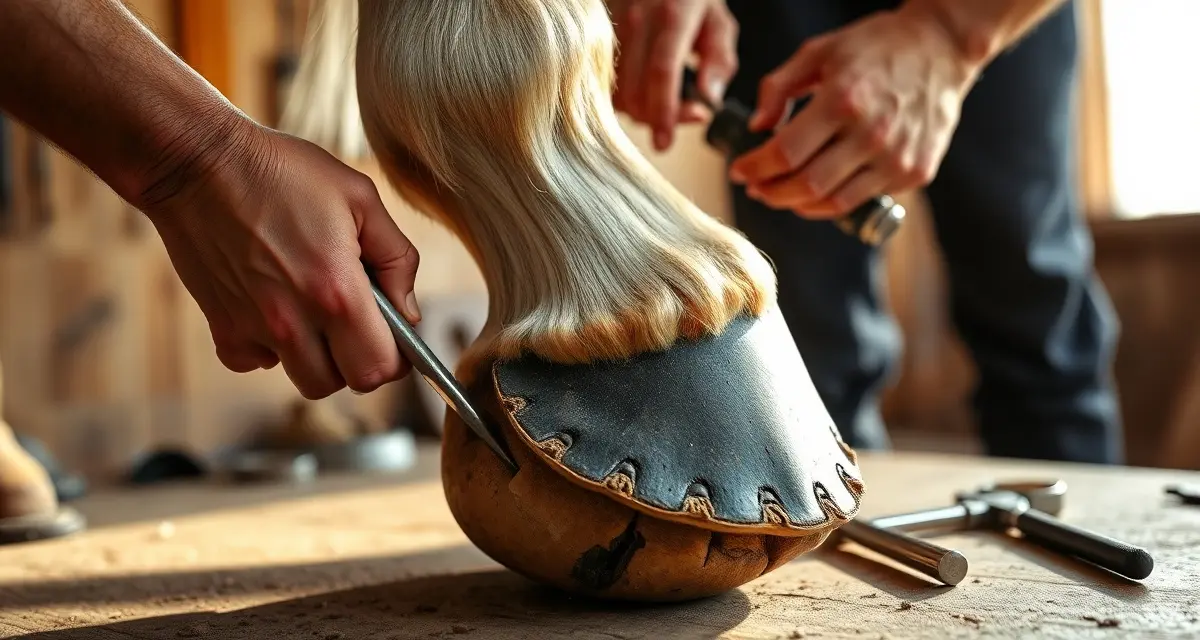
Arabian Hoof Care: Managing Sensitive Hooves on a Precise Schedule
Arabians have a higher incidence of thin soles and narrow heels than any other major breed. That's not anecdotal. It's a consistent characteristic tied to the breed's anatomy. The Arabian evolved in desert conditions where the primary challenge was soft sand and hard packed desert floor, not the varied rocky terrain of mountain breeds. The result is a horse with extraordinary endurance, expressive beauty, and hooves that need a more careful approach than many other breeds.
TL;DR
- Arabians have a higher incidence of thin soles and narrow heels than any other major light breed, requiring more precise trim and nail placement than heavier-walled horses.
- Contracted heels are a primary management challenge, and correcting them is slow work across multiple shoeing cycles rather than a single-visit fix.
- Nail placement in narrow Arabian walls requires careful positioning in the strongest wall section to avoid quicking or leaving clinches in thin, unsupportive material.
- Thin-soled Arabians benefit from pour-in pads, full pads, or wide-webbed shoes that add solar protection on hard terrain.
- Endurance Arabians may need visits every 4-6 weeks during peak training, compared to the 7-8 week intervals appropriate for lighter-use Arabians.
- Arabian owners tend to be knowledgeable about their breed's hoof characteristics, so arriving prepared to discuss specific concerns builds credibility.
Arabians represent a meaningful portion of the horse market, particularly in endurance riding, halter and breed showing, western pleasure, and trail riding. Understanding the specific hoof demands of the breed positions you to serve these clients well.
The Arabian Hoof Profile
The typical Arabian hoof is smaller and more narrow than most other light horse breeds of comparable body weight. The heel area is often contracted compared to a Quarter Horse or Warmblood of similar height and weight. The sole may be thinner and more prone to bruising on hard surfaces.
Narrow heels are the primary management challenge. A foot with contracted heels has less ground contact surface, more concentrated loading per unit of hoof wall, and reduced frog engagement. The frog in a contracted foot often loses contact with the ground entirely, reducing its role as a shock absorber and blood flow stimulator.
Many Arabians arrive at their first appointment with heel issues that developed gradually over time, through shoeing that was too tight in the heels or through management that didn't allow enough frog engagement. Addressing contracted heels is slow work. You're helping the foot find its way back toward expansion over multiple shoeing cycles. The corrective shoeing contracted heels guide covers the full approach to managing this condition progressively.
Thin Sole Management
The thin sole that's common in Arabians means sensitivity to hard ground and rocky terrain. An Arabian with thin soles will tell you about it quickly if you put them on packed gravel or rocky trail. They pick their way carefully, transfer weight off sore feet, and may show subtle lameness on hard surfaces that disappears on softer ground.
Management options for thin-soled Arabians include:
- Pads, either full pads or pour-in pads, to add solar protection
- Wide-webbed shoes that provide more coverage over the sole
- Graduated introduction to harder terrain to allow the sole to develop more callus
- Supplementation to support hoof quality, discussed with the owner and veterinarian
FarrierIQ's hoof health records capture sole depth and sensitivity notes at each visit. Tracking whether thin sole issues are improving, stable, or worsening across multiple visits tells you whether your management approach is working or whether adjustments are needed.
Nail Placement in Narrow Hooves
The narrow hoof wall of Arabians requires precise nail placement. There's less margin between the white line and the outer wall than in heavier-walled breeds. Going too deep toward the white line risks quicking. Going too far toward the wall edge leaves nails in thinner, less supportive material.
Selecting appropriately sized nails for the wall thickness and placing them in the strongest available wall, typically higher on the wall rather than at the quarters where the wall is thinner in a contracted foot, produces better retention without the risk that comes with forcing standard nails into a narrow Arabian wall.
The Arabian Schedule
Arabians in various disciplines fall at different points in the 6-8 week range. Endurance Arabians that train and compete actively may need visits every 4-6 weeks, particularly during peak mileage periods. Show Arabians in halter, western pleasure, and English pleasure classes typically fall in the 6-7 week range. Trail and pleasure Arabians in lighter work can often go 7-8 weeks.
FarrierIQ's scheduling software sets appropriate individual intervals for each Arabian based on their use and hoof characteristics. An endurance Arab on a 5-week schedule gets that tracked separately from the pleasure Arab at the same barn on a 7-week cycle.
Arabian Show Shoeing
Arabian halter and breed show horses have specific shoeing requirements that differ from performance horse shoeing. Halter Arabians are often shown with toe extensions and pads to enhance the appearance of the foot and the natural lofty action expected in the breed's show presentation. These requirements are class-specific and governed by USEF and breed-specific show rules.
Performance Arabian show horses, including those competing in English pleasure, western pleasure, and park, have their own shoeing requirements tied to the desired gait expression in each class.
Working With Arabian Owners
Arabian owners tend to be knowledgeable and engaged. The breed has a dedicated community with strong educational resources, and Arabian owners often have read about their horses' hoof characteristics before you arrive. Coming prepared to discuss narrow heels, thin soles, and the specific considerations of the breed demonstrates that you understand their horse.
Frequently Asked Questions
How often do Arabian horses need a farrier?
Most Arabians need farrier visits every 6-8 weeks. Endurance Arabians in active training and competition may need visits every 4-6 weeks due to mileage demands. Show Arabians are typically on a 6-7 week schedule during season. The specific interval is based on the individual horse's hoof growth rate, work intensity, and any management concerns like contracted heels or thin soles.
What are the special hoof care needs of an Arabian?
The primary considerations are narrow heels, which benefit from management that encourages heel expansion rather than contraction, thin soles, which may need pad protection on hard terrain, and the precise nail placement requirements of a narrower-than-average hoof wall. Arabians also tend toward contracted heels from shoeing that's too tight in the heel area, so appropriate shoe fitting that allows natural heel expansion is important.
Can farrier software track breed-specific hoof characteristics?
Yes. FarrierIQ's horse records include notes fields where you can capture breed-specific observations like contracted heel status, sole depth assessment, and any management protocols in place. Tracking these notes across multiple visits shows whether the horse's hoof characteristics are improving, stable, or changing, which informs your management decisions.
How do you communicate thin sole findings to an Arabian owner?
Most Arabian owners are receptive to a straightforward explanation: thin soles are common in the breed, they make the horse more sensitive on hard footing, and the management options include pads, wide-webbed shoes, and footing management. Specific observations are more useful than general statements - noting that the horse reacted to hoof tester pressure in a specific location, or that the sole is deflecting more than at the last visit, gives the owner something concrete to discuss with their vet if needed.
Can contracted heels in Arabians be corrected over time?
Yes, though it takes patience and consistent management across multiple cycles. The approach involves fitting shoes wider at the heels to allow natural expansion, encouraging frog contact, and avoiding trimming the heels aggressively. Progress is visible in the measurement of heel width from visit to visit. FarrierIQ notes fields let you record heel width at each visit so you can track whether expansion is occurring and at what rate, which helps you show owners the progress being made.
Related Articles
Sources
- Arabian Horse Association (AHA), breed registry and health resources
- American Farrier's Association (AFA), farrier education and hoof care protocols
- American Association of Equine Practitioners (AAEP), equine lameness and hoof care guidelines
- The Horse: Your Guide to Equine Health Care, Arabian-specific hoof management coverage
- University of Florida Institute of Food and Agricultural Sciences Extension, equine hoof care resources
Get Started with FarrierIQ
Managing Arabians well means tracking contracted heel progression, sole depth notes, and individual intervals across a client base where no two horses have the same schedule. FarrierIQ's per-horse records and flexible scheduling give you a practical system for keeping all of that organized. Try FarrierIQ free and see how having each Arabian's hoof history accessible at the barn changes how you manage these clients.