Appaloosa Shoeing Guide: Managing Striped Hooves and Sensitive Feet
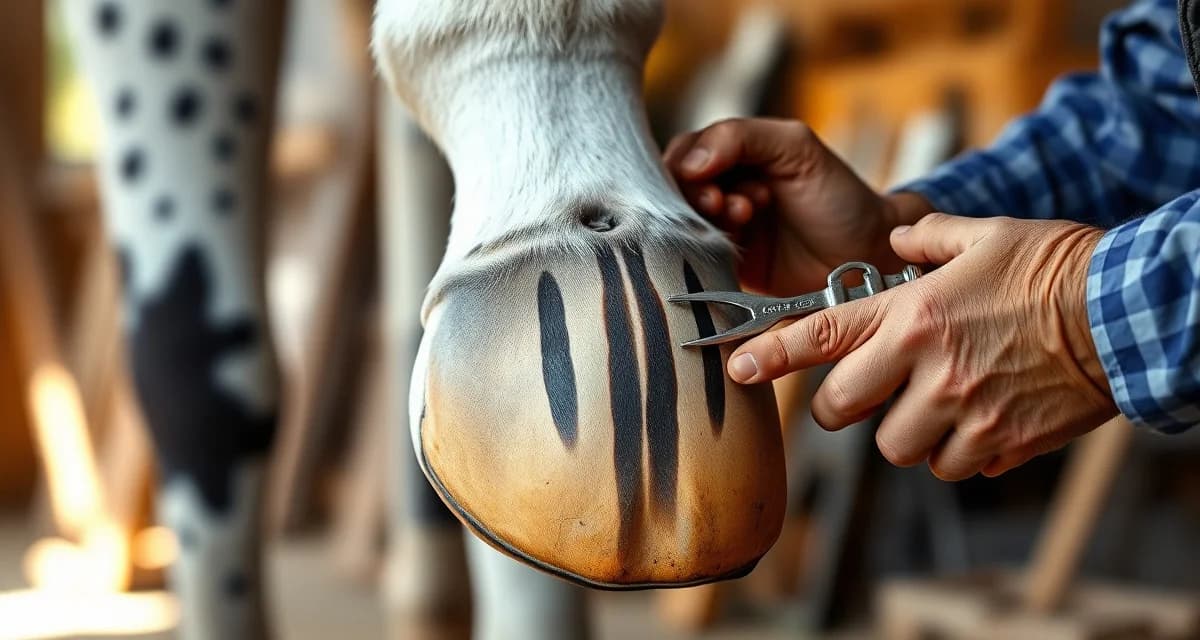
Appaloosas are one of the most recognizable horse breeds in the world, and their hooves are as distinctive as their coats. The striped hoof - alternating light and dark vertical stripes running from coronet to ground - is a hallmark of the breed. Those stripes aren't just cosmetic. They can tell you something about what you're working with.
TL;DR
- Appaloosa hoof striping reflects the same LP gene complex that controls the breed's coat pattern; dark stripes are denser wall tissue and light stripes are less pigmented and typically softer.
- Brittle walls that hold nails poorly are a genuine, documented challenge in some Appaloosa individuals, not just farrier folklore.
- When wall quality is poor, use fewer nails positioned in the strongest sections of the wall, and consider glue-on shoes for severely compromised feet.
- Narrower-footed Appaloosa bloodlines are prone to sole bruising on hard ground; full pads with packing are a practical solution for repeat bruisers.
- Appaloosas with Equine Recurrent Uveitis (moon blindness) may be more reactive during hoof handling due to impaired vision.
- Recording wall quality notes at every visit captures the trend over time, which is essential for flagging deterioration to owners, vets, and nutritionists.
This guide covers the real hoof care considerations for Appaloosas: what's different about their feet, what problems come up most often, and how to shoe them for the range of work they do.
Appaloosa Hoof Characteristics
The Striped Hoof
Appaloosa hooves typically show the breed's characteristic vertical striping, produced by pigmentation differences in the hoof wall associated with the LP gene complex that controls the Appaloosa coat pattern. Dark stripes correspond to normally pigmented wall tissue; light stripes are less pigmented.
The practical question: are striped (partially unpigmented) hoof walls softer than fully pigmented walls? Anecdotally, many farriers report that Appaloosa hooves can be more brittle and prone to cracking than other breeds of similar size and care level. Some evidence supports this - reduced pigmentation may mean slightly different structural properties in the wall tissue. But management, nutrition, and environment affect hoof quality as much or more than pigmentation.
Don't condemn an Appaloosa foot based on the stripes alone. Evaluate what's actually there.
Narrower Feet, Upright Pasterns in Some Lines
Some Appaloosa bloodlines produce a more upright, narrower foot than the wide, round Quarter Horse profile. This can make some Appaloosas more prone to foot soreness on hard ground. Assess individually.
Sensitivity and Moon Blindness Connection
Appaloosas have a well-documented predisposition to Equine Recurrent Uveitis (ERU), or moon blindness. Horses with impaired vision from ERU may be more reactive under foot handling. This isn't a hoof problem, but it's worth knowing when you're approaching an Appaloosa that's unusually tense or reactive.
Common Hoof Problems in Appaloosas
Hoof Cracks
Appaloosa walls can be more prone to cracking than many other breeds, particularly in dry climates or with wet/dry cycling. Quarter cracks and horizontal cracks at the coronet both occur. Track crack development at each visit - note location, length, and depth, and whether it's stable or progressing. The corrective shoeing hoof cracks guide covers intervention options when cracks are actively progressing.
Brittle Walls
Some Appaloosas have brittle walls that hold nails poorly or chip easily at the nail holes. If you're working on an Appaloosa with brittle wall quality, be conservative with nail placement - use fewer nails further from the toe if wall quality at the toe is poor.
Sole Bruising
Narrower-footed Appaloosas can be prone to sole bruising on hard ground. Pads and packing are a practical solution for horses that bruise regularly.
White Line Disease
Same as other breeds. Document and treat per standard protocol.
Step-by-Step: Shoeing an Appaloosa
Step 1: Wall Quality Assessment
Before trimming, assess wall quality. Is the wall firm and dense, or brittle and chalky? Are there existing cracks? This affects your shoe selection and nailing approach.
Step 2: Trim
Conservative trim. If the walls are brittle, avoid removing more wall than necessary. Keep the foot balanced - Appaloosas with naturally upright angles don't need the toe dramatically lowered unless the hoof-pastern axis is genuinely broken back.
Step 3: Shoe Selection
Most Appaloosas do well in standard keg shoes. For brittle-walled horses, some farriers prefer glue-on shoes to avoid nail holes weakening already challenged walls. This requires more preparation and time but is appropriate for problem cases.
For horses prone to sole bruising, full pads with packing provide protection without compromising function.
Step 4: Nailing on Brittle Walls
If walls are brittle or have active cracking:
- Use fewer nails than standard if wall integrity is poor
- Position nails in the strongest areas of the wall - avoid toe and quarter areas with visible damage
- Use a smaller nail size to reduce the hole diameter in compromised wall
- Check clinch security carefully and re-check before leaving the barn
Step 5: Record Wall Quality
This is one of the most important notes you'll make on an Appaloosa. If walls are deteriorating between visits - more cracking, more brittleness - that's a trend worth flagging for the owner and potentially the vet and nutritionist. Biotin supplementation, correct moisture balance, and good nutrition can improve wall quality over 6-12 months. Using hoof health records to capture these observations across multiple visits makes the trend visible in a way that memory alone cannot.
Appaloosa Discipline Notes
Trail and ranch work: The majority of Appaloosas are pleasure and trail horses. Standard steel shoes for the discipline. On rocky terrain, ensure the shoe provides adequate sole coverage. Monitor sole sensitivity.
Reining and cutting: Some competitive Appaloosas in these disciplines - particularly APPHA competition - need the same shoeing approach as Quarter Horse reiners and cutters. Sliders on the hinds for reining horses.
Show: APPHA show horses in western disciplines follow the same protocols as AQHA horses. English Appaloosas are less common but follow standard hunter/jumper or dressage shoeing approaches.
Related Articles
- Friesian Horse Shoeing Guide: Managing Feathered Feet and Heavy Frames
- Quarter Horse Shoeing Guide: Managing High-Performance Western Horse Hooves
FAQ
How often do Appaloosas need to be shod?
Most Appaloosas follow standard 5-7 week cycles depending on work intensity and growth rate. Those with faster-growing but more brittle walls may need closer attention because compromised wall integrity gets worse as the foot grows out and the shoe loosens.
Are Appaloosa hooves really harder to shoe than other breeds?
Some Appaloosas with brittle, unpigmented walls present more challenge than average - nailing in brittle wall requires more care, and cracks can complicate an otherwise routine appointment. But this is individual variation, not universal. Many Appaloosas have perfectly normal feet that present no challenge beyond any other light breed.
What hoof conditions are common in Appaloosas?
Hoof wall cracking and brittleness are the most-cited Appaloosa-specific concerns. Sole bruising in narrow-footed individuals on hard ground is also common. General conditions like thrush and white line disease occur at similar rates to other breeds.
How does biotin supplementation help Appaloosa hoof quality?
Biotin supports keratin synthesis at the coronary band, which can improve the structural quality of new hoof wall as it grows out. The effect is not immediate - it takes 6 to 12 months for supplemented hoof to grow from coronary band to toe, so owners need realistic expectations. Documenting wall quality at each visit while a horse is on supplementation lets you objectively assess whether the newer growth is better or worse than the older wall.
When should you recommend glue-on shoes for an Appaloosa?
Glue-on shoes are worth discussing when nail placement is genuinely compromised by brittle wall - when clinches are working loose before the expected shoeing interval, when wall is crumbling at nail holes, or when the horse has a history of throwing shoes on the weaker wall sections. The trade-off is added time and material cost, so the conversation should be grounded in what you're actually observing in the foot.
Sources
- Appaloosa Horse Club (ApHC), breed registry and health information
- American Farrier's Association (AFA), farrier education and nail placement standards
- American Association of Equine Practitioners (AAEP), equine health guidelines
- Kentucky Equine Research, biotin supplementation and hoof quality studies
- Colorado State University Extension, equine nutrition and hoof care resources
Get Started with FarrierIQ
Keeping detailed, visit-by-visit records on Appaloosa wall quality is the difference between catching a crack trend early and discovering a serious problem at the next appointment. FarrierIQ's hoof notes and photo documentation give you that longitudinal record without adding time to your workday. Try FarrierIQ free and see how having each Appaloosa's history at your fingertips changes how you manage your clients.