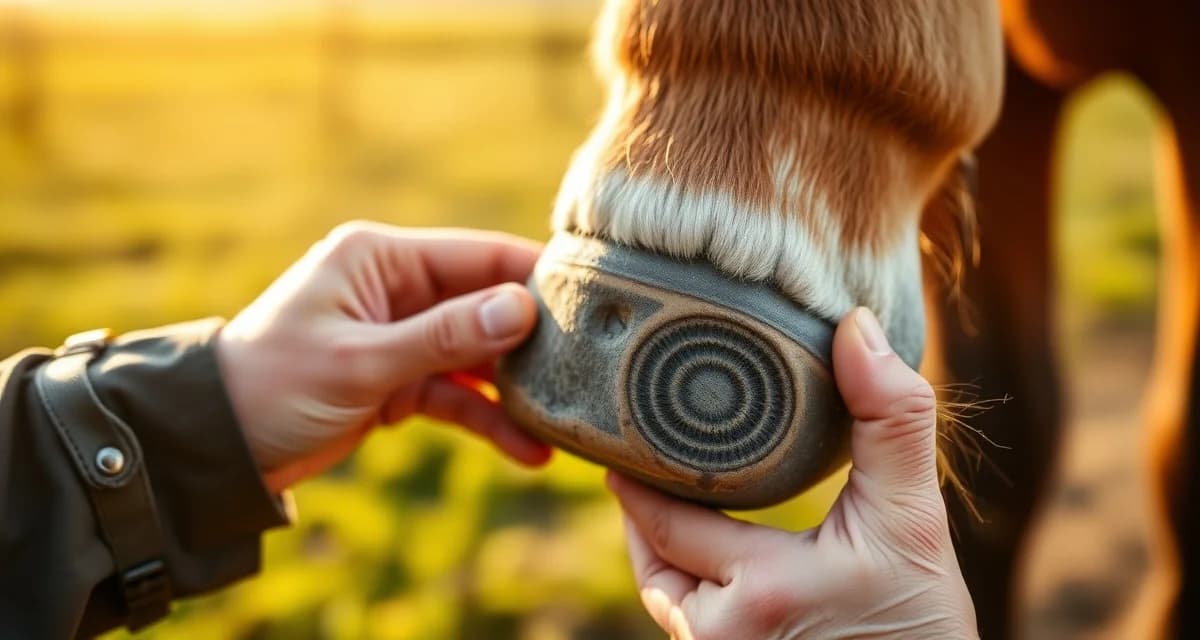
Spring Hoof Care Guide for Farriers: Mud Season Softening and Growth Surge
Spring hoof growth rate increases 60% versus winter - tightening shoeing cycles for active horses and creating management challenges that farriers who understand the physiology can stay ahead of.
TL;DR
- Spring hoof growth increases 60% versus winter -- a horse comfortable on an 8-week winter interval may develop imbalance, long toe, or flaring at 8 weeks in spring; most active horses need 5-6 week intervals March-June.
- Mud season creates four distinct hoof risks: moisture oversaturation (softens hoof wall), thrush (anaerobic sulci conditions), white line disease (saturated white line vulnerable to fungal/bacterial invasion), and shoe loss (soft ground suction pulls shoes far more frequently than dry-season turnout).
- Every spring visit should include white line probe examination around the full shoe circumference -- white line disease begins in spring and early detection prevents the excavation cases that take months to grow out.
- Frog assessment is nearly universal in wet climate spring visits: thrush treatment for anything beyond the mildest early-stage finding; document presence and grade in hoof health records.
- Proactively reach out to clients of horses on 8-week winter intervals before spring growth gets ahead of the schedule -- don't wait for the client to notice overgrown feet.
- FarrierIQ's growth tracking notes capture each horse's individual spring growth rate across multiple seasons -- this longitudinal data lets you accurately predict which horses need shorter spring intervals vs. which are slower growers.
- Spring is typically the busiest farrier season as horses return to work and turnout increases -- proactive scheduling in February for March-June prevents the reactive spring rush. Spring is arguably the most demanding season for hoof care, combining rapid growth with soft ground conditions, mud season moisture, and an often-sudden increase in horse use and turnout time.
Why Spring Hooves Grow So Fast
Hoof growth is driven by blood circulation to the coronary band, which produces the keratinized cells that become hoof wall. Blood circulation to the extremities increases significantly in spring as temperatures warm and horses move more. More circulation to the coronary band means faster hoof production - simple physiology with major scheduling implications.
A horse that needs trimming every 8 weeks in January may genuinely need attention every 5 to 6 weeks from March through June. Failing to account for this in your scheduling means horses that develop flares, long toe, and hoof imbalance before their scheduled appointment.
Mud Season: Hoof Risks and Management
The spring mud season - particularly in the Midwest, Northeast, and Pacific Northwest - creates conditions that directly threaten hoof health.
Moisture oversaturation: Hooves standing in mud for hours daily absorb excess moisture that softens the hoof wall, white line, and sole. Soft hoof wall is more prone to bruising, nail hole damage, and the kind of minor trauma that accumulates into bigger problems.
Thrush development: The frog thrives on anaerobic conditions - exactly what packed mud creates in the sulci. Horses standing in wet mud conditions are highly susceptible to thrush, which can progress to serious frog infection if not caught and treated early.
White line disease: Soft, moisture-saturated white line is vulnerable to fungal and bacterial invasion. White line disease begins when debris packs into a softened white line and creates anaerobic conditions in which pathogenic organisms can thrive. Document white line quality carefully during spring visits.
Shoe loss: Soft spring ground creates suction that pulls shoes. Horses in active turnout on wet, soft pastures lose shoes more frequently in spring than any other season. Clients should know this and have your number handy.
Spring Shoeing Considerations
Adjust intervals proactively: Don't wait for clients to call and say their horse's feet are too long. If you know spring growth rates in your region, proactively reach out to clients of horses that were on 8-week intervals through winter and schedule them for 6-week spring appointments before the growth surge gets ahead of you.
Sole and white line inspection: Spring is when white line disease begins. Every spring visit should include careful probe examination of the white line around the full circumference of the shoe. Pack any soft spots you find and document your findings.
Frog condition: Thrush treatment in spring is almost universal in wet regions. Assess frog health on every visit and treat or advise treatment for anything beyond the mildest early-stage thrush.
Balance: Rapid growth can create imbalance faster than in slower seasons. A horse that was balanced at 6 weeks in winter may be noticeably imbalanced at 6 weeks in spring if growth has been asymmetric. Check balance carefully and trim accordingly.
Documenting Spring Hoof Changes
FarrierIQ's growth tracking notes capture spring hoof growth rate changes per horse - giving you documented evidence of each horse's individual spring growth pattern. Over two or three spring seasons, these notes help you accurately predict which horses need shorter spring intervals versus which are slower growers who can stay on their standard schedule.
Capture these specifically in your hoof health records for spring visits:
- Hoof growth rate compared to previous visit
- White line quality and any soft or separated areas
- Frog condition and thrush presence
- Sole moisture and quality
- Any mud-related softening of the hoof wall
Scheduling for the Spring Rush
Spring is often the busiest season for farriers as horses come back into work, owners increase turnout, and growth rates create earlier-than-expected demand for service. Managing the spring rush without burning out requires proactive scheduling.
Use FarrierIQ's scheduling tools to identify which horses are coming due and reach out ahead of their standard interval. The complete spring seasonal guide covers the full scheduling and business management approach for the spring season.
Frequently Asked Questions
How does spring affect horse hoof growth?
Spring triggers a significant acceleration in hoof growth due to increased blood circulation to the coronary band as temperatures warm and horses become more active. The typical increase is 50 to 60% above winter growth rates, though individual horses vary. This growth acceleration means a horse that was comfortable on an 8-week winter interval may develop imbalance, long toe, or excessive flaring at 8 weeks in spring. Most active spring horses benefit from 5 to 6 week intervals during the peak growth months of March through June. Horses in lighter work or those with slower individual growth rates may be comfortable at 7 weeks, but 8 weeks is usually too long during peak spring growth.
Do horses need more frequent shoeing in spring?
Yes, most horses - particularly active horses in work - need shorter shoeing intervals in spring than in winter. The 60% growth rate increase is real, and ignoring it leads to longer toes, flares, hoof imbalance, and the soft tissue strain that comes with prolonged imbalance. Good farriers proactively schedule spring appointments at shorter intervals rather than waiting for clients to notice overgrown feet. If you're transitioning a client from 8-week to 6-week intervals for spring, communicate the reason - it's the physiology of the season, not a change in your policies.
What hoof problems are most common in muddy spring conditions?
Thrush is the most common spring hoof condition in wet climates, affecting the frog's sulci as constant mud exposure creates the anaerobic environment thrush organisms need. White line softening and early-stage white line disease are close seconds - moisture saturates the white line, debris packs in, and the pathogenic process begins. Shoe loss is dramatically higher in spring due to soft ground suction. Bruising of the sole can occur as horses move more actively over variable footing that includes both soft mud and the hard frozen patches that persist in late winter. All of these conditions are documented and tracked more effectively with consistent hoof condition notes at each spring visit.
How should farriers communicate spring interval changes to clients who expect to stay on their winter schedule?
Lead with the physiology, not the schedule: "Spring growth rates are running about 60% higher than winter right now -- if we stay on the 8-week winter schedule, you're going to start seeing some flaring and length by the time I get there. I'd like to move you to a 6-week interval through June, then we can reassess for summer." Most horse owners who understand the reason accept an interval adjustment readily. Clients who push back on the timing or cost can be shown the condition difference at the visit: a hoof that would have been balanced at 8 weeks in January is noticeably long at 8 weeks in April, and pointing to that concretely is more persuasive than any explanation. Document the spring interval change in FarrierIQ's farrier scheduling software so the adjustment carries forward automatically.
What signs at a spring visit indicate a horse's mud-season exposure has created hoof wall damage that needs monitoring?
Key indicators of mud-season hoof wall compromise: hoof wall that appears bleached or chalky (moisture-depleted structure), excessive flaking at the periople layer, widened or soft white line that probes more easily than it should, superficial separation at the hoof wall/white line junction visible after cleaning, or frog tissue that has a gray color or soft texture beyond normal frog pliability. Any of these findings should be documented in the horse's hoof health records with a note about the mud exposure history. Monitoring these indicators across 2-3 spring visits creates a baseline for that specific horse's mud-season hoof response -- some horses are remarkably resilient to wet conditions while others consistently show significant softening that informs management recommendations you can share with owners.
Sources
- American Association of Equine Practitioners (AAEP), equine hoof health seasonal care guidelines
- American Farrier's Association (AFA), spring hoof care and mud season management resources
- Cornell University College of Veterinary Medicine, equine hoof disease prevention and seasonal hoof physiology
- Rutgers Cooperative Extension, mud management and equine hoof health guidelines
Get Started with FarrierIQ
Spring hoof growth increases 60% versus winter and creates the year's busiest farrier season -- FarrierIQ's scheduling software lets you proactively adjust spring intervals per horse and the hoof health records capture white line and frog condition documentation so mud-season changes are tracked across seasons. Try FarrierIQ free and update your first spring interval before the March growth surge begins.