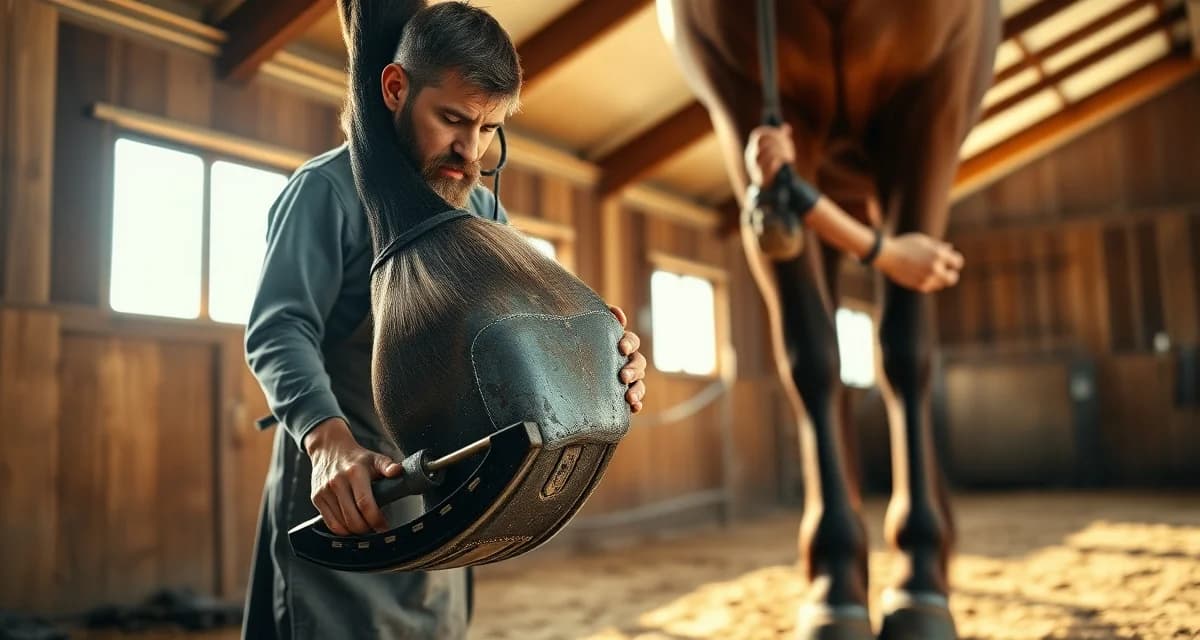
Draft Horse Hoof Care: Managing Large Hooves on a Reliable Schedule
Draft horse hoof care costs are approximately 35% higher per visit than standard horse shoeing due to material and labor requirements. That cost differential reflects reality: you're using more shoe material, your time per horse is longer, and the physical demands of working on feet that size are real. Draft horse clients understand this, or they should once it's explained. The key is charging appropriately and delivering consistent, skilled care.
TL;DR
- Draft horse hoof care costs approximately 35% more per visit than standard horse shoeing, reflecting larger shoe material, longer appointment time, and greater physical demands.
- Draft horse hooves are typically twice the ground surface area of a standard horse's foot, with wall density and strength that reflects the breed's historical work demands.
- A full set on a large draft horse takes 90-120 minutes versus 45-60 minutes for a standard horse -- this time difference must be built into scheduling from the start, not absorbed from the following appointments.
- Belgians (the most common US draft) tend toward rounder, open hooves; Clydesdales and Shires may have feathering that creates moisture-trapping concerns at the coronary band requiring monitoring at every visit.
- Pulling competition drafts need fresher shoes before major competitions and competition-legal calk configurations -- track competition shoe specs in FarrierIQ separately from routine shoeing records.
- Automated appointment reminders in FarrierIQ are particularly valuable for working draft clients (farmers, loggers) who may not track the calendar as closely as show horse owners.
Draft horses represent a growing segment of the horse market as interest in traditional farming, pulling competitions, and carriage driving continues to build. Understanding the specific demands of draft horse hoof care positions you to serve this market well.
The Scale of Draft Horse Hooves
If you've worked on Clydesdales, Percherons, Belgians, or Shires, you know that the scale difference is not just about shoe size. The hoof walls are thicker and more substantial. The foot itself may be twice the ground surface area of a standard horse's foot. The weight of the horse, sometimes exceeding 2,000 pounds, puts different loads on the hoof capsule than a 1,200-pound Quarter Horse.
The positive side of draft horse hoof characteristics is that wall density and strength are typically excellent. Drafts evolved for hard work on varied terrain, and their feet reflect that. Nail placement is generally more forgiving than with thin-walled breeds. You have more wall to work with.
The challenge is the size and weight of everything. Heavier shoes take longer to shape and apply. Holding a draft horse's foot up for trimming and shoeing is physically demanding. Draft horse clients should understand that appointment time for a full set is longer than for a light horse.
Hoof Size and Material Costs
A size 6 or 7 steel keg shoe for a large Clydesdale or Belgian costs considerably more than a size 2 or 3 for a Quarter Horse. Multiply that by four feet and the material cost per visit is substantially higher. Nails for draft horse shoes are larger and cost more as well.
Transparent pricing conversations with draft horse clients prevent misunderstandings about billing. FarrierIQ's invoicing tools let you itemize material and labor separately, making the cost structure clear. When a client asks why their draft costs more than their neighbor's Quarter Horse, you can show them the breakdown.
Scheduling Draft Horses on Proper Intervals
Draft horses on the standard 6-8 week schedule share that interval with most other breeds, but the appointment takes longer, which affects your day's planning. A full set on a large draft horse might take 90-120 minutes versus 45-60 minutes for a standard horse. If you have draft horse clients mixed into a standard day, building in the extra time prevents the rest of your schedule from falling behind.
FarrierIQ's scheduling lets you set appointment duration per client rather than using a flat time slot for everyone. Your draft horse appointments get the time they need built in from the start.
FarrierIQ's scheduling software also sets the correct interval for each horse and sends automated reminders. Draft horse owners who are running farms or working animals may not always track the calendar as closely as show horse owners. Automated reminders keep draft clients on their proper schedule without manual follow-up.
Pulling Competition Draft Horses
Draft horses in pulling competitions have specialized shoeing needs beyond routine care. Competition shoes with cleats for maximum traction are the primary modification, and competition rules govern what's legal in sanctioned events. If you serve pulling competition clients, FarrierIQ's hoof health records can capture competition shoe specifications alongside routine shoeing records.
Pulling horses may need fresher shoes going into competition season. Some competitors prefer to reshoe before major pulls rather than running on worn cleats.
Draft Breeds and Individual Variation
Each draft breed has somewhat different hoof characteristics. Belgians, the most common draft in the US, tend toward rounder, more open hooves with good substance. Clydesdales may have more feathering and slightly different hoof angles. Percherons are often more refined for a draft breed, with feet proportionately smaller than a Belgian of similar weight. Shires are massive, with the largest hooves of any breed, and their feathering creates moisture-trapping concerns similar to Friesians.
Knowing these breed-level tendencies helps you approach each draft client with the right expectations, while still assessing the individual horse.
Carriage and Driving Draft Horses
Draft horses used for carriage driving, whether in competition or pleasure driving, often need a different shoe configuration than working farm horses or pulling competition horses. Carriage driving on paved or hard surfaces requires traction devices appropriate for hard ground. The hoof care demands of a carriage horse doing road driving are different from one working in soft farm fields.
If you serve carriage driving clients, the discipline-specific notes in FarrierIQ's records help you track what each horse's driving work requires.
Farm and Working Draft Horses
True working draft horses, those used for farming, logging, or other traditional work, put different demands on their feet than pleasure or competition draft horses. The terrain they work on, the loads they pull, and the hours they work all factor into what the hoof experiences and when it needs attention.
Some working draft horses go barefoot on appropriate terrain. Others need shoes with modifications for specific work conditions. See the draft horse farm work shoeing guide for the detailed approach to working draft shoeing decisions.
Frequently Asked Questions
How often do draft horses need to see a farrier?
Most draft horses follow the standard 6-8 week schedule for routine hoof care. Working draft horses on hard terrain or in intensive use may need visits at the closer end of that range. Draft horses on light work or pasture rest can sometimes stretch to 8 weeks. The same individual factors that affect other breeds, hoof growth rate, work intensity, terrain, apply to drafts.
How much does it cost to shoe a draft horse?
Draft horse shoeing costs are typically 30-50% higher than comparable service on a standard light horse, reflecting the additional material cost for larger shoes and the additional time required for the visit. Regional rates vary, but expect to price draft horse services at a meaningful premium over your light horse rate and communicate that to clients before the first appointment.
What farrier records are important for draft horses?
Hoof condition at each visit, including wall quality, any feather-related skin issues at the coronary band for feathered breeds, shoe size and specifications, and any work-related notes are the basics. For competition draft horses, competition shoe specs and event results are worth capturing. For therapeutic cases, the treatment protocol and response tracking are essential. FarrierIQ's records accommodate all of these.
How do you monitor feathered draft breeds for coronary band and skin issues under the feathering?
Make checking under the feathering part of every visit routine. Pull the feather aside and inspect the coronary band, heel bulbs, and pastern skin for signs of scratches (pastern dermatitis), moisture accumulation, or early skin breakdown. These areas stay moist under the feather and are prone to bacterial and fungal skin conditions that can affect hoof health if they spread to the coronary band. Document any findings in FarrierIQ's condition notes -- feathering issues tend to be seasonal, and having a record of when they appeared and how they responded to management helps you advise clients on winter versus summer management adjustments.
What should a farrier expect physically when working on large draft horses for the first time?
Draft horse work is physically more demanding than light horse work in ways that compound over a long day. Holding up a foot that weighs significantly more than a Quarter Horse's hoof requires more from your back and legs. The shoes are heavier and take more effort to shape. Budget more time per horse and consider scheduling draft visits early in the day when you're fresh rather than at the end of a full day of light horse work. Experienced draft horse farriers typically recommend building core and leg strength specifically for the demands of this work, and treating draft days as distinct scheduling blocks rather than mixing them through a standard day.
Sources
- American Farrier's Association (AFA), draft horse shoeing techniques and breed-specific hoof care education
- Draft Horse Journal, draft horse management and farrier care resources
- American Association of Equine Practitioners (AAEP), equine hoof care guidelines
- Clydesdale Breeders of the USA, breed-specific care and feathering management resources
- University of Minnesota Extension, draft horse management and health resources
Get Started with FarrierIQ
Draft horse accounts require appointment durations built around the actual time needed, automated reminders to keep working-horse clients on schedule, and breed-specific condition tracking for feathering concerns and work-use variations. FarrierIQ's per-horse scheduling and records handle all of that, letting you manage draft accounts as efficiently as your light horse book. Try FarrierIQ free and build the scheduling and documentation structure that draft horse work requires.