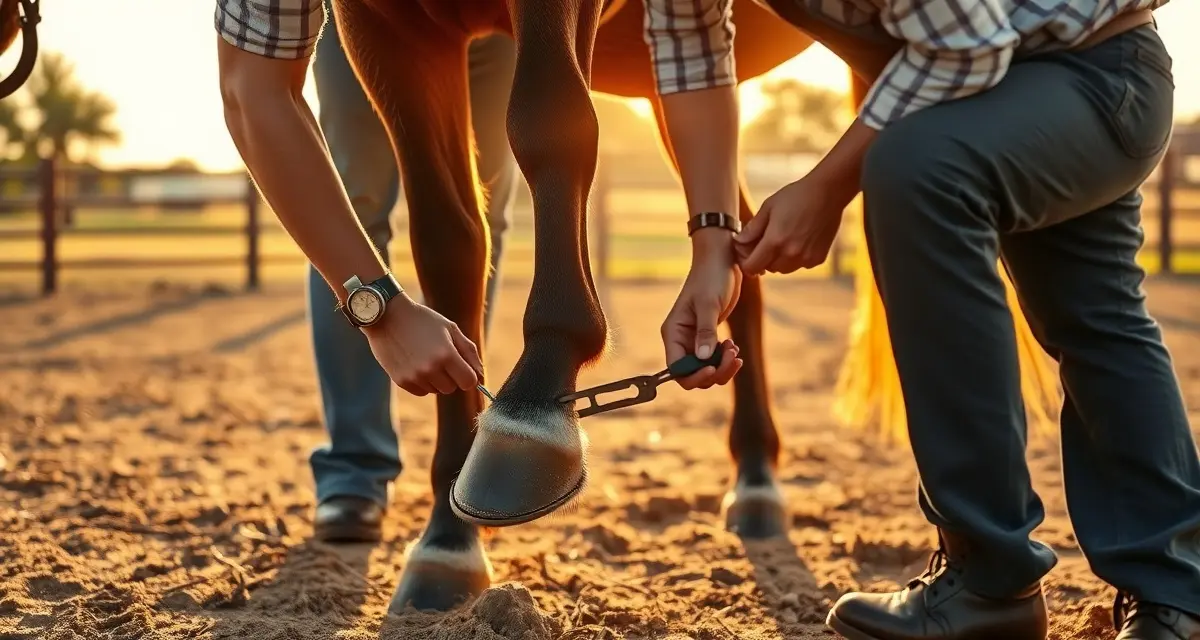
Mustang Hoof Trimming Schedule: From Wild Hooves to Domestic Care
Wild-caught Mustangs require an average of 4-6 initial farrier visits to adapt to domestic hoof management. That's not just about the horse's hooves. It's about the horse's trust, its training, and its adjustment from a life of constant movement and natural hoof conditioning to standing in a paddock and having its feet handled by a stranger.
TL;DR
- Wild-caught Mustangs typically need 4-6 farrier visits before reaching routine domestic maintenance intervals.
- Hoof quality varies significantly by range terrain and holding facility history, so every Mustang requires an individual assessment rather than a one-size-fits-all approach.
- The first farrier visit should prioritize trust-building and baseline documentation over completing a full trim.
- Adopter groundwork preparation before the first farrier visit is one of the biggest factors in how smoothly the transition goes.
- Most Mustangs in domestic management do well barefoot; shoes are appropriate only when actual work demands exceed what the hoof can handle.
- Transition-phase visits typically run every 4-6 weeks, shifting to 5-7 week maintenance intervals once the horse is established.
- Detailed notes on handling tolerance at each visit are as important as hoof condition records during the transition period.
Mustang hoof transition work is some of the most rewarding farrier work you can do, but it requires patience, good horsemanship, and a record system that tracks the horse's progress across multiple visits over an extended period.
What Wild Hooves Actually Look Like
There's a romance in horsemanship circles about Mustang feet being perfect. The reality is more nuanced. Mustangs from well-managed range with appropriate terrain do often have excellent hooves, with dense walls, strong soles, and self-maintaining length from natural wear. These horses may need only minor initial assessment and light trimming to bring them into domestic management.
But Mustangs from other situations, horses that came from soft, wet range terrain, horses that spent extended time in holding facilities, or horses adopted from the Nevada studs with different soil characteristics, can have hooves that are softer, longer, or more compromised than the reputation suggests.
The initial assessment is everything. Coming to a freshly adopted Mustang with a preconceived idea of what you'll find, rather than actually looking at the horse in front of you, is how you get into trouble.
The Trust Problem: Handling Before Trimming
The most notable challenge in early Mustang trimming isn't usually the hoof condition. It's the handling. A freshly adopted Mustang may have had limited or no positive human contact. Lifting a foot for trimming is an entirely foreign and potentially threatening experience.
Working with the adopter on foot handling groundwork before the first farrier visit produces better outcomes. A Mustang that's been taught to lift and hold its foot in response to leg pressure from the ground, by the owner in a gradual desensitization process, is ready for a farrier visit. One that's never had its feet handled is not.
Communicate clearly with new Mustang adopters about what preparation is needed before the first farrier visit. FarrierIQ's hoof health records include notes fields where you can log the horse's handling status and what groundwork has been done, so you know what to expect before you arrive. Setting these client communication expectations early also helps adopters understand their role in the transition process.
The Initial Assessment Visit
The first visit to a new Mustang should be an assessment and a minimum necessary trim, not a full overhaul. The horse needs to have a good experience and survive the visit without excessive stress. That might mean doing one or two feet and stopping. It might mean doing all four feet but only taking a small amount off.
What you're assessing includes:
- Hoof wall quality, including density, cracks, or flares from the transition to domestic conditions
- Sole condition and depth
- Frog health and quality
- Current length and any immediate balance issues that need addressing
- The horse's handling tolerance and how it's responding to the process
Your notes from this first visit are the baseline. Everything that follows is measured against it. Keeping those notes in FarrierIQ's records ensures the baseline doesn't get lost as the Mustang's management evolves.
The Transition Timeline
Most Mustang transitions follow a predictable arc, though the timing varies by individual horse and initial hoof condition.
Visits 1-2: Assessment, minimum necessary trimming, establishing trust. May be short sessions. Handling is often the limiting factor.
Visits 3-4: More complete trimming as the horse's handling improves. Beginning to address any balance issues or overgrowth. The horse should be accepting foot handling reasonably well by this point.
Visits 5-6: Routine maintenance trimming. The horse is in domestic management and the hooves are responding to the change in environment and nutrition. This is when you assess whether any ongoing management concerns exist, such as wall quality issues from transitioning from hard range to soft paddock footing.
Ongoing maintenance: 5-7 week intervals depending on growth rate and whether the horse is being worked on terrain that provides natural wear.
FarrierIQ's scheduling software tracks this progression. You can set the initial short intervals for the transition period and then adjust to maintenance intervals once the horse is established. This is especially useful when managing a large client roster that includes horses at different stages of their transition.
When Shoes Become Appropriate
The barefoot Mustang in domestic management is the norm. Most adopters are not planning competitive careers that require shoes, and Mustangs generally handle domestic life and trail riding barefoot well once their hooves are conditioned.
Shoes become appropriate when the Mustang is being used for work that exceeds what the hoof can handle barefoot, such as sustained rocky trail work that produces sole bruising or lameness, or competitive endurance with aggressive terrain. The decision should be based on the individual horse's hoof condition and the actual work being done, not a generic assumption.
Working With Adopters and Programs
Mustang adoption programs, including the BLM's Mustang Heritage Foundation and TIP (Trainer Incentive Program) events, create a community of new Mustang owners who are often simultaneously learning horsemanship and hoof care together. Being the farrier who can explain the transition process clearly, work patiently with horses that are new to handling, and communicate well with first-time adopters builds strong long-term client relationships in this community. Keeping thorough farrier visit records for each horse makes it easy to share progress updates with adopters and demonstrate the value of consistent professional care.
Frequently Asked Questions
How do I start trimming a Mustang's hooves?
Start with an assessment visit where the primary goal is establishing trust and gathering baseline information. Do only what the horse will comfortably tolerate. Work with the adopter ahead of time on foot handling groundwork. Use your first visit to assess hoof condition and take careful notes rather than trying to complete a full professional trim. Follow-up visits build on the baseline as the horse's handling improves.
How often do Mustangs need farrier care after adoption?
During the initial transition, most Mustangs benefit from visits every 4-6 weeks to monitor hoof condition as it adapts from wild to domestic management and to work through any training limitations gradually. Once the transition is complete and the horse is in stable domestic management, 5-7 week intervals for trimming are typical, with the shorter end for horses in active work and the longer end for those in light use.
What records should I keep for a Mustang in transition?
The handling status and training progress at each visit is as important as the hoof condition notes. Recording what the horse would tolerate at visit one, what improved at visit two, and when they were fully accepting of foot handling creates a useful record of the transition. Baseline hoof condition notes, any issues identified, and the progression of the trim work all matter for a Mustang record in FarrierIQ.
How do I know when a Mustang's transition to domestic hoof management is complete?
The transition is generally considered complete when the horse accepts foot handling without significant resistance, the hooves have stabilized in response to the new environment and nutrition, and you can move to a standard maintenance trimming interval without needing to monitor for rapid changes. For most horses this happens somewhere between visits 5 and 8, though horses from holding facilities or with compromised initial hoof condition may take longer.
Should I charge differently for Mustang transition visits compared to routine trims?
Many farriers do charge differently for early Mustang visits because the sessions often take longer, involve more handling work, and may require stopping before a full trim is complete. Being transparent with adopters upfront about the time and skill involved in transition work, and explaining why the first several visits may be priced differently than routine maintenance, helps set appropriate expectations and reflects the real value of the service.
Can a Mustang's hooves deteriorate after adoption even with regular farrier care?
Yes, particularly in the first several months. Hooves that were self-maintaining on dry, abrasive range terrain can soften, chip, or develop flares when the horse moves to a wet paddock or a diet higher in sugars than range forage provides. Regular farrier visits during this period catch these changes early, and noting them in your visit records helps you and the adopter identify whether management adjustments, such as footing changes or diet review, are needed.
Sources
- Bureau of Land Management (BLM), Wild Horse and Burro Program, U.S. Department of the Interior
- Mustang Heritage Foundation, Trainer Incentive Program (TIP) guidelines
- American Farriers Journal, Farrier Business and Equine Hoof Care reporting
- University of California Cooperative Extension, Equine Sciences Program
- American Association of Equine Practitioners (AAEP), Hoof Care and Lameness resources
Get Started with FarrierIQ
Mustang transition work demands more detailed record-keeping than routine maintenance trimming, and FarrierIQ is built to handle exactly that. From logging handling status at the first assessment visit to adjusting scheduling intervals as the horse moves from transition to maintenance care, FarrierIQ keeps every detail organized across the full arc of a Mustang's domestic adjustment. Try FarrierIQ free and see how purpose-built farrier records make complex, multi-visit cases easier to manage.