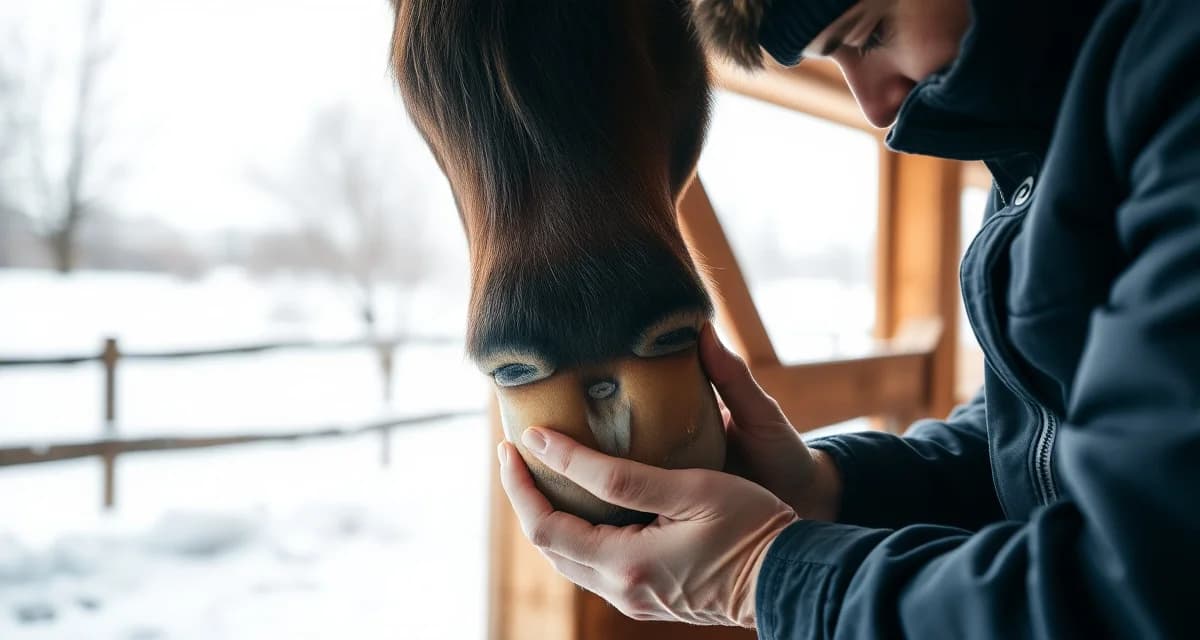
Winter Hoof Care Guide for Farriers: Snow, Ice, Mud, and What Horses Need
Hoof-related injuries increase 38% during winter months from ice, snowballs, and frozen ground. Winter is the season that separates farriers who treat hooves reactively from those who anticipate seasonal changes and manage them proactively.
TL;DR
- Hoof-related injuries increase 38% during winter months -- the primary causes are ice traction loss, snowballing, and freeze-thaw footing stress, all of which are largely preventable with the right shoeing approach.
- Snowballing is the most common winter crisis: full pads eliminate the concavity where snow packs; conveyor belt material is a durable and inexpensive alternative; rim pads are better than nothing but leave the sole center exposed.
- Traction solutions by situation: borium welded to heels and toes for general ice work, Drill-Tek screwed into tapped shoe holes for replaceable grip, removable studs for horses needing traction customization by footing type.
- Winter interval assumptions are often wrong -- frozen ground can wear shoes faster than summer use, snowballs can pull shoes, and stalled horses still grow hoof wall even with minimal movement.
- Mud season (late winter/early spring) is the opposite problem: excess moisture softens the white line and creates conditions for thrush, seedy toe, and white line disease -- document mud season baseline condition in March to evaluate same horses in June.
- Cold dry air removes moisture from the hoof wall causing contraction and brittleness -- a brittle hoof chips and cracks differently than a moisture-deprived summer hoof and needs different management.
- FarrierIQ's hoof health records capture winter shoeing choices and seasonal condition changes that guide next winter's decisions -- what worked or failed on a specific horse is only useful if it's in the record.
Understanding what winter does to the hoof -- and what you can do about it -- is one of the most valuable things you can offer your clients. Understanding what winter does to the hoof - and what you can do about it - is one of the most valuable things you can offer your clients.
How Winter Affects Hoof Structure
The hoof is a living structure that responds to environmental conditions. Winter creates a specific set of stressors that compound each other if not addressed.
Cold and dryness: Cold air is typically dry air. Reduced moisture in the environment draws moisture from the hoof wall, causing contraction and increased brittleness. Hooves that were well-hydrated in fall can become noticeably drier and harder - and harder is not always better. A brittle hoof is prone to chipping, cracking, and splitting.
Freeze-thaw cycles: Ground that freezes and thaws repeatedly creates uneven surfaces that stress hoof structures differently each day. A horse moving across rutted, frozen footing experiences asymmetric loading that can aggravate existing issues and create new ones.
Ice traction loss: Even shod horses on ice have dramatically reduced traction. A horse that slips, twists, or catches a shoe on ice can damage soft tissue structures, displace a shoe, or suffer a fall that causes injuries to both horse and human.
Snowballing: Snow packs in the concavity of the hoof and between shoe and sole, creating a compacted ice ball that effectively turns the hoof into a curved platform. Horses on snowballs walk on stilts - altering their gait, straining tendons and joints, and creating fall risk.
Snowball Prevention: Your Most Important Winter Service
Snowballing is the most common winter hoof crisis, and it's almost entirely preventable with the right shoeing approach.
Snow pads (full pads): A full pad between the shoe and sole eliminates the concavity where snow packs. Rim pads - which seal the rim of the shoe without covering the entire sole - are less effective but better than nothing.
Conveyor belt material: Many farriers use strips of conveyor belt material glued or packed into the sole area to prevent snowballing. It's durable, inexpensive, and effective.
Borium and Drill-Tek: For traction on icy surfaces, borium welded to shoe heels and toes provides grip. Drill-Tek and similar products screw into tapped holes in the shoe and can be replaced as they wear. For horses working regularly on ice, traction additions are often non-negotiable.
Studs: For horses in specific sports or heavy winter work, removable studs allow traction customization by footing type. Studs add management complexity - they should be removed when the horse returns to the barn - but they're the most adjustable winter traction solution.
When you document your winter shoeing choices in hoof health records, you create a reference for both yourself and the horse owner. If a horse does well or poorly on a particular winter setup, those notes guide next season's decisions.
Managing the Winter Shoeing Interval
Many farriers and horse owners assume horses need shoeing less frequently in winter because horses are used less. That's often wrong.
Winter footing stresses shoes differently than summer. Hard frozen ground is punishing on shoes - some horses wear their shoes faster in winter than in summer. Snowballs can pull shoes. Ice can spring a shoe. And a horse standing in a stall for weeks still grows hoof - a barefoot horse in light winter work may actually be ready for trimming sooner than expected because growth hasn't been worn down by movement.
Discuss winter interval expectations with clients early in the season. For horses in light winter work, extending from 6 to 8 weeks may be appropriate. For horses working regularly on winter footing, maintain your standard interval. For horses that lose shoes frequently to ice or frozen ground, more frequent check-ins may be warranted.
Mud Season: The Winter-Spring Transition
In many regions, late winter and early spring bring mud season - weeks of softening ground and wet footing that create a completely different set of hoof challenges. Mud draws moisture into the hoof aggressively, softening the white line and creating conditions favorable for seedy toe, thrush, and white line disease.
Horses standing in mud with consistent moisture exposure need regular sole cleaning, white line inspection, and attention to thrush development. Document mud season hoof condition in your visit notes - the baseline you establish in March matters when you're evaluating the same horse in June.
Client Education: Your Winter Value
Winter is when clients most need education about what's happening to their horses' hooves. A farrier who explains the snowballing mechanism, recommends preventive options, and documents conditions across winter visits is delivering obvious value that justifies professional rates.
Farriers who use FarrierIQ's seasonal scheduling notes can capture winter hoof condition per visit and share that history with the horse owner through the records system. When spring arrives, a client who can see their horse's hoof condition tracked through winter is a more informed and more loyal client.
Frequently Asked Questions
How does winter affect horse hooves?
Winter affects horse hooves in several distinct ways. Cold, dry air removes moisture from the hoof wall, making hooves more brittle and prone to cracking. Freeze-thaw cycles in the ground create uneven footing that stresses hoof structures unevenly. Snow packs into the hoof concavity and between shoe and sole, creating ice balls that alter gait and increase fall risk. Ice removes the traction shod and barefoot horses rely on for safe movement. Horses standing in winter mud experience the opposite problem - excess moisture that softens the white line and encourages thrush and white line disease.
Do horses need different shoes in winter?
Many horses benefit from winter-specific shoeing. Full pads or rim pads prevent snowballing in horses that work on snow. Borium, Drill-Tek, or removable studs add traction for horses on ice. Horses with poor circulation or compromised hoof quality may benefit from specific therapeutic modifications during cold months. Barefoot horses in light winter work may be fine without changes, but their intervals should be monitored carefully. The right answer depends on the horse's use, the local footing conditions, and the specific winter challenges in your region - a Florida horse owner has a very different winter hoof management situation than a Minnesota horse owner.
How do farriers handle snowball prevention in horses?
Snowball prevention is primarily addressed at shoeing time. Full pads eliminate the sole concavity where snow packs. Rim pads seal around the shoe rim but leave the center of the sole more exposed. For horses that work on snow regularly, full pads with a pour-in pad material or packed with pine tar or grease can provide excellent prevention. Borium and other traction additions help on ice. For horses in areas with significant snowfall, discussing winter shoeing options at the fall shoeing appointment -- before the first significant snow -- is the professional approach that keeps horses safe and clients confident in your service.
How should a farrier document winter shoeing decisions to create a useful record for the following season?
Record the specific setup at each winter visit: pad type (full pad, rim pad, or none), traction additions (borium location, Drill-Tek holes, stud size), any snowball issues observed from the previous interval, and the horse's performance on winter footing as reported by the owner. Note whether the setup worked -- a horse that consistently lost shoes to snowballing on a rim pad setup should move to full pads the following winter. A horse that experienced a footing incident on ice needs traction additions documented and prioritized next fall. Without this record, you're making the same winter shoeing decisions by habit rather than evidence. FarrierIQ's hoof health records let you pull a horse's previous winter setup before the first cold-weather appointment so you're not starting the season with a blank slate.
When should a farrier proactively contact clients about winter shoeing adjustments versus waiting for the client to ask?
Proactive contact makes sense for two client categories. First, any horse whose fall shoeing would carry them into the first significant freeze -- if you're shoeing a horse in October and the next appointment falls in December, raise winter options before you leave the barn rather than waiting for a January emergency call about snowballing. Second, horses that had winter problems last year -- if your records show a horse lost two shoes to ice in February, that horse's owner needs a conversation about traction additions at the fall appointment, not in February when it happens again. For the rest of your book, a general note in your fall reminder messages about discussing winter shoeing options is sufficient. Most clients won't ask until there's a problem; your job is to identify the horses most likely to have a problem and address it in advance. The farrier scheduling software reminder system can flag these horses by adding a note to their fall appointment that prompts the winter shoeing conversation.
How should a farrier approach mud season hoof management differently from standard spring visits?
Mud season hoof management centers on white line and sole health in a way that dry-season visits don't. At each mud season visit: clean the sole thoroughly before trimming and inspect the white line around the full perimeter for early separation, debris packing, or softening. Note thrush presence and severity -- even mild thrush is worth documenting because mud season thrush that goes untreated becomes a problem by late spring. For horses standing in persistent mud, sole cleaning frequency between visits is something to discuss with owners directly -- weekly sole cleaning with a brush is realistic and meaningful preventive maintenance they can do themselves. Document your mud season baseline in late February or March in the horse's hoof health records so your first spring visit has a comparison point. The horses that enter spring with compromised white lines from mud season are the same ones who develop white line disease when the ground dries.
Sources
- American Association of Equine Practitioners (AAEP), equine hoof care and winter season management guidelines
- American Farrier's Association (AFA), winter hoof care and traction addition resources
- Cornell University College of Veterinary Medicine, equine hoof physiology and environmental stress research
- Colorado State University Extension, horse hoof care in winter and cold weather management
Get Started with FarrierIQ
Hoof injuries increase 38% in winter -- and the farriers who prevent that increase are the ones documenting winter shoeing setups, tracking which horses need early fall conversations about pads and traction, and carrying those records into the next season. FarrierIQ's hoof health records and farrier scheduling software make proactive winter management systematic rather than memory-dependent. Try FarrierIQ free and set up your first winter shoeing notes before the first cold-weather appointment.