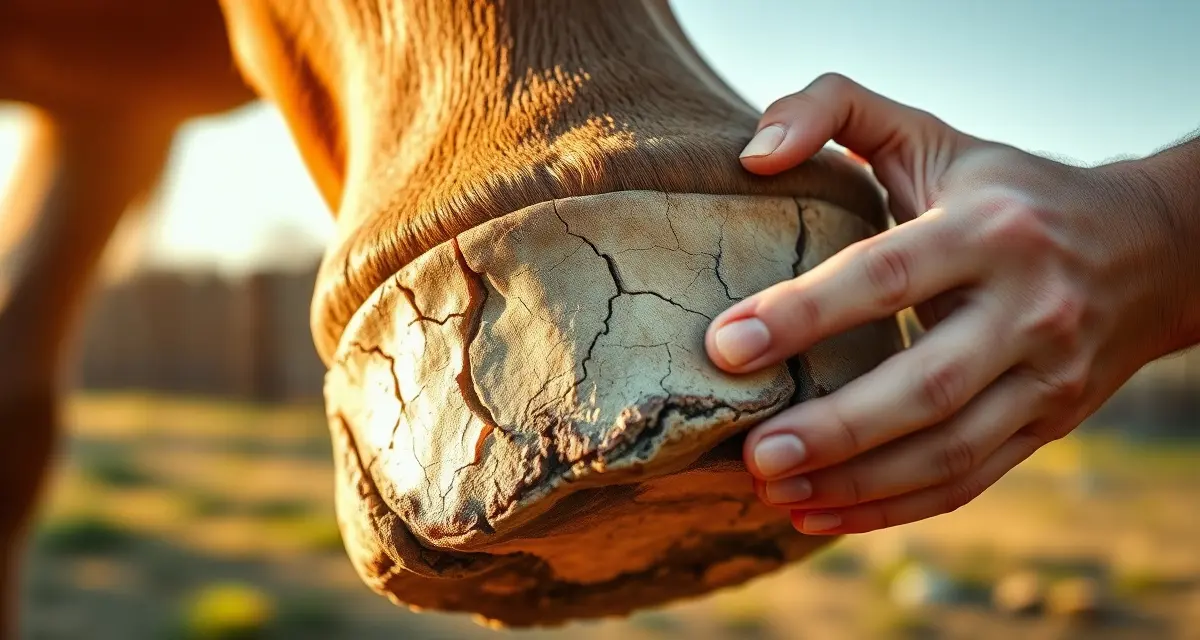
Summer Hoof Care Guide for Farriers: Dry, Cracked Hooves in Hot Weather
Hoof wall cracking increases 55% during hot, dry summer months in arid regions.
TL;DR
- Hoof wall cracking increases 55% during hot dry summer months in arid regions -- the mechanism is moisture evaporating from the hoof wall faster than coronary band growth and sole contact can replace it.
- Two crack types to document separately: grass cracks (start at ground surface, grow upward) and sand cracks (start at coronary band, grow downward) -- both increase in summer but indicate different mechanical stress patterns.
- Summer nailing requires extra precision: dry hooves split more readily when nails are placed imprecisely; summer is the season to be especially deliberate about nail placement in horses with thin walls or pre-existing cracks.
- Expansion fit at the quarters: leaving a millimeter or two beyond the hoof wall at the quarters accommodates summer drying contraction -- a shoe fitted tight on a freshly trimmed summer hoof can create lateral pressure as the hoof dries in the weeks after shoeing.
- Short controlled soaks (15-20 minutes) can help; long soaks or standing water leach natural oils and make long-term dryness worse -- give clients specific actionable guidance rather than "it depends."
- FarrierIQ's AI hoof flagging detects dehydration-related changes that worsen through summer -- photo documentation from the first hot-weather visit in May creates the baseline that August comparison photos need to be meaningful.
- Glue-on and composite shoes are worth considering for horses with severe hoof wall dryness, thin walls, or cracking that compromises conventional nail holding. Summer puts a different kind of stress on horse hooves than winter - instead of excess moisture and ice, the challenge is desiccation, hardening, and the expansion-contraction cycles that come with extreme temperature swings. A farrier who understands summer hoof physiology can anticipate problems before they become serious conditions.
What Heat and Dryness Do to the Hoof
The hoof wall is made of keratinized tubular structures that contain moisture. When environmental humidity drops and temperatures rise, moisture evaporates from the hoof wall faster than normal hydration from coronary band growth and sole contact with the ground can replace it.
The result is a hoof that becomes progressively drier, harder, and more brittle throughout the summer. This process accelerates in arid climates - Arizona, New Mexico, Nevada, the high plains - but occurs in virtually every region during extended dry spells.
Hoof wall cracking: As the hoof dries and contracts, cracks form at the weakest points. Grass cracks start at the ground surface and grow upward. Sand cracks start at the coronary band and grow downward toward the ground. Both are encouraged by the drying process.
White line separation: The white line - the junction between hoof wall and sole - becomes more porous and vulnerable to separation in very dry conditions. Dirt and debris pack into the white line, eventually creating the conditions for white line disease.
Sole hardening: The sole becomes harder in summer, which sounds like an advantage but can create bruising risk when horses work over rocky or uneven hard ground.
Expansion and contraction: In areas with significant temperature swings - hot days, cool nights - the hoof expands and contracts repeatedly. This cycling stresses the hoof capsule and can loosen shoes over a season.
Documenting Summer Hoof Changes
FarrierIQ's AI hoof flagging detects dehydration-related changes that worsen through summer - making photo documentation from the first hot-weather visit especially valuable. When you capture hoof condition photos in May before the summer drying cycle begins, you have a baseline to compare against by August.
Document these specifically in your hoof health records for summer visits:
- Hoof wall moisture/dryness assessment
- Crack presence, location, and length
- White line quality
- Sole condition - concavity, hardness, any bruising
- Any shoe loosening noted during visit
These notes build the summer pattern per horse that helps you anticipate rather than react.
Summer Shoeing Adjustments
Nailing pressure and placement: Dry hooves can split more readily when nails are placed imprecisely. Summer is the season to be especially deliberate about nail placement, particularly in horses with thin walls or pre-existing cracks.
Shoe fit at the quarters: Allowing a slight expansion fit at the quarters - leaving a millimeter or two of shoe beyond the hoof wall at the quarters - accommodates summer drying contraction. A shoe fitted too tight at the quarters on a freshly trimmed hoof may create lateral wall pressure as the hoof dries in the weeks after shoeing.
Pad considerations: In extremely dry, rocky conditions, pads may protect the sole and white line from bruising and debris packing. For horses in heavy work on hard ground, pad options are worth discussing with horse owners.
Glue-on and composite shoes: In horses with severe hoof wall dryness, thin walls, or cracking that compromises nail holding, glue-on shoe options may be more appropriate than conventional nailing through a vulnerable summer hoof wall.
Moisture Management for Dry Hooves
Farriers frequently field questions about hoof moisturizers, conditioners, and soaking from clients trying to address summer dryness. Here's the practical guidance:
Soaking: Short soaks (15-20 minutes) followed by a conditioner can help temporarily. Long soaks or continuous exposure to standing water are counterproductive - they leach natural oils from the hoof wall and ultimately make dryness worse.
Hoof conditioners and dressings: Products that penetrate the hoof wall and seal moisture in are useful. Pine tar-based products are traditional and effective. Petroleum-based products (Vaseline, many commercial conditioners) coat the surface but don't penetrate - they can prevent moisture absorption if applied too heavily.
Wet/dry cycling: Turning horses out in the morning when grass is wet, then allowing them to dry, provides natural moisture cycling that helps maintain hoof wall health better than constant dry or constant wet conditions.
Your role as a farrier isn't to prescribe specific products, but you can direct clients toward realistic expectations - summer dryness is managed, not eliminated, and the management has to be consistent.
The Complete Summer Farrier Seasonal Guide
For a full season-by-season breakdown of scheduling, business, and hoof management, the complete summer seasonal guide covers how to adjust your schedule for summer demand spikes, manage summer no-shows, and price for peak season.
Frequently Asked Questions
How does heat and dryness affect horse hooves?
Heat and dryness remove moisture from the hoof wall, making hooves harder and more brittle than normal. As the hoof dries, it becomes prone to wall cracking - grass cracks growing up from the ground and sand cracks growing down from the coronary band. The white line becomes more porous and susceptible to debris packing and separation. The sole hardens, which can increase bruising risk on rocky or very hard footing. In arid climates, these effects are more severe and faster-developing. In humid climates, summer heat without significant dryness may have less impact on hoof moisture, though it brings its own challenges around thrush and white line disease from moisture-heavy conditions.
Should horses have their feet soaked in summer?
Short, controlled soaking (15-20 minutes) can provide temporary moisture benefit for horses with very dry hooves, particularly if followed immediately by a penetrating hoof conditioner. However, regular long soaking or leaving horses in standing water is counterproductive - it strips natural oils from the hoof wall and makes long-term dryness worse. The more sustainable approach is moisture cycling through turnout patterns (morning dew exposure) and consistent application of a penetrating conditioner. Horse owners who ask about soaking are genuinely trying to help their horses - give them a practical, specific recommendation rather than a general "it depends."
How do farriers prevent hoof cracking in summer?
Prevention starts at the shoeing visit. During summer, farriers pay extra attention to nail placement, avoiding the driest and most brittle sections of hoof wall. Slight expansion fit at the quarters accommodates drying contraction between visits. For horses with pre-existing cracks, documenting crack location and length at each visit tracks whether the condition is improving, stable, or worsening. Advising clients on realistic moisture management - consistent conditioner application, avoiding standing water, morning turnout on dewy grass - addresses the underlying cause. For horses with severe wall quality issues, alternative shoe attachment methods including glue-on options may be appropriate.
How should a farrier document summer hoof condition changes to create a useful longitudinal record?
Consistent documentation format matters more than comprehensive detail at any single visit. At each summer visit, record: hoof wall moisture assessment (dry, normal, or oversaturated), crack presence/location/length in millimeters, white line quality score (intact, slightly softened, or separated/packed), sole condition (normal, hardened, or bruised/sensitive), and any shoe loosening observed. Photograph the worst-affected foot before trimming. After 3-4 summer visits, this consistent documentation reveals whether each horse's hoof quality is improving, stable, or declining through the season -- and that trend is what informs recommendations for the following summer. FarrierIQ's hoof health records support structured per-visit notes that create this longitudinal view across seasons.
How should a farrier handle a client whose horse develops significant grass cracks mid-summer despite normal shoeing practices?
Assess and explain the cracking mechanism before recommending a solution. Grass cracks in summer typically indicate one of three situations: the hoof wall is drying faster than normal moisture replacement can compensate (management issue), the crack started at an existing weakness like an old nail hole or a point of concussion (mechanical issue), or the horse is landing unevenly and loading the crack site asymmetrically (balance issue). Each has a different response. For moisture-driven cracks, advise consistent conditioner application and review turnout conditions. For mechanical cracks starting at stress points, adjust nail placement away from the crack origin. For balance-related cracks, evaluate medial-lateral balance at the next visit. Document the crack type, location, and suspected cause in the horse's record so the next visit can assess whether the intervention is working.
Sources
- American Association of Equine Practitioners (AAEP), equine hoof care and summer season management guidelines
- American Farrier's Association (AFA), summer hoof care and hoof wall condition resources
- Cornell University College of Veterinary Medicine, equine hoof physiology and environmental stress research
- University of Kentucky Equine Initiative, hot weather hoof care and moisture management guidelines
Get Started with FarrierIQ
Hoof wall cracking increases 55% during summer in arid regions -- FarrierIQ's hoof health records capture the baseline spring condition photos and per-visit summer documentation that reveal whether each horse's hoof quality is trending toward or away from cracking problems. Try FarrierIQ free and photograph your first summer baseline before the dry season peaks.