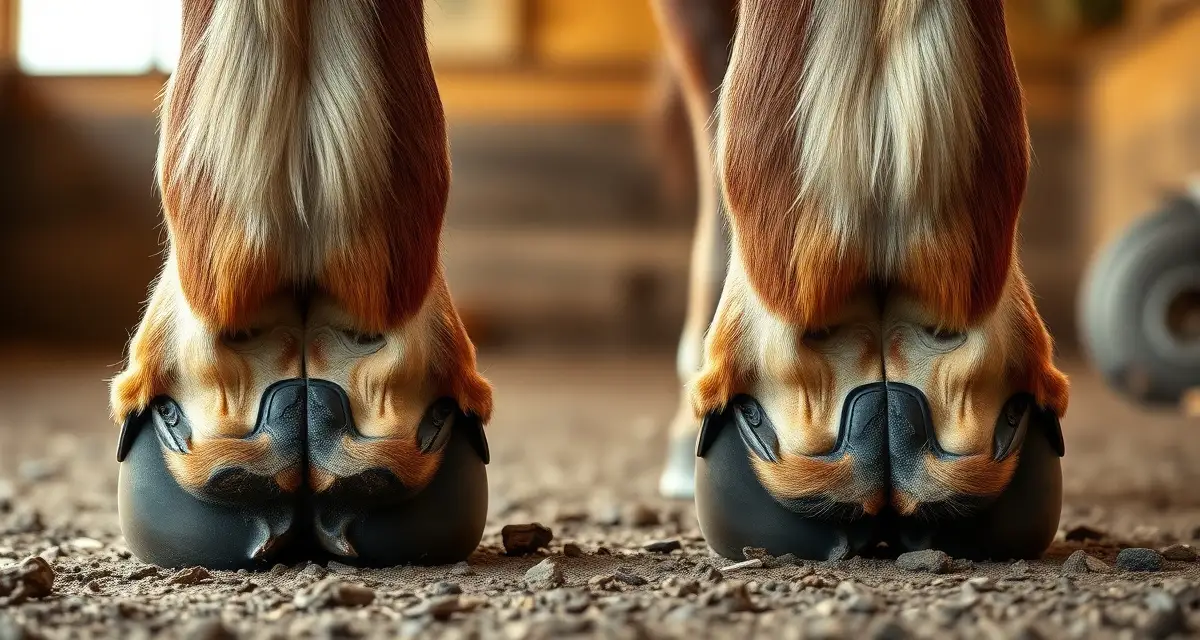
Corrective Shoeing for Contracted Heels: Opening Up Narrow Hoof Structures
Contracted heels affect approximately 25% of horses kept in stalls without adequate turnout -- making it one of the most common preventable hoof conditions in managed horse environments. The condition is also one of the few hoof problems where thoughtful corrective shoeing and management changes can produce genuine structural improvement over time.
TL;DR
- Contracted heels affect approximately 25% of stall-kept horses without adequate turnout, making this one of the most common preventable hoof conditions in managed horse environments.
- The frog acts as a circulatory pump; when it doesn't make ground contact, digital blood flow is reduced, and the heel structures contract over time.
- Measurable improvement in heel width (in millimeters) typically appears within 3-6 shoeing cycles with consistent corrective trimming and management changes.
- Full correction to normal heel geometry can take 8-12 cycles (12-18 months) in severely contracted horses.
- Open-heeled or standard shoes are preferred during correction; bar shoes close off the heel region and can impede the expansion you're working to achieve.
- Daily turnout on varied footing is one of the most impactful single interventions for contracted heels - corrective shoeing alone produces limited results without management changes.
FarrierIQ measurement tracking documents heel width changes over time to confirm correction progress. That documentation matters because heel contraction correction is a slow process -- measured in millimeters per shoeing cycle -- and without objective measurements, it's easy to either miss progress or miss when the approach isn't working.
What Contracted Heels Are and Why They Develop
A contracted heel is a narrowing of the heel region of the hoof, particularly at the frog and the distance between the heels (the inter-heel width). A healthy hoof has a frog that fills most of the heel region, medial and lateral walls that diverge toward the toe, and heels that are separated enough to allow normal frog ground contact.
Contracted heels develop when:
Inadequate frog stimulation: The frog is a pump mechanism. When it makes ground contact with each step, it stimulates blood flow through the digital circulation. Horses in continuous stall confinement without adequate turnout don't get normal frog stimulation, and the heel structures contract over time.
Improper shoeing: Shoes that overhang the heels or that are set too far back under the foot can prevent the heels from expanding normally with each load-bearing step. The hoof is designed to expand at the heels when weight is applied -- this expansion is part of the blood flow mechanism. A shoe that restricts this expansion, applied over many shoeing cycles, contributes to contraction.
Dry conditions: Consistently dry hooves lose elasticity. Contracted heels in arid climates are partly a moisture issue -- dry hoof wall doesn't expand and contract as freely as well-hydrated hoof.
Too-frequent shoeing: Some horses develop contraction when shod at very short intervals before the heel has time to expand. This is less common than the other causes but worth noting.
The pain-contraction cycle: A horse that develops heel pain from another cause (navicular, heel bruising) will often land toe-first to avoid heel contact. This reduced frog stimulation leads to contraction, which then contributes to further heel pain. The cycle is self-reinforcing without intervention. This connection to navicular syndrome is covered in the corrective shoeing navicular guide.
Measuring the Problem
Before you can correct contracted heels, you need to establish a baseline measurement. At the first evaluation, measure:
- Inter-heel width: Distance between the heel bulbs at the widest point
- Frog width: Width of the frog at its widest point
- Frog-to-heel ratio: Whether the frog is filling the heel region or significantly narrower than the available space
These baseline numbers are what you'll compare at subsequent visits to confirm whether the approach is working. Recording these measurements in FarrierIQ creates the longitudinal record that validates the correction progress -- or identifies when the approach needs to change.
Corrective Trimming for Contracted Heels
The primary tool for contracted heel correction is trimming, not shoeing. The goal is to create conditions that allow the hoof to expand naturally over successive trims.
Trim the heels lower: Taking the heels down allows the hoof to break over earlier, which increases the loading on the frog and heel region. More frog loading means more frog stimulation means more blood flow means more opportunity for expansion.
Open the collateral grooves: The collateral grooves (the grooves on either side of the frog) often fill with packed dirt and debris in contracted feet. Cleaning and opening these grooves allows the frog to expand laterally.
Leave the bars long or trim minimally: The bars play a role in heel support and frog positioning. Over-reducing the bars removes structural support that the heel region needs for expansion.
Trim the frogs conservatively: The frog is already compromised in contracted heels -- often narrow, hard, and under-developed. Conservative or no frog trimming allows it to grow and expand over time.
Shoeing Options for Contracted Heels
The fundamental question for contracted heels is whether to shoe at all. Many horses with contracted heels benefit from a period barefoot, where the full hoof expansion at each step is unimpeded by shoe constraints. For horses whose work or management requires shoeing, the approach matters.
Open-heeled shoes: A shoe that doesn't cover the heels allows the heel region to expand and the frog to make ground contact. Egg bars and bar shoes do the opposite -- they cover the heel region and can actually maintain the contracted state. Open-heeled or standard shoes are generally preferred for contracted heel correction.
Set the shoe forward: A shoe set slightly forward from the normal position (toward the toe) allows the heels to hang free behind the shoe's edge. This "open-heeled" effect without changing the shoe type can encourage heel expansion.
Wide web shoe in the toe region only: Some farriers use a shoe with a wider web at the toe for protection and a narrower web at the heel to allow frog contact and heel expansion. This approach requires custom fitting or modification.
Avoid bar shoes during correction phase: Unless there's another clinical reason for a bar shoe, avoid it during contracted heel correction -- bar shoes close off the heel region and can impede the expansion you're trying to achieve.
Management Changes That Support Correction
Corrective shoeing alone won't fully resolve contracted heels if the underlying causes aren't addressed.
Increase turnout: Daily turnout on varied footing is one of the most impactful interventions for contracted heels. Movement on natural ground provides the frog stimulation that stall confinement eliminates.
Moisture management: For horses in dry climates, soaking the feet or providing a wet area for regular standing can help restore elasticity. Hoof conditioner applied to the coronary band and heel bulbs supports moisture balance.
Regular hoof care: The 6 to 8-week standard interval is appropriate for correction work. Allowing longer intervals lets the hoof revert toward the contracted state between corrective trims.
How Long Does Correction Take?
Be honest with horse owners: heel contraction correction takes time. Expect to see measurable improvement (in millimeters of heel width) over 3 to 6 shoeing cycles with consistent application of the corrective approach. Full correction to normal dimensions may take a year or more in severely contracted horses.
The rate of improvement depends on how severe the contraction is, how young the horse is (younger horses respond faster because the hoof wall is more plastic), and whether the management changes have actually been implemented. A horse that's 20 hours per day in a stall will improve more slowly than one with 8 hours of daily turnout.
Frequently Asked Questions
What causes contracted heels in horses?
The primary causes are inadequate frog stimulation from stall confinement (the most common cause), improper shoeing that prevents normal heel expansion, dry conditions that reduce hoof wall elasticity, and the pain-contraction cycle where heel pain from any cause leads to toe-first landing, reduced frog stimulation, and progressive contraction. Horses in significant stall time without daily turnout are most susceptible. Some horses also develop contraction from very long shoes or shoes set too far back under the foot over many shoeing cycles.
How does corrective shoeing fix contracted heels?
Corrective trimming -- particularly taking the heels down to allow earlier breakover and better frog loading -- is the primary tool. Open-heeled shoes that don't cover the heel region allow normal heel expansion with each footfall. The key is removing the mechanical restrictions (over-long heels, bar shoes, shoes that cover the heel region) and adding the stimulation (lower heels, open-heeled shoeing, increased turnout) that allows the hoof to gradually expand over successive shoeing cycles. Progress is measured in millimeters and confirmed by tracking inter-heel width at each visit.
How many shoeing cycles does heel contraction correction take?
Measurable improvement in heel width typically appears within 3 to 6 shoeing cycles with consistent corrective trimming and management changes. Full correction to normal heel geometry can take 8 to 12 cycles (12 to 18 months) in severely contracted horses. The rate depends on the horse's age, the severity of the contraction, and whether the management changes (turnout, moisture) that support correction have actually been implemented. Without increased turnout and appropriate management, shoeing correction alone produces limited results.
How do you communicate inter-heel width measurements to a horse owner in a way they understand?
Show them with a measurement. Taking the measurement at the start of the correction program, recording it in FarrierIQ's hoof notes, and then comparing the number at each subsequent visit gives the owner a concrete data point to track. Most horse owners respond well to "your horse's heel width has increased from 38mm to 44mm over the last four visits" much more than a general description of improvement. The measurement also keeps you honest - if width isn't increasing, the approach or the management changes need to be reassessed.
Can contracted heels return after correction?
Yes, without sustained management changes. If a horse goes back to 20+ hours per day in a stall after healing is achieved, the same mechanisms that caused contraction initially will cause it to return. The conversation with the owner should include what ongoing management is needed to maintain the improvement - particularly consistent turnout, moisture management in dry climates, and appropriate shoeing that doesn't cover or restrict the heel region.
Related Articles
- Corrective Shoeing and Hoof Care for White Line Disease
- Arabian Show Halter Shoeing Guide: Grooming the Perfect Show Hoof
Sources
- American Farrier's Association (AFA), corrective shoeing education and contracted heel management
- American Association of Equine Practitioners (AAEP), equine hoof care guidelines and lameness resources
- Cornell University College of Veterinary Medicine, equine podiatry and heel contraction research
- The Horse: Your Guide to Equine Health Care, contracted heel management and corrective shoeing coverage
- University of California Davis School of Veterinary Medicine, equine hoof health and digital circulation research
Get Started with FarrierIQ
Contracted heel correction is a long-game process measured in millimeters and shoeing cycles. FarrierIQ's per-horse measurement tracking and condition notes create the objective, dated record that shows whether the approach is working - and gives you the data to have an informed conversation with owners and vets when adjustments are needed. Try FarrierIQ free and bring that documentation discipline to your corrective shoeing cases.