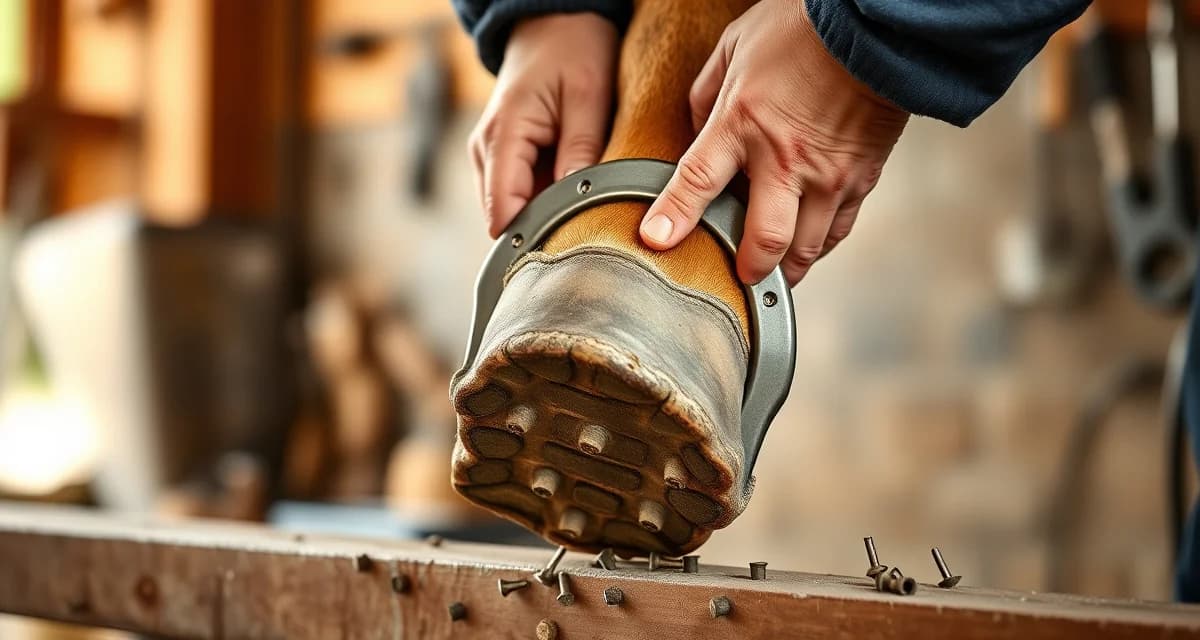
Thoroughbred Barrel Racing Shoeing Guide: Speed and Traction for the Pattern
OTTBs competing in barrel racing have 25% higher shoe loss rates than Quarter Horses. That statistic tells you a lot about why shoeing a Thoroughbred for the barrel pattern is a different job than shoeing the Quarter Horses that dominate the sport.
TL;DR
- OTTBs have 25% higher shoe loss rates than Quarter Horses in barrel racing, making retention the primary shoeing challenge
- Nail placement in the densest available wall, often with fewer nails placed higher, is the key to keeping shoes on thin-walled Thoroughbreds
- Toe clips or quarter clips on front shoes meaningfully reduce the load nails carry during the lateral forces of each turn
- Creased or rimed shoes provide adequate arena traction without creating the torque that thin walls cannot handle; aggressive caulks should be avoided
- OTTB barrel horses typically need reshoeing every 4-5 weeks during competition season rather than the standard 6-8 week cycle
- Scheduling shoeing 7-10 days before a major event gives the foot time to settle before competition
Thoroughbreds are gaining ground in barrel racing. Their natural speed is a genuine competitive advantage. But getting the shoes to stay on and keeping the hoof healthy through the lateral forces of the pattern takes a more careful approach than a standard barrel horse setup.
The Barrel Pattern Demands
Barrel racing is three 180-degree turns at speed, two right-handed and one left-handed in a cloverleaf pattern. The forces on the outside hoof of each turn are substantial. Traction, especially at the turn, determines whether the horse can run its pattern confidently or is guarding against slipping.
A Thoroughbred with thin walls is at higher risk of losing a shoe on a tight turn than a Quarter Horse with denser hoof structure. The nail has less wall to grip. If the shoe gets pulled at the start of a run, the horse is pulling up before the pattern's done.
Nail Placement for Thin Walls
The key to keeping shoes on OTTBs for barrel racing is precise nail placement in the strongest part of what wall there is. This often means using fewer nails than you would on a heavier-walled breed, placed further up the wall where there's more density. Getting creative with nail size and angle is part of the OTTB barrel shoeing game.
Some farriers use clips on OTTB barrel horses to help keep the shoe in place independent of the nails. A single toe clip or quarter clips on the front shoes can meaningfully reduce the load the nails carry during the turns. Tracking which clip configuration works best for each horse is part of managing detailed hoof records for performance horses.
Traction for Arena Surfaces
Most barrel racing happens on sand or dirt surfaces. The traction needs are real but not extreme. A creased or rimed shoe provides enough grip for most surfaces without creating the kind of torque that thin-walled hooves can't handle.
FarrierIQ's hoof health records let you note what traction setup each horse performs best with and how their shoes are holding between visits. If a particular horse is consistently pulling a shoe at the second barrel, that's information worth capturing.
Timing the Shoeing Cycle for Competition
OTTBs in barrel racing often need visits closer to 4-5 weeks rather than 6-8 weeks. The lateral forces of the pattern plus the thinner wall means less cycle time before things start to deteriorate. Timing visits so the horse is shod 7-10 days before a major event, giving the foot time to settle, is good practice.
FarrierIQ's scheduling app lets you plan those pre-event windows in advance so your barrel racing OTTB clients aren't calling you in a panic the Thursday before a weekend jackpot. Setting up automated appointment reminders for horse owners can also help barrel racing clients stay on the tighter cycle their OTTBs require.
Frequently Asked Questions
How are barrel racing Thoroughbreds shod differently?
OTTB barrel horses need careful nail placement in the strongest wall available, often with clips added to reduce nail dependency. The traction approach is similar to a Quarter Horse barrel setup, typically a creased or rimed shoe for arena surfaces, but the wall thickness demands more precision. Shoe loss rates are higher with OTTBs, so the focus is on maximizing shoe retention at every visit.
What traction do Thoroughbred barrel horses need?
Most OTTBs do well with a standard creased keg shoe for barrel racing on sand or dirt. A fuller rim shoe can work for horses that need more confidence on slippery surfaces. Aggressive caulks are generally avoided because the lateral torque they can create is harder on thin-walled horses than on heavier-walled breeds.
How often do OTTBs in barrel racing need reshoeing?
Most OTTB barrel horses need visits every 4-5 weeks during active competition season. The combination of thin walls and the lateral stress of the barrel pattern means the shoe typically can't go as long as it might on a Quarter Horse. Some horses competing frequently may need checks between full shoeing appointments.
Can a Thoroughbred's hoof walls improve over time with proper shoeing and nutrition?
Yes, wall quality can improve meaningfully with consistent farrier work and targeted nutrition. Biotin supplementation, adequate methionine, and zinc are commonly associated with improved hoof wall density and growth rate. Improvement is gradual, typically measured over months rather than weeks, so tracking wall condition at each visit gives you a useful baseline to work from.
Should front and hind feet be shod differently on an OTTB barrel horse?
Front feet generally carry more of the shoe retention burden in barrel racing because the horse plants and pushes off the front end through each turn. Clips are more commonly added to the fronts for this reason. Hind feet still benefit from a creased or rimed shoe for traction, but the wall thickness concern is usually less acute in the hinds than in the fronts on most OTTBs.
How do indoor and outdoor arena surfaces change the shoeing approach for OTTBs?
Harder-packed outdoor dirt or clay surfaces may call for a slightly fuller rim to give the horse more confidence, while deep sand arenas can create more drag and increase the risk of a shoe being pulled. Noting the primary competition surface in each horse's records helps you make consistent decisions across visits and adjust when a client starts competing at a new venue.
Sources
- American Farriers Journal, Lessiter Media
- Equine Veterinary Journal, British Equine Veterinary Association
- University of California Davis School of Veterinary Medicine, Equine Health Program
- Oklahoma State University Extension, Equine Science Program
- Thoroughbred Aftercare Alliance, industry education resources
Get Started with FarrierIQ
If you're working with OTTB barrel horses, keeping detailed records of nail placement, clip configuration, traction setup, and shoe retention between visits gives you a real advantage in managing these horses well. FarrierIQ's scheduling and hoof records tools are built for exactly this kind of precision work. Try FarrierIQ free and see how much easier it is to stay ahead of your competition-season clients.