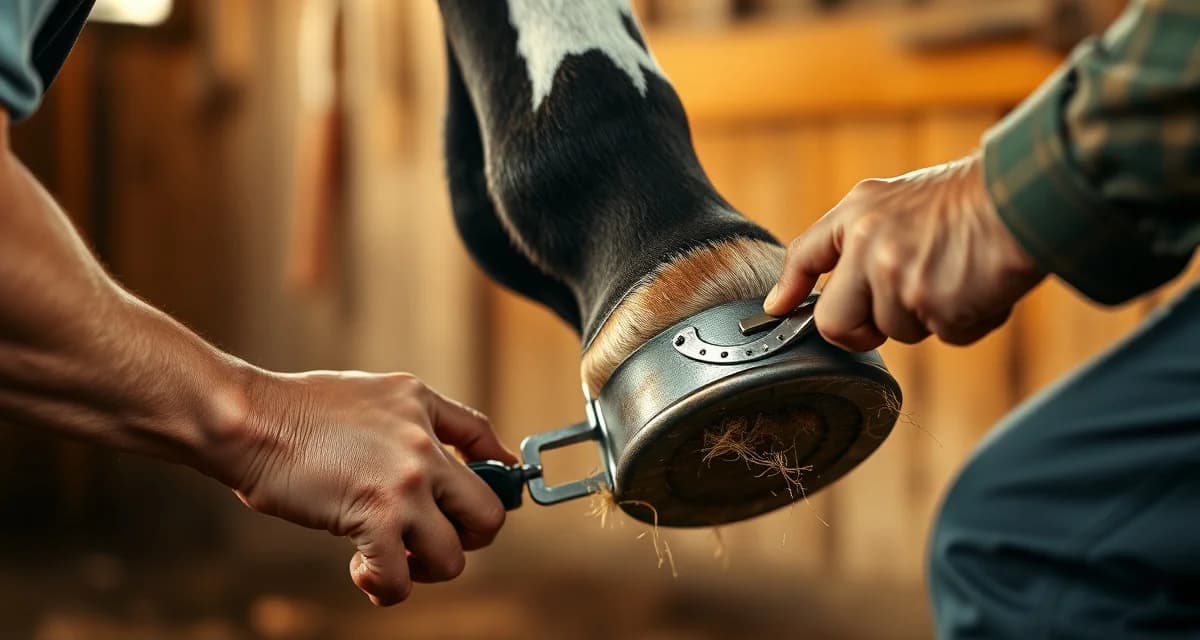
Paint Horse Barrel Racing Shoeing Guide: Traction and Pattern Speed for APHA Competition
Paint horses win approximately 8% of open barrel racing competitions despite being the number three registered breed, which tells you they're competitive when they're set up right. The breed's athleticism and often powerful hind end make them capable barrel horses. Their shoeing needs track closely to Quarter Horses, with a few individual characteristics worth knowing.
If you're shoeing Paint barrel horses, you're working with athletes that can genuinely compete, and your setup is one of the factors that determines whether they do.
TL;DR
- Paint horses win roughly 8% of open barrel racing competitions, making proper shoeing setup a real competitive factor.
- Shoeing differences between Paints and Quarter Horses are driven by individual hoof quality, not breed rules.
- White hooves on Paints tend to be softer and more porous, increasing the risk of pulled shoes on the barrel pattern.
- Clips and stouter nails on white-hoofed feet improve shoe retention under lateral barrel pattern forces.
- Active Paint barrel horses typically need shoeing every 4-6 weeks, with white-hoofed horses benefiting from the shorter end of that range.
- Arena surface, not breed, is the primary driver of traction decisions for Paint barrel horses.
Paints vs. Quarter Horses: What's Actually Different
Paint Horses and Quarter Horses share close genetic ancestry. The primary difference in barrel racing shoeing is not breed-based but individual-based. You're assessing the foot in front of you, the way the horse moves, the footing conditions they compete on, and the performance goals.
That said, some Paint horses show Quarter Horse-typical hoof characteristics with good wall density and a solid, rounded hoof capsule that holds nails well and tolerates the lateral forces of the barrel pattern without unusual difficulty. This is the norm.
What varies is individual hoof quality. Paints with any white hooves tend to have softer wall on those feet. If all four hooves are pigmented, you're generally looking at the same wall density as a Quarter Horse. If you've got one or two white hooves, those feet need a bit more attention to nail placement and shoe security than a fully pigmented foot.
Traction Setup for the Barrel Pattern
The same principles that apply to Quarter Horse barrel shoeing apply to Paints. Arena surface drives traction decisions. Standard sand or dirt arenas do fine with a creased keg shoe. Slippery or firmer surfaces may benefit from a rim shoe or mild heel caulks on the hinds.
FarrierIQ's hoof health records let you note which traction setup each Paint barrel horse performs best with and what surfaces they typically compete on. That context makes your adjustments more targeted at each visit.
White Hoof Considerations
If your Paint client's horse has white hooves, those feet need extra attention to shoe retention. White hoof wall tends to be softer and more porous than pigmented wall. Nails may not grip as tightly. The risk of a pulled shoe on the barrel pattern is higher.
For Paints with white hooves, consider clips to support the shoe independent of the nails, use slightly stouter nails in the strongest available wall, and plan visits at the closer end of the interval range. Letting a white-hoofed Paint run four weeks past their last shoeing on a loose shoe is asking for trouble.
The Competition Cycle
Paint barrel horses competing regularly are on a similar schedule to Quarter Horse barrel horses, 4-6 weeks depending on workload and individual hoof growth. FarrierIQ's scheduling app keeps your Paint barrel clients on that cycle with automated reminders and prevents the gradual drift toward overdue appointments that happens when clients are busy with competition.
Frequently Asked Questions
How are Paint horses shod for barrel racing?
Paint barrel horses are generally shod similarly to Quarter Horse barrel horses. Creased steel keg shoes on all four, with the option of a rimed or caulked hind shoe for additional traction on specific surfaces. White hooves, if present, get extra attention to nail placement and may benefit from clips to improve shoe retention under the lateral forces of the barrel pattern.
Do Paint horses need different shoes than Quarter Horses for barrels?
Usually no, with the caveat that individual hoof quality matters more than breed. Paints with pigmented, dense hooves are shod essentially the same as Quarter Horses. Paints with white hooves need additional attention to shoe security on those feet. The assessment is always based on the individual horse rather than a breed-wide rule.
How often do barrel racing Paint horses need shoeing?
Active competition Paint barrel horses are typically on a 4-6 week schedule, with the same logic that applies to Quarter Horses. More frequent competition and more intense lateral work compress the interval. White-hoofed horses may benefit from visits at the shorter end of the range to stay ahead of wall quality degradation.
Does hoof pigmentation actually affect wall hardness, or is that a myth?
Research and field experience both support the observation that white hoof wall tends to be softer and more porous than dark pigmented wall. The difference is not dramatic in every horse, but it is consistent enough that most farriers account for it when planning nail placement and shoe retention strategies on horses with mixed pigmentation.
Should Paint barrel horses wear the same shoe weight as Quarter Horses?
In most cases, yes. Shoe weight decisions are driven by the horse's movement, the footing, and the rider's performance goals rather than breed. A Paint with a naturally light-moving front end may benefit from a slightly lighter shoe to preserve that action, but this is an individual assessment, not a breed standard.
Can clips be used on all four feet of a Paint barrel horse, or just the white hooves?
Clips can be used wherever shoe retention is a concern, and some farriers apply them on all four feet for high-mileage competition horses regardless of hoof color. For Paints with a mix of pigmented and white hooves, prioritizing clips on the white feet is a practical starting point, then expanding to additional feet based on how the horse holds its shoes through competition.
Sources
- American Paint Horse Association (APHA), breed registration and competition statistics
- American Farriers Journal, hoof care and shoeing technique coverage for performance horses
- University of Missouri Extension, equine hoof care and management guidelines
- Kentucky Equine Research, hoof wall structure and pigmentation research
- American Association of Equine Practitioners (AAEP), farriery and hoof health resources
Get Started with FarrierIQ
FarrierIQ gives you a single place to track hoof notes, traction setups, and white hoof observations for every Paint barrel horse on your client list, so that context is ready at each visit rather than relying on memory. Automated scheduling reminders keep competition horses on their 4-6 week cycle without you chasing down busy clients. Try FarrierIQ free and see how much easier it is to manage a performance horse book.