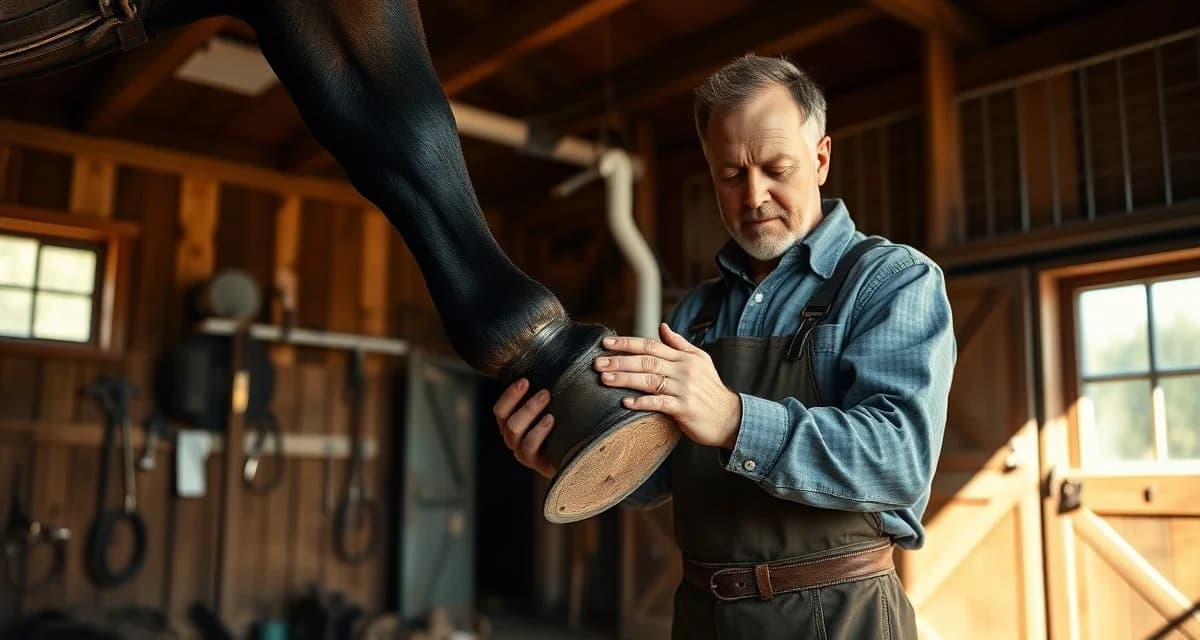
Farrier App for Barrel Racing Horses: Fast Turnaround and Precise Hoof Records
A lost shoe during a barrel racing run causes injury in 23% of incidents. The combination of tight turns, hard stops, and arena footing creates forces that test every nail hole. When something goes wrong at speed, everyone looks at the last shoeing appointment.
TL;DR
- A lost shoe during a barrel racing run causes injury in 23% of incidents -- nail integrity, proper fit, and shoe style are directly safety-relevant in this discipline.
- Competition barrel horses need 4-6 week shoeing cycles during active season, often at the shorter end when running multiple times per week -- a horse at 7-8 weeks on a heavy competition schedule is past its useful life.
- Traction setup (studs vs. borium, indoor vs. outdoor preferences) should be documented per horse so you're not making a phone call to ask the same questions before every event.
- Any hoof changes noticed at a visit -- wall cracks, white line concerns, sole sensitivity -- need to be flagged before they become competition-day emergencies.
- Nailing pattern for barrel horses should account for lateral forces in turns, typically with tighter-set nails and careful attention to heel area integrity.
- Toe grabs are used by some barrel competitors but are regulated by some associations and associated with suspensory ligament injury risk -- know the rules for each client's competition circuit.
- The complete approach to barrel horse-specific shoeing and traction is covered in the appaloosa trail shoeing guide for western performance horse hoof care context.
Barrel racing clients are some of the most demanding in the industry -- and they should be. Their horses are athletes doing high-stress work on tight schedules, often in multiple states in a single week. Your records need to be as sharp as their horses.
The Direct Answer
A farrier app for barrel racing horses needs to track shoe type, traction devices, nailing pattern, and shoeing date per horse, and flag when a horse is approaching the end of its cycle before a major event. FarrierIQ does this with per-horse records and the ability to pull up full shoeing history in seconds at any location -- with or without cell signal.
Why Barrel Racing Horses Have Unique Shoeing Demands
The Shoe Has to Stay On
Barrel horses hit lateral forces in turns that would pull a loose shoe cleanly off. Nail integrity, proper fit, and appropriate shoe weight and style all matter for retention. If you're fitting barrel horses, you need a nailing pattern that accounts for those lateral forces -- typically tighter-set nails and careful attention to the heel area.
Traction Is a Performance Factor
Different arenas have different footing. A horse going from a dry outdoor arena to fresh indoor dirt needs different traction than one on consistent hard-pack. Many barrel horse owners want stud holes or some form of traction enhancement. Know the horse's competition schedule and what surfaces it'll hit.
The Cycle Aligns With the Competition Calendar
Barrel horses often run weekly or multiple times a week during peak season. A horse that's 7 weeks out from its last shoeing and running at a major rodeo next weekend is a problem. Owners who have six horses in rotation can lose track. Your records should catch this before they do.
3 Key Points for Barrel Horse Records
1. Track Shoe Date Against the Competition Calendar
If you know a client has a major event on a specific date, you can plan shoeing visits to hit that 5-6 week sweet spot. It keeps shoes tight and the horse comfortable on the big day.
2. Document Traction Setup Per Horse Per Surface
Which horse gets studs vs. which one goes with borium. What the owner prefers for indoor vs. outdoor. This saves a phone call every time you've got a new show coming up.
3. Note Any Hoof Changes That Could Affect Performance
Hoof wall cracks, white line concerns, changes in sole sensitivity -- all of these need to be flagged before they become a competition-day emergency. Voice-recorded notes at the barn capture what you saw while you were seeing it.
Related Articles
- Farrier Scheduling for Polo Horses: Fast-Twitch Hoof Care Management
- Farrier App for Cross-Country Horses: Traction and Hoof Integrity for Eventing's Toughest Phase
- Farrier App for Cutting Horses: Hoof Management for the Most Athletic Cow Horses
FAQ
How often do barrel racing horses need shoeing?
Competition barrel horses are typically on 4-6 week cycles during active season, often toward the shorter end when they're running frequently. A shoe at 7-8 weeks on a horse running barrel patterns multiple times a week is past its useful life. Plan cycles around the competition schedule, not just the calendar.
What shoes are best for barrel racing?
Most barrel horses run in steel keg shoes appropriate to their foot size, sometimes with added traction. Wide-web shoes can provide more stability in turns. Toe grabs are used by some competitors but are controversial due to injury risk -- particularly suspensory ligament strain -- on some horses. Know the rules of the associations the owner competes in, as some regulate traction devices.
How do farriers track shoe wear for barrel racing horses?
Consistent records showing shoeing date, shoe type, nail pattern, and the horse's competition schedule let you catch approaching cycle ends before they become problems. A farrier app that stores this history per horse and can flag upcoming appointment needs is significantly more reliable than a paper ledger or memory.
How do you handle a barrel client who wants to push the shoeing interval to save money during an active rodeo season?
Be specific about the risk, not just the principle. If a horse that runs twice a week on the rodeo circuit goes to 8 weeks on a shoe, you're describing exactly the conditions that lead to a pulled shoe mid-run -- which is in the 23% of lost-shoe incidents that cause injury. Put the cost comparison in concrete terms: the cost of a regular 5-6 week set versus the cost of an emergency call to reset a pulled shoe at a rodeo venue, plus the potential injury costs and missed entry fees if the horse can't compete. Most barrel clients who understand the actual math agree that the interval is the wrong place to cut expenses during active competition season.
What should a barrel horse farrier check at a pre-event call or walk-up?
Before a major event, check: all four shoes for tightness (any clinches that have risen, any shoe movement relative to the hoof), stud configuration and stud tightness if the horse uses removable studs, any new wall cracks or white line changes since the last visit, and sole sensitivity check on any foot that showed prior bruising. Take a photo of each foot at the pre-event check and add it to FarrierIQ's records so you have a timestamped baseline of the horse's condition immediately before the event -- which protects you if any post-event lameness questions arise.
Sources
- National Barrel Horse Association (NBHA), competition guidelines and horse welfare resources
- Professional Rodeo Cowboys Association (PRCA), rodeo horse shoeing regulations and traction device guidelines
- American Farrier's Association (AFA), western performance horse shoeing techniques
- American Association of Equine Practitioners (AAEP), equine lameness and competition horse soundness resources
- The Horse: Your Guide to Equine Health Care, barrel racing horse hoof care coverage
Get Started with FarrierIQ
Barrel racing clients need their competition calendar integrated into their shoeing schedule, traction preferences documented per horse and per surface type, and hoof condition flagged at every visit before it becomes a competition-day problem. FarrierIQ's per-horse records, scheduling tools, and offline access from the arena parking lot handle all of that. Try FarrierIQ free and manage your barrel racing clients with the records their sport demands.