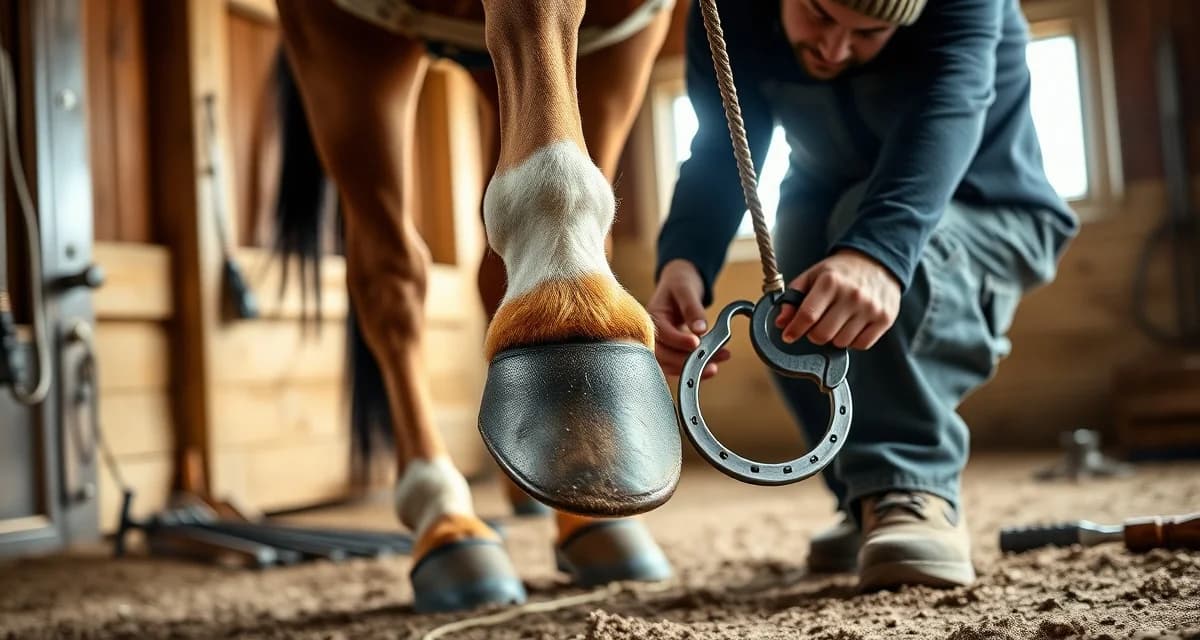
Quarter Horse Barrel Racing Shoeing Guide: Speed Traction and Pattern Performance
Quarter Horses win 89% of WPRA barrel racing titles. The breed is so dominant that optimizing their shoeing setup has become a discipline of its own. Top barrel farriers know that small changes in angle, breakover, and traction can measurably affect pattern time. That's not casual knowledge. It's built from paying attention to what works for each horse over many visits.
TL;DR
- Quarter Horses account for 89% of WPRA barrel racing titles, making breed-specific shoeing knowledge a real competitive advantage for farriers.
- Front shoes prioritize quick breakover, often using a rounded or squared toe, while hind shoes focus on drive and traction with creased or rimed steel.
- Heel caulks on the hinds are a common addition for arenas with slippery surfaces, but the right traction setup depends on the specific surface your client competes on.
- Performance barrel horses typically need a 4-6 week shoeing cycle, with high-level competitors often on 4-5 weeks during the season due to accelerated shoe wear from lateral pattern forces.
- Tracking angle changes and their correlation to reported run times across a book of 20+ barrel horses builds the kind of longitudinal expertise that separates top performance farriers.
FarrierIQ's performance notes capture barrel time correlations with shoeing changes per horse. When a client tells you the horse ran three-tenths faster after you made an adjustment, that's worth recording. Multiply that across a book with 20 barrel horses and you're building genuine expertise.
The Barrel Pattern and Hoof Demands
Three barrels. Two right-hand turns. One left-hand turn. Then home. The horse needs to accelerate down the alley, collect and turn tight, drive forward to the next barrel, collect and turn again, and finish with everything it has.
The turns put enormous lateral force on the outside hooves. The hind end needs to drive through the turn without slipping. The front feet need to grip and break over quickly when the horse is collecting for the barrel approach.
Getting the traction right for the specific arena surface your client competes on is one of the most important things you can do for their barrel horse run time.
Front vs. Hind Setup
Many barrel farriers use different shoe configurations front and rear. The fronts typically carry more breakover emphasis, since the horse needs to collect quickly for barrel approach. Some use a rounded or squared toe to help the front feet break over cleanly.
The hinds are all about drive and traction. A creased or rimed shoe on the hinds gives the horse confidence to push through the turn without slipping. Some farriers use heel caulks on the hinds, particularly on arenas that are known to be slippery.
FarrierIQ's hoof health records let you document what you're running front and rear for each horse, and what surface conditions they typically compete on. That context helps you make better adjustments when a client reports that their horse is slipping at the barrels or not driving as hard through the turns.
Shoeing Angles and the Short-Round Horse
Barrel horses that are competing at a high level often have specific angle requirements based on their individual way of going. A horse that breaks down behind under the stress of the pattern may benefit from a slightly elevated heel. One that's reaching with the hinds and dragging toes might need a different toe angle.
These are individual assessments that you develop over visits. The key is tracking what you change and whether it correlated with better or worse performance. That's exactly the kind of longitudinal data that FarrierIQ is built to capture. Keeping detailed farrier visit notes per horse means you're never starting from scratch when a client calls with a performance concern between appointments.
Scheduling Around the Competition Calendar
Top barrel racers might compete every other weekend during season. The shoeing cycle needs to fit around that calendar without the horse going into competition on shoes that are past their best.
Most performance barrel horses are on a 4-6 week schedule. FarrierIQ's scheduling app helps you plan those visits around competition windows so your barrel clients are always shod at the right point in the cycle relative to their next big run.
Frequently Asked Questions
What shoes do Quarter Horse barrel racers wear?
Most performance barrel Quarter Horses wear a steel keg shoe or a performance shoe on the fronts, often with a slightly rounded or squared toe to support quick breakover. The hinds typically carry a creased or rimed shoe for traction, with some horses running heel caulks on the hinds for additional drive on slippery surfaces.
What traction setup is used on barrel racing Quarter Horses?
This depends on the arena surface. For standard sand or dirt arenas, a creased steel shoe is usually sufficient front and rear. For slipperier surfaces or horses that lack confidence at the turn, a rimed shoe on the hinds or mild heel caulks can help. Some high-level competitors run a more aggressive traction setup on the hinds than on the fronts to maximize push through the turns.
How often do barrel racing Quarter Horses need shoeing?
Performance barrel horses competing regularly are typically on a 4-6 week cycle, with the more competitive horses leaning toward 4-5 weeks during season. The lateral forces of the pattern accelerate shoe wear compared to horses doing flatwork or trail riding. Shoes that are loose or worn going into a competition are a risk both for performance and for the horse's soundness.
Should I shoe a barrel horse differently for indoor versus outdoor arenas?
Yes, surface type matters significantly. Indoor arenas often have packed or harder footing that may require less aggressive traction than a deep outdoor sand arena. If your client competes on both surfaces in the same season, it's worth discussing whether a mid-season traction adjustment makes sense or whether a single setup can serve both conditions adequately.
How do I document shoeing changes so I can actually connect them to performance outcomes?
The most practical approach is to record the specific change you made, the date, and then follow up with the client after their next competition. Note the reported run time or any feedback about how the horse handled the turns. Over several visits, patterns emerge. Using a platform built for tracking performance notes per horse makes that process much easier than relying on memory or paper records.
Can the wrong shoeing setup cause a barrel horse to knock barrels?
Indirectly, yes. A horse that lacks confidence at the turn due to slipping, or one that cannot break over quickly enough on the approach, may drift wider than intended. Farriers who work closely with barrel clients often hear feedback about barrel contact that traces back to traction or breakover issues rather than rider error. That kind of feedback is worth capturing in your visit notes.
Sources
- American Farrier's Association (AFA), industry standards and continuing education resources for performance horse shoeing
- Women's Professional Rodeo Association (WPRA), barrel racing competition data and breed performance statistics
- University of Missouri Extension, equine hoof care and performance horse management publications
- The American Quarter Horse Association (AQHA), breed performance research and sport horse resources
- Anvil Magazine, trade publication covering performance shoeing techniques and farrier case studies
Get Started with FarrierIQ
If you're working a book of barrel horses, the difference between good and great often comes down to how well you track what you've tried and what actually moved the needle for each horse. FarrierIQ gives you a dedicated place to log shoeing setups, traction choices, angle changes, and client-reported performance feedback, all tied to individual horses and visit history. Start a free trial and see how much easier it is to build real expertise when the data is organized and accessible.