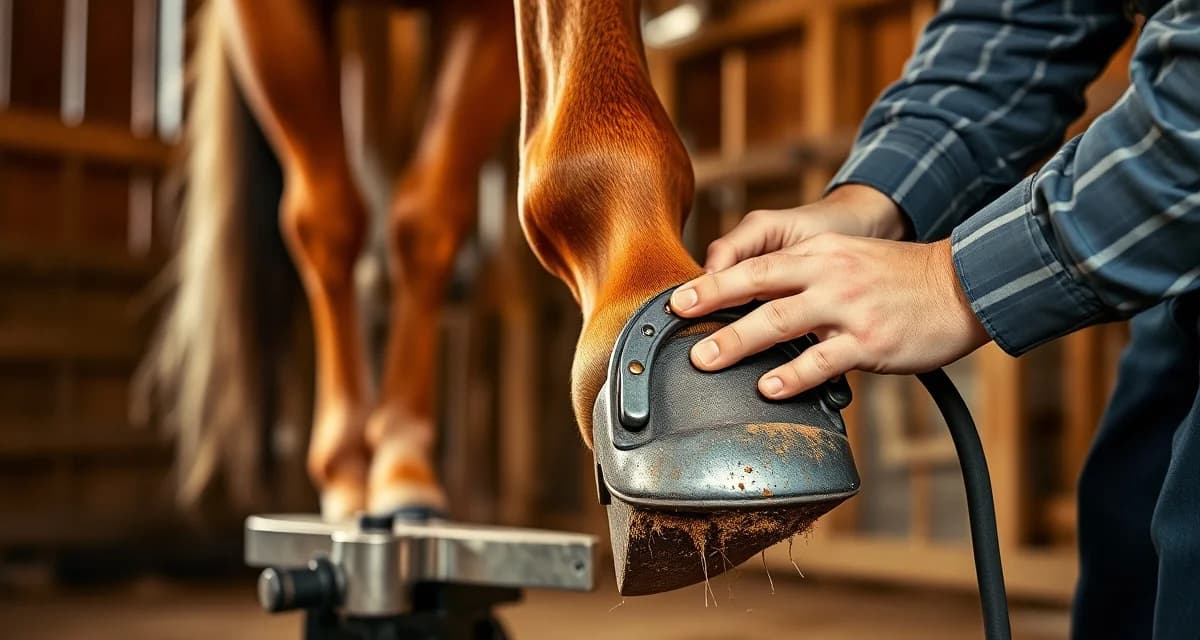
Farrier Scheduling for Barrel Racing: Shoe Fresh, Run Fast
Barrel racing is a sport where hundredths of a second separate paychecks from gate fees.
TL;DR
- Fresh shoes within 2 weeks of a major barrel racing competition correlate with a 0.3-second improvement in run times -- at a $50,000 barrel race, that difference separates the winner's circle from going home empty-handed.
- Barrel horses competing every other weekend require shoeing every 3-4 weeks during active season (March-October), not the standard 6-8 weeks -- the barrel turn grinding motion and multi-surface competition accelerate inside hind heel wear significantly.
- Build the seasonal schedule in February: get competition dates for the full season, map shoeing appointments 14 days before each major run, fill in 4-week intervals between, and flag NFR qualifiers and high-prize events as priority anchors.
- Hind shoe traction modifications are the key technical differentiator: heel caulks, stud holes, or rim shoes depending on the primary competition surface (deep sand vs. hard caliche vs. wet outdoor).
- Keep one or two short-notice slots per week during active season for pulled shoes before major runs -- this single practice builds more client loyalty than any marketing.
- A trainer facility with 10-20 barrel horses creates scheduling pressure if you don't plan ahead: 4 horses all needing shoes the week before a major rodeo requires early identification and resolution.
- Competition calendar management across 15-20 horses on different rodeo circuits is where scheduling software pays for itself -- manual coordination of pre-competition windows across that many animals is genuinely unmanageable without a system. The horse's ability to drive hard into each barrel, plant, and push off cleanly depends on traction, and traction depends on shoe condition. Fresh shoes within 2 weeks of a major barrel racing competition correlate with a 0.3-second improvement in run times. At a $50,000 barrel race, that's the difference between the winner's circle and going home empty-handed.
Most performance disciplines give you 6 to 8 weeks between farrier visits. Barrel racing compresses that window significantly. If your client is competing every other weekend from March through October, you need a scheduling system that keeps up. FarrierIQ's sport horse scheduling was built for exactly this kind of high-frequency, performance-critical calendar management.
How Barrel Racing Degrades Shoe Condition Faster
Understanding the mechanics helps you explain your scheduling recommendations to clients who push back on the frequency.
The barrel turn. At each barrel, the horse plants a hind foot and pivots with enormous torque. This grinding motion at the turn wears the inside heel of the hind shoes faster than any other movement pattern in equestrian sport. On arena dirt, this wear is moderate. On harder pan or concrete-adjacent surfaces at outdoor venues, it's dramatic.
The rundown. The approach to each barrel is at a dead gallop. The concussion is significant, and the grip the shoe provides at this phase of the run is critical for the horse's ability to check and rate.
The footing variable. Barrel horses compete on many different surfaces: deep arena sand, outdoor caliche, packed dirt, wet ground. Shoe wear rate varies substantially by surface. A horse that competes on concrete-adjacent hard pan will eat through shoes twice as fast as one running in deep sand.
Frequency compounds the issue. A barrel horse competing every weekend isn't just wearing shoes from competition. It's also training at speed on its home arena multiple times per week. By the 5-week mark, a barrel horse that trains and competes regularly often has shoes that would be considered "done" on a pleasure horse at 8 weeks.
Setting Up a Barrel Racing Shoeing Schedule
Establish the competition baseline
Ask your client for their full rodeo or jackpot schedule at the start of the season. Many barrel racers have a regional circuit they follow: NBHA district events, WPRA pro rodeos, or a state series. Get those dates and map them.
Target the 2-week pre-competition window
The goal is to have the horse shod within 14 days of any major competition. For a horse running every other weekend, this means you're looking at an appointment every 3-4 weeks during active season rather than the standard 6-8 weeks.
Shoeing more than 3 weeks out from a big competition is acceptable for local jackpots. For anything with significant prize money or point implications, 2 weeks or less is the target.
Build the seasonal schedule
Once you have the competition dates, work backward. A horse competing on the 15th needs to be shod by the 1st at the latest. Book the appointment. Then set the prior appointment 4 weeks back from that. Continue through the season.
FarrierIQ's pricing guide for barrel racing can help you structure your rates to reflect the tighter intervals your barrel horse clients require. Shorter intervals mean more visits per season, so your pricing should account for that.
Account for the rodeo road trip
Many barrel clients travel to major rodeos: NFR qualifiers, The American, US Finals. These events may be weeks away on the calendar, but they represent the most important runs of the season. Flag them in your schedule and treat them like championship events for planning purposes.
What Shoes Do Barrel Horses Use?
Shoe selection affects both performance and wear rate. Here's what you're typically working with:
Front shoes: Most barrel horses wear a steel keg shoe or a modified version with some toe grab and heel caulks for traction. Some trainers prefer a rolled toe for smooth breakover. The front shoes bear less of the turning stress and typically wear more evenly.
Hind shoes: This is where it gets specific. Hind shoes for barrel horses almost always carry some traction modification: heel caulks, a stud hole, or a rim shoe. The inside heel of the hind shoe at each barrel turn is the highest wear point on the horse.
Material: Steel is the standard for most barrel horses because it holds traction devices better than aluminum. Some trainers use specific composite shoes for soft arena conditions.
Modifications: Horses that compete on multiple surface types sometimes get removable screw-in studs. You'll need to set the stud holes correctly and ensure the threads are clean at each shoeing.
Managing a Full Barrel Client Book During Rodeo Season
If you service a barn or trainer facility with 10-20 barrel horses, the spring and fall rodeo seasons can overwhelm your schedule if you don't plan ahead.
Pre-season planning in February: Contact every barrel client in February to get their season schedule. Build the shoeing calendar for March through October before the season starts. You'll see immediately where you have 4 horses all needing shoes the week before a major rodeo, and you can address that before it becomes a crisis.
Communicate travel conflicts early: When a client mentions they're hauling to a big rodeo, that trip affects more than their shoeing date. It means the previous appointment timing matters more than usual. Flag these events in your records.
Keep a short notice slot. Even with the best planning, barrel clients will call you 3 days before a big run with a pulled shoe. Leave one or two short-notice slots per week during active season for exactly these situations. It builds enormous loyalty.
Frequently Asked Questions
How often should a barrel horse be shod before competition?
The general rule is to shoe within 14 days of any significant competition. For horses competing every other weekend during a busy season, this means a shoeing interval of 3-4 weeks rather than the standard 6-8 weeks. Horses that train at speed multiple days per week and compete regularly on harder surfaces may need visits as frequently as every 3 weeks. Track the wear pattern at each visit. Some horses are harder on their inside hind heels than others and need more frequent attention.
What shoes are best for barrel racing?
Most barrel horses run steel keg shoes with traction modifications on the hinds. Heel caulks are the most common choice for inside-rail traction at barrel turns. Screw-in stud holes give more flexibility for varying surface conditions. Rim shoes provide some added traction on softer footing without the leverage risk of caulks. The right shoe depends on where the horse competes. A horse that runs exclusively on deep arena sand needs different footing than one that works on hard caliche. Talk to the trainer and rider about the surfaces they compete on most before committing to a specific setup.
How do I schedule farrier visits around a barrel racing event calendar?
Start by getting the client's full competition schedule for the year, not just the next event. Identify the high-priority runs: anything with significant prize money, championship points, or NFR qualifier status. Work backward from those dates to set your shoeing appointments at the 10-14 day mark. Fill in the rest of the schedule at 3-4 week intervals. Load these dates into FarrierIQ's scheduling system so you get automated alerts when a barrel horse's due date is approaching a competition window, and share the schedule with the client so they know what to expect.
How should a farrier document shoe wear in barrel horses to calibrate the right shoeing interval?
Wear pattern documentation at each visit tells you more than the calendar interval alone. Note specifically: inside heel wear on hind shoes (the primary barrel turn wear point), overall shoe thickness at the toe compared to a new shoe, and any white line separation or wall cracking that suggests the horse is competing at the edge of its current shoes' useful life. After 3-4 visits, you'll have a wear rate baseline for that specific horse on its primary competition surfaces. If inside hind heel wear is consistently severe at 4 weeks, the interval should shorten. If wear is minimal at 5 weeks, you may be able to extend slightly. FarrierIQ's hoof health records capture per-visit wear notes that build this longitudinal picture -- without those records, interval recommendations rely on general rules rather than that specific horse's documented wear history.
What should a farrier do if a barrel horse client wants to extend the shoeing interval to save money during the season?
Address the request by connecting shoe condition directly to performance. A barrel horse running at 6 weeks with worn heel caulks on arena caliche is a traction risk at each barrel turn, and a traction slip costs more in points and prize money than a shoeing visit. Frame the interval as a performance decision: "At 4-5 weeks, your shoes are fresh enough that traction is consistent. At 6-7 weeks, the caulk wear on the hinds is enough that I'd expect inconsistent grip at the barrels -- that's not where you want unpredictability." Most serious barrel racers understand and accept this reasoning once it's framed in terms of competitive outcome rather than just farrier recommendation.
Sources
- American Farrier's Association (AFA), farrier scheduling and performance horse specialization resources
- National Barrel Horse Association (NBHA), competitive calendar and barrel horse care standards
- Women's Professional Rodeo Association (WPRA), barrel racing competitive guidelines
- American Quarter Horse Association (AQHA), performance horse care and shoeing recommendations
Get Started with FarrierIQ
Fresh shoes within 14 days of competition are the standard for serious barrel clients -- FarrierIQ's sport horse scheduling tracks competition dates for every horse so pre-run appointments are always timed correctly, and the hoof health records capture the wear pattern documentation that calibrates interval recommendations horse by horse. Try FarrierIQ free and set up your first barrel horse's competition calendar before rodeo season starts.