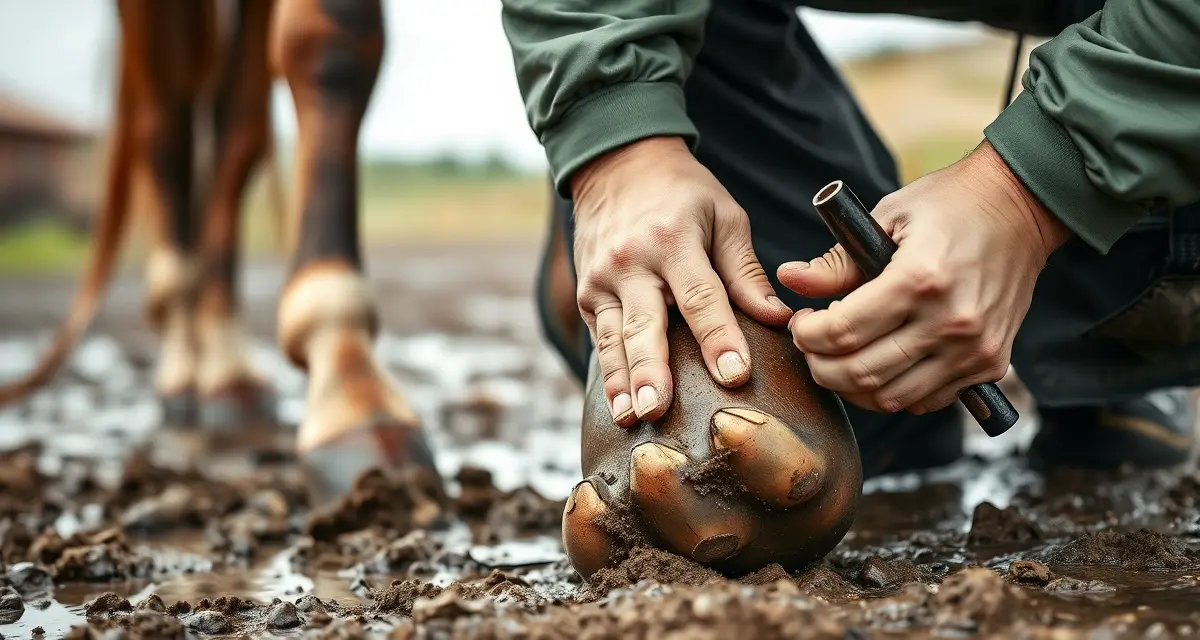
How to Manage Hoof Care During Wet Season: A Farrier's Complete Guide
Hoof-related issues increase 45% during prolonged wet seasons. That's not a small uptick, it's nearly half again as many problem calls, more corrective work, more client anxiety, and more pressure on your schedule. Wet season is when your clients need you most and when the work gets genuinely harder.
TL;DR
- Hoof-related issues increase 45% during wet seasons, making proactive scheduling and documentation more critical than during dry months.
- Soft, saturated horn holds nails differently than dry horn, which means shoes set in February may shift by week four even when applied correctly.
- Standard 6-8 week intervals often need shortening for horses in muddy turnout; tracking individual horse responses is more reliable than applying a blanket rule.
- Date-stamped visit records with condition photos are your primary professional protection when clients question shoe retention or hoof health outcomes.
- Thrush should be checked at every wet season visit across all four feet, not just when a client reports a smell.
- Building 2-3 open scheduling slots per week during rainy seasons prevents a single weather day from creating a multi-week backlog.
- Slightly wider shoe fits and one nail size smaller can meaningfully improve shoe retention on horses with consistently soft, wet hooves.
If you've been doing this long enough, you know. A horse standing in mud for three days straight doesn't have the same feet as one on dry ground. The wall softens, the white line stretches, thrush sets in fast, and shoes pull more often. Managing hoof care through a wet season requires deliberate adjustments, to your shoeing approach, your documentation habits, and your scheduling system.
This guide covers all of it.
What Wet Ground Actually Does to Hooves
Understanding the mechanics helps you explain things to clients and make better shoeing decisions.
Moisture doesn't strengthen hooves, it softens them. The wall becomes more flexible, which sounds fine until you realize that soft horn compresses differently under nail placement and doesn't hold shoes the way dry horn does. White line tissue saturates and weakens, which is why white line disease follows wet seasons predictably. Thrush thrives in the anaerobic environment created by constant mud contact.
Horses that live in persistently wet conditions also tend to have more bar pressure issues and flare faster. The hoof simply doesn't self-trim the way it does on drier, harder ground.
The Soft Ground Problem for Nailing
If you've ever tried to set a nail in a horse that's been standing in mud for a week, you know the difference. The horn is spongy. You're not getting the same purchase. Shoes that would hold rock solid on a dry-hooved horse in October might shift by week four in February.
This is worth having a direct conversation with clients about. Managing expectations around shoe duration during wet seasons saves you from getting calls about lost shoes that you had nothing to do with.
Adjusting Shoeing Intervals
Standard 6-8 week intervals often don't make sense during prolonged wet seasons. You might need to shorten cycles for horses in particularly muddy turnout. You also might see some horses that need to come in sooner because of accelerated hoof growth that wet conditions can promote in some animals.
The key is tracking. You need to know how individual horses are responding to wet conditions, not just guessing based on breed or general knowledge.
FarrierIQ's hoof health records let you log condition notes at every visit and set custom interval reminders per horse. If a client's horse is consistently pulling shoes early during wet months, you can shorten the interval for that horse specifically and document the reason. When the horse's owner asks why you're coming more frequently, you've got the data to back it up.
When to Pull Early
There's no universal rule, but some signs that a wet-season horse needs to be seen before the scheduled appointment:
- Shoe shifted more than 5mm from original position
- Visible white line separation expanding beyond what was present at last visit
- Thrush progressing into deeper tissue despite treatment
- Notable hoof growth flaring in ways that will compromise the shoe placement
Train clients to text you photos between visits. FarrierIQ's client messaging features make it easy to stay in contact without a full phone call every time.
Documenting Wet Season Conditions
This is where a lot of farriers leave money on the table, or more accurately, leave protection on the table. Wet season creates liability scenarios. A horse develops a white line abscess after standing in mud. The owner wants to know when you last saw it. A shoe pulls after a week and the owner wonders if it was put on wrong.
Date-stamped records with condition notes protect you. If your last visit record says "notable mud at pasture gate, white line wet but intact, discussed turnout conditions with owner," you've got a very different position than if you have nothing written down.
FarrierIQ records every visit with a timestamp and lets you add detailed notes and photos. Get in the habit of photographing hoof condition at every wet season visit. It takes 30 extra seconds per horse and it's the best professional insurance you have.
Building a Wet Season Record Habit
At each visit during wet conditions, note:
- Current ground conditions at the property
- Hoof moisture level (visibly wet/softened or normal for season)
- White line condition compared to last visit
- Any thrush present and severity
- Shoe retention quality from the interval
- Owner-applied treatments in place between visits
This level of documentation seems like a lot until you need it once. After that, it becomes automatic.
Addressing Thrush Proactively
Thrush is a wet season constant. Most experienced farriers know the smell before they get the hoof picked clean. The question is how you handle it systematically rather than reactively.
At every wet season visit, check all four feet for thrush as part of your baseline. Don't wait for the client to mention a smell. If you find it, document it, treat what you can at the visit, and give clear written instructions for between-visit care.
The "written instructions" part matters. Verbal instructions are forgotten. If you send a quick text follow-up after the visit or hand them a note, they're more likely to follow through, and you're protected if they don't and the horse gets worse.
Client Education During Wet Season
Most horse owners know that mud is bad for feet, but they don't know the specifics. Educate your clients proactively:
- Turnout management (dry lot access, even a small dry pad at the gate makes a difference)
- Thrush treatment protocols between visits
- What signs mean they should call you before the scheduled appointment
- Why shoes may not hold as long in wet conditions
Clients who understand what's happening are less likely to blame you for wet-season hoof issues that aren't your fault.
Adjusting Your Shoeing Approach for Wet Conditions
Wet season calls for some practical adjustments to technique and product selection.
Nail selection. Finer nails give you better control in soft horn. Some farriers drop one nail size during consistently wet periods.
Shoe fit considerations. A slightly wider fit gives more room for the wall's increased flexibility without creating use problems. Going tight on a soft-hoofed wet season horse is asking for a pulled shoe.
Packing. For horses with chronic white line issues or deep cleft thrush, packing with an appropriate medicated compound gives continuous treatment between visits. Document what you're packing with and when.
Pad use. Full pads aren't always appropriate, but pour-in pads or silicone can help protect white line tissue in horses with ongoing wet-ground issues. Run this by the vet if you're in corrective territory.
Scheduling During Wet Season
Wet season scheduling has its own challenges. Weather cancellations happen. Muddy properties become unsafe working conditions. Clients call to move appointments because their arena flooded.
FarrierIQ's scheduling app makes rescheduling fast. When a rainy day causes three cancellations, you move them without losing track of where those horses are in their cycles. The system keeps interval tracking intact even when the actual appointment shifts by a week or two.
The worst wet season scenario is horses falling months behind on care because of repeated weather disruptions. Good farrier scheduling software with automatic cycle tracking prevents that from quietly happening across your whole book.
Building Wet Season Buffer Into Your Schedule
In consistently wet climates or during rainy seasons in your region, it helps to build some schedule flexibility rather than packing every day solid. A single weather day that causes five cancellations on a packed schedule creates a backlog that takes weeks to clear. Two to three open slots per week gives you the capacity to absorb disruptions without the same pressure.
FarrierIQ's calendar view shows you your density by day and week, making it easy to see where you've got breathing room and where you're exposed to weather risk.
Working Safely in Wet Conditions
Personal safety matters too. Muddy properties create slipping hazards for you, not just for horses. Wet horses can be unpredictable. Your footing while working is compromised.
A few practical habits for wet season work:
- Wear boots with meaningful grip, not worn soles
- Assess footing before positioning yourself under a horse
- Keep a handling discussion with barn staff if conditions are particularly bad
- Don't work in situations where the horse can't stand safely on the surface
You know this, but it's worth the reminder. Wet season injuries to farriers are real.
Frequently Asked Questions
How does wet weather affect horse hooves?
Prolonged wet conditions soften hoof horn, weaken white line tissue, and create an ideal environment for thrush. Horses in constant mud exposure are at higher risk for white line disease, loose shoes, and bacterial infections in the hoof cleft.
Should horses be shod differently in wet conditions?
Yes, often. Wet season shoeing may benefit from slightly wider shoe fits to account for hoof flexibility, finer nails for better placement in soft horn, and shorter intervals for horses that consistently pull shoes early. Protective packing or silicone pours can help horses with recurring white line problems.
How do farriers handle muddy conditions during winter?
Practically, wet season management comes down to documentation, proactive client communication, and schedule flexibility. Logging condition notes and photos at every visit protects you professionally. Educating clients on turnout management reduces how bad the conditions get. And flexible scheduling software handles the weather cancellations that are inevitable.
Can wet season hoof problems be prevented entirely?
Not entirely, but their severity can be reduced significantly with the right management. Dry lot access, even a small gravel pad near the gate, limits continuous mud contact. Consistent shoeing intervals prevent small issues from compounding into larger ones. The horses that end up with serious white line disease or deep thrush infections are usually the ones where a combination of poor turnout conditions and delayed farrier visits allowed problems to build over weeks.
How should farriers communicate wet season concerns to clients without alarming them?
Frame it around what the client can control. Rather than leading with worst-case outcomes, explain the specific conditions you observed, what you did about them at the visit, and the two or three things the owner can do before your next appointment. Written follow-up after the visit, even a brief text with care instructions, is more effective than a verbal conversation at the barn. Clients who feel informed and capable are far more likely to follow through on between-visit care.
Is it worth charging differently for wet season visits that require more time or corrective work?
Yes, and most clients will accept it when the reason is explained clearly. If a horse requires additional work because of thrush treatment, corrective trimming from accelerated growth, or resetting a shoe that pulled early due to wet conditions, that additional time and material cost is legitimate. Document the extra work in your visit notes so the invoice reflects what actually happened. Clients who can see the record of what was done are much less likely to question the charge.
What's the best way to track which horses in a client's herd are most vulnerable to wet season issues?
Individual horse records that carry condition history across multiple visits are the most practical tool. When you can look back at the last three wet seasons for a specific horse and see that it consistently develops white line softening by week five in February, you can proactively shorten that horse's interval before problems appear. Without that history, you're making decisions based on general knowledge rather than what you actually know about that animal.
Sources
- American Farrier's Association, Farrier Industry Resource Center
- University of Minnesota Extension, Horse Hoof Care and Management Program
- The Horse magazine, published by Blood-Horse Publications
- UC Davis School of Veterinary Medicine, Equine Health and Welfare Program
- National Farrier's Federation, Professional Standards and Education Resources
Get Started with FarrierIQ
Everything covered in this guide, shortening intervals for specific horses, logging condition photos, sending follow-up care instructions, and absorbing weather cancellations without losing track of where horses are in their cycles, is easier to manage consistently when it's all in one place. FarrierIQ is built specifically for farrier businesses handling exactly these situations. Try it free and see how much simpler wet season management gets when your records, schedule, and client communication work together.