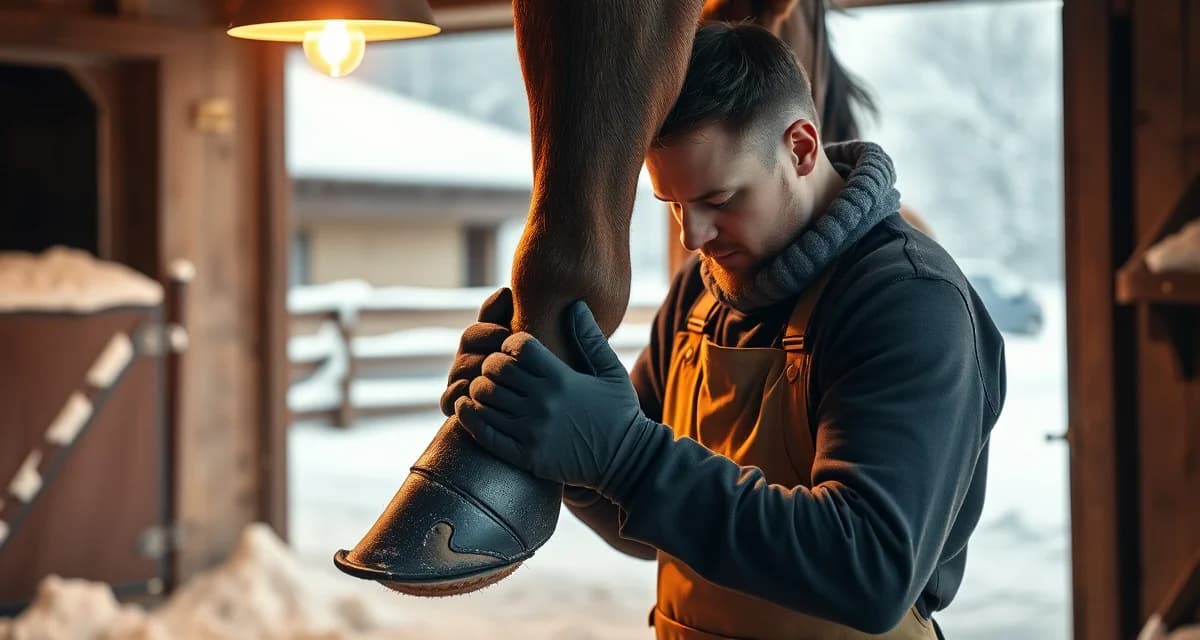
The Complete Farrier's Winter Guide: Surviving and Thriving in Cold Weather Season
Farriers lose an average of $12,000 in winter income without proactive schedule and cancellation management. That's a meaningful number, it's the difference between a profitable year and a barely-breaking-even one for many solo farriers. Winter doesn't just slow down, it actively attacks your income through weather cancellations, horses going out of service, clients reducing visit frequency, and the physical challenges of working in cold conditions.
TL;DR
- Farriers lose an average of $12,000 in winter income without proactive schedule and cancellation management - a predictable loss that planning can significantly reduce.
- Building winter schedules at 70-80% of peak season density creates the buffer needed to absorb weather cancellations without a cascading backlog that takes months to recover.
- Hoof growth slows substantially in cold climates, allowing some horses to safely extend from six-week to seven- or eight-week intervals in winter without negative consequences.
- Freeze-thaw cycles are one of winter's most damaging forces - cracks that were stable in fall can propagate, and white line that held through summer can show stress under frozen-ground mechanical force.
- A modest cold weather premium - typically $10-25 per visit below a temperature threshold - reflects the genuine cost differential of winter work and should be communicated to clients before the first cold-weather visit.
- Emergency winter appointments are an underused income opportunity for farriers with the capacity and the right rate structure.
The farriers who do well in winter don't just survive it. They plan for it.
This guide covers every dimension of winter farrier management: the clinical side of cold weather hoof care, scheduling systems that absorb weather disruption, income protection strategies, and the personal sustainability practices that keep you working through the hard months.
Cold Weather and Horse Hooves: The Clinical Picture
Cold temperature changes hooves in ways that directly affect your work. Understanding the physiology helps you make better decisions and have better conversations with clients.
Hoof Growth in Winter
Hoof growth slows substantially in cold weather. Horses in cold climates grow considerably less wall in December and January than in June and July. The slowdown is more pronounced in horses that are also on reduced exercise and nutrition.
This affects your intervals. A six-week interval that made sense in summer may extend naturally to seven or eight weeks in winter without negative consequences for many horses. This is useful to know because it allows you to space your book slightly without compromising care, which in turn gives you more flexibility to absorb weather disruptions.
Track growth rates per horse over winter seasons. FarrierIQ's hoof health records let you note growth observations at each visit, and over multiple winters you'll have data on which horses can safely extend intervals and which can't.
Freeze-Thaw Effects
The freeze-thaw cycle is one of winter's most damaging forces on hooves. Ground that freezes solid overnight and thaws into mud by midday creates wildly inconsistent footing. Horses traverse this repeatedly, and the mechanical stress accumulates.
Cracks that were stable in fall sometimes propagate through winter freeze-thaw. White line that held through summer and fall can show stress when frozen ground puts unusual mechanical force through the wall during hard conditions. Monitor your ongoing corrective cases closely through winter.
Cold-Induced Hoof Contraction
In very cold conditions, some horses show temporary hoof contraction. The horn responds to cold similarly to how cold affects other tissues. Shoes that fit perfectly in October may feel slightly snug on a horse in January.
This is rarely a serious problem for horses with good hoof quality, but for horses with compromised heels or contracted hoof syndrome, it's something to track and discuss with the attending vet if you're seeing progressive changes. See the corrective shoeing contracted heels guide for ongoing management protocols.
Thrush in Winter
Thrush doesn't stop in winter. Horses standing in wet straw, mud, or manure in poorly bedded stalls are prime thrush candidates. In some ways, winter thrush is more insidious because cold conditions mask the smell and clients may not notice it between visits.
Check all four feet at every winter visit regardless of what you're there to do. Document any thrush findings and leave specific written care instructions with the client or barn manager. Between-visit home care is the only thing controlling thrush in winter, you can't address it thoroughly every six weeks.
Winter Shoeing Decisions
Winter brings specific shoeing decisions that don't come up the rest of the year.
Traction: When You Need It and What to Use
Any horse that's regularly ridden or driven on icy or packed snow surfaces needs traction consideration. The options range from studs to borium to ice nails to snow rim shoes, and the right choice depends on the horse's use and the specific conditions they face.
Studs are good for horses that need consistent traction adjustment across different conditions. Clients can swap them for different footing.
Borium (tungsten carbide applied to shoe heels or branches) is a permanent traction addition that works well for horses in consistent icy conditions. It wears slowly and provides reliable grip.
Ice nails (hardened steel nails that project slightly from the ground surface) are a classic approach that still works well in snowy conditions.
Snow pads (winter pads with elevated center sections) prevent snow from packing under the shoe, which is a real problem for shod horses in accumulating snow conditions.
Document the traction approach you apply to each horse in FarrierIQ. Next winter, you have a reference for what worked. For horses with ongoing winter traction needs, note what you changed and why so you can refine the approach across seasons.
Pulling Shoes for Winter Barefoot
Not every horse needs to stay shod through winter. Horses that won't be ridden considerably, that are in good general hoof health, and that have appropriate turnout conditions for barefoot are sometimes better served by pulling shoes for the winter.
The conversation with the client needs to happen in October, not December. If you pull shoes in November, you want to have already discussed the plan and the reasoning. A horse that was shod for show season doesn't necessarily need to stay shod through January on soft winter ground if it's in reduced work.
This isn't just about client preference, it's about what's actually right for the horse. Make the recommendation based on your assessment.
Winter Schedule Management: The Core Challenge
Winter weather is unpredictable. A day you planned two weeks ago can get cancelled by an ice storm 12 hours before. Your schedule needs to be designed to absorb this rather than collapse under it.
FarrierIQ's Scheduling App in Winter
Winter is when scheduling software earns its annual subscription price multiple times over. When a weather event cancels four appointments, you're not rescheduling from a paper calendar or texting clients one by one. You open FarrierIQ, see all the impacted appointments, move them to available slots, and send notifications automatically.
The alternative, manual rescheduling without a system, takes hours and still results in horses falling behind their intervals because the tracking isn't tight enough. The farrier scheduling software guide covers how to structure your schedule architecture for maximum weather resilience.
Keep your cycle tracking intact through winter. If a horse gets pushed back two weeks by weather, the system should still flag that horse as due from the original interval date, not the rescheduled date. FarrierIQ handles this correctly so you don't lose track of where each horse is in its care cycle even when appointments shuffle considerably.
Building a Winter Schedule with Appropriate Density
One of the biggest winter planning mistakes is trying to run a summer-density schedule through February. You don't have summer's daylight hours. You have weather days that wipe out planning. You have clients whose horses are in reduced service or not working.
Build winter schedules at 70-80% of peak season density. That gives you:
- Days to absorb weather without an immediately critical backlog
- Flexibility to serve urgent calls when a horse loses a shoe in a storm
- Enough breathing room that a weather week doesn't cascade into months of being behind
Yes, it feels like you're leaving income on the table. But the alternative, packing winter days and watching the schedule collapse under weather pressure, costs more.
Emergency Winter Calls
Winter creates horse emergencies that don't happen as often in other seasons. Lost shoes on ice. Horses left without traction before a freeze. Injuries that require therapeutic shoeing quickly.
Being available for emergency winter work is actually an income opportunity most farriers underuse. If you have the capacity to serve clients in a pinch, and you have reasonable emergency rates, you build the kind of loyalty that's worth more than any advertising.
Keep a few emergency slots available each week through winter. Charge appropriately for emergency visits, travel to a distant property in icy conditions deserves a premium. Document the visit thoroughly in FarrierIQ the same as any other.
Protecting Winter Income
The $12,000 winter income loss figure reflects a combination of factors, and most of them are addressable.
Retention Over Acquisition
In winter, focus on keeping your existing clients current rather than chasing new ones. Existing client relationships are warm, you've built trust, they know what to expect, they're less likely to let horses fall behind if you stay in communication.
New client acquisition in winter is harder and the clients often haven't developed the habit of regular service yet. That can come in spring. Winter is about retention.
Rate Adjustments for Winter Work
Working in cold conditions is harder. You're dealing with hard iron, cold horses, and physical demands that are more taxing than summer work. Many farriers implement a modest cold weather premium, a small addition to standard rates when conditions require working below a certain temperature threshold.
This isn't gouging. It's reflecting the real cost differential of winter work. Most established clients understand and accept it. If you're adding a premium, communicate it clearly before the first cold-weather visit, not after.
Managing Clients Who Drop Off in Winter
Some clients genuinely reduce their service frequency in winter because horses are in light work. That's legitimate. The question is whether the reduction in frequency is appropriate for the horse's hoof health or whether it's becoming neglect.
Stay in communication with reduced-frequency clients. If a horse is going ten weeks in winter, check in at eight weeks with a "just confirming your horse is doing well, we're coming up on the next scheduled visit" message. It's professional follow-up that keeps the relationship active and catches horses that are slipping past appropriate intervals.
Ancillary Winter Income
Winter is a natural time for farrier education, consulting, or other income streams that don't require standing in a cold barn.
Some farriers teach basic hoof care courses for horse owners in winter, how to pick a hoof, identify thrush, recognize a loose shoe. These attract horse owners who want to be more educated about their animals.
Some farriers provide written hoof care assessments and reports for clients with horses in specific management programs. This isn't clinical work a vet does, it's professional documentation of what you've been observing and managing, which some clients find valuable.
Physical Sustainability Through Winter
The single biggest risk to winter income isn't weather or client behavior, it's your own physical burnout or injury. Cold weather farrier work is physically demanding in ways that accumulate.
Cold Weather Physical Management
Cold muscles don't work the same way as warm ones. The risk of back injury, pulled muscles, and strained joints is higher in cold conditions. Warm up before each day starts, not just stretching, but movement that genuinely raises your body temperature before you start bending over horses.
Dress for the conditions. Layering that lets you adjust through a working day keeps your core warm while your back is bending and lifting. Wet cold is worse than dry cold; keep an extra dry layer in the truck.
Managing Work Hours in Winter
Winter days are shorter. Working past dark in a poorly lit barn is both inefficient and unsafe. Build realistic day lengths into your winter schedule that account for actual working daylight.
If you find yourself consistently working past 5 p.m. in November through January, your schedule is too dense. That's not a productivity problem, it's a planning problem. Fix it in the schedule, not by working later.
Mental Health Through Winter
The isolation of solo farrier work combined with winter conditions can be a real mental health challenge. You're working alone, often in uncomfortable conditions, with a book that's lighter than summer. It's worth acknowledging that winter can be hard for farriers in ways that go beyond the practical.
Maintain professional connections through winter. The farrier community has active online forums and social groups. Regional farrier associations have winter events. Staying connected to colleagues keeps you sharp and gives you a network to consult when you encounter something unusual.
Frequently Asked Questions
How do farriers manage business in winter?
The core winter management approach is building a schedule at lower density than peak season, creating a solid cancellation recovery system with a populated waitlist, maintaining regular communication with clients to prevent horses from falling behind their intervals, and having a proactive traction and winter shoeing conversation with clients in the fall before they need it.
What are the biggest winter horseshoeing challenges?
Weather cancellations and the resulting schedule disruption are the most notable business challenge. On the clinical side, frozen ground, freeze-thaw cycles, reduced hoof growth, and winter thrush in stalled horses are the consistent challenges. Traction decisions for horses on icy surfaces require individual assessment and clear client communication.
Should farrier rates change in winter?
Many farriers implement a modest cold weather premium for work done below a temperature threshold. This reflects the genuine physical cost differential of winter work. It should be communicated to clients in advance, be consistent in application, and be reasonable in amount, typically $10-25 per visit depending on conditions and market. Some farriers also reduce visit frequency for horses in minimal winter work and price accordingly.
How do you handle a client whose horse is overdue in winter because of cancelled appointments?
Address it directly when you reschedule. If a horse has gone to 10 or 12 weeks due to weather cancellations, acknowledge it at the visit - note what you're seeing as a result of the extended interval, assess whether anything needs attention that wouldn't have been an issue at 8 weeks, and document the finding. If the extended interval has caused a problem, that's important information for the client and for your records. FarrierIQ's overdue horse alerts flag animals that have gone past their scheduled interval regardless of the reason, so you can identify these horses before arriving at the barn.
What should farriers do during prolonged winter weather events that cancel an entire week of appointments?
Use the time productively: catch up on invoicing, review your outstanding accounts, contact clients whose horses are approaching overdue status, do equipment maintenance, and plan your recovery schedule in advance. When you know a weather event is ending, have your rescheduling communication ready to send immediately. Clients who hear from you promptly during a recovery period trust that their horses aren't forgotten.
Related Articles
- The Complete Farrier's Summer Guide: Managing Heat, Dry Ground, and Heavy Schedules
- Farrier Business Taxes: Complete Guide to Deductions, Quarterly Payments, and Records
Sources
- American Farrier's Association (AFA), winter shoeing techniques and seasonal business management resources
- American Association of Equine Practitioners (AAEP), cold weather equine health and hoof care guidelines
- The Horse: Your Guide to Equine Health Care, winter hoof management and freeze-thaw effects coverage
- Kentucky Equine Research, cold weather hoof growth rate and seasonal nutrition research
- National Institute for Occupational Safety and Health (NIOSH), cold stress guidelines for outdoor workers
Get Started with FarrierIQ
Winter's cancellation management, reduced-density scheduling, and cycle tracking across weather disruptions are exactly what FarrierIQ's scheduling tools are built for. When an ice storm cancels four appointments, you reschedule from the app in minutes rather than texting clients one by one from memory. Try FarrierIQ free and go into winter with the tools to protect your income rather than just absorbing the losses.