Farrier App for Show Jumping Horses: Traction and Safety for Course Riders
Show jumping shoe failures caused 12% of horse falls in FEI-tracked competitions in 2023. That number puts the stakes of this work in plain terms. The farrier serving a Grand Prix barn isn't just maintaining horses. They're a direct factor in whether a horse and rider get around a course safely.
Grand Prix show jumping horses average 14 shoeing visits per year. That's more than almost any other discipline, reflecting the intensity of competition schedules and the tight intervals needed to maintain precise shoe specs and stud configurations.
TL;DR
- Show jumping shoe failures caused 12% of horse falls in FEI-tracked competitions in 2023 -- the safety stakes of this discipline are higher than almost any other, and documentation of each visit directly supports horse and rider safety.
- Grand Prix show jumping horses average 14 shoeing visits per year, more than almost any other discipline, making organized scheduling essential to keep up with the frequency without things slipping past due.
- Stud configuration varies by footing, surface, and rider preference -- what works on dry summer grass is different from wet outdoor clay, and that per-horse stud history is institutional knowledge that makes you hard to replace.
- Shoe weight and breakover point affect how cleanly a horse folds its front legs over a vertical; documenting what's been applied and correlating it with trainer performance feedback builds a visit-by-visit record of what works.
- Most active Grand Prix horses are on 5-6 week cycles, with intervals tightening to 4-5 weeks during peak show season -- horses competing every two to three weeks need careful scheduling to avoid heading into a show weekend past due.
- Some horses are sensitive to stud placement and move differently depending on what's installed -- noting that sensitivity per horse prevents repeating a configuration that hurt performance.
Stud Configuration Is Its Own Discipline
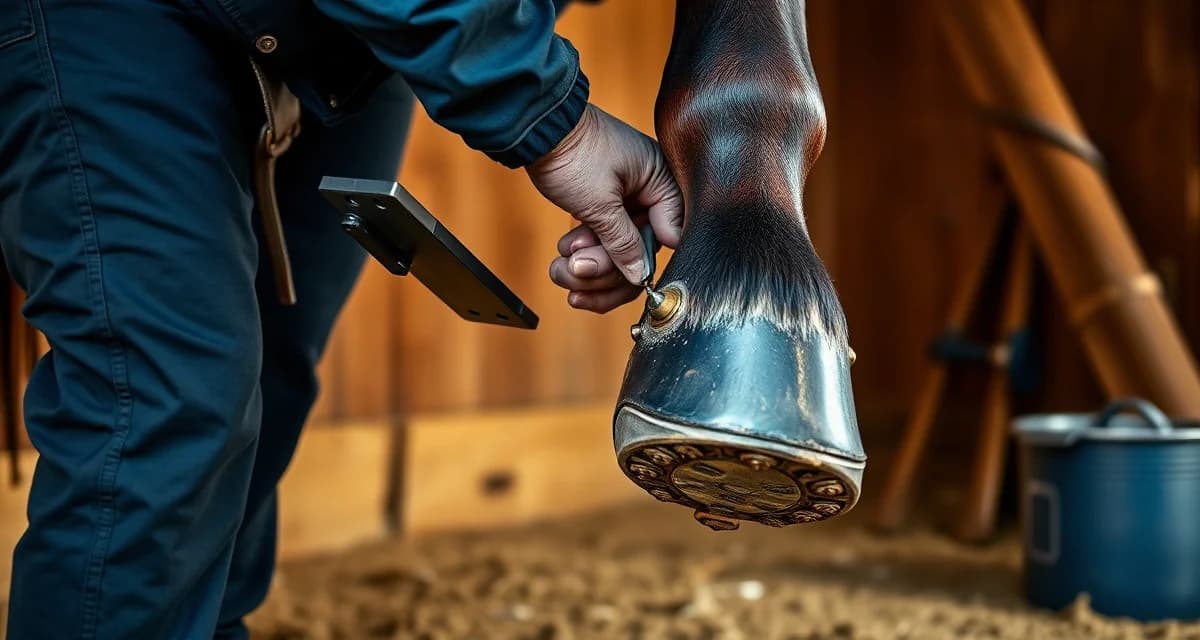
If you work with show jumpers, you know that stud configuration is a real conversation, not just a detail. The footing matters enormously. Grass in summer after rain is different from dry summer grass. Indoor arena sand is different from outdoor clay. An oxer at 1.45m is unforgiving to a horse that loses grip on landing.
Riders and trainers have strong preferences about their stud setups. Some prefer larger outside heel studs with smaller inside studs for lateral stability. Others want matched pairs. Some horses are sensitive to stud placement and move differently depending on what's installed.
FarrierIQ's hoof health records let you document stud hole placement, the size and type of studs each horse performs best with, and any notes from the trainer after each show. That institutional knowledge is yours to build over time, and it makes you genuinely hard to replace.
Shoe Weight and Breakover
Beyond studs, show jumping horses need careful attention to shoe weight and breakover point. A shoe that's too heavy drags on the horse's movement over a fence. A breakover that's too far back affects the horse's ability to fold the front legs cleanly over a vertical.
These are the details that separate a technically good farrier from an exceptional one in a high-level jumping barn. And they're the details that need to be documented visit to visit so you can see whether a change you made is correlating with better or worse performance.
Scheduling Around Show Commitments
The show jumping calendar is year-round for serious competitors. Some horses show every two to three weeks. Managing the shoeing cycle around that without letting anything slip past due requires solid scheduling.
FarrierIQ's scheduling app keeps your show jumper clients on track. You can flag horses that need reshoeing before a specific show, set up appointments around competition windows, and make sure no horse on your book is heading into a Grand Prix weekend on shoes that are six days past due.
Communication With Riders and Trainers
Grand Prix riders and trainers pay attention. They notice when something changed and they'll tell you. FarrierIQ's client management tools let you send visit summaries that capture exactly what was done, what stud holes are active, and what you're planning for next time. That level of communication builds trust and positions you as a professional who takes their work seriously.
Frequently Asked Questions
What shoes do show jumping horses wear?
Most sport horse show jumpers wear a steel shoe, often with rim or crease for traction. Many high-level jumping horses wear a steel shoe with pre-drilled stud holes. Some farriers use aluminum for horses where weight reduction matters, though steel remains more common for the durability demands of a full show schedule. Hind shoes often differ from front shoes in a jumping horse's setup.
How are stud holes placed on show jumping horse shoes?
Stud holes are typically placed in the heel area of the shoe, one in each heel for a two-stud configuration or one outside heel only for a single-stud setup. The exact placement depends on the shoe size, the horse's hoof shape, and the trainer's preference. Some horses carry four studs per shoe for maximum grip in slippery conditions. The holes are drilled before the shoe is applied, and the farrier taps threads so studs can be installed and removed cleanly.
How often do Grand Prix show jumpers need shoeing?
The most competitive Grand Prix horses are typically on a 5-6 week schedule, and many are seen more frequently during peak show season. Some horses that compete every weekend during an active circuit season need attention every 4-5 weeks to maintain the precise shoe specs their performance demands.
What should a farrier do when a rider reports that a horse started refusing after the last shoeing visit?
Pull the record and review everything from the last visit: shoe type, shoe weight, breakover position, stud hole placement, hoof angle. Ask the rider specifically whether the refusing is at one type of fence or all fences, whether it started immediately after the visit or developed over several days, and whether it's consistent or intermittent. Correlation doesn't mean causation -- there are many reasons a horse starts refusing -- but your records let you rule out or identify a shoeing variable quickly. Offer to come out and assess the horse in work if the rider is concerned. The farrier who investigates proactively and with documented specifics is the one who keeps the account.
How do you document a stud configuration change so that future visits reflect the updated preference?
Update the horse's record in FarrierIQ immediately after the visit with the new configuration: stud hole positions, hole sizes, and any notes from the trainer about what prompted the change. If the trainer reports back after the next show that the new configuration worked better, add that as a dated follow-up note. Over time the record builds a picture of what each horse needs in what conditions -- that context is what makes the record genuinely useful rather than just a log of dates and shoe sizes.
Related Articles
Sources
- Federation Equestre Internationale (FEI), show jumping safety data and horse welfare standards
- American Farrier's Association (AFA), sport horse shoeing techniques and stud configuration resources
- United States Equestrian Federation (USEF), show jumping competition regulations and equipment standards
- American Association of Equine Practitioners (AAEP), sport horse soundness and performance horse hoof care guidelines
- Professional Farrier Magazine, Grand Prix barn management and show jumping farrier relationships
Get Started with FarrierIQ
Grand Prix show jumping clients need stud configurations documented per horse, shoe weight and breakover tracked visit to visit, and a scheduling system that keeps up with the most demanding show calendar in equestrian sport. FarrierIQ's hoof health records, scheduling tools, and client communication features give you the professional infrastructure that high-level jumping clients expect from their farrier. Try FarrierIQ free and manage your show jumping accounts with records that match the stakes of the discipline.