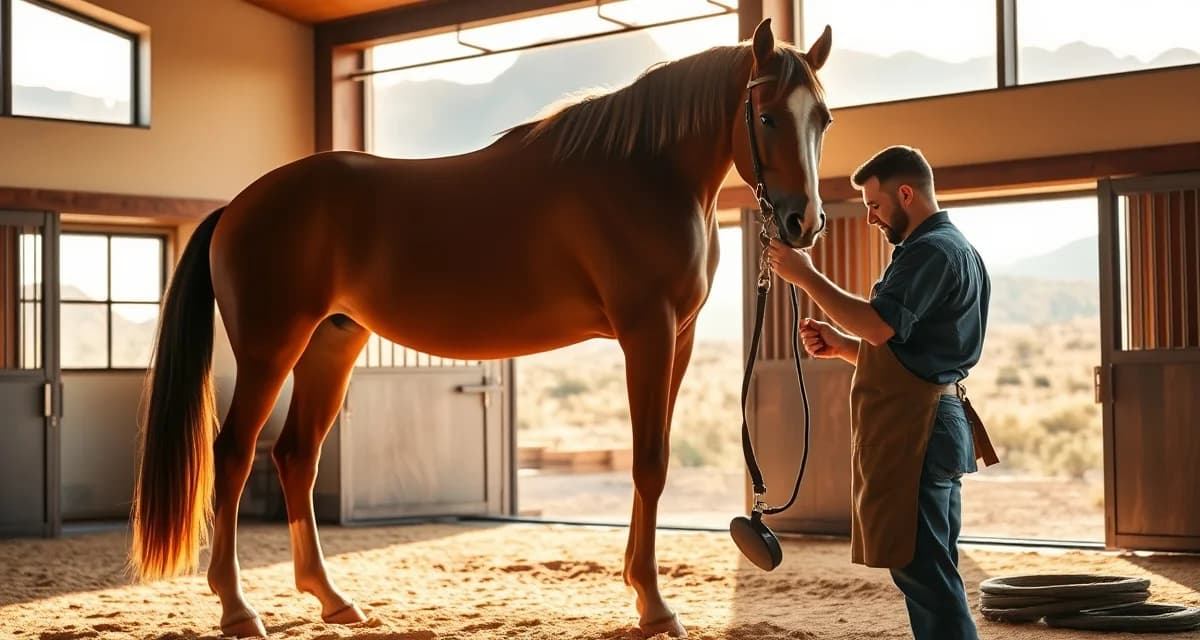
Farrier App for Scottsdale AZ: Managing Show Horses and Desert Barns Year-Round
Scottsdale, Arizona has more than 35,000 horses in the metro area and a year-round showing calendar that never really lets up. The horse density here, WestWorld of Scottsdale, the surrounding show facilities in Cave Creek and Queen Creek, the luxury boarding barns in Paradise Valley and Pinnacle Peak, creates a farrier workload unlike almost any other region in the country.
The farrier app Scottsdale AZ operations actually need has to handle the specific demands of a desert show horse community: intense year-round scheduling pressure, detailed health records for high-value horses, and the heat-driven scheduling adjustments that come with working outdoors in 110-degree summer heat.
TL;DR
- Scottsdale metro has 35,000+ horses with a year-round showing calendar -- WestWorld, the Arizona Sun Circuit, and the Arabian Horse Association nationals run throughout the calendar year, creating constant competition-prep scheduling pressure.
- Show horses need farrier visits aligned with competition prep windows, not standard 6-8 week intervals -- FarrierIQ's competition-aware scheduling flags horses approaching their show prep window so overdue horses don't enter a show undersupported.
- Summer temperatures regularly exceed 110 degrees, driving experienced Scottsdale farriers to 5am starts and noon finishes -- scheduling software must accommodate two-hour time block shifts without disrupting the full client sequence.
- Scottsdale's premium boarding barns (Paradise Valley, Pinnacle Peak) have high-value horses whose owners expect meticulous per-horse documentation including shoe specs, corrective angles, hoof condition photos, and vet coordination notes.
- Route density near WestWorld and Cave Creek's show facilities allows 8-10 horses in a compact area before temperatures climb -- route optimization maximizes the early-morning efficiency window.
- No Arizona state farrier licensing requirement exists -- but Scottsdale's show horse community and premium boarding operations expect AFA credentials and documentation comparable to any elite US horse market.
- The combination of year-round show season plus extreme heat makes Scottsdale one of the highest-demand farrier scheduling environments in the country -- manual tracking systems fail under this volume.
Year-Round Show Season Creates Constant Demand
Most horse communities have an off-season. Scottsdale doesn't. The Barrett-Jackson area, WestWorld events, Arabian Horse Association nationals, the Arizona Sun Circuit, shows run throughout the calendar year. That means show horses need regular farrier visits on competition timelines, not standard 6-8 week intervals.
Scottsdale's year-round show schedule demands tight scheduling and real-time health tracking. A sport horse getting ready for a rated show needs to be shod at the right point in the prep window, not whenever there's a gap in your calendar.
FarrierIQ lets you set competition-aware scheduling for each horse. You can align farrier visits with a horse's show calendar, flag horses as competition-priority, and get alerts when a competition-prep window is approaching for an overdue horse.
Heat-Driven Scheduling Adjustments
Scottsdale summers are serious. When temperatures exceed 110 degrees, outdoor shoeing becomes a health risk for both horses and farriers. Most experienced Scottsdale farriers shift their schedules dramatically in summer, starting at 5am, finishing by noon, avoiding afternoon work entirely.
This kind of schedule variation requires flexible, real-time scheduling software. FarrierIQ's scheduling tools let you restructure your day-of appointments, shift time blocks, and manage client expectations through the portal. When summer hits and you're changing your start time by two hours, the app accommodates the adjustment without a scheduling scramble.
High-Value Horse Records for Scottsdale Barns
The horses at Scottsdale's premier barns are high-value animals. Their owners expect meticulous documentation. FarrierIQ's per-horse health records capture shoe type, corrective angles, hoof condition photos, therapeutic notes, and vet coordination, everything a premium boarding operation expects.
The farrier scheduling app integrates with the horse records so every visit builds a complete, timestamped history for each animal. When a barn manager asks about a horse's last three shoeing cycles, you have the answer immediately.
Scottsdale's Dense Barn Concentration Optimizes Routes
The upside of Scottsdale's horse density is that routes can be extremely efficient. Multiple high-end barns within a few miles of each other means you can serve eight to ten horses in a compact geographic area.
FarrierIQ's route optimization clusters your Scottsdale stops to minimize drive time between barns, letting you maximize the number of horses you see in the early-morning window before temperatures climb.
FAQ
What farrier apps are popular in Scottsdale AZ?
FarrierIQ is used by Scottsdale farriers managing the high-demand year-round show horse schedule. The app's competition-calendar-aware scheduling, per-horse health records, and flexible time management tools fit the Scottsdale horse community's specific requirements.
How do Scottsdale farriers handle year-round show season schedules?
Competition-aware scheduling is key. FarrierIQ lets you flag horses by show priority and align farrier visits with competition prep windows. Many Scottsdale farriers also use zone scheduling to cluster WestWorld-area barns on specific days, keeping routes efficient during the dense winter and spring show seasons.
Is there farrier software designed for hot-weather horse communities?
FarrierIQ's flexible scheduling accommodates the early-start, midday-finish schedules that Scottsdale farriers use during summer months. The app also includes the farrier software for Arizona specific features suited to the broader AZ market.
How does Scottsdale's desert climate affect hoof documentation practices?
Scottsdale's combination of extreme summer heat and dry desert conditions creates year-round desiccation pressure on hoof walls -- but the documentation challenge is more nuanced than simply tracking dryness. Show horses cycling in and out of indoor arenas, wash stalls, and footing materials at WestWorld and Cave Creek show grounds experience moisture variation that suburban pleasure horses don't. Documenting hoof wall condition, white line integrity, and moisture response at each visit creates a per-horse baseline that tells you how each show horse's feet respond to the competition environment. The farrier hoof health records guide covers the documentation practices that work best for high-turnover show horse accounts where hoof condition changes quickly between visits.
What's the most efficient route structure for a Scottsdale farrier covering both show facilities and private luxury barns?
The most efficient Scottsdale structure clusters show facility stops (WestWorld-area, Cave Creek show grounds) into dedicated facility days and private luxury barn stops (Paradise Valley, Pinnacle Peak, North Scottsdale) into dedicated barn days -- never mix a multi-horse facility stop with widely spaced private barns in the same day. Facility days run more horses in fewer miles because the horses are co-located; private barn days require more drive time per horse but serve the premium accounts where documentation depth and personal service justify the longer drives. Summer scheduling adjusts both day types to early-morning windows -- FarrierIQ's route optimization re-sequences the stops automatically when you shift start times, so the 5am structure is as efficient as the 7am shoulder-season structure.
Sources
- Arizona Department of Agriculture, Arizona horse population and Scottsdale equine industry data
- Arizona Horse Council, Maricopa County equine industry and show horse market resources
- American Farrier's Association (AFA), Southwest regional farrier professional resources
- WestWorld of Scottsdale, annual show and event calendar data
Get Started with FarrierIQ
Scottsdale's 35,000+ horse market with year-round show season, 110-degree summer heat, and premium documentation expectations is one of the most demanding farrier scheduling environments in the country -- FarrierIQ's competition-aware scheduling, hoof health records, and route optimization for the early-morning density window handle all of it. Try FarrierIQ free and align your first Scottsdale show horse to its competition prep schedule before your next WestWorld event week.