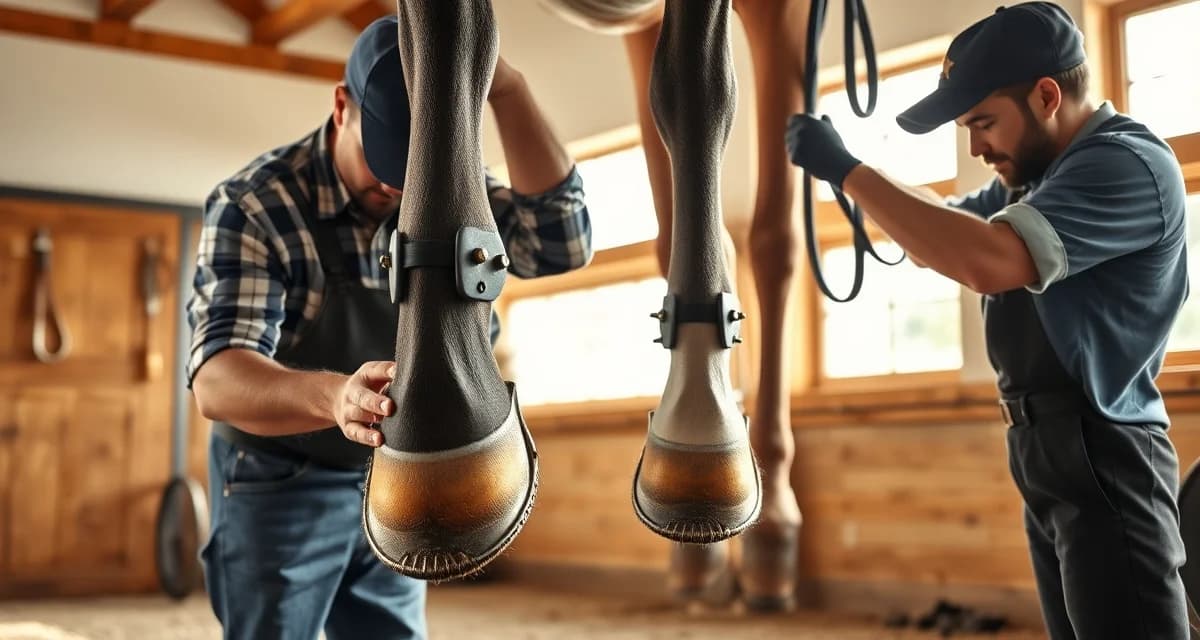
Farrier App for Eventing Horses: Track Cross-Country and Stadium Shoeing Needs
Eventing is the triathlon of the horse world. Your eventing clients need their horses to perform in three completely different phases, often within 48 hours. That puts real pressure on the farrier. One shoeing setup has to hold up through dressage, stadium jumping, and cross-country, all with different footing and traction demands.
TL;DR
- FEI data shows shoeing failures during cross-country account for 31% of horse falls in eventing -- making accurate, accessible records of stud configuration and shoe setup a professional necessity, not just good practice.
- One shoeing setup must perform across dressage, stadium, and cross-country; stud configuration typically changes between phases based on footing, which needs to be documented per horse and per event.
- Most event horses need visits every 5-6 weeks during competition season, with some upper-level horses needing 4-5 week cycles during heavy cross-country mileage periods.
- Pre-event check visits between regular appointments should be planned proactively when a horse's competition schedule is known -- scheduling them reactively creates last-minute scrambles that affect route efficiency.
- Cross-country stud setup details (size, placement, footing conditions that day) should be recorded so you can replicate what worked or adjust based on what didn't at the next event.
- For cross-country-specific stud setup and post-event assessment protocols, the farrier app for cross-country horses guide covers the phase-specific details.
Keeping notes in your head, or scribbled on a paper invoice, just doesn't cut it when you've got 40 horses on your book and three of them are event horses with different stud configurations.
Why Eventing Horses Are Different
FEI data shows that shoeing failures during cross-country account for 31% of horse falls in eventing. That's not a statistic you want associated with your work. The problem isn't usually that the farrier did a bad job. It's that the information wasn't passed along correctly, or the notes from the last visit weren't accessible when they mattered.
Eventing horses often need different traction setups for each phase. Cross-country in wet conditions might call for longer studs. Stadium on hard arena footing might need something smaller. And dressage needs the horse balanced and moving freely. Tracking all of that per horse, per event, takes more than memory.
Stud Holes, Angles, and Event-Specific Notes
With FarrierIQ's hoof health records, you can log stud hole placement, shoe weight, heel height, and any discipline-specific notes for each horse. When your eventing client calls the week before a three-day, you can pull up exactly what you did for their horse at the last event and replicate it, or adjust based on what worked and what didn't.
You're also capturing things like:
- Which stud configuration the horse performs best with on cross-country
- Whether there were any hoof condition concerns after the last event
- How frequently this particular horse needs reshoeing during peak competition season
That history builds up over time and becomes genuinely useful. Both for you and for the client.
Scheduling Around the Event Calendar
Eventers have packed show calendars. Missing the week before a competition because scheduling got jumbled costs your client real money. With FarrierIQ's scheduling app, you can set recurring appointments that account for competition windows, flag horses that are getting close to their next visit, and make sure you're not doubling back across your route unnecessarily.
Eventing horses often need visits every 5-6 weeks during competition season, and some will need a pre-event check in between. Having that visibility in your schedule means you can plan for it instead of scrambling.
Keeping the Trainer and Owner in the Loop
A lot of eventing horses don't live where their owners work them. The barn manager, the trainer, and the owner might all be different people. FarrierIQ's client communication tools let you keep everyone relevant informed without playing phone tag. You finish a visit, log your notes, and the owner gets a summary. The trainer knows what studs were set up. Nobody's guessing.
That kind of professional communication matters a lot in the eventing world, where clients are often invested in their horses' performance at a serious level.
Frequently Asked Questions
How are eventing horses shod differently for cross-country?
Cross-country typically requires studs for maximum traction on variable terrain, including grass, mud, and water complexes. The stud size and placement depend on footing conditions and the horse's way of going. Many farriers also use a slightly heavier shoe on cross-country horses compared to dressage or stadium setups.
How often do eventing horses need shoeing?
Most event horses are on a 5-6 week cycle during competition season. Some horses competing at the upper levels may need visits closer to every 4-5 weeks, especially if they're doing a lot of cross-country mileage on hard ground. Off-season intervals often stretch to 6-8 weeks.
What stud configurations do eventing horses use?
This varies by discipline phase and footing. Cross-country in soft or wet conditions typically uses larger, more aggressive studs. Stadium often uses smaller, rounder studs for a firmer surface. Many horses carry four studs, one in each heel position. Some farriers use a larger stud on the outside heel and a smaller one on the inside for lateral stability.
How do you handle a situation where an eventing horse loses a shoe during cross-country warm-up?
This is an on-site emergency that needs to be resolved before the horse enters the course. If you're attending the event, you're working with what you have on your person -- typically a portable shoeing kit in your vehicle. If you're not on site, the barn needs a protocol for either locating an on-site farrier at the venue or making a phone decision about whether the horse can safely compete barefoot on one front foot for that particular course. Document the incident in FarrierIQ when you're next with the horse -- what shoe was lost, which foot, what condition the foot was in when you assessed it, and what was done at the event. This creates a record of how the shoe held up and whether there's a fitting or nail pattern issue to address at the next set.
What should a farrier check when an eventing horse comes back from a three-day event?
A post-event check should cover all four feet: shoe integrity, stud hole condition and thread wear, wall chips or cracks from footing impact, sole sensitivity from concussion on hard landing, and overall hoof heat or digital pulse. The post-event assessment is the data point that closes the loop on whether the competition setup worked -- if there's wall damage or unusual wear, that's information for adjusting the setup before the next event. Document the findings in FarrierIQ alongside the event name and footing conditions for that specific competition, building the per-horse reference that makes future setups better informed.
Related Articles
Sources
- United States Eventing Association (USEA), competition guidelines and horse welfare resources
- FEI (Federation Equestre Internationale), eventing safety data and shoeing regulations
- American Farrier's Association (AFA), competition horse shoeing techniques and eventing resources
- The Horse: Your Guide to Equine Health Care, eventing horse hoof care and stud management coverage
- American Association of Equine Practitioners (AAEP), competition horse soundness and lameness resources
Get Started with FarrierIQ
Eventing clients need stud configurations documented per horse and per event, competition schedules built into the appointment calendar, and post-event hoof assessments recorded so you're building knowledge across a full season rather than starting fresh at each competition. FarrierIQ's scheduling tools and per-horse records handle all of that in a single platform. Try FarrierIQ free and manage your eventing clients with the documentation that three-phase competition requires.