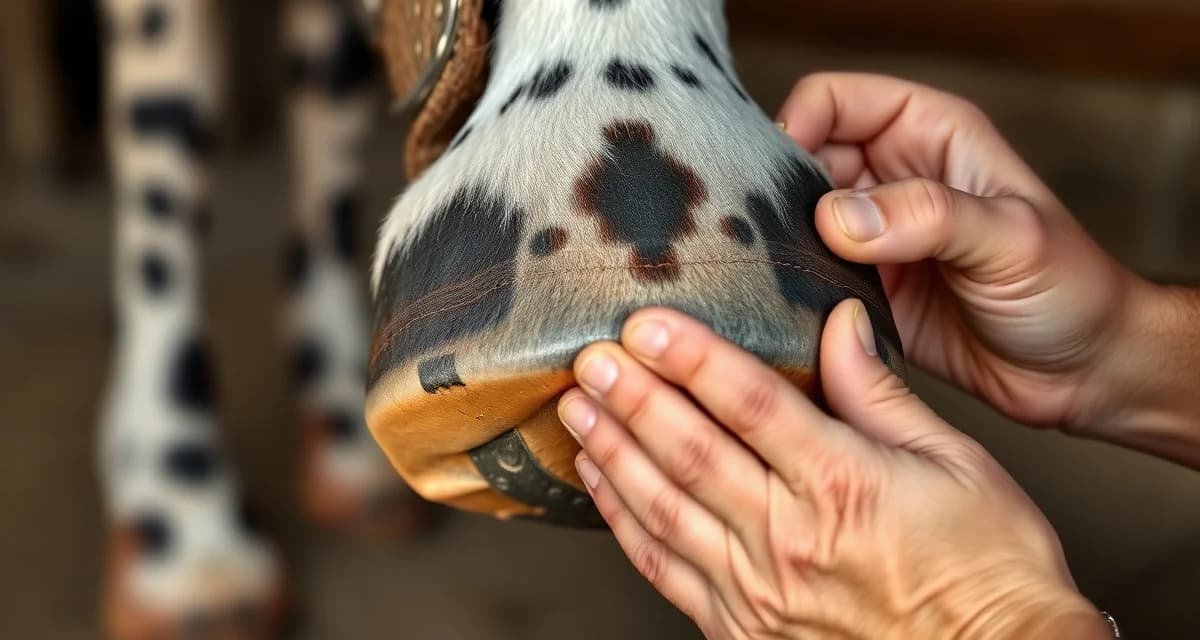
Appaloosa Farrier Care: Striped Hooves and Unique Health Considerations
Appaloosas have a higher incidence of hoof wall issues tied to their unique pigmentation genetics. The alternating dark and light bands that create the breed's signature striped hooves are more than aesthetic. They reflect alternating zones of different wall density and hardness, which creates specific management considerations that farriers working with Appaloosas should understand.
TL;DR
- Appaloosa hoof wall cracking rates are 40% higher than solid-colored horses on rocky terrain, driven by the alternating dense and soft zones created by pigmentation genetics.
- Dark (pigmented) hoof wall bands are denser and harder; light (non-pigmented) bands are softer and more vulnerable to chipping and cracking under abrasive conditions.
- Most Appaloosas in active work are best served by 5- to 7-week intervals, shorter than the 8-9 weeks that may work for sturdier-hoofed breeds.
- Full-coverage or wide-web shoes protect the softer non-pigmented wall zones from direct rock edge impact on hard terrain.
- Changes in the width or character of hoof striping over multiple visits can occasionally signal systemic health changes worth flagging to the owner or vet.
- The Appaloosa Horse Club runs an active show circuit that creates specific pre-show scheduling needs for farriers serving that community.
The Appaloosa is a versatile American breed used in trail riding, western performance events, and pleasure riding. They're sturdy, willing horses with a loyal following. Knowing their hoof characteristics builds your credibility with Appaloosa clients.
The Striped Hoof: What It Means Physically
Appaloosa hoof striping comes from the same pigmentation genetics that produce the breed's spotted coat. The dark bands are pigmented and denser. The light bands are non-pigmented and typically softer. This alternating structure means the hoof wall is not uniform in its density across the width.
On flat, maintained surfaces, this variability is manageable. The hoof distributes load normally and the softer zones don't fail under typical use. On abrasive terrain, particularly rocky trail conditions, the softer zones are more vulnerable to chipping, cracking, and wearing. Appaloosa hoof wall cracking rates are 40% higher than solid-colored horses on rocky terrain, which tells you how notable this variability can be in demanding environments.
Monitoring Hoof Striping as a Health Indicator
Changes in hoof wall pigmentation patterns can sometimes indicate health changes in Appaloosas. The breed's pigmentation is generally stable, but notable changes in the color and pattern of hoof wall growth can occasionally reflect systemic health changes.
More practically, tracking the width and character of the striping zones over multiple visits gives you a baseline for each horse. If the non-pigmented zones are becoming wider or the pigmented zones are appearing to thin, that's worth noting.
FarrierIQ's hoof health records support the kind of multi-visit tracking that makes these observations useful. A note about hoof striping at one visit, followed by a comparison note at the next, builds a longitudinal picture that a one-time observation can't provide.
Managing Appaloosa Wall Quality
Appaloosas on rocky terrain need the most attention to wall quality management. The preventive approach is appropriate shoe selection, consistent intervals that don't allow excessive overgrowth, and communication with owners about management practices that affect hoof quality.
Keeping Appaloosas on rocky or hard terrain shod with appropriate steel and fitted with shoes that have sufficient wall coverage protects the vulnerable non-pigmented zones. Full-coverage shoes, sometimes called wide-web shoes, reduce the direct impact of rock edges on the hoof wall and provide more uniform support across the hoof capsule.
Wall cracks in Appaloosas should be monitored carefully. A crack that progresses toward the coronary band can become a permanent feature of hoof growth. Catching cracks early, drilling the toe to prevent progression in severe cases, and managing the horse's activity while cracks resolve are the tools at hand. See the corrective shoeing hoof cracks guide for protocol details on stabilizing and managing active cracks.
Interval Management for Appaloosas
Most Appaloosas in active work are well-served by a 5-7 week schedule. The variability in their wall quality means that letting cycles run to 8-9 weeks allows more overgrowth to develop in the soft zones, which increases the risk of flaring and cracking.
FarrierIQ's scheduling software keeps your Appaloosa clients on appropriate intervals with automated reminders. Trail horse Appaloosas in particular benefit from consistent scheduling because their owners may not always notice early wall changes the way a more focused horse owner might.
The Appaloosa Community
The Appaloosa Horse Club runs an active show circuit and the breed has a dedicated following particularly in the western states. Appaloosa owners who are involved in the AHC show community have specific show schedule needs that benefit from the same proactive scheduling tools you use for any show horse client.
Trail and pleasure Appaloosa owners, who make up the majority of the breed's population, appreciate reliable service and professional communication more than anything else.
Frequently Asked Questions
How often do Appaloosa horses need a farrier?
Most Appaloosas benefit from farrier visits every 5-7 weeks, particularly if they're doing any trail work on harder terrain. The alternating wall density of Appaloosa hooves makes consistent intervals more important than for breeds with more uniform wall structure. Horses on rocky terrain may need visits at the shorter end of that range.
Do Appaloosa horses have special hoof care needs?
Yes. The primary consideration is the alternating dense and soft zones in the hoof wall that come from the breed's pigmentation genetics. Soft zones are more prone to cracking and chipping on hard terrain. Appropriate shoe selection for the terrain and work being done, consistent intervals, and active monitoring of wall quality are the management priorities.
What should farriers note about Appaloosa hoof health?
Hoof wall striping pattern and any changes to it over time, the condition of non-pigmented (white or light) wall zones relative to pigmented zones, any cracks or chips in the wall, and the hoof's response to the specific terrain the horse works on are all worth capturing in visit records. Over time, those notes tell a story about how each Appaloosa's hooves are responding to their management and use.
Should nail placement differ for Appaloosas compared to other breeds?
Yes, in cases where the non-pigmented wall zones are notably softer. Placing nails through soft, chalky wall increases the risk of the clinch working loose or the wall crumbling at the nail hole. Where possible, target the denser, darker-pigmented wall sections for nailing. If the wall quality is poor throughout, glue-on or glue-assisted shoes eliminate this concern entirely.
How do you communicate wall quality concerns to Appaloosa owners?
Most Appaloosa owners are aware of their breed's reputation for variable hoof quality, so the conversation is usually well-received. Specific observations are more useful than general statements: noting which foot has the most active cracking, whether the condition has improved or worsened since the last visit, and what management changes (consistent intervals, moisture conditioning, nutrition review) might support better wall quality gives owners something concrete to act on.
Related Articles
Sources
- Appaloosa Horse Club (ApHC), breed registry and health resources
- American Farrier's Association (AFA), farrier education and hoof care standards
- American Association of Equine Practitioners (AAEP), equine health guidelines
- The Horse: Your Guide to Equine Health Care, breed-specific hoof management coverage
- University of Minnesota Extension, equine care and farriery resources
Get Started with FarrierIQ
Tracking Appaloosa hoof striping changes, wall quality progression, and cracking patterns across multiple visits is exactly the kind of longitudinal record that makes a meaningful difference in managing this breed. FarrierIQ's per-horse notes and hoof photo documentation make that tracking simple to maintain visit to visit. Try FarrierIQ free and build the kind of detailed history that helps you catch problems early and communicate clearly with Appaloosa owners.