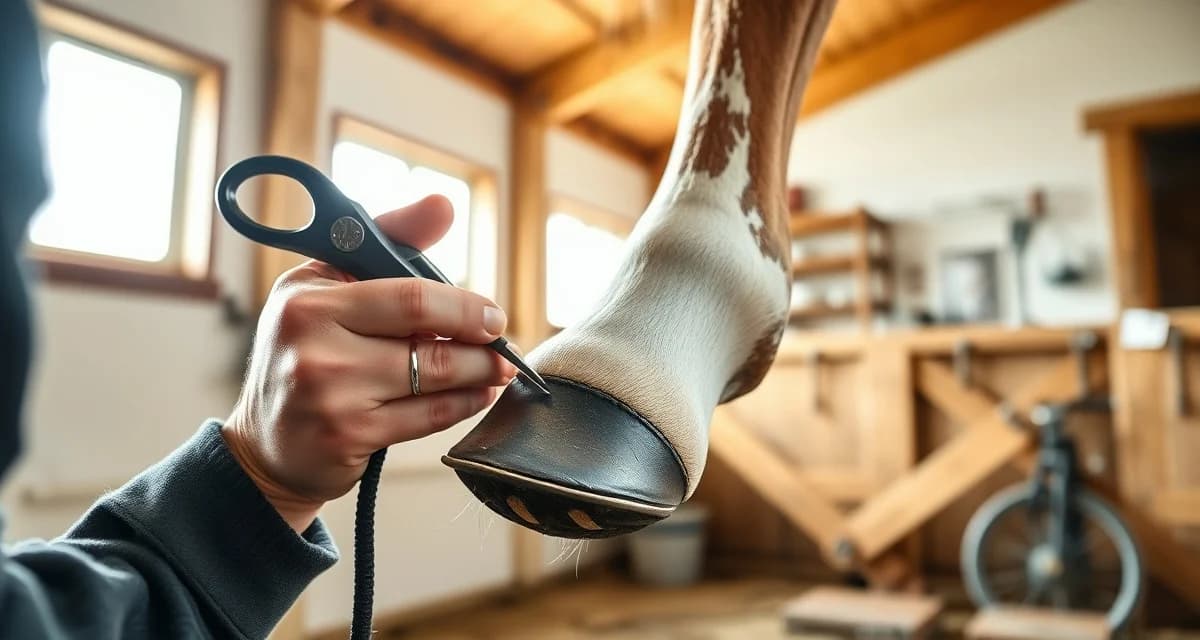
Farrier Pricing Guide: Set Rates That Are Fair, Competitive, and Profitable
Most farriers don't have a pricing problem. They have a pricing system problem. The rates aren't the issue -- it's that they were set based on what the last farrier in the area charged, haven't been reviewed in three years, and aren't built on what it actually costs to run the business.
This guide covers how to build a pricing structure that covers your costs, pays you appropriately, and reflects your regional market.
TL;DR
- Most farriers have a pricing system problem, not a pricing level problem -- rates based on what the last farrier charged, not reviewed in years, and not built on actual business costs.
- Typical solo farrier annual costs: $22,200-57,100 before paying yourself -- a farrier targeting $80,000 personal income with $35,000 in costs needs $115,000 gross revenue.
- Regional full set price ranges (2024-2025): Northeast $200-300, Mid-Atlantic $175-260, Southeast $155-240, Midwest $150-220, South Central $150-225, Mountain West $160-235, Pacific Coast $200-300, Kentucky Thoroughbred country $180-275.
- Resets should be priced at 60-75% of a new shoe set, not 50% -- the material cost savings is real, but the labor is nearly equivalent.
- Emergency call fee ($50-100 flat on top of service rate) and travel surcharges ($0.75-1.25/mile beyond a 15-mile radius) should be explicit line items, not absorbed into service rates.
- Raise prices annually (5-10%) rather than holding for years and then issuing a large increase -- clients absorb gradual increases more readily than occasional large jumps.
- FarrierIQ's income tracker breaks revenue by service type and route segment -- when therapeutic work generates $95/hour and basic trims on a remote property generate $38/hour, you have the data to make intelligent pricing and territory decisions.
The Foundation: Know Your Actual Costs
Before looking at market rates, know what it costs to be in business for a year. Most farriers underestimate this significantly when they're starting out.
Annual business costs for a typical solo farrier:
| Expense Category | Annual Cost Range |
|---|---|
| Fuel (40,000+ miles/yr at 15 mpg) | $9,000 - $14,000 |
| Vehicle maintenance & tires | $2,000 - $4,000 |
| Truck/trailer payment | $0 - $15,000 |
| Tools (replacement + maintenance) | $1,500 - $3,000 |
| Forge consumables | $500 - $1,500 |
| Business insurance (farrier-specific) | $800 - $2,000 |
| AFA dues and certifications | $300 - $600 |
| Farrier app and software | $500 - $600 |
| Supplies (shoes, nails, pads, hardware) | $4,000 - $8,000 |
| Health insurance (if self-paying) | $3,600 - $8,400 |
| Total estimated annual costs | $22,200 - $57,100 |
This is before you pay yourself. Add your target personal income to get your total revenue requirement.
A farrier targeting $80,000 in personal income with $35,000 in business costs needs to generate $115,000 in gross revenue. Divide by your billable hours (typically 1,000-1,400 per year for a full-time solo farrier) and you get your required hourly rate.
Regional Pricing Benchmarks
Farrier rates vary significantly by region. Urban markets with high costs of living and dense horse populations typically support higher rates than rural markets. Horse discipline matters too -- a competition barn in Wellington, Florida runs on different economics than a trail horse property in rural Tennessee.
Regional pricing averages (2024-2025):
| Region | Basic Trim | Full Set (Steel) | Full Set (Aluminum) |
|---|---|---|---|
| Northeast (NY, MA, CT) | $55-80 | $200-300 | $250-375 |
| Mid-Atlantic (VA, MD, PA) | $45-70 | $175-260 | $220-325 |
| Southeast (FL, GA, NC) | $40-65 | $155-240 | $200-300 |
| Midwest (OH, IL, IN) | $35-60 | $150-220 | $190-275 |
| South Central (TX, OK) | $35-60 | $150-225 | $190-280 |
| Mountain West (CO, MT, WY) | $40-65 | $160-235 | $200-295 |
| Pacific Coast (CA, WA, OR) | $55-85 | $200-300 | $250-375 |
| Kentucky (Thoroughbred country) | $50-75 | $180-275 | $225-340 |
These are ranges across farriers of varying skill and experience levels. Top-end farriers doing therapeutic work or competition horses command rates at or above the high end. General-practice farriers on pleasure horses typically land in the middle.
Pricing by Service Type
Trims
Barefoot trims are the most common service and often the most price-sensitive. Most owners compare trim prices among farriers. Your trim price needs to be competitive with your local market while still covering the actual cost of the visit including drive time.
Don't price trims as a loss-leader to attract new clients. If a trim doesn't cover costs at your rate, it's not a sustainable business model.
Resets
A reset (pulling, cleaning, light trim, resetting the existing shoe) takes less material cost than a new shoe set but nearly equivalent labor. Price it accordingly -- typically 60-75% of a new shoe price.
New Shoes
Prices for new steel shoes vary by region and by the type of shoe. Standard keg shoes are the baseline. Specialty shoes (aluminum, wide web, rocker toe, Natural Balance) carry material premiums that should be passed through to the client.
Don't absorb material upgrades in your standard rate. If an owner wants aluminum shoes, aluminum is priced at the aluminum rate.
Pads and Special Hardware
Full pads (leather or synthetic), rim pads, pour-in pads with silicone packing -- these add labor and material cost. Price them as add-ons with a specific line item on the invoice. "$175 for full set + $40 for leather pads and packing" is cleaner than a flat rate that occasionally includes expensive extras.
Therapeutic Shoeing
Heart bars, egg bars, wedge pads, glue-ons, laminitis rehab work -- this is specialty work that requires more time, more materials, and more skill. It should be priced meaningfully higher than standard shoeing.
Most farriers who do significant therapeutic work charge $25-100+ per hour premium over their standard rate, or price specific therapeutic procedures at fixed rates that reflect the additional complexity.
Emergency Calls
An emergency call -- a pulled shoe, a horse that can't wait for the regular appointment -- disrupts your day and costs you time. Charge for it. Most farriers apply a $50-100 emergency call fee on top of standard service rates.
Travel Surcharges
If you're driving 30+ minutes to a single horse, the economics often don't work at standard rates. A distance-based surcharge (e.g., $0.75-1.25/mile beyond a 15-mile radius) is legitimate and standard practice in many markets.
Be upfront about travel surcharges with new clients. It shouldn't be a surprise on the first invoice.
When to Raise Prices
Annually. Costs increase every year. If you haven't raised prices in two years, you've taken a real pay cut.
When you're too busy. If you have a waitlist or are turning away new clients, your prices are probably below market. Raising rates reduces demand slightly while increasing revenue per appointment.
When adding specialty services. If you've invested in therapeutic shoeing skills or breed-specific expertise, that should be reflected in your rates.
When a long-standing client relationship allows it. Annual 5-10% increases are much easier for clients to absorb than occasional large jumps. Raise gradually and consistently rather than holding steady for five years and then hitting clients with a 40% increase.
Communicating Price Changes
Give clients notice -- 30 days is standard. A brief, professional message: "Starting [date], my rates will be updated to [new rates]. Please let me know if you have any questions." Most clients expect periodic increases and appreciate the advance notice.
Don't apologize for the increase. Your rates reflect your costs and your skill. A brief explanation (fuel costs, supply costs, market adjustment) is fine, but extensive justification signals uncertainty about your own value.
Tracking Profitability
Setting good prices is step one. Knowing whether you're actually hitting your targets is step two.
FarrierIQ's income tracker breaks down revenue by client, horse, service type, and route. This lets you identify your highest-margin services, your most profitable clients, and the parts of your territory where you're not covering costs.
When you can see that therapeutic work is generating $95/hour and basic trims on a remote property are generating $38/hour, you have the information to make intelligent decisions about pricing and territory.
Related Articles
- Farrier Pricing for Trail Horses: Terrain-Ready Shoeing Rates
- Farrier Income Maximization Guide: Pricing, Routes, Records, and Revenue Tracking
FAQ
How do I calculate farrier prices?
Start with your annual business costs plus your target personal income. Divide by your billable hours to get a required hourly rate. Multiply that by the average time for each service type to get per-service prices. Then cross-check against local market rates -- price below market only if there's a strategic reason to do so.
What is the average farrier charge per horse per year?
A shod horse on a 6-week cycle with new shoes runs roughly $1,100-1,600 per year in most markets (8-9 appointments x $130-180 average per visit). Therapeutic horses, competition horses, or those on shorter cycles cost more. Barefoot-only horses on 8-week trims might be $350-500 per year.
Should farriers charge for difficult horses?
Yes. A horse that requires extra time, extra handlers, or creates safety risk is not the same job as a cooperative horse. Many farriers add 25-50% to appointments with known problem horses, or require the owner to provide adequate handling assistance. Document this clearly in your invoicing.
How should farriers track whether their pricing is actually covering their costs over time?
The most practical tracking approach is to compare your FarrierIQ income data against your actual business expenses quarterly. Pull your quarterly revenue total and divide by your total visits to get average revenue per visit -- then compare that to your target revenue per visit based on your hourly rate and average service time. If the average is below target, something in your pricing or service mix needs adjustment. FarrierIQ's income tracker breaks revenue by service type, which lets you see if the shortfall is in specific categories (often therapeutic work or remote clients) rather than across the board. Quarterly reviews catch pricing drift early enough to adjust before a year's worth of below-target revenue has accumulated.
Sources
- American Farrier's Association (AFA), national farrier pricing survey and business management resources
- Bureau of Labor Statistics (BLS), occupational wage data and regional cost of living indices
- Internal Revenue Service (IRS), self-employment tax and business expense guidance for independent contractors
- Small Business Administration (SBA), pricing strategy and profitability guidance for service businesses
Get Started with FarrierIQ
FarrierIQ's income tracker breaks revenue by service type, client, and route -- when you can see that therapeutic work generates $95/hour and remote trim-only clients generate $38/hour, you have the information to make pricing and territory decisions from data, not intuition. Try FarrierIQ free and run your first revenue-by-service-type report to see where your pricing actually stands.