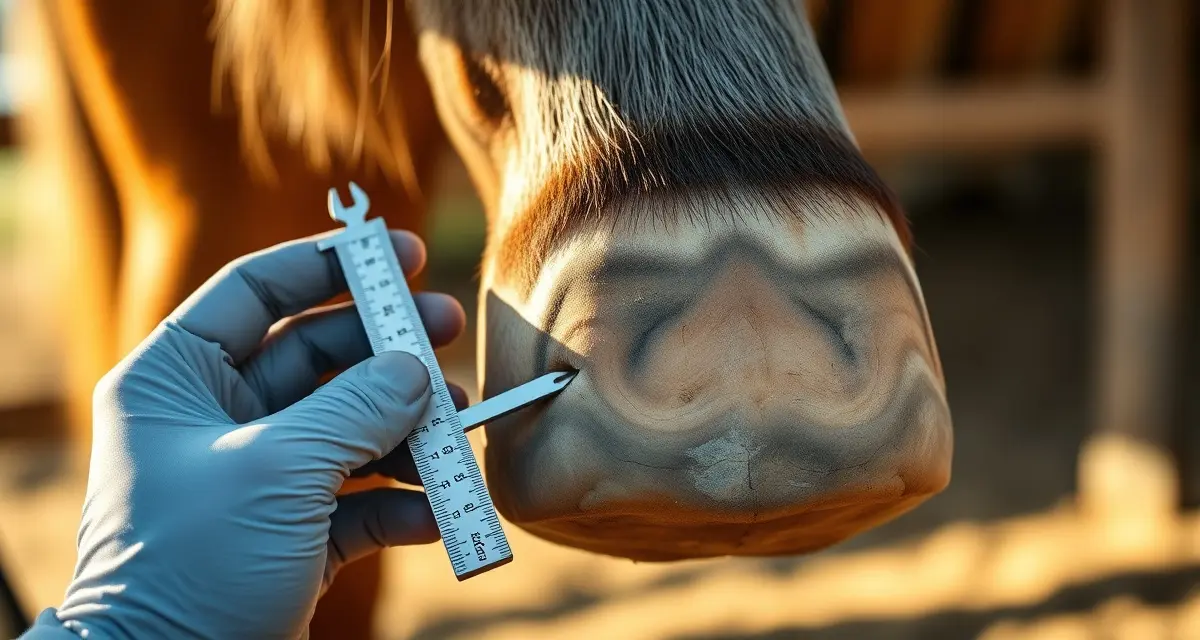
Hoof Cycle Tracking Software for Farriers
Horses with laminitis need visits up to 4 weeks more frequently than healthy horses. That's not a guideline, it's the difference between managed disease and a horse in crisis. And it's just one example of why hoof cycle tracking needs to be precise, per-horse, and automatic.
TL;DR
- Laminitis horses need visits up to 4 weeks more frequently than healthy horses -- managing different intervals for different horses across a large book requires per-horse cycle tracking, not a single default schedule.
- A typical 120-horse book has 4 distinct interval groups: standard (6-8 weeks), working horses with faster wear (5-6 weeks), therapeutic/laminitis cases (4 weeks), and lightly used pasture horses (8-10 weeks) -- manual tracking across all four groups is where spreadsheets break down.
- Hoof cycle tracking is proactive; standard scheduling is reactive -- cycle tracking knows a horse is due next week whether or not the owner has called; standard scheduling only knows about horses with booked appointments.
- 80 horses at 6-week intervals = 13-14 horses per week -- having that number visible lets you see whether you're at capacity, whether there's room for new clients, and whether pricing needs adjustment.
- FarrierIQ's overdue alert system surfaces horses that have passed their due date sorted by days overdue, and suggests available appointment slots based on geographic proximity to already-planned stops.
- The laminitis interval (3-5 weeks) is often coordinated with veterinary treatment schedules -- custom interval settings and vet coordination notes keep the clinical calendar organized.
- FarrierIQ's farrier scheduling software integrates cycle tracking with route optimization -- an overdue horse suggestion includes which day you'll be nearby and what slot is available, making the addition a one-tap decision.
Generic scheduling software doesn't know what a hoof cycle is. It knows when you booked an appointment. That's a completely different thing.
Generic scheduling software doesn't know what a hoof cycle is. It knows when you booked an appointment. That's a completely different thing. Hoof cycle tracking software is built around the biology of hoof growth, with per-horse intervals, health condition flags, and automatic alerts that catch overdue horses before you've missed them.
This is the first platform to automate scheduling based on individual horse trim intervals. This guide explains exactly how it works, what to track, and why it matters.
What Is a Hoof Growth Cycle?
Hoof horn grows continuously throughout a horse's life. In most horses, the hoof wall grows roughly 1/4 to 3/8 inch per month, with growth rates varying by season, diet, circulation, workload, and individual genetics.
A hoof cycle is the time between farrier visits appropriate for a given horse to maintain healthy hoof length and angle. For most horses, this is 6-8 weeks. But the range is wide:
- Horses with laminitis, navicular syndrome, or other hoof conditions often need visits every 3-5 weeks
- Heavily shod working horses may need resets at 4-6 weeks as shoes wear
- Young growing horses may grow hoof faster and need closer intervals
- Aged horses on lush pasture may have faster growth
- Horses in dry, hard conditions may wear naturally and need less frequent trimming
The point is: there is no single correct hoof cycle. Every horse has its own optimal interval based on its individual biology, use, and health status.
Why Tracking Hoof Cycles Manually Fails
When you're managing 40 horses, you can probably keep track. When you're managing 100, 150, or more, manual tracking breaks down.
Here's what manual hoof cycle tracking actually looks like in practice:
You write the visit date in your notebook. Or you remember it mentally. Or you rely on the horse owner to call when they think the horse is due. Then a few weeks pass, you're busy, and somewhere in the back of your mind you know that mare at the Johnson farm is probably getting close. But you're not sure. So you wait for the call.
The call comes six weeks later, and the horse is nine weeks out. That's a welfare issue and a relationship management issue both.
The farriers who handle this manually well have typically developed systems over many years, elaborate spreadsheets, paper calendars with horse names on target dates, color-coded notebooks. These systems work, but they require constant maintenance and they break when you get busy.
How Hoof Cycle Tracking Software Works
FarrierIQ's hoof interval tracking system works like this:
Per-horse interval settings. When you add a horse to the system, you set its individual interval, 6 weeks, 4 weeks, 8 weeks, whatever is appropriate. This interval can be changed at any time as the horse's needs change.
Automatic countdown tracking. After each visit, the app records the completion date and starts counting down to the next due date based on the interval you've set.
Overdue alert generation. When a horse reaches its due date without a new appointment scheduled, the app flags it as overdue and surfaces it in your alerts.
Automatic schedule integration. FarrierIQ can slot overdue horses into your schedule based on their geographic proximity to your already-planned stops, filling gaps without manual planning.
This is the difference between reactive scheduling ("the owner called and the horse is 12 weeks out") and proactive scheduling ("the horse is due next week and I've already added it to my Thursday route").
Tracking Different Intervals for Different Horses
One of the most valuable aspects of hoof cycle tracking software is the ability to manage different intervals within a single client base.
Consider a typical farrier with 120 horses:
- 70 horses at 6-8 week standard intervals
- 20 horses at 5-6 week intervals (working horses, shoes wearing faster)
- 15 horses at 4-week intervals (laminitis, therapeutic cases, young stock)
- 15 horses at 8-10 week intervals (lightly used pasture horses)
Managing all four groups manually, across more than 100 horses, is where the spreadsheet breaks down. You're tracking different target dates for different animals and trying to keep it all current as horses join, leave, or change categories.
FarrierIQ tracks all of it automatically. Each horse has its own settings. You change them when the horse's needs change. The system handles the rest.
Health Condition Flags and Custom Intervals
For horses with specific health conditions, hoof cycle tracking becomes even more important because the stakes are higher.
Laminitis horses need closer intervals, often every 3-5 weeks, to manage hoof angles and prevent the rotation or sinking that can turn a managed case into a crisis. FarrierIQ lets you flag laminitis horses and set their interval shorter than your standard. The system alerts you on their schedule independently of your standard clients.
Navicular horses may need specific shoeing techniques on precise intervals. The exact timing of their visits may be coordinated with veterinary treatment schedules. Custom interval settings and vet coordination notes keep this organized.
Post-surgery horses or horses recovering from laminitic episodes may need weekly or biweekly monitoring. The system accommodates any interval you set.
The laminitis management farrier guide covers these shorter-interval cases in more detail, including how to coordinate with veterinarians through shared records.
Hoof Cycle Tracking for Large Herds
Some farriers serve large boarding facilities or breeding operations with 30, 50, or 100+ horses at a single location. Managing hoof cycles for a herd at that scale requires a different approach than individual client management.
FarrierIQ handles herd accounts by displaying all horses at a facility in a single view, sorted by days-overdue or by next due date. You can see at a glance which horses need attention and when.
For breeding operations especially, seasonal variation in growth rates means intervals that work in summer may need adjustment in winter. The system lets you bulk-update intervals for a group of horses or adjust them individually as conditions change.
Can Software Alert You When a Horse Is Overdue for Shoeing?
Yes, this is one of FarrierIQ's core functions. Overdue alerts work at two levels:
Internal alerts: The app notifies you when a horse in your client base has passed its due date without a new appointment. You see a prioritized list of overdue horses sorted by how many days past due they are.
Owner notifications: For appropriate clients, FarrierIQ can send automatic notifications to horse owners when their animal is approaching its due date, prompting them to confirm or request a new appointment. This is handled through the owner portal.
The combination of internal alerts and owner notification creates a proactive system where horses rarely go considerably overdue. See the overdue horse alerts guide for detailed configuration.
Hoof Interval Tracking vs. Standard Scheduling
The difference between hoof interval tracking and standard scheduling is worth being clear about.
Standard scheduling: you book appointments. The system tracks what you've booked.
Hoof interval tracking: you set each horse's biological cycle. The system tracks whether that cycle is being maintained, flags deviations, and prompts corrective action before the horse falls through the cracks.
Standard scheduling is reactive. You serve the horses who have appointments. Hoof interval tracking is proactive. You know which horses need attention before the owner calls, or before anyone calls.
For the farrier, this means fewer missed appointments and better horse welfare outcomes. For the client relationship, it means you're the farrier who stays on top of their horse's needs, not the one who waits to be called.
Connecting Hoof Cycle Data to Business Outcomes
Hoof cycle tracking isn't just a horse welfare tool. It's a business management tool.
When you know how many horses are in each interval category, you can project your workload. 80 horses at six-week intervals means roughly 13-14 horses per week to serve. When you can see that number, you can see whether you're at capacity, whether there's room to take new clients, or whether you need to adjust pricing.
When you track visit completion against interval targets, you can see which clients are reliably scheduling and which are chronically late. That information matters for route planning, capacity planning, and client relationship decisions.
FarrierIQ's reporting ties hoof cycle data to scheduling outcomes, giving you a business-level view of your client base that you simply can't get from paper records.
Integration With Scheduling and Routing
Hoof cycle tracking in FarrierIQ isn't a separate feature, it's integrated with scheduling and routing.
When a horse becomes overdue, FarrierIQ doesn't just alert you. It suggests available appointment slots based on your existing schedule and the horse's geographic location. The result is a suggestion: "This horse is three days overdue. You have a gap on Thursday afternoon and you'll be two miles away. Want to add it?"
That integration between cycle tracking and route optimization is what makes the system genuinely useful in practice, rather than just another thing to check.
See the farrier scheduling software hub for how all of this fits into your complete scheduling workflow.
FAQ
What is a hoof growth cycle?
A hoof growth cycle is the period between farrier visits appropriate for a given horse to maintain healthy hoof length and angle. Most horses have cycles of 6-8 weeks, but this varies considerably based on individual growth rate, health conditions, workload, and use type. Horses with laminitis or other hoof conditions may need cycles as short as 3-4 weeks, while lightly used pastured horses may go 8-10 weeks between visits.
How do I track hoof intervals for large herds?
FarrierIQ handles large herds by displaying all horses at a facility or in your client base in a single view sorted by days-overdue or next due date. Each horse has its own interval setting that triggers independent alerts. For herd accounts at boarding facilities or breeding operations, you can bulk-view all horses' upcoming due dates and sequence visits efficiently around your existing routes.
Can software alert me when a horse is overdue for shoeing?
Yes. FarrierIQ generates overdue alerts when a horse passes its scheduled interval without a new appointment logged. These appear as internal alerts in your dashboard, sorted by days overdue. The system can also send automatic notifications to horse owners when their horse approaches or passes its due date, reducing the need for manual follow-up calls.
How should a farrier handle a horse whose interval needs to change mid-season -- for example, a horse recovering from laminitis returning to normal work?
Change the interval in FarrierIQ when the clinical situation changes -- the system updates immediately and begins calculating from the most recent visit. For a laminitis horse transitioning from 4-week to 6-week intervals as they recover, the change is typically made in consultation with the treating vet. Document the rationale for the interval change in the visit note: "Vet cleared for extended interval -- transitioning from 4 to 6 weeks, monitoring hoof angle stability." If the horse's condition changes again, the record shows the interval history and the reasoning at each adjustment point. For horses coming off intensive therapeutic protocols, extending the interval in 1-2 week increments rather than jumping to the full standard interval gives you additional monitoring checkpoints during the transition.
What is the business case for hoof cycle tracking beyond horse welfare?
Cycle tracking makes your book's workload predictable and manageable. When you know how many horses are in each interval category, you can project how many visits you need to complete per week to stay current across your full client base. That projection is your capacity calculation: if your current book requires 18 horses per week at your standard intervals, and you have capacity for 22, you have room for 4 more horses. If you're already at 22, you're at capacity. Without cycle tracking, most farriers estimate their capacity from feel -- with tracking, it's a number. That number informs decisions about new client intake, pricing adjustments for a full book, and route expansion planning. FarrierIQ's reporting connects hoof health records and cycle data to give you this business-level view.
Sources
- American Association of Equine Practitioners (AAEP), equine hoof cycle and laminitis management guidelines
- American Farrier's Association (AFA), farrier business management and scheduling resources
- Cornell University College of Veterinary Medicine, equine hoof growth physiology research
Get Started with FarrierIQ
Horses with laminitis need visits up to 4 weeks more frequently than healthy horses -- and the only way to guarantee that interval is maintained across a full book is automatic cycle tracking with overdue alerts. FarrierIQ's farrier scheduling software handles per-horse intervals, overdue alerts, and hoof health records in one system. Try FarrierIQ free and set up your first per-horse interval before your next route day.