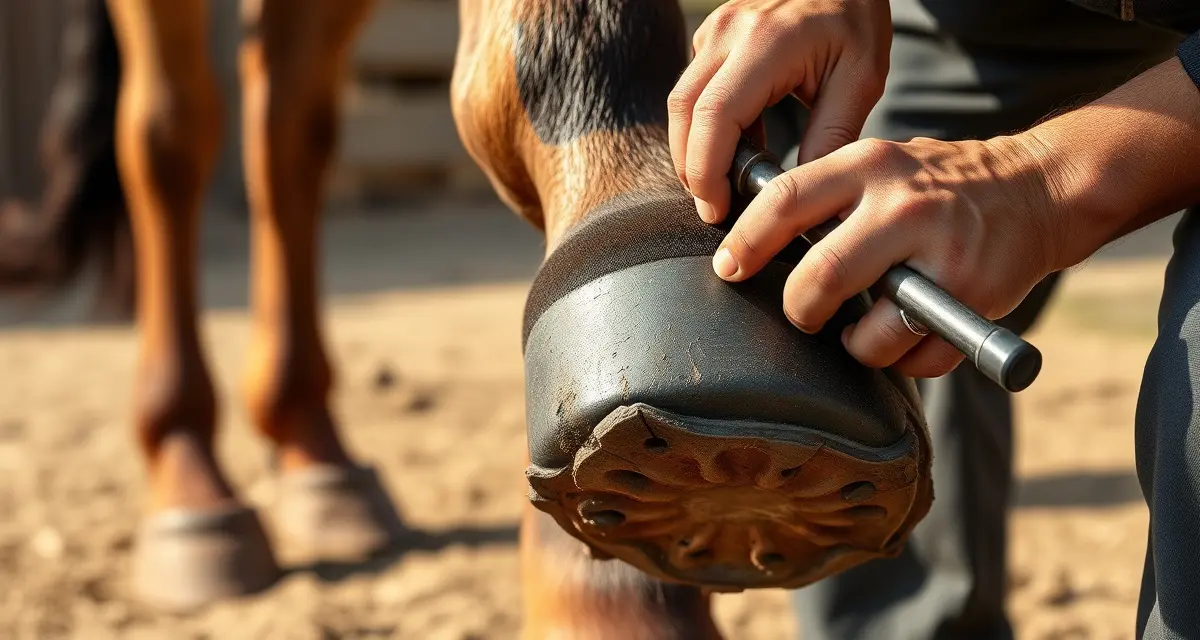
Arabian Horse Shoeing Guide: Caring for Strong Dense Hooves
Arabians have 25% denser hoof walls than most light breeds. That's not marketing copy from an Arabian registry - it's the result of thousands of years of selection pressure in the Nejd desert, where horses walked on rock and sand and the ones with weak feet didn't survive.
TL;DR
- Arabian hoof walls are 25% denser than most light breeds, a product of thousands of years of desert selection pressure that produced naturally hard, concave, nail-retaining feet.
- The naturally more upright, smaller, and rounder Arabian foot should not be reshaped to look like a Quarter Horse foot - fit to the individual, not the stereotype.
- White line disease is more common in Arabians than many owners expect, and the dense wall makes early detection harder because the soft material isn't visible until it's well established.
- Show Arabians in active competition are typically on 4-5 week cycles to maintain the appearance standards judges assess in the ring.
- Aluminum shoes are standard for English-class show Arabians; heavier steel with borium or studs is the right choice for trail and endurance work on hard terrain.
- FarrierIQ's voice-to-notes feature lets you capture breed-specific observations like wall density and hoof angle measurements immediately after each visit.
Those dense walls are a genuine advantage. Arabians hold a nail better than most breeds and can often go barefoot in conditions that would have a Thoroughbred footsore inside a week. But dense doesn't mean problem-free. Arabians have their own set of hoof characteristics that you need to understand before you pick up the nippers.
Arabian Hoof Characteristics
What Makes the Arabian Foot Distinct
Arabian hooves tend to be:
- Smaller and more upright than many Western breeds
- Rounder in shape with a more concave sole profile
- Hard-walled - you'll notice it when you're nipping
- Naturally shorter-toed compared to many light breeds
The upright hoof conformation is a heritage trait - horses traversing rocky desert terrain needed a more upright, tight foot. That same foot can cause problems when the horse lives in a wet climate, works on soft arena footing, or is asked to do athletic work that puts different loading demands on the leg.
Sole Concavity
Good sole concavity is one of the Arabian's real strengths. A naturally concave sole provides better self-cleaning on rocky terrain and reduces the risk of sole bruising. You'll see flat soles in some individuals, particularly those kept on consistently wet ground, but it's less common than in warmer-blooded breeds.
Common Hoof Problems in Arabians
Long Toe/Low Heel
Less common as a natural conformational trait in Arabians than in some breeds, but show conditioning can push horses toward longer toes for aesthetic reasons. The classic Arabian head-high trot with floating action looks more dramatic with a slightly longer toe - some show barns encourage it. It's not good for the horse's long-term soundness.
If you're taking on show Arabians, be ready for conversations about ideal hoof angle versus what certain trainers want to see in the ring. Your job is the horse's long-term soundness. Be diplomatic but firm.
Contracted Heels
More common in stalled horses. Arabians kept in intensive show conditioning with limited turnout can develop contracted heels. Management is the same as other breeds: restore frog ground contact, encourage turnout, avoid removing commissure tissue. See the corrective shoeing contracted heels guide for the full protocol.
Sensitivity Issues
Some Arabians - particularly part-breds and those who've been kept primarily on soft footing - can be surprisingly footsore on gravel and rough terrain despite their reputation for hard feet. It's always worth testing with hoof testers rather than assuming the horse is fine because it's an Arabian.
White Line Vulnerabilities
The Arabian's typically denser wall doesn't make it immune to white line disease, especially in wet climates. The condition can progress quickly in hard-walled horses because it's harder to see early - you don't always notice the soft crumbly material until it's well established. See the corrective shoeing white line disease guide for assessment and management protocols.
Do Arabians Need Shoes?
Many Arabians do perfectly well barefoot. The combination of hard walls, good concavity, and smaller frame means the breed tolerates barefoot management better than most.
Factors that push toward shoeing:
- Regular work on gravel, asphalt, or hard rocky terrain
- Competition schedule requiring consistent work regardless of terrain
- Existing hoof wall weakness or previous white line issues
- Owner preference and stable management
Factors where barefoot is reasonable:
- Horse primarily on grass or soft footing
- Healthy, hard-walled feet without issue
- Light to moderate work only
- Owner committed to regular trimming cycles
Don't shoe a horse that doesn't need shoes. But don't let an owner convince you that an Arabian in heavy trail work on rocky ground is fine barefoot if the horse is clearly footsore.
Step-by-Step: Shoeing an Arabian
Step 1: Assess the Hoof Angle
Arabians often have a naturally more upright hoof angle. Before adjusting the toe, look at the hoof-pastern axis from the side. A naturally upright foot with a straight hoof-pastern axis doesn't need the angle lowered. Resist pressure to stretch the toe for a more typical-looking angle if the natural angle is correct for the individual.
Step 2: Trim the Dense Wall
Arabian hoof wall will take more effort to trim than many breeds. Sharp nippers and a sharp knife are essential. This isn't the job for dull tools.
Keep the trim balanced. Arabian feet are naturally rounder - don't try to make them look like a Quarter Horse foot.
Step 3: Check Sole Depth
Even with naturally concave soles, check before paring. Some individuals have thinner soles than you'd expect. Don't over-pare.
Step 4: Select the Shoe
Most Arabians do well in standard keg shoes sized appropriately. The foot is naturally smaller - don't go over-sized in shoe length or width trying to get coverage. Fit to the foot.
Aluminum shoes are common for show Arabians in English disciplines - reduced weight for floating movement.
For Arabians in trail or endurance work, heavier steel with appropriate traction (borium, studs) is standard.
Step 5: Nail Pattern
Arabian hooves hold nails well. Standard 4 or 5 nail pattern front and back, avoiding the last nail hole to allow heel expansion. The hard wall clinches cleanly - enjoy it.
Step 6: Finish
The dense wall finishes well and stays dressed neatly between shoeing visits. Show Arabians get a high-finish rasp job, often with hoof black for the ring. Working Arabians just need a neat, functional finish.
Arabians in Endurance and Trail Work
Endurance Arabians - particularly horses competing in 50 and 100-mile rides - are a specialty. The hoof management for endurance work is significantly different from show or pleasure work.
Key considerations:
- Many top endurance horses compete barefoot, using hoof boots for rocky sections
- Those who are shod often use glue-on shoes to avoid nail holes weakening the wall over a heavy competition season
- Hoof conditioning and sole toughening protocols are important - talk to the team's vet and endurance trainer
- Cycles may be shortened during competition season
If you're getting into endurance Arabians, spend time with the community. There's a specific knowledge base around endurance hoof care that goes beyond standard shoeing.
Show Arabian Specifics
Show Arabians in halter, English pleasure, and native costume classes are some of the highest-maintenance shoeing appointments you'll do. The owners are knowledgeable and particular, the standards are specific, and the appearance of the foot is judged as closely as any other aspect of the horse's presentation.
- Feet are typically trimmed to show the naturally upright, rounded profile
- Hoof black or hoof polish is standard for the ring
- Shoeing is often every 4-5 weeks to maintain the preferred appearance
- Aluminum shoes are common for English classes; plain steel for others
Keeping Records on Arabian Clients
The endurance world and show Arabian world both have extensive vet involvement. If you're shoeing horses in either community, your records need to be detailed and accessible. Hoof wall changes, sole sensitivity findings, previous shoeing approaches - all of it can be relevant when a vet is evaluating performance.
FarrierIQ's voice-to-notes feature lets you capture breed-specific observations at the barn while they're fresh. Arab-specific notes on wall density, hoof angle measurements, and sole depth flag any changes across the shoeing history in a way that a notebook in the truck never will.
Related Articles
- Mustang Natural Horsemanship Shoeing Guide: Building Trust and Managing Hooves
- Appaloosa Trail Riding Shoeing Guide: Managing Brittle Hooves Across Rocky Terrain
FAQ
How often do Arabian horses need shoeing?
Shod Arabians typically need new shoes every 5-7 weeks depending on work intensity and hoof growth. Show Arabians in active competition may be on 4-5 week cycles to maintain appearance. Barefoot Arabians should be trimmed every 6-8 weeks - don't let the hard wall fool you into thinking they can go longer without attention.
Do Arabian horses need shoes at all?
Many Arabians do fine barefoot, especially those with good hoof quality working primarily on soft or mixed footing. Their naturally hard, dense walls make them one of the better barefoot candidates among light breeds. Shoeing becomes necessary for horses in regular work on hard surfaces, those with existing hoof issues, or those in competition requiring consistent footing regardless of conditions.
What hoof conditions are common in Arabians?
White line disease is more common than many people expect given the dense walls - it's just harder to spot early. Contracted heels occur in heavily stabled horses. Some Arabians in non-native climates or on consistently wet ground can develop softer, less dense walls over time. Show horses kept on artificially long toes for aesthetic reasons often develop long toe/low heel issues that create long-term soundness problems.
How do you handle farrier resistance from an Arabian in pain?
Arabians can be reactive horses under foot, particularly when sole sensitivity or contracted heels are causing genuine discomfort. Working calmly and deliberately, testing before trimming aggressively, and giving the horse predictable handling reduces resistance. If a horse is consistently difficult under foot in ways that suggest pain rather than behavior, flagging the pattern in your notes and discussing it with the owner and vet is appropriate.
What's the best way to document a show Arabian's hoof history for vet consultations?
Systematic notes at every visit - hoof angle measurements, sole depth assessment, any sensitivity findings, shoe type and nail pattern used - give vets a detailed picture when they're evaluating performance concerns or post-ride lameness. FarrierIQ's records let you capture these specifics in a format that's easy to share with a vet or trainer, rather than trying to reconstruct history from memory.
Sources
- Arabian Horse Association (AHA), breed registry and performance horse resources
- American Farrier's Association (AFA), farrier education and shoeing standards
- American Endurance Ride Conference (AERC), endurance horse hoof management guidelines
- University of California Davis School of Veterinary Medicine, equine podiatry research
- The Horse: Your Guide to Equine Health Care, breed-specific hoof care coverage
Get Started with FarrierIQ
Show Arabians, endurance Arabians, and pleasure Arabians all have different interval and documentation needs - and often live at the same barn. FarrierIQ keeps each horse on its own schedule with its own notes, so managing a diverse Arabian client base doesn't require a different system for each use type. Try FarrierIQ free and see how organized records change your Arabian appointments.