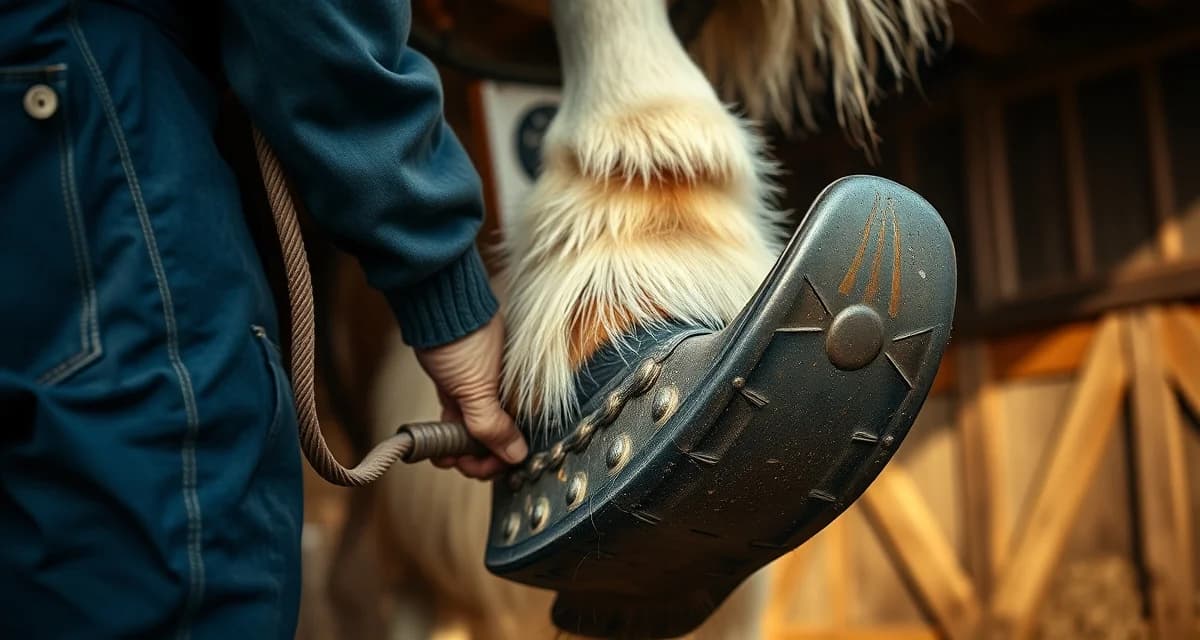
Clydesdale Shoeing Guide: Managing the Gentle Giants of the Draft World
Clydesdale shoes can weigh 3-5 lbs each and require specialized tooling to fit and shape. That alone tells you something about what's different when you're working with these horses. Clydesdales aren't just big horses with bigger shoes, they have specific hoof anatomy, distinctive feathering that creates its own care challenges, and a gentle disposition that, combined with their sheer size, demands a particular approach from the farrier.
TL;DR
- Clydesdale shoes weigh 3-5 lbs each and require size 6 or 7 stock - specialized draft-specific shoe inventory that most light horse farriers don't carry.
- The feathering on Clydesdale lower legs traps moisture and debris, significantly increasing the risk of white line disease and pastern dermatitis compared to clean-legged draft breeds.
- Always inspect under the feathering at every visit - skin conditions and moisture buildup develop where the owner cannot see them between appointments.
- Working Clydesdales need shoeing every 6-8 weeks, with pulling or logging horses often requiring 5-6 week intervals due to accelerated wear.
- Soft hoof horn means Clydesdales bruise more easily on rocky or hard-packed ground than Percherons, which tend toward harder horn quality.
- Heavy rasps, larger clinch blocks, draft-specific nail sizes, and sufficient anvil capacity are required - light horse tools produce worse results and harder work on draft feet.
This Clydesdale shoeing guide covers frequency, sizing, feather management, common hoof conditions, and how to keep detailed records for large draft clients.
Clydesdale Hoof Basics
Clydesdales have large, round hooves with a lower heel angle than most light horse breeds. Their hooves are typically softer and more prone to bruising than other draft breeds, particularly Percherons, which tend to have harder hoof horn.
The wide, open hoof structure of the Clydesdale means they're susceptible to white line disease if feathering traps moisture and debris against the coronary band and lower leg. Regular cleaning of the feathering, especially in wet conditions, is part of responsible Clydesdale care.
Their hooves grow quickly, which is a factor in determining trim intervals.
How Often Do Clydesdales Need Shoeing?
Most working Clydesdales need shoeing every 6-8 weeks. For horses doing heavy draft work, logging, pulling competitions, farm use, some farriers push intervals closer to 5-6 weeks because wear accumulates faster on working hooves.
Show Clydesdales, particularly those shown in halter or hitch classes, may need closer attention because their hoof appearance is judged as part of the overall picture. Hitch horses often have specific shoeing requirements for the action and movement judges want to see.
Pastured Clydesdales doing minimal work can sometimes stretch to 8-10 weeks, but their hooves should be evaluated rather than assumed to hold up over longer intervals. The farrier hoof health records system provides a good framework for tracking condition at each visit regardless of interval.
Shoe Sizing and Weight
This is where Clydesdale shoeing differs most dramatically from light horse work. A typical Clydesdale shoe will be a size 6 or 7, sometimes larger for particularly big individuals. The shoes themselves are heavy, often requiring specialized draft horse shoe stock that many light horse farriers don't stock.
Custom fit is important. Clydesdales have distinctive foot shapes, and a shoe that doesn't follow the natural shape of the hoof wall properly won't provide the support the horse needs. Take your time fitting. A poorly fit draft shoe is worse than no shoe because of the weight and use involved.
For pulling competition Clydesdales, calks and studs are common additions. These provide traction on pulling tracks but need to be appropriate for the horse's movement and the competition surface.
Feathered Feet: Special Considerations
The feathering on Clydesdales, the heavy hair growth around the lower legs and hooves, is part of what makes the breed visually distinctive. It's also a management challenge.
Feathering traps moisture against the skin of the lower leg, creating conditions that favor skin conditions like "mud fever" (pastern dermatitis) and can contribute to white line disease if the hoof wall isn't kept clean.
When shoeing feathered Clydesdales:
Check under the feathering. You can't see the lower leg without parting the feathers. Look for skin irritation, moisture buildup, or early signs of skin conditions. Your clients may not know these issues are developing until they're notable.
Clean the hoof wall thoroughly before fitting. Feathering debris can contaminate the white line area. Take time to clean the hoof properly before assessing or fitting.
Advise clients on feather maintenance. Regular brushing, keeping the feathers dry after wet conditions, and prompt treatment of any skin irritation are owner responsibilities. Share this with clients as part of the visit.
FarrierIQ's per-horse health record fields let you document feather condition observations at each visit and flag horses with recurring skin issues for closer monitoring. Link to the draft horse shoeing guide reference notes for your Clydesdale clients.
Common Hoof Conditions in Clydesdales
White line disease. As noted, Clydesdales are prone to white line disease because moisture gets trapped in the feathering around the hoof. Early detection requires looking carefully at the white line during trimming and noting any separation or soft spots. See the corrective shoeing white line disease guide for treatment protocols.
Bruising. Soft hoof horn bruises more easily than hard horn. Working Clydesdales on rocky or hard-packed ground are particularly susceptible. Clients should be made aware of this and asked about changes in going condition.
Laminitis. While perhaps less common than in some light breeds, laminitis can occur in Clydesdales, particularly in those on lush pasture or with metabolic conditions. Know your clients' horses well enough to notice any changes in hoof warmth or sensitivity.
Contracted heels. Less common than in light horses but can occur, particularly in horses that aren't worked regularly or whose hooves aren't trimmed on appropriate intervals.
Tooling and Equipment for Clydesdale Shoeing
You need the right tools. Draft horse shoeing with light horse equipment is harder work and produces worse results.
Heavy rasps. A light horse rasp won't do the job efficiently on draft hoof wall. Dedicated draft rasps are worth the investment.
Larger clinch block. Draft nails are bigger and require appropriate tooling to clinch properly.
Draft nail sizes. Stock the right nail sizes. Going undersized on nails for a heavy draft shoe creates a fixation problem.
Anvil capacity. Shaping and modifying large draft shoes takes a larger anvil than typical light horse work. Many farriers have a secondary draft-capable setup.
Document the shoe brand, size, and nail type in FarrierIQ's horse records alongside your Clydesdale-specific visit notes.
Related Articles
FAQ
How often do Clydesdales need shoeing?
Working Clydesdales typically need shoeing every 6-8 weeks, with heavier-use horses sometimes requiring attention at 5-6 weeks. Show horses may need closer monitoring for appearance requirements. Lightly used pastured Clydesdales can sometimes go 8-10 weeks, but this should be based on actual hoof assessment rather than assumption.
What size shoes do Clydesdales wear?
Clydesdales typically wear size 6 or 7 shoes, though large individuals may require larger. The shoes themselves weigh 3-5 lbs each, considerably heavier than light horse shoes. Draft-specific shoe stock is required, standard light horse shoes aren't appropriate for Clydesdales.
Are there special considerations when shoeing Clydesdale feathered feet?
Yes. The feathering on Clydesdales traps moisture and debris against the lower leg and hoof wall, increasing the risk of white line disease and skin conditions. Always inspect under the feathering during visits, clean the hoof wall thoroughly before assessment and fitting, and advise clients on proper feather maintenance between visits.
How does working in the feathers affect a farrier's time on Clydesdale appointments?
It adds meaningful time to the appointment. Parting and inspecting the feathering, cleaning the hoof wall thoroughly, and advising the owner on any findings all take longer than the equivalent step on a clean-legged horse. Factor this into your scheduling - a Clydesdale appointment is not the same time commitment as a light horse shoeing, and pricing and scheduling should reflect that reality.
Do Clydesdales need any different nail placement than light horses?
The principles are the same - nails should be placed in the strongest wall at an appropriate height - but the scale is different. Draft nails in the correct size for the shoe and wall thickness need to be seated properly and clinched with the right tools. Going too small on nail gauge relative to the shoe weight creates a holding problem. Many farriers who work primarily with light horses find the first few Clydesdale shoeing appointments take longer than expected until they're accustomed to the tooling and scale required.
Sources
- Clydesdale Breeders of the USA (CBUSA), breed standards and management resources
- American Farrier's Association (AFA), draft horse shoeing education and certification
- American Association of Equine Practitioners (AAEP), equine health and hoof care guidelines
- The Horse: Your Guide to Equine Health Care, draft horse hoof management coverage
- University of Minnesota Extension, draft horse management and care resources
Get Started with FarrierIQ
Clydesdale clients require per-visit feather condition notes, hoof size and shoe specifications, and careful interval tracking across multiple use contexts - show, farm work, pulling season. FarrierIQ's per-horse records capture all of this in one place, accessible from your phone at the barn. Try FarrierIQ free and see how organized draft horse records change the way you manage these appointments.