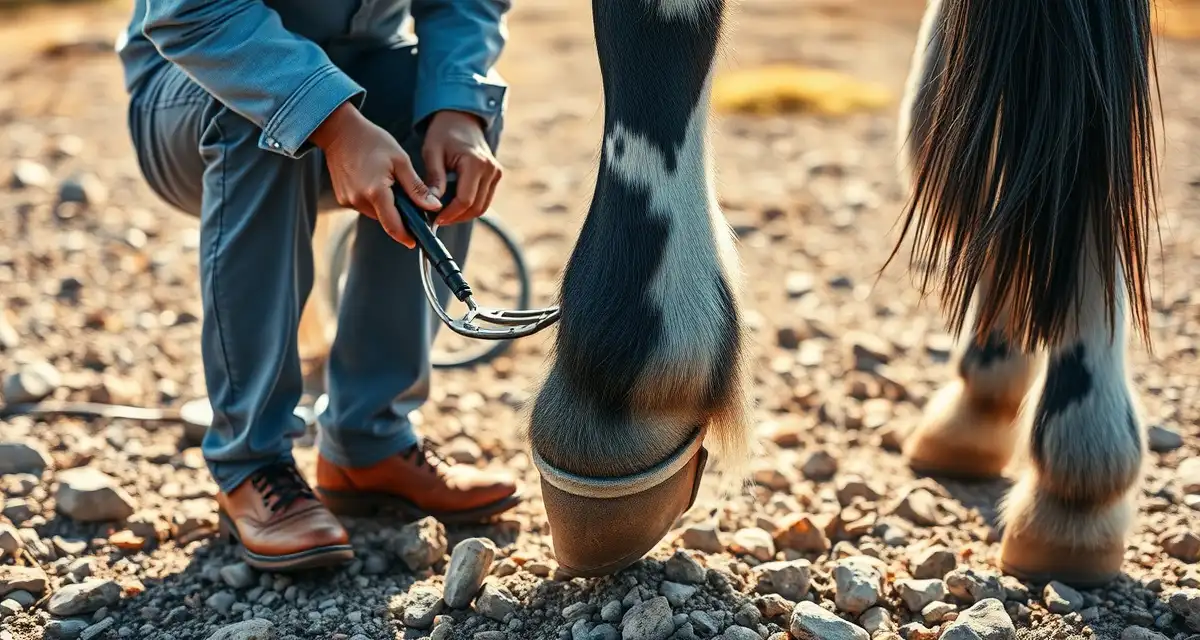
Appaloosa Trail Riding Shoeing Guide: Managing Brittle Hooves Across Rocky Terrain
Appaloosa hoof wall cracking rates are 40% higher than solid-colored horses on rocky terrain. That's a statistic tied to the breed's genetics. The same pigmentation patterns that create the distinctive spotted coat also affect hoof wall characteristics. Striped hooves, the vertical dark and light bands that are almost a signature of the breed, often indicate alternating zones of different density and hardness. On rocky terrain, that variability creates points of weakness.
TL;DR
- Appaloosa hoof wall cracking rates are 40% higher than solid-colored horses on rocky terrain, a direct consequence of alternating dense and soft wall zones from pigmentation genetics.
- The non-pigmented (light) hoof wall zones are softer and more vulnerable to chipping and crack initiation under rock impact.
- A wider-webbed shoe provides more sole coverage and distributes load away from vulnerable wall zones better than a standard-width shoe.
- Horizontal cracks are generally superficial; vertical cracks running toward the coronary band require active management and can become permanent if they reach the coronary band.
- Trail Appaloosas should be seen every 5-6 weeks rather than the 8-9 weeks that work for sturdier-hoofed breeds, especially during active riding season.
- Clips can help stabilize shoes on variable-density walls where nail retention may be inconsistent.
Trail riding Appaloosas can absolutely be sound and comfortable athletes. But their shoeing needs to account for the hoof wall characteristics specific to this breed.
Understanding Appaloosa Hoof Wall
The striped hoof wall common in Appaloosas alternates between pigmented and non-pigmented zones. The pigmented (dark) zones are typically harder and denser. The non-pigmented (light or white) zones are softer and more prone to cracking, chipping, and flaring under stress.
On flat surfaces with maintained footing, this variability is manageable. On rocky terrain, where the hoof wall takes direct impact from stone edges, the lighter zones are more vulnerable. Cracks that start at the ground surface can travel upward if they're not addressed.
Shoe Selection for Rocky Trail Appaloosas
Harder steel is your friend for an Appaloosa doing notable rocky trail work. The shoe protects the hoof wall from direct rock impact and distributes the load more evenly across the sole. A wider-webbed shoe provides more sole coverage, which helps on terrain with sharp projections. Adding toe and quarter clips to the shoe improves stability on a wall that may have variable nail retention across its pigmented and non-pigmented zones.
FarrierIQ's hoof health records let you capture wall condition notes for each Appaloosa you're shoeing, including which feet are showing the most cracking and how the condition is tracking between visits. If you see a crack starting at the last visit, you note it and check its progression at the next one. That monitoring catches problems early.
Managing Existing Wall Cracks
Trail Appaloosas that come to you with existing wall cracks need careful attention to whether those cracks are stable or growing. A horizontal crack is usually superficial and of limited concern. Vertical cracks that run toward the coronary band are more serious. A crack that reaches the coronary band has the potential to become a permanent feature of the hoof, returning every growth cycle.
For Appaloosas with notable wall cracks, you may need to discuss with the client whether rest, a change in footing, or a modified shoe setup is appropriate. Drilling the end of a crack to prevent it from extending further, or applying patches in severe cases, are tools in the kit for crack management. The corrective shoeing hoof cracks guide covers the full range of crack stabilization options.
Keeping Appaloosas on Proper Intervals
The brittle wall characteristics of Appaloosas mean they benefit from visits at the closer end of the standard range, particularly during active trail season on rocky terrain. Letting an Appaloosa on rocky trails go to 8-9 weeks between visits risks notable wall degradation.
FarrierIQ's scheduling app keeps your Appaloosa trail clients on consistent 5-6 week intervals with automated reminders. Their owners may not always track the calendar closely, but the reminder system does it for them.
Frequently Asked Questions
How do you shoe an Appaloosa for rocky trail riding?
The priority is protecting the wall from direct rock impact and distributing load evenly. A steel shoe with good wall coverage, sized appropriately for the foot, is the baseline. A wider-webbed shoe adds sole protection. Clips can help stabilize the shoe on a wall that has variable density zones. The trim work should maintain hoof balance while addressing any existing cracks or flares before the shoe goes on.
Do Appaloosas need harder shoes than other breeds?
Not necessarily harder, but the shoe selection should account for the brittle wall characteristics of the breed. Standard steel keg shoes are appropriate for most Appaloosas on trail. The quality of the nail placement matters more than the shoe hardness, since the alternating wall density means some zones hold nails better than others. Good nail placement in the denser pigmented wall is more important than selecting an unusually hard shoe.
How often do trail riding Appaloosas need shoeing?
Most trail Appaloosas should be seen every 5-6 weeks, particularly during active trail season. Horses on very rocky terrain may need attention at 4-5 weeks if the wall condition is actively cracking or if the shoes are wearing quickly. The 8-week intervals that work for some sturdier-hoofed breeds are generally not appropriate for Appaloosas doing notable rocky trail work.
Can moisture conditioning reduce cracking in trail Appaloosas?
Yes, particularly in dry climates where wet/dry cycling accelerates brittleness. A penetrating hoof conditioner applied consistently keeps wall moisture levels more stable, which reduces the brittleness that makes non-pigmented zones so vulnerable on rocky footing. Owners should apply conditioner after washing feet or after exposure to wet ground - not as a surface coating but as an actual penetrating product. Document wall condition at each visit so you can track whether the conditioning protocol is making a measurable difference.
Should trail Appaloosas wear hoof boots as an alternative to shoeing?
Hoof boots are worth considering for Appaloosas with specific wall quality issues that make reliable nailing difficult, or as a complement to a barefoot trim on trails with variable terrain. The practical limitation is that boots require management mid-ride if they shift or come loose, which some trail riders find inconvenient on longer rides. For Appaloosas with good enough wall quality to hold shoes reliably, shoeing is typically less management-intensive for serious trail riding.
Related Articles
Sources
- Appaloosa Horse Club (ApHC), breed registry and trail horse resources
- American Farrier's Association (AFA), farrier education and nail placement protocols
- American Trail Horse Association, trail horse hoof care guidelines
- The Horse: Your Guide to Equine Health Care, breed-specific hoof condition coverage
- University of Kentucky College of Agriculture, equine extension and hoof care resources
Get Started with FarrierIQ
Appaloosa trail horses need close interval management and consistent crack monitoring to stay sound on rocky footing. FarrierIQ's scheduling reminders keep your trail clients on the right cycle, and the hoof condition notes create a visit-to-visit record of how each horse's wall is holding up through the season. Try FarrierIQ free and put that monitoring system to work for your Appaloosa clients.