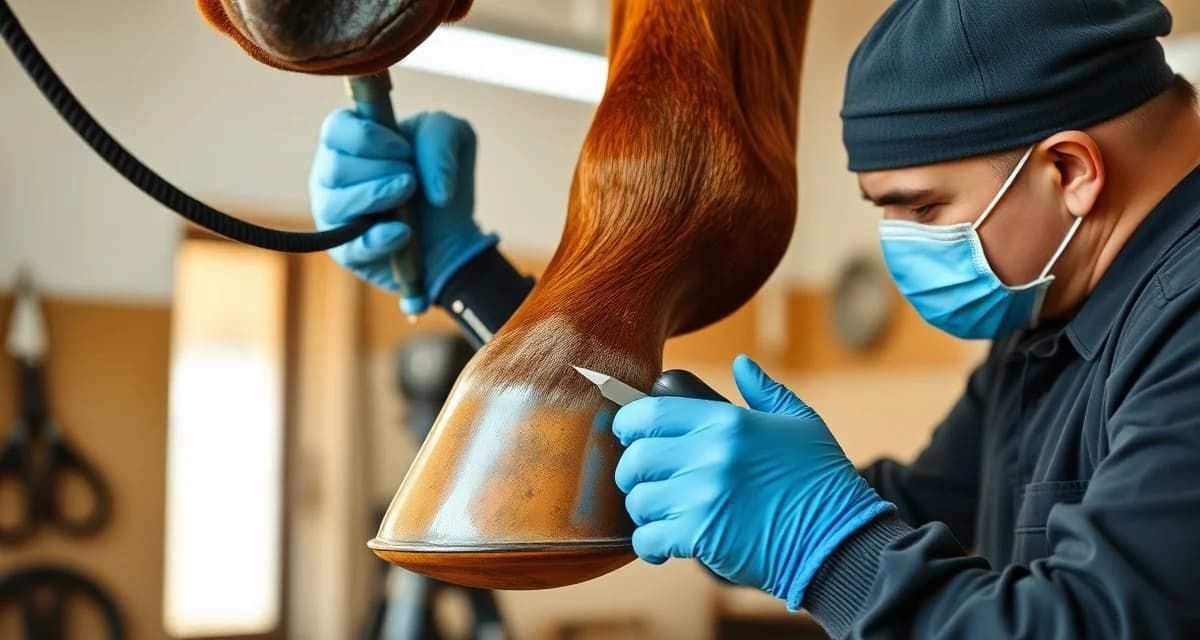
Arabian Show Halter Shoeing Guide: Grooming the Perfect Show Hoof
Arabian halter horses are evaluated partly on hoof quality - making farrier work performance-critical in a way that doesn't apply to most other halter breeds. A halter Arabian presented with chipped walls, poor hoof quality, or uneven trimming loses points that can decide class placements. The farrier's contribution to a halter Arabian's show career is visible, judged, and significant.
TL;DR
- Halter Arabian judges assess hoof quality as part of overall conformation evaluation, meaning uneven trim or chipped walls can directly cost class placements.
- Most halter Arabians in the US show ring are presented barefoot or with very light aluminum shoes that maintain the hoof's natural appearance without visible shoe mass.
- Timing the trim 5-7 days before the show allows the freshly rasped surface to smooth from normal movement while the hoof retains its shape.
- Medial-lateral balance and hoof-pastern axis alignment are non-negotiable for halter presentation - any asymmetry is visible to trained judges from ringside.
- Show halter Arabians typically need farrier visits every 4-6 weeks, timed around the competition calendar rather than a fixed interval.
- Coronary band health is the foundation of wall quality, and any injury or chronic inflammation there should be documented and tracked visit to visit.
The Halter Arabian's Hoof Standards
Arabian halter horses are presented at halter - led in hand and evaluated for conformation, movement, and overall quality. Judges assess the hoof as part of the overall picture: correct conformation, balanced hoof-pastern axis, and immaculate presentation are all expected.
Unlike performance classes where shoeing serves functional goals, halter shoeing serves both functional and aesthetic goals. The hoof must be:
- Trimmed to perfect balance and correct hoof-pastern axis alignment
- Clean and ideally polished
- Free of chips, cracks, or irregular surfaces
- Proportionate to the horse's conformation
Most halter Arabians in the US show ring are presented either barefoot or with very light show shoes - plain aluminum or steel shoes that maintain the hoof shape and appearance without significant shoe visibility.
The Precision Trim
The halter Arabian trim requires exceptional attention to balance. Because these horses are evaluated by judges trained to assess conformation in detail, any medial-lateral imbalance, broken hoof-pastern axis, or obvious flaring will be noticed.
Hoof-pastern axis: The angle of the hoof face should align with the pastern bones above. Breaking this alignment - either broken-back (too low) or broken-forward (too high) - creates an obvious conformation fault visible from a distance.
Medial-lateral balance: The horse must stand evenly on both sides of the hoof. Assess from the front - both coronary band should be at equal height from the ground. Any asymmetry suggests either poor trim or an underlying conformational issue.
Wall smoothness: After trimming and rasping, the hoof wall should be smooth and even. Many halter farriers finish the wall with progressively finer rasps or sandpaper to create the smooth, polished appearance judges appreciate.
Show Preparation Timing
FarrierIQ show appointment notes capture the precise schedule required for halter show prep. Timing a halter trim correctly relative to the show date requires understanding how the hoof looks best.
A freshly trimmed hoof - 1 to 2 days before the show - looks pristine but may show rasping marks under bright arena lighting. A hoof trimmed 5 to 7 days before the show has smoothed slightly from normal movement while still maintaining its shape.
Most halter Arabian trainers prefer horses trimmed 5 to 7 days before the show, followed by careful hoof conditioning and polishing immediately before entering the ring. Work with your clients to establish the timing that produces the best results for their specific horses.
Hoof Condition Care Between Shows
Arabian halter horses that live in show barns or maintained conditions typically need consistent hoof care between appearances. Hoof health records for halter horses should note:
- Hoof wall quality at each visit (any new chips, cracks, or surface damage)
- Hoof oil or conditioner application consistency
- Any coronary band issues that might affect wall quality as it grows out
- Changes in hoof color or quality related to housing or footing conditions
Stable bedding can dry hooves over time, making consistent moisture conditioning between shows important for maintaining the wall quality judges assess. Owners should apply a penetrating conditioner regularly, not just immediately before the show.
Frequently Asked Questions
How are halter Arabians trimmed for shows?
Halter Arabians are trimmed to perfect balance with exceptional attention to the hoof-pastern axis alignment and medial-lateral levelness. The trim emphasizes smooth, clean hoof walls without chips or rough surfaces. Most halter Arabian farriers finish the wall smoothly after rasping, and some use conditioning products to enhance the hoof's natural appearance. The horse may be presented barefoot or with very light aluminum shoes that are nearly invisible in the ring. The trim is typically scheduled 5 to 7 days before the show to allow the freshly rasped surface to smooth slightly while the hoof still holds its shape.
What hoof care do halter show Arabians need?
Show Arabians need consistent hoof care between appearances, including regular conditioning to maintain hoof wall quality and prevent chipping. Horses in stable environments may develop slower, higher-quality wall growth than those on pasture - stable bedding dries hooves, so moisture management matters. Regular application of a penetrating hoof conditioner maintains the wall quality that judges assess. Any chips, cracks, or rough spots that develop between shows should be addressed at the next farrier visit with careful rasping to minimize the damage. Coronary band health - the source of all wall quality - should be monitored and protected from injury, trauma, or chronic inflammation.
How often do halter Arabians need farrier visits?
Show halter Arabians typically need farrier visits every 4 to 6 weeks depending on their hoof growth rate and show schedule. The frequent visits reflect both growth management needs and the appearance standards halter competition demands. A horse entered in multiple shows throughout a season may need visits timed specifically to the show calendar - always ensuring the hoof is in optimal condition for the ring. Between show-prep trims, some halter horses receive light maintenance visits to address any chips or uneven growth without a full trim. Your FarrierIQ records let you track each horse's individual growth rate and plan visits around competition dates.
How do you handle a halter Arabian with a visible wall crack before a major show?
The approach depends on the size and location of the crack. A small, superficial crack in the upper wall can often be minimized with careful rasping and a finishing rasp job that reduces its visual prominence. A deeper or more visible crack may need to be discussed honestly with the owner - a patch is one option, but patches have their own visual presence. The conversation is easier when you have prior visit notes showing when the crack appeared and how it has progressed, which lets you speak to whether it was a new development or an existing condition that wasn't managed early enough.
What's the difference in trimming a halter Arabian versus a performance Arabian?
Halter trimming prioritizes visual balance and conformation enhancement - the goal is to present the best possible conformational picture to the judge. Performance trimming prioritizes biomechanical function, ensuring the horse moves efficiently and comfortably for their specific discipline. In some cases these goals align. In others, the show barn may have preferences about toe length or angle that a performance farrier would not choose. Understanding the context your client is operating in helps you work effectively within their requirements while maintaining the horse's soundness.
Related Articles
- Miniature Horse Driving Shoeing Guide: Small Shoes for the Show Driving Ring
- American Saddlebred Three-Gaited Shoeing Guide: Walk, Trot, Canter Show Ring Setup
- Morgan Western Pleasure Shoeing Guide: Natural Animation for the Show Ring
Sources
- Arabian Horse Association (AHA), show rules and halter class standards
- United States Equestrian Federation (USEF), breed show regulations and hoof presentation guidelines
- American Farrier's Association (AFA), farrier education and show horse hoof preparation
- The Horse: Your Guide to Equine Health Care, hoof conditioning and quality maintenance
- University of Kentucky Equine Initiative, hoof care and coronary band health resources
Get Started with FarrierIQ
Managing halter Arabian accounts means tracking show calendars, timing visits precisely, and maintaining detailed notes on wall quality between appearances. FarrierIQ's scheduling tools and per-horse hoof condition records keep that information organized so you can serve show clients with the precision their competition demands. Try FarrierIQ free and see how having each horse's history and upcoming show dates in one place changes how you plan halter appointments.