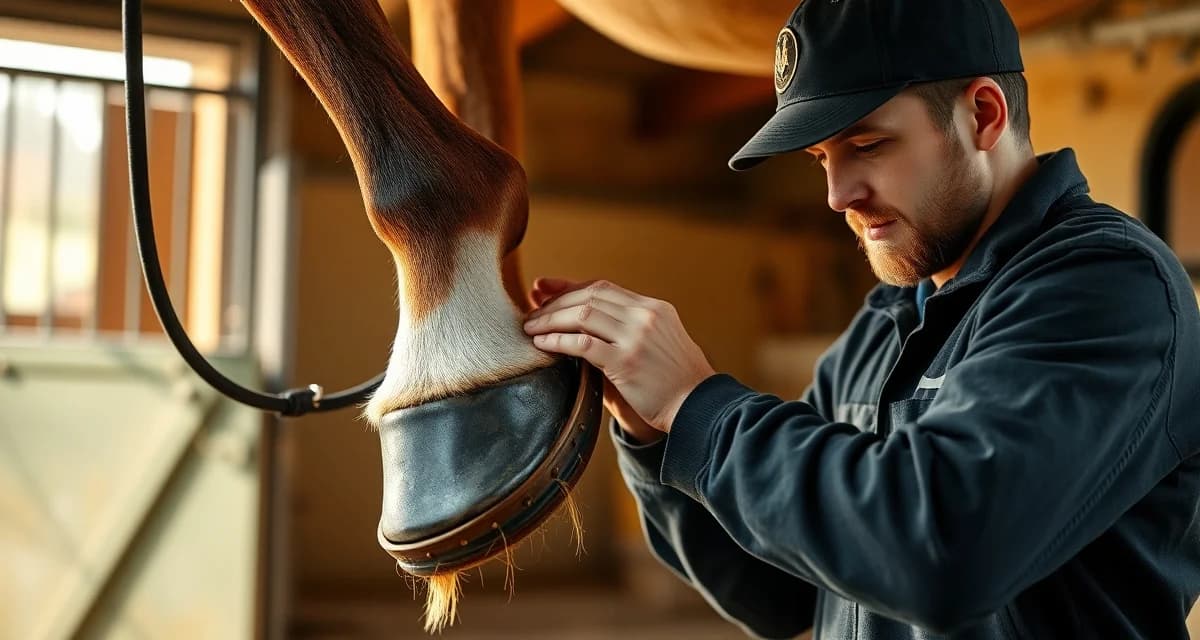
Arabian Endurance Shoeing Guide: Hard Hooves and Long-Distance Performance
Arabians win over 90% of 100-mile endurance rides. The breed's natural hoof density, their efficient metabolic systems, and their adaptability to varied terrain make them the dominant force in distance riding. For farriers working with endurance Arabians, the job is less about correcting hoof deficiencies and more about optimizing what's already a naturally capable foot.
TL;DR
- Arabians win over 90% of 100-mile endurance rides, and their naturally denser, more concave hooves are a key reason for that competitive dominance.
- Many endurance Arabians compete barefoot on appropriate terrain, eliminating the mid-ride shoe loss risk that is a serious concern with conventional shoeing.
- Aluminum shoes are preferred over steel when Arabians do need shoeing, offering protection with meaningfully less weight over 50- to 100-mile distances.
- Glue-on shoes eliminate nail hole stress that repeated shoeing cycles can create in horses with heavy competition schedules.
- Barefoot endurance Arabians on abrasive terrain may need trimming every 3-4 weeks during peak training, shorter than the 6-8 weeks typical for other horses.
- Visit timing should align with competition dates and training mileage cycles, not just the calendar.
That doesn't mean endurance Arabian shoeing is simple. It means the decisions are nuanced, and getting them right matters over 50 to 100 miles.
The Arabian Hoof Advantage
Arabian hoof walls are typically denser and harder than other light horse breeds. Their hooves also tend to have a more concave sole, which provides natural protection against rocky terrain. These traits evolved in the desert environment that shaped the breed, where horses traveled over varied, often rocky terrain daily.
For endurance riding, this means many Arabians can compete barefoot on appropriate terrain, which eliminates shoe loss mid-ride as a concern. But barefoot doesn't work for every horse on every trail system, and some competitive Arabians do better with appropriate shoeing for the specific terrain they're racing.
Barefoot vs. Shod for Endurance
This is the great debate in endurance horse management, and the answer is genuinely horse-specific. Arabians with naturally strong, concave hooves on abrasive terrain that keeps them conditioned naturally are often good barefoot candidates for endurance. Arabians with softer or flatter hooves, or those competing on extremely rocky terrain, often benefit from shoes.
Some endurance riders use hoof boots as a hybrid approach, putting protective boots on for rocky sections and removing them for softer stretches. This is a management choice that involves the rider, the vet, and you.
Whatever approach is being used, FarrierIQ's hoof health records capture the decision history, the mileage context, and the condition of the hooves at each visit. When an endurance Arabian is coming off a 100-mile ride and the question is whether to shoe before the next competition, having the complete hoof history in hand is invaluable.
When Arabians Do Need Shoes
Endurance Arabians that compete on rocky trail systems often use aluminum shoes for their combination of protection and light weight. Aluminum is considerably lighter than steel, reducing fatigue over long distances. Some endurance farriers also use glue-on shoes to eliminate the nail hole stress that can weaken the wall over repeated shoeing cycles.
For rocky terrain, a shoe with more sole coverage, sometimes called a wide-webbed shoe, provides additional protection against sole bruising that can end a ride. The Arabian shoeing guide covers general shoe selection and fit principles that apply to endurance horses as well.
The Mileage-Tracking Approach
The most useful thing a farrier can do for a serious endurance program is align their visits with the training and competition mileage cycle, not just the calendar. FarrierIQ's scheduling app can be used alongside notes about the horse's upcoming competition schedule so visits happen at the right point relative to ride dates.
Mileage-driven interval decisions, combined with regular hoof condition monitoring, produce better outcomes for endurance horses than calendar-only scheduling.
Frequently Asked Questions
Do endurance Arabians need shoes or go barefoot?
This is individual. Arabians with strong, concave, naturally hard hooves on terrain that maintains hoof conditioning are often competitive barefoot. Horses on rocky trail systems that cause sole bruising, or those with flatter or softer hooves, typically benefit from aluminum shoes or a protective boot system. The rider, farrier, and vet should assess each horse's hooves and the specific terrain demands of their competition schedule together.
How does Arabian hoof density affect endurance shoeing decisions?
Denser Arabian hooves are better candidates for barefoot endurance competition and also hold nails more securely when shod. Horses with naturally hard hooves on abrasive terrain may need trimming more frequently to prevent flaring, even without shoes. The density advantage of Arabian hooves is real, but it doesn't mean all Arabians are the same.
How often do Arabians competing in endurance need farrier visits?
Barefoot endurance Arabians typically need trimming every 4-6 weeks, though heavy mileage on abrasive terrain may compress that to 3-4 weeks during peak training. Shod endurance Arabians on a 4-6 week shoeing cycle, with visits timed around competition dates rather than purely by calendar.
What role does vet communication play in endurance Arabian shoeing?
Endurance vets assess hoof condition at ride vet checks, and their findings should inform your shoeing decisions. If a vet is noting sole sensitivity, unusual wear patterns, or hoof wall concerns at checks, that information is directly relevant to your shoe selection, padding decisions, and interval planning. Building a working relationship with the vets involved in a serious endurance program makes you a more effective part of the horse's management team.
How should a farrier prepare an Arabian before its first 50-mile ride?
Preparation starts months before the ride, not days before. Hoof conditioning - building sole callus, ensuring wall quality is at its peak, and confirming the horse's trimming interval is calibrated to their growth rate - happens over the full training season. In the weeks immediately before a ride, the timing of the final shoeing or trimming visit matters: you want a fresh, secure shoe that has a week or two to settle before competition day, not a freshly reset shoe nailed the morning of.
Related Articles
Sources
- American Endurance Ride Conference (AERC), ride completion statistics and hoof management guidelines
- Arabian Horse Association (AHA), breed registry and performance horse resources
- American Farrier's Association (AFA), farrier education and endurance horse shoeing standards
- Kentucky Equine Research, equine nutrition and hoof quality research
- University of California Davis School of Veterinary Medicine, endurance horse health and hoof care studies
Get Started with FarrierIQ
Managing endurance Arabians means tracking hoof condition across training cycles, timing visits around competition dates, and maintaining a detailed history of what's worked for each individual horse. FarrierIQ's scheduling tools and per-horse hoof notes keep that information organized and accessible. Try FarrierIQ free and see how aligning your visit schedule with your clients' ride calendars changes how you manage endurance horse accounts.