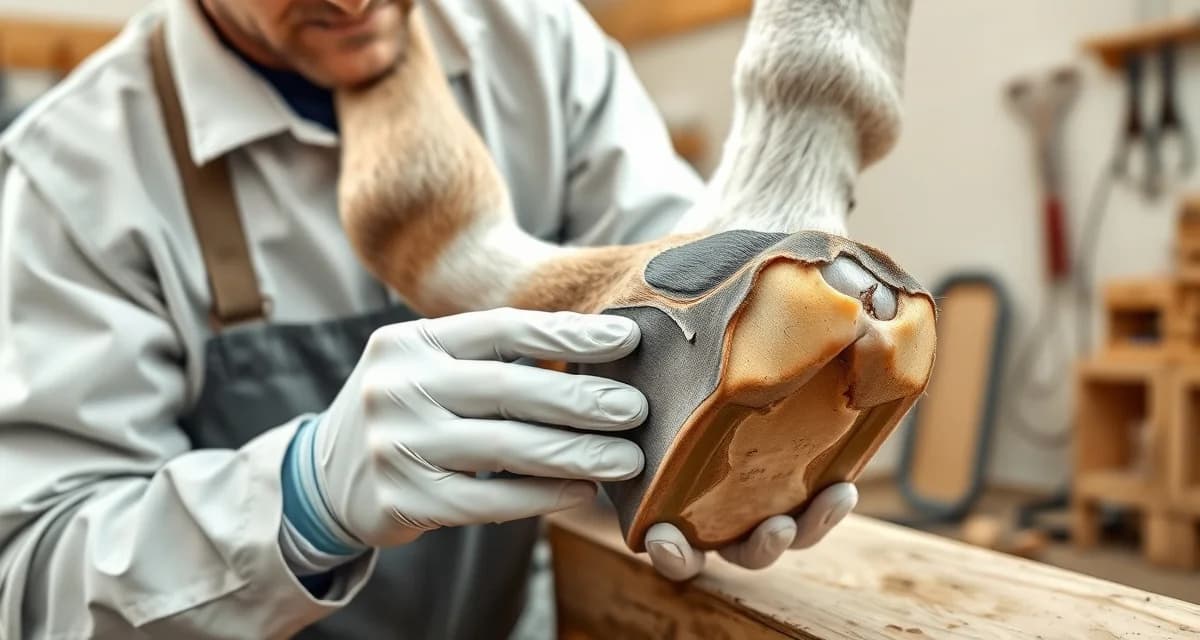
Corrective Shoeing and Hoof Care for White Line Disease
White line disease affects 15 to 20% of horses in wet climates and causes significant lameness when it progresses beyond the early stages. The treatment protocol is straightforward in principle -- remove all infected material, expose the area, keep it dry -- but the shoeing decisions that follow depend on how much hoof wall was removed and where.
TL;DR
- White line disease affects 15 to 20% of horses in wet climates -- the organisms causing it are anaerobic and require moisture and oxygen exclusion to thrive.
- Treatment starts with complete debridement: removing every bit of infected, crumbly, undermined hoof wall until reaching solid healthy tissue. Leaving infected material because removing it looks alarming is the most common treatment mistake.
- Four post-debridement shoeing scenarios require different approaches: minor debridement (standard shoe with adjusted nail placement), moderate wall removal (bar shoe, modified nails, pour-in pad), extensive wall loss (glue-on shoe or barefoot with boot), and infection near sensitive laminae (stop farrier work and involve the vet immediately).
- Recovery for mild to moderate cases typically takes 2-4 shoeing cycles (3-6 months) -- the infection is resolved by debridement, but hoof wall regrowth from coronary band to ground takes its own time.
- WLD has a recurrence pattern in susceptible horses; tracking it in FarrierIQ lets you identify seasonal patterns and plan preventive treatment ahead of the risk window.
- Client participation in treatment is essential: topical applications between farrier visits and keeping the horse off wet footing between visits directly affect whether the treatment succeeds.
FarrierIQ condition tracking documents white line disease progression and recovery by shoeing cycle, which matters because WLD has a tendency to recur, and having a clear record of when it appeared, how it was treated, and how the hoof recovered helps both the farrier and the horse owner recognize patterns that might otherwise go unnoticed.
The Treatment Foundation: Aggressive Debridement
Treating white line disease begins with removing every bit of infected, crumbly, undermined hoof wall until you reach solid, healthy tissue. This is non-negotiable. Leaving infected material in place because removing it looks alarming is the most common mistake in WLD treatment -- the organisms causing the disease will continue to spread through any remaining diseased tissue.
The extent of debridement depends on how far the infection has progressed. Minor cases may require removing a small pocket of undermined wall. Extensive cases can involve removing a significant portion of one quarter or the entire toe region. The horse owner should be informed before you start that the affected area may look substantially larger after treatment than it did when you pulled the shoe.
After debridement, the area is treated with an antifungal/antibacterial agent. Common options:
- Copper sulfate solution (effective antifungal, need to avoid contact with sensitive tissue)
- Diluted bleach solution (10% bleach / 90% water)
- Commercial WLD treatments (various products formulated specifically for the condition)
- Thrush treatment products with antifungal agents
The critical follow-up is keeping the area dry. The organisms causing WLD are anaerobic -- they need moisture and oxygen exclusion to thrive. Exposing the infected area and keeping it dry removes the conditions they require.
Shoeing After Debridement: The Decision Tree
Scenario 1: Minor debridement, stable wall remaining
If the undermined area was small -- a thumbnail-sized pocket at the white line -- and the remaining hoof wall is structurally sound on all sides, you can often shoe normally. Avoid placing nail holes through or immediately adjacent to the treated area. A shoe with slightly different nail placement may be appropriate.
Scenario 2: Moderate debridement, one quarter or section of wall removed
When a meaningful section of wall has been removed, the shoe needs to be fitted to the reduced wall. Options:
- A bar shoe (straight bar or egg bar) to provide heel support and reduce stress on the remaining wall
- Modified nail placement to avoid the compromised area
- A pour-in pad to fill and protect the exposed sole area
- Acrylic or hoof repair material to temporarily restore wall coverage in stable areas
Scenario 3: Extensive debridement, significant wall loss
Extensive WLD that required removal of a large section of wall may make traditional nailed shoes inappropriate until regrowth occurs. Options:
- Glue-on shoes that don't require nail placement through compromised wall
- A period barefoot with protective boot management
- Therapeutic shoeing with pads and packing to protect the exposed sole
- Veterinary involvement if the sensitive laminae are at risk
Scenario 4: WLD reaching sensitive structures
If debridement reveals infection near or involving the sensitive laminae, stop the farrier work and involve the vet immediately. This is a medical case, not just a shoeing case.
Topical Protection During Regrowth
As the debrided area begins to grow new hoof wall from the coronary band down, it needs protection from re-infection. Options used at different farrier's discretion:
- Weekly copper sulfate application to the growing edge
- Commercial antifungal spray or liquid kept in the area
- Pine tar (traditional, antifungal properties, provides some moisture barrier)
The horse owner needs to participate in treatment. Topical applications between farrier visits, keeping the horse off consistently wet footing, and daily hoof picking are part of what makes treatment successful. A farrier who treats WLD at a visit and returns 6 weeks later to find the horse has been standing in mud the whole time between visits is unlikely to see improvement.
Why WLD Recurs and How to Prevent It
White line disease has a frustrating recurrence pattern in susceptible horses and environments. The reasons:
- Ongoing wet footing (never resolved)
- The debrided area growing back with weakened wall that re-admits infection
- Other hoof wall defects (cracks, nail holes) creating new entry points
- Underlying hoof conformation issues (flared walls with leverage stress at the white line) that keep creating stress points
Prevention strategies:
- Manage wet footing as much as possible (better drainage, rubber mats, sacrificial paddocks)
- Keep regular farrier visits on schedule -- a horse that goes 10+ weeks between visits is developing more white line separation stress than one seen every 6 weeks
- Weekly topical copper sulfate or commercial treatment during the highest-risk wet seasons
- Periodic white line inspection when shoes are pulled
Tracking WLD recurrence in FarrierIQ's condition notes lets you identify horses with a pattern of seasonal WLD and plan preventive treatment ahead of the risk window rather than treating it reactively each time.
Documentation for WLD Cases
Every WLD case should have clear documentation at each visit in FarrierIQ:
- Location and extent of the affected area (which wall, how far up)
- Treatment applied
- Shoe type and modifications
- Photos if possible (most smartphones have adequate documentation quality)
- Owner instructions given at the visit (topical treatment, management changes)
Documentation protects you if an owner is later unhappy with the recovery timeline. White line disease can take multiple shoeing cycles to fully resolve, and owners who were told the horse would be "fixed" in one visit may be disappointed. Clear notes showing the progressive treatment and realistic expectations communicated at each visit tell the professional story correctly.
Frequently Asked Questions
How do farriers treat white line disease?
Treatment starts with debridement -- completely removing all infected, crumbly, undermined hoof wall until reaching solid healthy tissue. The exposed area is treated with an antifungal or antibacterial agent (copper sulfate solution, diluted bleach, or a commercial WLD product) and kept dry. Shoeing after debridement depends on how much wall was removed -- minor cases can often be shod normally with adjusted nail placement, while extensive cases may require bar shoes, glue-on shoes, or a period barefoot while the wall regrows. FarrierIQ's condition records track each visit's treatment and the progression of regrowth.
Does white line disease require corrective shoeing?
It depends on the extent of the infection. Minor WLD caught early and fully debrided can often be managed with standard shoeing and adjusted nail placement. When significant wall has been removed -- enough to compromise structural integrity -- corrective approaches are needed: bar shoes to redistribute load, glue-on shoes to avoid nail placement through compromised wall, or protective pads to cover exposed sole tissue. The goal of any post-WLD shoeing is to protect the exposed and weakened structures while allowing clean regrowth.
How long does it take to recover from white line disease?
Complete resolution of white line disease typically takes 2 to 4 shoeing cycles (3 to 6 months) for mild to moderate cases, depending on how much wall was removed and how quickly new wall grows. The infection itself is resolved by aggressive debridement and drying -- but the hoof wall regrowth from the coronary band to the ground surface takes the same time it always does (approximately 10 to 12 months for a full hoof replacement). The visible cavity left by debridement fills in gradually as new wall grows down. Recurrence is possible if environmental conditions haven't changed.
How do you handle a horse owner who is alarmed by how much wall was removed during WLD debridement?
Prepare them before you start. At any WLD case where significant debridement is likely, tell the owner that the area will look much larger after treatment than the infected region looked externally -- that's because the disease spreads inside the wall in a way that isn't visible until the wall is removed. Explain that leaving infected material in place would allow the disease to continue spreading, which is worse than the temporary structural loss from thorough debridement. Photograph the area before and after treatment, and add a brief note to FarrierIQ's records explaining the extent of debridement and why. Owners who were briefed before the procedure are far less alarmed by the outcome than those who discovered it after.
Can WLD spread to other horses in the same barn?
The organisms causing white line disease (primarily Pseudoallescheria boydii and related fungi, plus bacterial contributors) are environmental rather than highly contagious horse-to-horse. WLD is not typically spread directly from one horse to another through contact. What is shared is the environment -- wet footing, manure accumulation, poor drainage -- that creates the conditions where WLD flourishes. If multiple horses in one barn are developing WLD, the focus should be on environmental management (footing, drainage, stall hygiene) rather than isolating affected horses. Individual horse factors like hoof conformation (flared walls, white line separation) also affect susceptibility.
Related Articles
Sources
- American Farrier's Association (AFA), white line disease treatment and corrective shoeing education
- American Association of Equine Practitioners (AAEP), equine hoof care guidelines and infectious hoof conditions
- Cornell University College of Veterinary Medicine, equine podiatry and white line disease research
- The Horse: Your Guide to Equine Health Care, white line disease management and treatment coverage
- University of California Davis School of Veterinary Medicine, equine hoof infection and treatment protocols
Get Started with FarrierIQ
White line disease cases require sequential documentation at every visit -- extent of debridement, treatment applied, shoe modifications, and owner instructions -- to track recovery and identify recurrence patterns before they become serious. FarrierIQ's per-horse condition notes and photo records capture that information with date-stamping that creates the complete treatment timeline. Try FarrierIQ free and build the documentation discipline that WLD cases require.