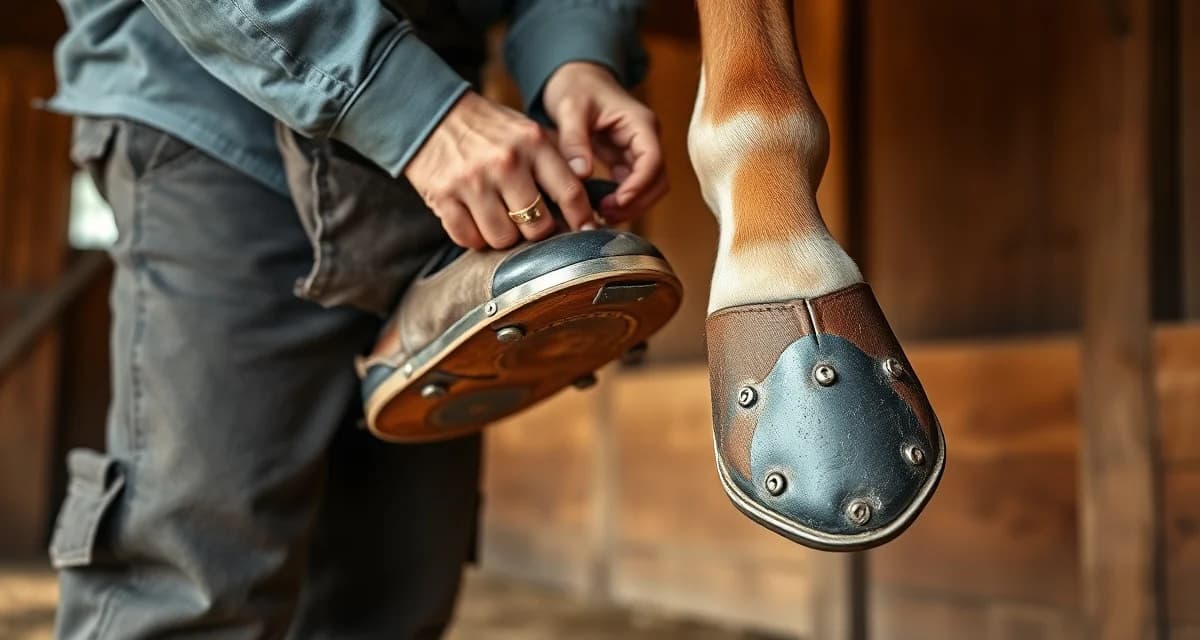
Morgan Endurance Shoeing Guide: Tough Feet for Long-Distance Competition
Morgans finish endurance rides at an 88% completion rate - the highest of any non-Arabian breed in AERC endurance competition. Their naturally hard, dense feet and exceptionally strong constitution make them reliable endurance athletes. But even horses with great natural feet need thoughtful shoeing management when the miles accumulate and the ride terrain varies.
TL;DR
- Morgans complete endurance rides at an 88% completion rate, the highest of any non-Arabian breed in AERC competition, largely due to their naturally hard, dense hoof walls.
- Many Morgans can compete barefoot at 50-mile distances on moderate terrain, making them one of the most commonly barefoot-competed breeds in endurance.
- When shoes are needed, light aluminum shoes are the standard choice, as weight savings at the front end reduce fatigue over 50+ miles.
- Endurance shoe fit must accommodate natural hoof expansion under sustained exertion to preserve vascular function and hoof temperature regulation during long rides.
- Hoof management for endurance Morgans is a season-long process - a small crack at mile 200 carries different implications than the same crack at mile 800.
- Barefoot or shod endurance Morgans on active ride schedules typically need trimming or shoeing every 6 to 8 weeks, with closer monitoring for horses logging 200+ miles per season.
- Longitudinal tracking of hoof condition across a full ride season is essential for identifying whether a barefoot Morgan is wearing appropriately or needs a different approach.
The Morgan Hoof Advantage
The Morgan's natural hoof quality is one of the breed's most celebrated physical attributes. Morgan feet tend to be:
- Compact and round with strong wall thickness
- Naturally hard and dense - more resistant to wear than many breeds
- Well-shaped with appropriate concavity
- Consistent in pigmentation quality (unlike striped hooves, which can have variable density)
This natural quality is the foundation for Morgan endurance success. It means the horse often needs less shoe intervention than other breeds to perform at high mileage. But it doesn't eliminate the need for skilled farrier management - it changes what that management looks like.
Barefoot Endurance for Morgans
Morgans are among the breeds most commonly competed barefoot in endurance. Their naturally hard feet handle trail surfaces that would quickly destroy softer-hoofed horses. Many Morgan endurance horses with good natural hoof quality and appropriate conditioning can:
- Complete 50-mile rides barefoot on most trail types
- Use hoof boots selectively for particularly rocky sections
- Manage rocky terrain with less bruising risk than thin-walled breeds
The barefoot decision depends on the individual Morgan's specific hoof condition, the typical terrain in their ride region, and their mileage level. A Morgan doing 50-mile rides on desert hardpan has different needs than one doing 50-mile rides on Pacific Northwest forest trails.
FarrierIQ endurance-specific notes capture Morgan mileage and hoof condition per ride season. This longitudinal view - tracking hoof condition across 500 or 1,000 miles of ride season - helps you identify whether a barefoot Morgan is wearing appropriately or developing conditions that suggest a different approach is needed.
Shod Morgan Endurance Setup
When Morgans do need shoes - for rocky terrain, for mileage levels that exceed natural foot resilience, or for horses with specific hoof quality issues - the endurance shoe setup follows the same principles as any endurance horse.
Shoe selection: Light aluminum shoes are the standard for endurance horses that compete shod. Weight savings at the front end matter over long distances - every extra ounce the horse carries on its feet adds fatigue over 50+ miles.
Fit: Endurance shoe fit should accommodate natural hoof expansion under sustained exertion. A shoe that's too tight restricts the vascular function that manages hoof temperature during long rides.
Stud holes: Removable studs allow terrain-specific traction management. Morgans competing on varied terrain - some rocky, some sandy, some wet - benefit from stud flexibility.
Glue-on options: For Morgans that prefer minimal shoe intervention but need protection in specific areas, glue-on shoes for endurance horses can provide coverage without nail holes through good wall structure.
Documenting the Endurance Season
Endurance hoof management is a season-long process. FarrierIQ's endurance horses app tracks condition across the full ride calendar - starting from pre-season conditioning through the final fall ride. The progression matters because ride stress accumulates. A small crack at mile 200 of the season is different from the same crack at mile 800.
Capture at each visit:
- Hoof wear pattern compared to previous visit
- Any crack development or progression
- Wall condition and thickness
- Sole condition and depth
- Any bruising from recent rides
Keeping detailed farrier visit records for endurance horses across a full season gives you the data to make confident decisions about barefoot vs. shod status as mileage climbs. The Morgan horse shoeing guide covers full breed management across disciplines.
Frequently Asked Questions
Do Morgan horses need shoes for endurance riding?
Many Morgans compete successfully barefoot in endurance, particularly at 50-mile distances on moderate terrain. The breed's naturally hard, dense hoof wall provides excellent wear resistance without shoe protection. However, Morgans doing higher mileage (75-100 mile events), competing on very rocky terrain, or those with specific hoof quality variations may need shoes or selective hoof boot use. The barefoot vs. shod decision should be made per horse based on hoof condition assessment, typical ride terrain, and competitive level - not applied as a breed-wide rule.
How does Morgan hoof density help in endurance competition?
Morgan hoof density provides several practical endurance advantages. Dense, hard hoof wall resists wear on rocky and abrasive trail surfaces - a significant advantage for horses covering 25-100 miles on varied terrain. Hard wall also resists chipping and cracking better than softer hoof types, reducing the risk of mid-ride shoe loss or hoof damage that can cause vet-check pulls. The Morgan's hoof quality means these horses typically need less shoe intervention to compete safely at moderate mileage levels, which in turn reduces the management complexity and shoe loss risk that comes with shoeing endurance horses on rocky terrain.
How often do endurance Morgans need shoeing?
Endurance Morgans on active ride schedules are typically shod or maintained every 6 to 8 weeks during the ride season. Barefoot endurance Morgans need regular trimming at similar intervals to manage wall length and shape as natural wear patterns develop. The exact interval depends on mileage - horses doing 200+ miles of ride season may wear hooves faster than the standard interval predicts, requiring closer monitoring. Post-season horses in light work can often go the full 8 weeks. For horses doing distance events, plan visits around the ride calendar to ensure hooves are in optimal condition before major events.
What should a farrier check at a pre-ride vet check for a Morgan endurance horse?
Before a major endurance event, a farrier should confirm that shoes are fully seated with no sprung clinches, that hoof wall has no active cracks that could propagate under sustained stress, and that sole depth is adequate for the expected terrain. For barefoot Morgans, checking for any bruising from recent conditioning rides and confirming wall thickness is appropriate for the course conditions are the key priorities. Coordinating the shoeing visit to fall 7 to 10 days before a major ride gives clinches time to settle and allows any minor soreness from the trim to resolve before competition.
Can a Morgan's hoof condition decline over a long endurance season?
Yes, even Morgans with excellent natural hoof quality can show wall thinning, increased chipping, or sole sensitivity after a high-mileage season. Horses logging 500 or more miles in a single season are working their hooves hard, and cumulative wear can outpace natural growth. Monitoring wall thickness and sole depth at each visit across the season, rather than only assessing condition at a single point in time, is the most reliable way to catch gradual decline before it affects soundness or competitive eligibility at vet checks.
How do hoof boots fit into a Morgan endurance shoeing plan?
Hoof boots are a practical middle ground for Morgans that are primarily barefoot but face occasional terrain challenges. They can be used selectively on rocky sections of a course without committing to full-time shoeing, which preserves the natural hoof function that makes Morgans strong barefoot competitors. The key is fit - a boot that shifts or rubs during a 50-mile ride creates its own problems. Farriers working with Morgan endurance clients should be familiar with current boot sizing and fit principles so they can advise owners on which boot styles are compatible with their horse's specific hoof shape.
Sources
- American Endurance Ride Conference (AERC), breed completion rate statistics and endurance horse management guidelines
- American Farriers Journal, endurance horse shoeing and hoof care coverage
- University of California Davis School of Veterinary Medicine, equine podiatry and hoof biomechanics research
- The Morgan Horse Magazine, breed-specific hoof quality and performance documentation
- American Association of Equine Practitioners (AAEP), hoof care and farriery guidelines for performance horses
Get Started with FarrierIQ
Managing endurance horses across a full ride season means tracking hoof condition across hundreds of miles, multiple vet checks, and shifting terrain demands - not just visit to visit. FarrierIQ gives you the longitudinal records to spot wear trends early, document barefoot vs. shod decisions with supporting data, and keep your Morgan clients' horses in peak condition from the first conditioning ride through the final fall event. Try FarrierIQ free and see how season-long hoof tracking changes the way you manage endurance horses.