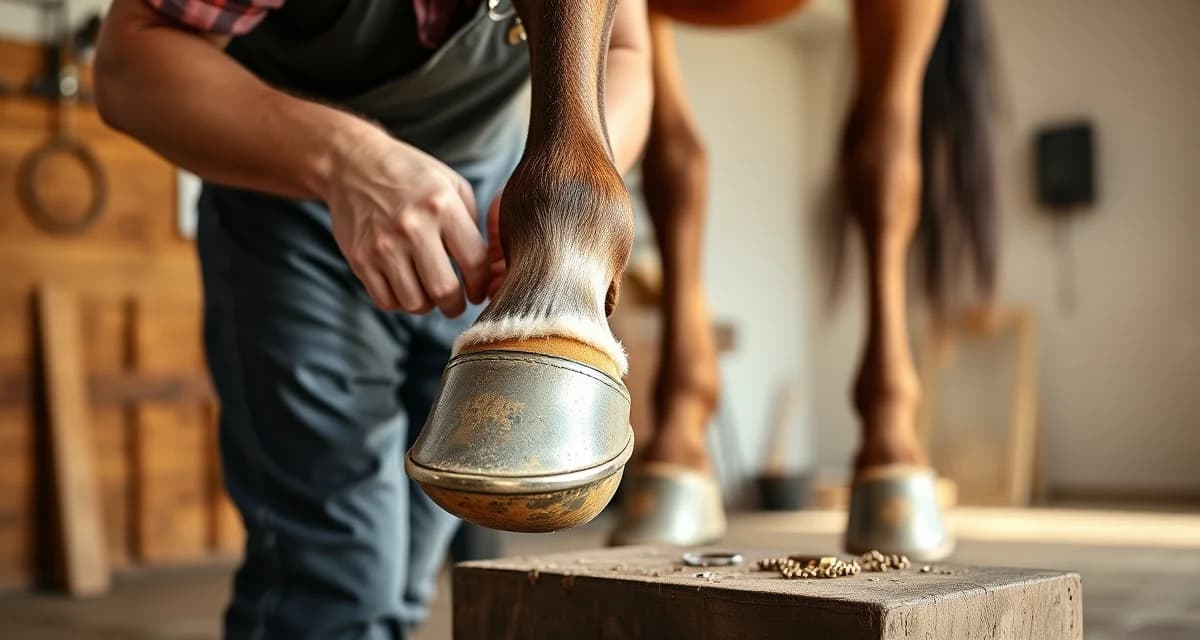
Quarter Horse Shoeing Guide: Managing High-Performance Western Horse Hooves
Quarter Horses are the most popular breed in the US with 3 million+ registered. They're the backbone of the American West's horse culture - ranch work, barrel racing, reining, cutting, roping, trail riding. Chances are, if you're building a farrier book, a significant percentage of it is Quarter Horses.
TL;DR
- Quarter Horses in regular performance work need shoeing every 6-8 weeks, with barrel horses requiring 4-6 week cycles before competition season to keep shoes tight and secure.
- Lost shoes during barrel runs cause injury in 23% of incidents, making pre-competition shoeing timing one of the highest-stakes scheduling decisions for these horses.
- Sliding plates for reining horses require precise fit, and the hind feet absorb extreme force during sliding stops - monitor the white line and toe wall closely each visit.
- Halter horse bloodlines often carry elevated navicular risk due to compact, upright hooves; toe-first landing and stumbling at the walk are early warning signs to flag and document.
- Shoe choice varies by discipline: flat steel for general work, rim steel for arena traction, sliding plates for reining, and wide-webbed comfort shoes for horses managed for navicular-related issues.
- Bloodline knowledge matters - cutting and reining lines often have excellent feet, while some halter horse lines prioritize body mass over hoof quality.
- Tracking per-horse shoeing cycles, discipline-specific shoe specs, and competition dates in one place lets you manage event-driven schedules rather than relying on fixed calendar intervals.
QHs are generally hardy horses with good hoof quality - dense walls, adequate sole depth, and a sensible landing pattern for most of their work. But "generally hardy" doesn't mean without issues, especially in the performance disciplines where these horses are pushed hard.
Quarter Horse Hoof Anatomy
Quarter Horses typically have:
Wide, rounded hooves with good wall thickness: More material to nail into than a Thoroughbred, which makes shoeing more forgiving. QH walls tend to hold nails well.
Good frog development: The wide, open foot of a well-structured QH maintains good frog contact, which contributes to healthy circulation and shock absorption.
Compact upright hooves in some lines: Particularly in ranch-bred and halter horse lines, some QHs have narrower, more upright hooves. These horses need attention to heel angles and may be at higher navicular risk.
Hoof quality variation by bloodline: Performance cutting and reining horses often have exceptional feet. Some halter horse bloodlines breed for body mass over hoof quality. Know your horses' bloodlines; they tell you something.
Recommended Shoeing Cycle for Quarter Horses
For performance horses in regular work: 6-8 weeks
For barrel horses before shows: 4-6 weeks to ensure the shoe is fresh and well-set before competition
For ranch horses and trail horses in lighter work: 7-9 weeks depending on wear and hoof growth rate
The event-driven nature of performance QH work matters for cycle planning. A barrel horse heading into a major show weekend needs a fresh, tight shoe - not a shoe that's been on 8 weeks and has nail holes backing out. FarrierIQ's per-horse scheduling lets you schedule performance horses on event-responsive cycles rather than calendar intervals.
Shoe Selection for Quarter Horses
Flat steel: The workhorse option for most QHs in regular work. Available in a full range of sizes, durable, versatile.
Rim steel: Provides traction for cutting, reining, and barrel horses working in arena dirt or grass. The rim creates grip without studs.
Sliding plates: Reining horses use sliding plates - low-profile, wide-webbed shoes designed to allow the hind feet to slide during sliding stops without catching. Getting the plate fit right is one of the craft challenges in reining horse shoeing.
Sport medicine (SMB) style shoes: For older performance horses or those being managed for navicular-related issues, wide-webbed comfort shoes provide better breakover and support.
Bar shoes: Full bars, egg bars, and heart bars address specific structural and therapeutic needs - navicular support, laminitis management, heel pain reduction.
Performance-Specific Concerns
Barrel Racing
Barrel horses need shoes that stay on at speed through tight turns. Lost shoe during a barrel run causes injury in 23% of incidents. Keep these horses on tight cycles, check nails before competitions, and document any wall thinning in FarrierIQ that might indicate the next set needs extra attention.
FarrierIQ's per-horse notes let you track that Jelly Roll needs to be shod no later than day 42 before competition season - notes that carry forward to every visit.
Reining
Sliding plates require specific fit, and the hind feet of a reining horse absorb enormous force in the slide. Watch for buildup at the white line from the sliding impact, any wall damage at the toe, and the condition of the hoof below the sliding plate.
Cutting
Cutting horses make explosive lateral movements. The front foot takes the brunt. Watch for quarter crack development in front feet, flare at the lateral wall from the lateral loading, and any sign of soreness that might indicate a fit or balance issue.
Navicular Risk in QHs
Quarter Horses - particularly those with upright, narrow hooves or certain halter horse bloodlines - have elevated navicular risk. Signs to watch: stumbling at the walk, landing toe-first instead of heel-first, digging at the ground before landing. Flag anything suggestive in FarrierIQ and recommend vet evaluation if the pattern develops.
Documenting QH Visits
FarrierIQ's voice-to-notes and per-horse condition tracking are well-suited to QH performance schedules. Capture:
- Pre-competition shoeing dates (relevant to when they need to be done next)
- Discipline-specific shoe specifications
- Any signs of performance-related wear or damage
- Owner feedback about the horse's movement after shoeing
When you're managing a large book of performance horse clients, having this documentation organized by horse rather than by visit date makes it far easier to spot patterns across a season.
Related Articles
FAQ
How often should a Quarter Horse be shod?
Most Quarter Horses in regular work should be shod every 6-8 weeks. Performance horses - barrel horses, reining horses, cutting horses - may need 4-6 week cycles, especially approaching competition season when you want the shoe fresh and secure. Ranch horses and trail horses in lighter work can often extend to 8-9 weeks. Track each horse's individual cycle in FarrierIQ to account for seasonal hoof growth variation and the specific demands of their workload.
What shoes work best for Quarter Horses in barrel racing?
Barrel horses typically do best in flat steel for general work and rim steel for arena competition, where traction matters. The shoe should be fit to the full width of the hoof wall - not too narrow, which leaves the wall unsupported - and nails should be tight before every competition. Some barrel horse owners prefer aluminum for slight weight savings; the tradeoff is faster wear. Whatever shoe you use, cycle frequency is the critical management variable for a horse that needs a secure, stable shoe at speed.
Do Quarter Horses have different hoof needs than other breeds?
Quarter Horses generally have more forgiving hooves than Thoroughbreds or Warmbloods - wider, denser walls, better tolerance for the 6-8 week standard cycle. However, performance QHs in disciplines with extreme lateral loading (cutting, reining) or high-speed work (barrel racing) develop discipline-specific wear patterns and structural stresses that require attention. Halter horse bloodlines often have compact, upright hooves with higher navicular risk. Know your individual horses, track their condition history in FarrierIQ, and manage them as individuals rather than as a breed stereotype.
How do I recognize early signs of quarter cracks in cutting horses?
Quarter cracks typically start as a small vertical split at the coronary band or upper hoof wall, often on the lateral quarter of the front feet where lateral loading is greatest. In cutting horses, look for any hairline separation at the quarter during each visit, especially if the horse has been competing frequently on hard arena ground. Early intervention - addressing balance, fit, and wall support - is far more manageable than treating a crack that has migrated downward through multiple growth cycles.
What's the difference between fitting sliding plates for reining versus standard hind shoes?
Sliding plates are wider-webbed and lower-profile than standard hind shoes, with the goal of reducing ground friction during the sliding stop rather than providing grip. They're typically fit slightly fuller at the heels to support the hoof as it loads under the slide. Standard hind shoes prioritize traction and breakover. Fitting sliding plates incorrectly - too narrow, too short at the heel, or with too much toe - can cause the horse to catch during the slide or load the hoof unevenly, which compounds wear and increases injury risk over a competition season.
Should farriers communicate with vets when managing QHs with navicular concerns?
Yes, and that communication is most useful when you can bring specific documentation to the conversation. Noting when a horse started landing toe-first, what the heel angle has been across multiple visits, and how the horse's movement has changed after each shoeing gives the vet context that a single lameness exam can't provide on its own. FarrierIQ's condition history records make it straightforward to pull that timeline together before a vet call or appointment.
Sources
- American Quarter Horse Association (AQHA), Amarillo, TX - breed registry and performance horse health resources
- American Farrier's Association (AFA) - farriery standards, continuing education, and hoof care research
- University of California Davis School of Veterinary Medicine, Equine Health and Welfare - navicular syndrome and performance horse lameness research
- The Horse: Your Guide to Equine Health Care, published by Blood-Horse Publications - peer-reviewed equine veterinary reporting
- Colorado State University Extension, Equine Sciences Program - hoof care management guidelines for working and performance horses
Get Started with FarrierIQ
Managing a book full of performance Quarter Horses means juggling event calendars, discipline-specific shoe specs, and horses whose shoeing windows are tighter than a standard 8-week cycle allows. FarrierIQ gives you per-horse scheduling, condition notes that carry forward visit to visit, and the documentation you need to stay ahead of competition deadlines. Try FarrierIQ free and see how much easier it is to manage event-driven schedules without anything falling through the cracks.