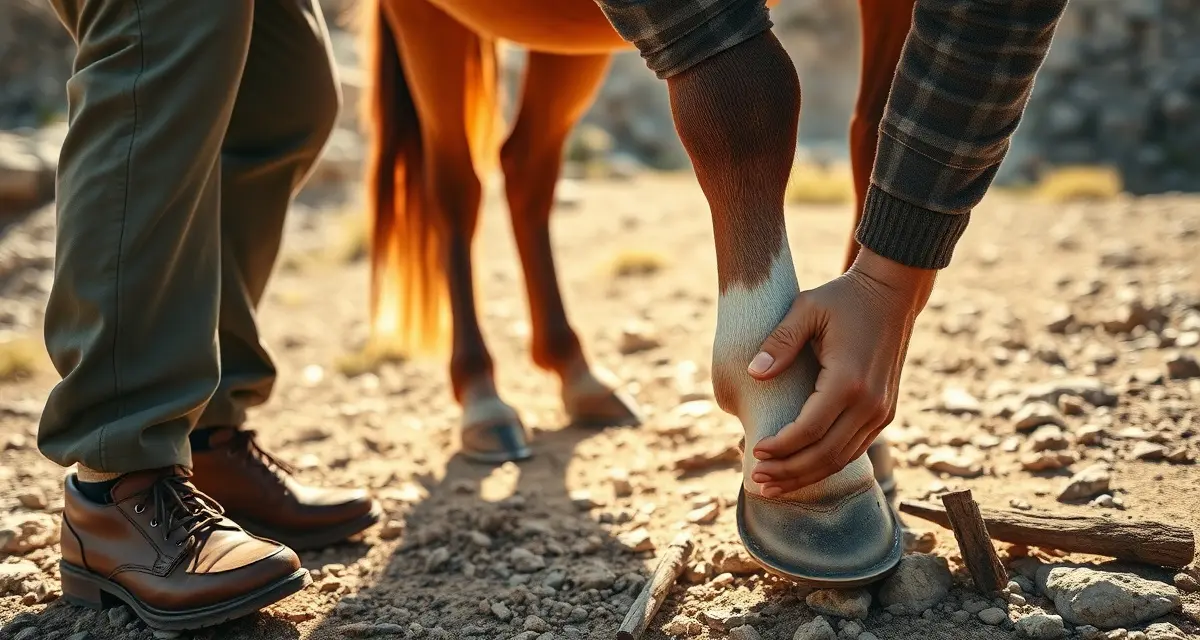
Mustang Trail Riding Shoeing Guide: From Barefoot Wild to Shod Trail Riding
Mustangs kept barefoot on appropriate terrain have lower hoof disease rates than shod horses. That's not a coincidence. These are animals that evolved over thousands of years on varied terrain, developing hooves specifically adapted to wild range conditions. The natural wear patterns of a Mustang living on abrasive rock and dry desert ground produce a self-maintaining hoof that can be remarkable.
TL;DR
- Many Mustangs do not need shoes for trail work once properly transitioned to domestic life and given adequate conditioning time through regular trimming.
- Soft paddock conditions, wet ground, and sustained rocky trail work are the main triggers that make shoes worthwhile for individual Mustangs.
- Freshly adopted Mustangs should go through several barefoot trims before any shoe decision is made, since the first visits are about hoof balance and handler comfort.
- Lighter steel or aluminum shoes are preferred for Mustangs because their naturally dense hoof walls hold nails well and the lighter shoe preserves more of the natural limb feel.
- The barefoot-to-shod transition works best spread across 2-3 visits over 6-12 weeks, with notes on the horse's response at each stage guiding the next decision.
- Tracking hoof condition, terrain soreness, and shoeing history across visits gives farriers the data needed to make evidence-based decisions rather than breed-based assumptions.
But domestication changes the equation. A Mustang in a soft paddock doesn't get the natural wear that conditioned their feet in the wild. And a Mustang doing serious trail work on terrain that exceeds what their hooves can naturally handle may need shoes, at least for specific situations.
When Mustangs Need Trail Shoes
The honest answer is that many Mustangs don't need shoes for trail work, even on moderately rocky terrain, once they're properly transitioned to domestic life and their hooves are conditioned through regular trimming and appropriate work.
The situations where shoes become worthwhile include:
- Hooves that have become soft from standing in wet paddocks or on soft ground
- Horses doing sustained rocky trail work that produces sole bruising or lameness
- Mustangs transitioning directly from adoption to a demanding trail program before their hooves have fully adapted
- Any Mustang showing consistent soreness on hard terrain despite adequate trimming and conditioning time
FarrierIQ's hoof health records are particularly useful for Mustangs in the barefoot-to-shod transition. You can track hoof condition across multiple visits, note when the horse showed soreness and on what terrain, and build a record that informs the decision about whether shoes are truly needed.
The Transition from Wild Hooves to Domestic
Freshly adopted Mustangs often come with hooves that have never been handled and have developed in whatever conditions the range they came from offered. Some have hard, well-conditioned feet. Others, especially those from wetter range country or holding pens, have softer, flatter hooves that need notable work.
The first several trims are about establishing the relationship, getting the horse comfortable with handling, and bringing the hoof into a balance appropriate for domestic work. This process takes time and shouldn't be rushed.
The transition to shoes, if it happens, should come after the horse is comfortable with the farrier, their hooves are trimmed to a good baseline, and the decision is based on actual performance feedback from trail work rather than assumption.
Shoe Options for Mustangs
When shoes are appropriate, aluminum or lighter steel is often a good choice. The naturally dense wall of a well-conditioned Mustang hoof holds nails very well, so retention isn't usually the concern. The concern is usually sole protection for a horse whose feet became softer in domestic conditions.
A standard keg shoe sized to the foot provides adequate protection for most trail scenarios. Some farriers add a pad for sole protection on Mustangs that are particularly sensitive or doing very rocky work.
The Barefoot-to-Shod Transition Timeline
When a Mustang is being transitioned to shoes, doing it gradually over several visits is better than a sudden change. FarrierIQ's scheduling app helps you track that transition timeline with notes about the horse's response at each stage. Some Mustangs adapt immediately. Others take several shoeing cycles to be fully comfortable.
Frequently Asked Questions
Should Mustangs be shod for trail riding?
It depends on the individual horse, their hoof conditioning, and the demands of the specific trail work. Many Mustangs are excellent barefoot trail horses on appropriate terrain. Those doing sustained rocky trail work, particularly if they show sole bruising or soreness, may benefit from shoes or hoof boots as needed. The decision should be based on that specific horse's hooves and performance, not a blanket rule about the breed.
How long does it take to transition a Mustang to shoes?
If a Mustang is going from barefoot to shod, plan for a 2-3 visit process over 6-12 weeks to assess how they're adapting and whether the full set is needed. Some Mustangs take to shoes immediately with no issues. Others are uncomfortable at first and benefit from a gradual approach. The first shod visit often goes on aluminum or lighter steel to minimize the change in limb feel.
What type of shoes work best on Mustang hooves?
Mustang hooves, when properly conditioned, are dense enough to hold any standard shoe well. Lighter steel or aluminum is often preferred to maintain the natural feel as much as possible. The shoe size should be fitted conservatively to the actual hoof rather than overlapping considerably, since Mustang feet often have cleaner proportions than domestically-bred horses of similar size.
Are hoof boots a reasonable alternative to shoes for Mustang trail riding?
Hoof boots are a practical middle ground for Mustangs that are mostly sound barefoot but struggle on specific terrain types. They allow the hoof to remain unshod between rides while providing protection when the trail demands it. The fit needs to be checked regularly, since Mustang hooves can change shape noticeably during the conditioning process.
How do I know if my Mustang's soreness is a shoeing issue or a trimming issue?
Soreness that appears immediately after a trim and resolves within a day or two usually points to a balance or angle issue in the trim itself. Soreness that builds gradually over a trail ride and is concentrated at the sole or toe is more consistent with inadequate protection for the terrain. Keeping detailed notes on when soreness appears, on what ground, and at what point in the ride helps distinguish between the two causes.
Do Mustangs from different BLM ranges have meaningfully different hoof quality?
Yes, range of origin matters. Mustangs from drier, more abrasive ranges in Nevada or Wyoming tend to arrive with harder, better-conditioned hooves than those from wetter Pacific Northwest ranges or horses that spent extended time in holding facilities. Knowing a horse's origin gives the farrier a useful starting point, though individual variation within any range is still significant.
Sources
- American Farriers Journal, Lessiter Media
- Bureau of Land Management Wild Horse and Burro Program, U.S. Department of the Interior
- American Association of Equine Practitioners (AAEP), Farriery and Hoof Care Guidelines
- University of California Davis School of Veterinary Medicine, Equine Hoof Care Extension Resources
- The Equine Lameness Prevention Organization (ELPO)
Get Started with FarrierIQ
Tracking a Mustang through the barefoot-to-shod transition requires more than memory. FarrierIQ lets you log hoof condition, terrain soreness notes, and shoeing decisions across every visit so the record builds itself as you work. Try FarrierIQ free and see how much easier it is to make confident, data-backed decisions for horses like these.