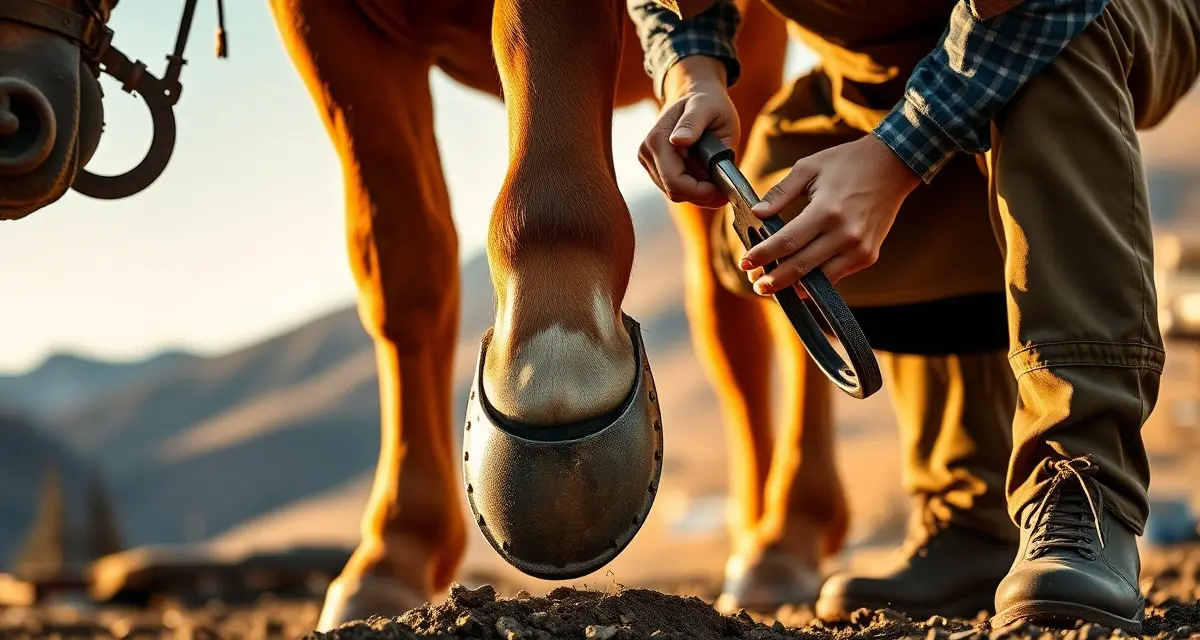
Rocky Mountain Horse Trail Shoeing Guide: Ambling Gait Across Mountain Terrain
Rocky Mountain Horses are bred specifically for mountain trail use, with their smooth four-beat ambling gait making them the ride of choice for mountain trail enthusiasts across Kentucky, Virginia, Tennessee, and the Appalachian region. Their exceptionally smooth gaits - the result of selective breeding in mountain Kentucky - are what defines the breed's purpose. Trail shoeing for Rocky Mountain Horses focuses on preserving that smooth gait across the varied and sometimes challenging terrain of mountain trail riding.
TL;DR
- Rocky Mountain Horses for mountain trail use are shod with standard flat steel shoes - no action devices or weighted toes - to preserve the natural four-beat ambling gait.
- Borium welded at the heels is the most effective traction addition for wet rock, limestone ledges, and steep mountain terrain.
- Correct hoof-pastern axis and smooth break-over are the two most critical shoeing factors for maintaining gait quality in this breed.
- Horses with good natural hoof quality are strong barefoot candidates, with hoof boots used for the most technically demanding rocky sections.
- Mountain trail wear is faster and often uneven compared to flat ground, placing most shod RMHs on a 6-to-8-week cycle.
- Medial-lateral imbalance is more visible in gaited breeds like the RMH than in non-gaited breeds, making precise balance especially important.
- Sole protection through leather or rubber pads is worth discussing with owners whose horses regularly cross very rocky terrain.
The Rocky Mountain Horse on the Trail
FarrierIQ terrain notes capture Rocky Mountain Horse shoe choices for mountain vs. flat trails. The terrain distinction is real: a RMH on the gentle Kentucky horse park grounds needs a different shoe consideration than the same breed navigating a rocky Red River Gorge trail.
The Rocky Mountain Horse's natural smoothness comes from a specific footfall pattern - a four-beat lateral gait similar to other gaited breeds but with the breed's distinctive smooth quality. Anything that disrupts this footfall pattern, or makes the horse uncomfortable, will show in the gait immediately.
Trail Shoe Selection for Mountain Terrain
Standard flat shoes: The baseline for most trail RMHs. A standard keg shoe in appropriate size with correct hoof-pastern axis and smooth break-over. No augmentation, no action devices, no weighted toes. The goal is natural movement.
Traction for mountain terrain: Mountain trails present traction challenges that flat trails don't. Wet rock, limestone ledges, clay soil that becomes slick when wet - all are common mountain trail hazards. Options:
- Borium at heels: Provides excellent grip on rock and slippery surfaces. The standard mountain trail traction addition.
- Calks: Small calks provide grip on soft ground and some rock surfaces.
- Rim shoes (fullered): The fuller groove provides base traction beyond a flat shoe.
Sole protection: Rocky mountain terrain can bruise soles. For horses regularly traversing very rocky trails, pad considerations are worth discussing with the owner. A leather or rubber pad adds sole protection without significantly affecting gait quality.
Barefoot: Rocky Mountain Horses with good natural hoof quality are strong barefoot candidates, particularly in the eastern mountain regions where the breed originated. The breed's heritage includes horses navigating rough mountain terrain without shoes - their feet evolved for this purpose. Horses with adequate natural wall thickness and sole depth often do well barefoot with hoof boots for gaited trail horses for the most extreme rocky sections.
Gait Preservation Through Correct Shoeing
The Rocky Mountain Horse owner's primary concern - even more than soundness in many cases - is preserving the smooth four-beat gait that makes their horse special. Angle, balance, and break-over all affect the gait:
Angle: A broken-back hoof-pastern axis can push the horse toward a more diagonal gait pattern, undermining the smooth four-beat rhythm. Correct angle is foundational for gait quality.
Break-over: An abrupt, square break-over can create an irregular footfall. A rolled or eased toe creates the smooth, forward break-over that supports the natural ambling gait.
Lateral balance: Medial-lateral imbalance creates asymmetric loading that affects gait rhythm. Perfect balance is more visible in gaited breeds than in non-gaited breeds because any irregularity shows in the movement quality. Tracking hoof balance measurements across appointments helps identify subtle shifts before they affect the gait.
See the Rocky Mountain Horse shoeing guide for full breed context. For trail documentation, the trail horses farrier app captures terrain and gait notes specifically.
Frequently Asked Questions
How are Rocky Mountain Horses shod for mountain trails?
Rocky Mountain Horses for mountain trail use are shod with standard flat steel shoes with traction additions appropriate for mountain terrain - typically borium at heels for rocky surfaces or calks for soft mountain trail ground. The shoe is fitted for correct hoof-pastern axis and smooth break-over that supports the natural four-beat ambling gait. No action augmentation is used for trail horses. For horses on very rocky trails, sole protection through pads may be considered. Well-conditioned RMH feet with good natural hoof quality are strong barefoot candidates, with hoof boots available for the most technically challenging sections.
Do Rocky Mountain Horses need special shoes for steep terrain?
Rocky Mountain Horses on steep mountain terrain benefit from traction additions that standard flat shoes don't provide. Borium welded to heel positions is the most durable and effective option for horses regularly navigating steep, rocky, or wet mountain terrain. This provides grip on the rock and wet surfaces that mountain trails present without adding significant weight or altering the horse's natural movement. Steep terrain also increases the loading on the hind limbs at each step - ensuring correct hoof-pastern axis and balanced feet is especially important for horses working regularly on steep grades.
How often do mountain trail Rocky Mountain Horses need shoeing?
Mountain trail Rocky Mountain Horses are typically shod every 6 to 8 weeks. Horses doing regular and frequent mountain trail riding - weekly or multiple times per week - may wear their shoes at the lower end of that range. The rocky terrain that mountain trail horses navigate wears both the shoe and hoof faster than flat ground work. Barefoot mountain trail RMHs need trimming at similar intervals, with careful attention to wear pattern - mountain trail wear is often uneven, with some parts of the hoof wearing faster than others depending on the terrain and the horse's footfall on specific trail surfaces.
Can borium affect a Rocky Mountain Horse's gait?
Borium applied only at the heels has minimal effect on the natural ambling gait because it does not alter break-over or toe movement. Applying borium across the entire shoe, or adding significant material at the toe, can change the way the foot breaks over and may introduce irregularity into the four-beat footfall. Most farriers working with mountain trail RMHs limit borium to the heel quarters and heel ends of the shoe for this reason.
What should I document after shoeing a Rocky Mountain Horse for trail use?
Recording the shoe type, traction additions, hoof angles, and any pad use at each appointment gives you a clear picture of what supports that horse's gait over time. Noting the owner's terrain - whether the horse primarily rides rocky ridgelines, wet creek crossings, or mixed mountain trails - helps explain wear patterns at the next visit. Keeping detailed farrier records for gaited horses is especially useful because gait changes are often the first sign that something in the shoeing needs adjustment.
Is there a difference in shoeing approach between front and hind feet on mountain trail RMHs?
Yes. The front feet carry more of the horse's weight and take the initial impact on rocky terrain, making sole protection and traction more critical up front. The hind feet do more of the propulsive work on steep climbs, so correct angle and balance behind directly affects how efficiently the horse moves uphill. Some farriers apply borium to all four feet for horses on consistently rocky mountain trails, while others prioritize the fronts and use lighter traction additions behind to avoid interfering with hind limb engagement.
Sources
- Rocky Mountain Horse Association, breed standards and trail use guidelines
- American Farriers Journal, gaited horse shoeing and traction research
- University of Kentucky College of Agriculture, Food and Environment, equine extension program
- Kentucky Horse Council, trail riding and hoof care recommendations
- Equine Lameness Prevention Organization (ELPO), hoof balance and gait research
Get Started with FarrierIQ
FarrierIQ lets you log terrain type, traction additions, hoof angles, and gait notes for every Rocky Mountain Horse in your client list, so you always arrive at the next appointment knowing exactly what worked on that horse's mountain trail setup. Try FarrierIQ free and see how purpose-built record keeping makes gaited breed work easier to manage across your entire schedule.