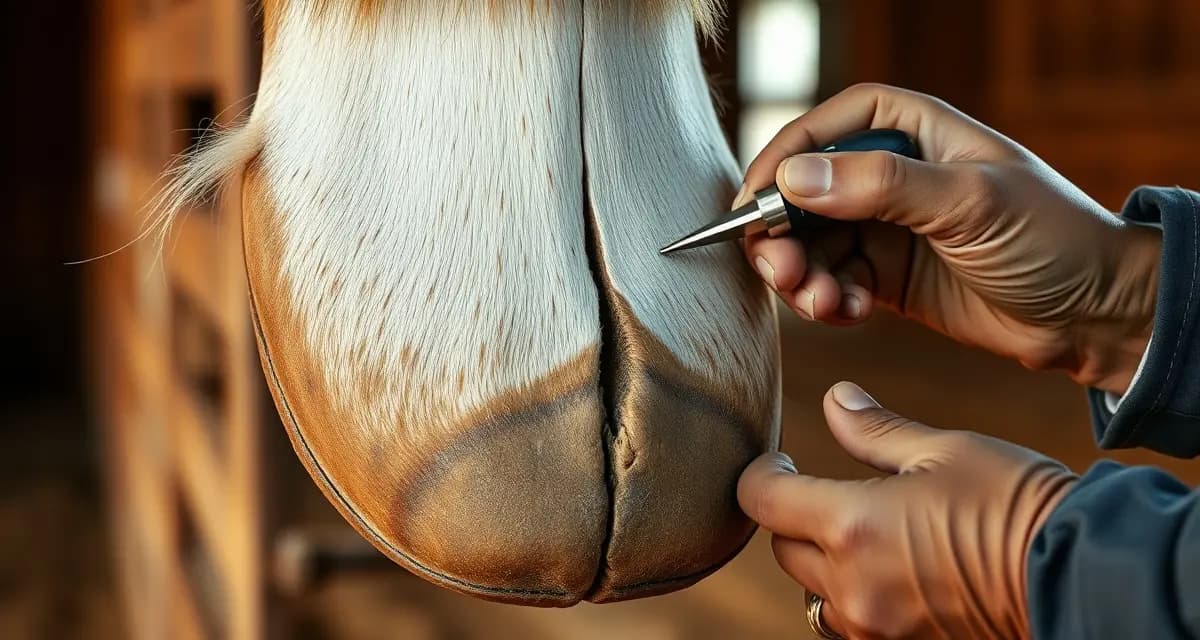
Corrective Shoeing for Hoof Cracks: Treating Grass Clips, Quarter, and Toe Cracks
Hoof cracks are the most common hoof condition farriers treat -- affecting approximately 35% of horses at some point in their lives. The range from a cosmetic surface crack to a full-thickness quarter crack that causes lameness is wide, and the corrective approach must match the severity and location of the crack accurately. Treating every crack the same way produces poor results for both simple and complex cases.
TL;DR
- Hoof cracks affect approximately 35% of horses at some point, making crack identification and treatment one of the most common corrective skills a farrier uses.
- The five main crack types -- grass cracks, sand cracks, quarter cracks, toe cracks, and bar cracks -- each have different causes and require different interventions.
- Quarter cracks are the most technically demanding: the biomechanical cause (underrun heels, long toe, asymmetric loading) must be identified and corrected first, before the crack itself is stabilized.
- Crack stabilization options include stainless steel or fiberglass lacing, acrylic patch material, and support shoe configurations (egg bar or full bar) that reduce dynamic loading on the cracked area.
- Severe quarter cracks typically require 3 to 6 months (3-6 shoeing cycles) of consistent management before they grow out completely.
- Sand cracks originating at the coronary band may become permanent if the coronary band is damaged -- these require veterinary assessment, not just farrier management.
- Photograph every significant crack at every visit: before cleaning, after treatment, and in context showing the whole hoof.
Understanding Hoof Crack Types
Before prescribing treatment, identify the crack type precisely. Different cracks require different interventions.
Grass cracks (superficial vertical cracks)
Start at the ground surface and extend upward. They're usually the result of dry, brittle hoof wall or uneven trimming that allows the wall to chip and crack from ground pressure. Most grass cracks are cosmetic and resolve with appropriate moisture management and correct trimming. They become structural concerns when they extend more than one-third of the way up the hoof wall.
Sand cracks (coronary band cracks)
Start at the coronary band and grow downward. These are more serious than grass cracks because they originate at the hoof production site. If the coronary band is damaged, the crack may become permanent. Sand cracks may result from trauma to the coronary band, nutritional deficiencies, or chronic infection at the coronary margin.
Quarter cracks
Vertical cracks in the quarter of the hoof wall -- the most common significant hoof crack. Quarter cracks cause lameness when they open and close with each stride, creating blood vessel and sensitive tissue exposure. They're associated with specific conformational and shoeing issues including underrun heels, long toe, and inadequate heel support.
Toe cracks
Vertical cracks at the toe of the hoof. Less common than quarter cracks. Toe cracks are often associated with excessive toe length, flat soles, or chronic hoof wall dryness that weakens the toe wall. Horses experiencing elevated summer cracking incidents (common in dry climates where hoof cracking increases 55%) often present with toe cracks first. See the complete farrier summer guide for seasonal crack management.
Bar cracks
Cracks in the bars of the hoof. Often associated with contracted heels and inadequate heel expansion.
Corrective Approach by Crack Type
Superficial Grass Cracks
Treatment priority: address the underlying cause. If dry feet are the cause, advise consistent hoof conditioner application and appropriate moisture exposure. If improper trimming is the cause, correct the trim and ensure appropriate break-over.
At the shoeing visit: clean out any debris from the crack with a fine pick. If the crack is shallow and dry, it may not require intervention beyond the underlying cause correction. For cracks showing any flexibility (opening and closing during walking), the shoe should be fitted to reduce the loading pressure on the crack location.
Quarter Cracks
Quarter crack treatment is the most technically demanding crack correction. FarrierIQ hoof condition photos document crack location and progress across shoeing cycles -- the visual record from first identification through resolution is essential for tracking whether the approach is working.
Step 1: Identify the biomechanical cause. Quarter cracks almost always have a cause beyond just the crack itself. Underrun heels, long toe/low heel, and asymmetric loading are the most common contributors. Address these first.
Step 2: Relieve the crack. A dremel or rotary tool can be used to create a small drainage groove across the top of the crack if it's active and bleeding. This prevents pressure buildup inside the crack.
Step 3: Stabilize the crack. Several techniques work depending on crack severity:
- Lacing: Stainless steel wire or fiberglass lacing across the crack, embedded in hoof material
- Patch application: Acrylic patch material applied over the crack after cleaning and drying
- Support shoe: Egg bar or full bar shoe that reduces the dynamic loading on the cracked area
Step 4: Shoe for heel support. A shoe that provides adequate heel support and is set slightly wide at the quarters reduces the collapse of the hoof capsule that opens the crack with each stride.
Step 5: Document and monitor. Track the crack's progress at every visit. Is it stable? Is the new growth coming in clear at the coronary band? Is there any sign of infection or ongoing movement?
Toe Cracks
Treatment for toe cracks addresses the biomechanical contributors (excessive toe, inadequate break-over) and stabilizes the crack with patch material or a clip placed on either side of the crack location to prevent the crack from widening. A shoe with a toe clip placed slightly to one side of the crack can help distribute loading away from the crack site.
Documentation Requirements
FarrierIQ hoof condition photos document crack location and progress across shoeing cycles. This documentation matters for multiple reasons:
- Your own clinical tracking of what's working
- Communication with the owner about progress
- Veterinary coordination if the crack requires professional consultation
- Liability protection if the crack pre-exists your involvement
Photograph every significant crack at every visit: before cleaning, after treatment, and in context showing the whole hoof. Note the length, depth, and any drainage or tissue involvement. Your farrier hoof health records and client management system should include these photos as permanent documentation.
Frequently Asked Questions
How do farriers treat toe cracks?
Toe crack treatment starts with identifying the biomechanical contributor -- usually excessive toe length or inadequate break-over. The farrier corrects the trim to reduce the mechanical stress that created the crack, then stabilizes the crack itself using a combination of patch material (acrylic repair compound) and clip placement. A toe clip positioned slightly to one side of the crack helps redistribute loading. For significant toe cracks that extend more than halfway up the wall, a patch is applied after thoroughly cleaning and drying the crack surface. The crack is monitored at every subsequent visit with photos documenting the new growth coming in cleanly from the coronary band.
What is a grass crack versus a quarter crack?
A grass crack starts at the ground surface and grows upward -- usually cosmetic and caused by dry, brittle hooves or uneven trimming. A quarter crack starts at the coronary band or deep in the quarter wall tissue and grows in both directions. Quarter cracks are usually associated with biomechanical issues (underrun heels, long toes, asymmetric loading) and cause lameness when they open and close during movement. The distinction matters because treatment is different: grass cracks often resolve with trim correction and moisture management, while quarter cracks require specific stabilization techniques and biomechanical correction over multiple shoeing cycles.
Can corrective shoeing fix a severe hoof crack?
Yes, in most cases -- but "fix" means managing the crack through regrowth, not instant repair. A severe quarter crack that involves the sensitive structures requires several shoeing cycles (3 to 6 months) of careful management before it grows out completely. During that time, the crack is stabilized with patches and appropriate shoeing, the biomechanical causes are corrected, and progress is documented at every visit. Most hoof cracks, including severe quarter cracks, can be resolved with appropriate corrective shoeing if the underlying causes are identified and addressed. The exceptions are cracks associated with permanent coronary band damage, which may be managed but not fully resolved.
When should a hoof crack be referred to a veterinarian?
Any crack with active bleeding, purulent drainage, or visible sensitive tissue exposure warrants veterinary consultation. Sand cracks originating at the coronary band should have veterinary assessment if they show no improvement after 2-3 shoeing cycles, since permanent coronary band damage may be present. Cracks that cause consistent lameness at a level the horse can't work through require vet evaluation for pain management alongside the mechanical correction. If you're uncertain whether a crack involves the sensitive laminae or has created an infection pathway, err toward the vet -- the liability exposure from under-reacting is higher than the cost of a consultation call.
How do you tell a horse owner their horse has a quarter crack that will take months to resolve?
Be specific about what "resolved" means and what the timeline looks like. Explain that new hoof growth comes from the coronary band at roughly 3/8 inch per month -- the crack has to grow out completely from top to bottom, which takes the full distance from coronary band to ground surface, typically 9-12 months for a full wall. What you're managing in the intervening months is stabilizing the crack so it doesn't propagate, correcting the mechanical cause so a new crack doesn't form, and keeping the horse comfortable enough to continue work. Owners who understand the biology of hoof growth accept a 6-month timeline more readily than owners who were told "we'll fix it next visit."
Related Articles
Sources
- American Farrier's Association (AFA), corrective shoeing education and hoof crack management techniques
- American Association of Equine Practitioners (AAEP), equine hoof care guidelines and lameness resources
- Cornell University College of Veterinary Medicine, equine podiatry and hoof wall research
- The Horse: Your Guide to Equine Health Care, quarter crack and hoof crack treatment coverage
- Kentucky Equine Research, hoof wall moisture content and crack prevention studies
Get Started with FarrierIQ
Quarter crack cases need sequential photo documentation at every visit to confirm whether the crack is stable, growing, or resolving -- and to communicate progress to the horse owner in a way that builds confidence in your management approach. FarrierIQ's per-horse photo records attach to individual visits, making it straightforward to compare crack status across the full management timeline. Try FarrierIQ free and build the kind of documented case file that serious crack cases require.