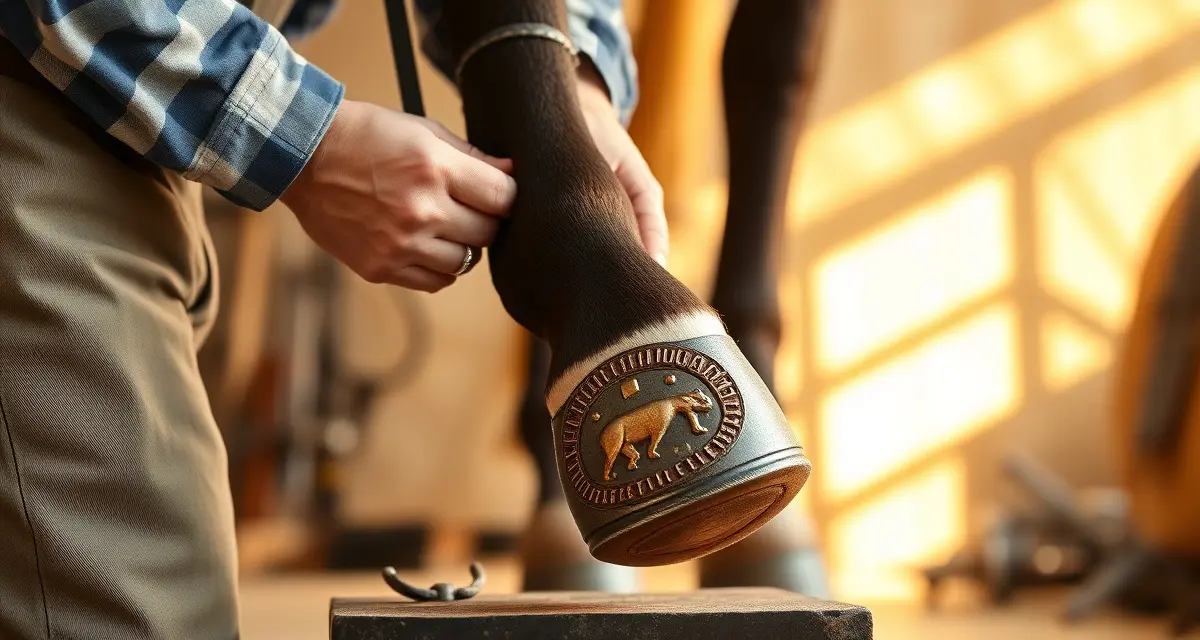
Paso Fino Trail Riding Shoeing Guide: Natural Gait for Outdoor Riding
Paso Fino trail horses are popular in Caribbean and southern US trail riding communities - beloved for a natural four-beat gait that's so smooth it's described as floating. Unlike the Tennessee Walker's running walk or the Missouri Fox Trotter's flat walk, the Paso Fino gait (Paso Fino, Paso Corto, or Paso Largo depending on speed) is a rapid, even four-beat lateral movement that occurs naturally in the breed with minimal training.
TL;DR
- Trail Paso Finos are shod with light-gauge flat steel shoes that preserve the natural four-beat gait, not show ring setups with weighted toes or platform configurations
- The breed's small, compact feet (13.3–15.2 hands) require precise nail sizing, exact shoe fit, and accurate angle work because small errors show up more visibly in gaited movement
- Borium at the heels of a standard flat shoe is the recommended solution for horses regularly trail riding on rocky limestone or granite terrain
- Gait disruption - shifting toward a diagonal pattern or losing even four-beat rhythm - is often a shoeing issue tied to hoof-pastern axis, break-over timing, or medial-lateral imbalance
- Shoeing intervals run every 6 to 8 weeks, with active trail horses on high mileage needing closer to 5 to 6 weeks; barefoot Paso Finos need trimming at the same frequency to maintain gait-supporting hoof shape
- Well-conditioned Paso Fino feet are strong barefoot candidates on moderate terrain, particularly in Caribbean communities where the breed is traditionally adapted to local footing
Trail shoeing for the Paso Fino focuses on preserving that natural gait across the varied footing that real-world trail riding involves.
Paso Fino Hoof Characteristics
Paso Finos are typically small horses (13.3-15.2 hands) with proportionally sized hooves - compact, hard, and often with good natural wall quality. The breed was developed in Latin America, where horses traversed varied tropical and mountain terrain. This heritage has produced naturally tough feet with good density.
The compact size of Paso Fino feet requires careful attention to:
- Nail size selection (smaller nails appropriate for smaller, thinner walls)
- Shoe fitting precision (small errors proportionally larger on small feet)
- Angle accuracy (slight angle errors more visible in movement in gaited breeds)
Trail Shoeing for Natural Gait
The primary goal of Paso Fino trail shoeing is preserving the natural four-beat gait without interference or augmentation. Unlike show Paso Fino shoeing, which may use specific shoe materials and configurations to enhance gait expression in the show ring, trail shoeing keeps everything as natural and functional as possible.
FarrierIQ terrain notes capture Paso Fino shoe selection across varied trail surfaces. Because trail conditions vary - from sandy beaches (popular with Florida and Caribbean trail riders) to rocky mountain paths - the shoe choice should reflect the horse's primary trail environment.
Flat steel shoes: The most common trail Paso Fino shoe. Light gauge, appropriate size, standard fit. No action additions, no weighted toes, no platform setups used in the show ring.
Aluminum shoes: Some trail riders prefer aluminum for the lightness, particularly for horses covering long distances. The natural Paso Fino gait's efficiency doesn't benefit from added weight.
Barefoot: Well-conditioned Paso Fino feet on appropriate terrain often don't need shoes. The breed's naturally hard feet are good candidates for barefoot hoof management on moderate trail terrain.
Rocky terrain shoes: For horses regularly trail riding on very rocky terrain - limestone outcroppings, granite mountain trails - a slightly heavier shoe with borium at heels provides both protection and traction. This is the environment where shoe protection earns its cost.
Gait Maintenance Through Shoeing
A Paso Fino that loses its characteristic smooth four-beat gait may have a shoeing issue. The angle, balance, and break-over of the shoe can all influence gait quality:
- Broken-back hoof-pastern axis encourages a flatter, less elevated gait that may shift toward a diagonal pattern
- Incorrect break-over changes the timing of foot release and can affect the even four-beat rhythm
- Medial-lateral imbalance creates asymmetric loading that alters gait rhythm
See the Paso Fino shoeing guide for full breed management context. Document any gait observations in FarrierIQ's notes - correlating shoeing changes with gait quality changes helps identify what each horse responds to best. The trail horses farrier app provides trail-specific documentation templates.
Frequently Asked Questions
How are Paso Finos shod for trail riding?
Trail Paso Finos are typically shod with standard flat steel shoes in a light gauge appropriate for the breed's smaller feet. The fit emphasizes correct hoof-pastern axis, smooth break-over, and adequate heel support for the lateral four-beat gait. No action devices, weighted toes, or platform setups used in show ring horses are appropriate for trail shoeing. Horses regularly trail riding on rocky terrain may benefit from borium at heels for traction. Some trail Paso Finos are kept barefoot with appropriate conditioning, particularly in Caribbean communities where the breed is traditional and well-adapted to local terrain.
Do trail Paso Finos need special shoes for rocky terrain?
Paso Finos on regularly rocky trail terrain benefit from shoe protection and traction. A standard light flat shoe with borium welded at the heels provides excellent rocky terrain performance - protection for the sole and white line from bruising contact, and grip for safe movement over variable footing. For horses on extreme rocky terrain, a slightly heavier shoe may be appropriate. The trade-off is that heavier shoes add some weight to a small foot - on a Paso Fino, proportional shoe weight is more significant than on a larger horse. Evaluate the specific rocky terrain characteristics and the horse's individual hoof quality when recommending shoe options.
How often do trail Paso Finos need shoeing?
Trail Paso Finos are typically shod every 6 to 8 weeks. Active trail horses on consistent mileage schedules may need closer to 5 to 6 weeks if hoof wear is significant. The Paso Fino's small, compact feet can develop imbalance or flaring relatively quickly if intervals are extended too long. Barefoot trail Paso Finos need trimming at similar intervals to maintain the hoof shape that supports their natural gait. Horses in Caribbean communities who trail ride year-round on consistently moderate terrain sometimes go slightly longer between visits - up to 8 to 9 weeks - if their hoof wear pattern is even and growth is moderate.
Can show Paso Fino shoeing setups cause problems if used on a trail horse?
Yes. Show ring configurations for Paso Finos - including weighted toes, platform setups, and action-enhancing devices - are designed to amplify gait expression in an arena setting, not to support a horse covering miles of varied terrain. Using these setups on a trail horse adds unnecessary weight and alters the natural biomechanics of the gait in ways that increase fatigue and the risk of soft tissue strain over long distances. Trail shoeing should always prioritize function, protection, and gait preservation over exaggerated expression.
Does aluminum versus steel shoe choice affect the Paso Fino's gait on trail?
For most trail Paso Finos, the difference is subtle but worth considering on longer rides. Aluminum shoes are lighter, which suits the breed's naturally efficient lateral gait and reduces fatigue over extended mileage. Steel shoes are more durable and hold borium better for rocky terrain applications. The choice typically comes down to the horse's primary trail environment: aluminum for softer or mixed terrain with high mileage, steel with borium for consistently rocky conditions where traction and sole protection matter more than minimal shoe weight.
How does a farrier identify whether a gait problem is shoeing-related or something else?
A shoeing-related gait issue in a Paso Fino typically appears or worsens shortly after a reset and improves as the shoe wears or is corrected at the next visit. Common shoeing causes include a broken-back hoof-pastern axis, asymmetric medial-lateral balance, or break-over positioned too far back. If the gait problem persists across multiple shoeing cycles with correct work, or appears mid-cycle without any change in footing or workload, a veterinary evaluation for soft tissue, joint, or neurological issues is appropriate. Detailed notes in FarrierIQ tracking each visit's angles and the horse's gait response make this pattern much easier to identify.
Sources
- Paso Fino Horse Association (PFHA), breed standards and management guidelines
- American Farriers Journal, gaited horse shoeing coverage and farrier education resources
- University of Florida Institute of Food and Agricultural Sciences (IFAS), equine extension publications on hoof care in Florida and Caribbean trail environments
- American Association of Equine Practitioners (AAEP), hoof care and lameness evaluation guidelines
- The Horse: Your Guide to Equine Health Care, gaited breed hoof and gait management articles
Get Started with FarrierIQ
FarrierIQ gives you the tools to track exactly what each Paso Fino trail horse responds to - logging shoe type, terrain notes, angle measurements, and gait observations visit by visit so you can see patterns across the shoeing cycle. If you're managing gaited breed clients on varied trail terrain, try FarrierIQ free and see how breed-specific documentation changes the quality of your work.