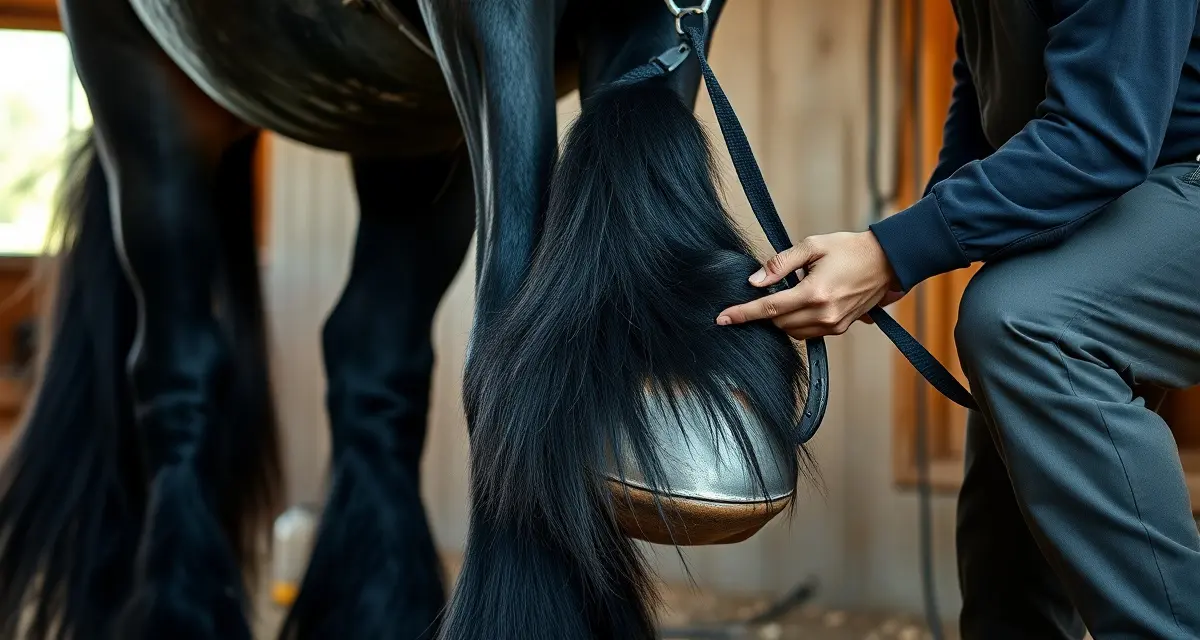
Friesian Horse Shoeing Guide: Managing Feathered Feet and Heavy Frames
Friesians are a striking breed -- jet black, heavily feathered, with a powerful baroque frame and high-stepping movement. They're increasingly popular in dressage, driving, and pleasure riding. They're also one of the more demanding breeds to shoe, for reasons that aren't immediately obvious until you've had a Friesian appointment.
TL;DR
- Friesians originated in the wet, cold, muddy Frisian Islands environment -- the breed carries that heritage in elevated risk of moisture-related hoof and skin problems including white line disease, scratches, and chronic progressive lymphedema (CPL).
- The five-step Friesian appointment includes an extra step most other breeds don't need: part the feathering and assess the skin and hoof wall underneath before beginning the trim.
- Friesian hooves are often upright -- work with the natural angle rather than trying to dramatically lower the toe; heel contraction can develop from the same mechanisms as in other feathered breeds.
- Shoe selection varies by discipline: aluminum shoes for dressage (lighter weight to enhance elevated movement), steel keg shoes for driving, wider-web shoes than foot size alone suggests for the broad baroque frame.
- Chronic progressive lymphedema (CPL) is a hereditary condition with increasing prevalence in Friesians -- noticeably enlarged, firm lower legs with unusual coronet anatomy warrant a discussion with the owner about veterinary evaluation.
- Sharp rasp edges or proud clinches near the coronet can cause irritation under the heavy feathering -- check that the finish around the coronet area won't trap or irritate the feathering between visits.
- Most Friesians are on 5-6 week cycles; competition horses and those in active training may need 4-5 weeks during peak season -- FarrierIQ's scheduling software tracks each Friesian on their individual interval.
Friesians are also one of the more demanding breeds to shoe, for reasons that aren't immediately obvious until you've had a Friesian appointment.
Friesian Hoof Characteristics
The Hoof Itself
Friesian hooves are typically:
- Large relative to body weight, though the breed carries more mass per inch of leg than warmblood sport horses
- Often somewhat boxy or upright
- Thick-walled - these are robust hooves in most individuals
- Prone to certain conditions related to the feathering and the wet-climate origin of the breed
The Friesian originated in the Frisian Islands off the coast of the Netherlands - a wet, cold, muddy environment. The breed carries that heritage in its tendency toward moisture-related hoof and skin problems.
The Feathering Challenge
Friesians have heavy feathering on the lower legs, similar to Clydesdales but in a lighter-framed package. That feathering creates the same management challenges: warm, moist conditions around the pastern and coronary band, trapped debris, and elevated risk of:
- Chronic progressive lymphedema (CPL) - a hereditary condition in Friesians causing progressive swelling and skin thickening in the lower legs
- Scratches (pastern dermatitis) - bacterial infection at the back of the pasterns
- Mite infestation - mange-causing mites that live in the feathering
- White line disease - moisture and debris at the coronet
When you're working on a Friesian, you're often parting feathering to get to the foot and assessing the skin condition you find underneath. If you see significant skin changes - scaling, moisture, irritation - note it and advise the owner to consult their vet.
Friesian-Specific Health Concerns That Affect Shoeing
Chronic Progressive Lymphedema
CPL is a hereditary condition affecting Friesians with increasing prevalence. It causes progressive fibrosis and swelling of the lower legs, which can eventually affect the pastern and hoof capsule. Horses with significant CPL may have altered hoof growth, unusual coronet development, or discomfort during shoeing in advanced cases.
If you're seeing a Friesian with noticeably enlarged, firm lower legs and unusual coronet band anatomy, discuss it with the owner. CPL diagnosis is the vet's domain, but your observations are valuable.
Hoof Wall Quality Variation
Friesian hooves can vary significantly in quality - some are rock-solid, others have softer, more crumbly walls, particularly in wet conditions. Assess wall quality before deciding on nailing approach.
Step-by-Step: Shoeing a Friesian
Step 1: Safety and Handling
Friesians are generally willing horses but can be sensitive. Horses with active skin conditions on their legs may be reactive about having those areas touched. Approach slowly, check for skin sensitivity before picking up feet, and note anything unusual.
Step 2: Part the Feathering and Assess
Get down to the hoof wall. Check the coronet band for skin changes or moisture damage. Look at the white line. Check frog health. The feathering can hide problems that a quick visual check from standing height misses.
Step 3: Trim the Foot
Friesian feet are often more upright than warmblood sport horses. Work with the natural angle. Don't try to dramatically lower the toe on a naturally upright Friesian foot.
Keep the frog in contact with the ground - heel contraction in feathered breeds can develop from the same mechanisms as in Clydesdales.
Step 4: Shoe Selection
Friesians in dressage work do well in appropriate-sized keg shoes or aluminum shoes (lighter weight for elevated movement). The broad, baroque frame of a Friesian means some individuals need wider-web shoes than their foot size alone would suggest.
For driving Friesians, steel is standard. Traditional Friesian show shoeing has specific aesthetic standards - consult with the owner about what their show classes require.
Step 5: Nail and Finish
Friesian walls are generally good for nailing. Standard pattern, avoiding the last nail hole at the heel to allow expansion.
Check that the finish around the coronet area doesn't trap feathering - sharp rasp edges or proud clinches can cause irritation under the feathering.
Dressage Friesians
Friesians are popular dressage horses, and their naturally expressive movement is well-suited for the work. Shoeing for dressage follows warmblood principles: appropriate breakover, supported heels, and shoe type that enhances rather than hinders the horse's natural elevation.
Many dressage Friesian owners ask about aluminum shoes. The lighter weight can help express the natural high knee action the breed is known for.
Driving Friesians
Traditional Friesian driving - in the famed Friesian "race" or in combined driving - demands durable shoes with appropriate traction. Steel keg shoes are standard for driving work. Traditional Friesian shows have specific requirements about shoe type and appearance that differ from general farrier practice.
FAQ
How often do Friesian horses need shoeing?
Most Friesians are on 5-6 week cycles. Their relatively heavy frames on well-developed feet mean standard cycles apply. Competition horses and those with specific shoeing programs may be on 4-5 week cycles during active seasons.
What hoof problems are Friesians prone to?
White line disease and thrush are common due to the moisture-trapping feathering. CPL affects the lower legs and can over time influence hoof development in advanced cases. Some Friesians develop soft or brittle walls in very wet conditions. Scratches and mite infestation under the feathering are skin conditions that affect shoeing comfort in active cases.
How do you manage feathering during a Friesian shoeing appointment?
Many farriers use velcro wraps or bandage material to temporarily hold the feathering back and out of the way during trimming and nailing. Assess the skin under the feathering at each visit. Report any significant changes to the owner so they can address underlying skin issues between appointments.
What should a farrier document in a Friesian's hoof health record that wouldn't typically be in a standard horse record?
Friesian-specific documentation includes: skin condition under the feathering at each visit (scoring scratches severity, any CPL-related changes, mite signs), white line condition assessment at all four feet with location noted in clock-face positions, feathering density and management condition (noting whether it's been thinned or is growing unchecked), and coronary band condition which is harder to assess through heavy feathering. These additional fields build the longitudinal record that catches progressive conditions early. A Friesian farrier appointment without skin-and-white-line documentation is an incomplete appointment. FarrierIQ's hoof health records support this breed-specific documentation alongside standard hoof condition notes.
How should a farrier approach a Friesian that is sensitive or reactive during shoeing due to skin conditions in the lower leg?
Start with a slower, quieter approach than you might with other horses. Run your hand down the leg before picking it up to assess sensitivity level -- a Friesian with active scratches or mite irritation under the feathering may react sharply to unexpected contact. If the horse is significantly reactive, note it in the record and communicate to the owner that the skin condition is affecting their horse's cooperation at farrier visits -- this creates pressure to address the underlying condition rather than managing around it indefinitely. For horses with mild sensitivity, working methodically and allowing the horse to settle between feet is more effective than rushing. Significant skin conditions that compromise the farrier appointment warrant a veterinary referral conversation.
Sources
- American Association of Equine Practitioners (AAEP), breed-specific equine health and hoof care guidelines
- American Farrier's Association (AFA), Friesian horse farrier care and feathered breed resources
- Friesian Horse Association of North America (FHANA), Friesian breed health and management guidance
- University of Utrecht Faculty of Veterinary Medicine, Friesian horse CPL and breed-specific health research
Get Started with FarrierIQ
Friesian appointments require breed-specific documentation that standard farrier records don't accommodate -- white line condition by location, skin assessment under the feathering, and CPL monitoring notes alongside the standard trim record. FarrierIQ's hoof health records support this documentation, and the farrier scheduling software keeps Friesians on their 5-6 week interval automatically. Try FarrierIQ free and set up your first Friesian client record before their next appointment.