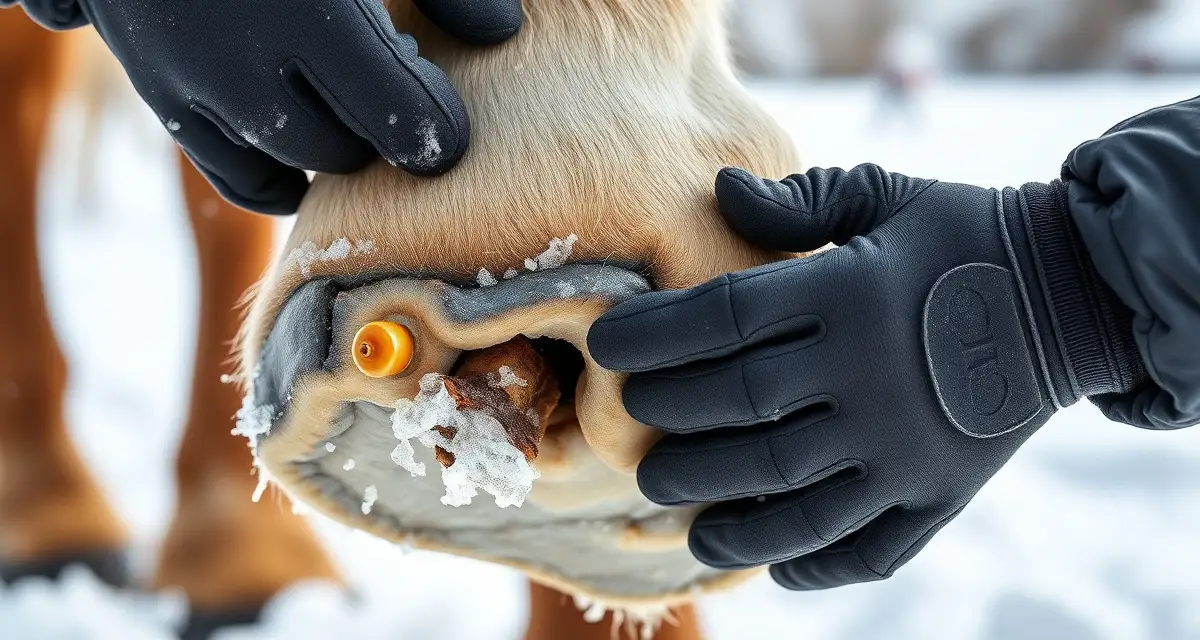
Winter Horse Hoof Care: Snow, Ice, and Cold Ground
Winter is often the season horse owners think least about hoof care, assuming that less riding means less wear and therefore less attention needed. That's partly true -- winter horses in light work need farrier visits less frequently than summer performance horses. But winter creates its own specific hoof challenges that can cause real problems if they go unaddressed.
TL;DR
- Frozen ground creates concussion nearly equivalent to trotting on pavement, making winter shoeing decisions as important as summer ones
- Anti-snowball (bubble) pads are the most reliable solution for horses with regular turnout in snowy conditions
- Borium and removable studs each offer traction on ice, but both involve tradeoffs depending on the footing your horse encounters most
- The 8-to-10-week winter interval is reasonable for light-use horses but should not be applied automatically -- 12-week-plus gaps can leave horses entering the hardest ground conditions with unbalanced feet
- If a shoe comes off in winter, the first priority is getting the horse off frozen or rocky surfaces and contacting your farrier promptly
- Horses with thin soles, arthritis, or navicular syndrome face elevated risk from frozen ground concussion and may need full pads or pour-in pad material
- Sand (not salt) on icy paddock surfaces and rubber mats in high-traffic areas are the most practical management steps for reducing winter hoof injuries
Hard frozen ground creates hoof concussion equivalent to trotting on pavement for horses without proper winter shoes. That's a number that should reshape how you think about winter shoeing. A horse on frozen ground in flat, unprotected shoes is absorbing impact force at every step that it wouldn't face on the same ground in warmer, softer conditions.
The Main Winter Hoof Challenges
Ice ball accumulation: The most common and immediate winter hoof problem is snow and ice packing into the hoof -- around the frog, between the bars, and sometimes filling the entire solar surface with a hard ball of ice. A horse walking on ice balls is essentially walking on stilts -- unbalanced, unsafe, and at risk of slipping and falling. Ice balls can also cause bruising by pressing on the sole and frog.
Hard frozen ground concussion: Frozen ground is nearly as hard as pavement. Horses without adequate cushioning between their feet and that surface absorb significant concussion force. This is particularly hard on horses with thin soles, existing arthritis, navicular syndrome, or any other condition that makes the lower limb more sensitive to impact.
Hoof cracking from freeze-thaw cycles: Like spring, winter's alternating freeze-thaw cycle stresses hoof wall. Ground that freezes overnight and softens during the day creates the same expansion-contraction cycle that causes spring cracks. Winter cracks tend to develop more slowly than spring cracks but can become significant if the horse is in regular work.
Reduced circulation in cold: Cold temperatures reduce blood flow to extremities, including hooves. For horses with existing circulation issues or conditions like chronic laminitis, cold weather can exacerbate those problems. Horses kept in cold stalls without sufficient exercise may develop decreased digital circulation that compounds other hoof problems.
Farrier access challenges: In cold climates, winter visits are sometimes skipped because of weather, frozen ground making travel difficult, or the assumption that less work means less need for attention. The result can be horses that enter spring significantly overdue, with uncorrected imbalances and longer-than-optimal hoof that's then asked to do increasing work.
Winter Shoeing Options
The right winter shoeing approach depends on your climate, the horse's workload, and the footing conditions you're dealing with.
Anti-snowball pads: If your horse is in a snowy environment and ice ball accumulation is a regular problem, anti-snowball (also called snow, bubble, or convex sole) pads are the most practical solution. These pads have a convex shape that prevents snow from packing and self-eject accumulated material as the horse walks. They're most useful for horses that live in the paddock or have regular turnout in snow.
Borium or carbide traction: For horses working on ice or frozen surfaces, borium (tungsten carbide) welded to the ground surface of the shoe provides grip that standard shoes can't offer. Once applied, borium lasts through several shoeing cycles. The tradeoff is that borium provides traction in all conditions -- which means the horse has hard traction even when transitioning to soft ground or rubber mats. Discuss the footing your horse encounters most with your farrier before committing to borium.
Removable studs: Tapped holes in the shoe allow you to install and remove studs as conditions warrant. Pointed studs for ice, wider bullet studs for mud, or no studs at all when footing is good. This flexibility is appealing but requires the horse owner to actively manage the stud situation -- forgetting to remove studs when a horse is turned out on firm ground can cause uneven loading and muscle soreness.
Full pads: In cold climates with very hard, frozen ground, some horses benefit from full pads with pour-in pad material (leather, rubber, or synthetic) that add cushioning between the shoe and the sole. Pour-in pad material provides additional support and can help horses with thin soles.
Bare through winter: Horses with limited winter work and good-quality hooves can sometimes go barefoot through winter successfully. Barefoot hooves grow a thicker sole callus that provides some natural protection. This only works well if the horse isn't doing significant work on frozen ground and if their hoof quality genuinely supports it.
Managing Ice in the Paddock
The single most impactful management change for winter hoof care is reducing ice accumulation in horse areas. This isn't entirely within everyone's control, but there are steps that help:
- Sand on icy surfaces (do not use salt near horses -- it can irritate hooves and if ingested causes toxicity)
- Rubber mats in high-traffic areas like gate entries, around hay and water
- Breaking up ice accumulation near troughs and feeders before it gets compacted
- Adequate bedding in stalls to provide some cushioning from frozen ground that transfers through concrete floors
The Winter Farrier Schedule
The standard advice that horses can go 8 to 10 weeks between visits in winter is reasonable for horses in light work, but it shouldn't become a default that's applied without thought. A horse that was last seen in October and won't see a farrier until January has been on a 12-week-plus interval that may be appropriate or may mean entering the hardest ground conditions of winter with an unbalanced foot.
For horses in regular winter work, 6 to 8-week intervals remain appropriate. For horses in very light use or turnout only, a winter visit every 8 to 10 weeks is usually fine, but verify that your specific horse is handling the interval well before extending it further.
FarrierIQ's overdue alert system flags horses that are approaching or past their scheduled interval -- useful in winter when it's easy to let visits slip because the horse "isn't doing much." Use hoof health records to note conditions observed at winter visits so you can assess whether the current interval is working for each horse.
What to Do When a Shoe Comes Off in Winter
Shoe loss in winter happens most often in deep mud before freeze-up, in wet footing that softens nail clinches, or when a horse gets a shoe caught on something in the paddock. If a shoe comes off in winter, here's the priority order:
- Get the horse off hard, rocky, or frozen surfaces if possible. An unsupported hoof on frozen ground loses the protective benefit of the shoe very quickly.
- Contact your farrier. Most farriers will prioritize a shoe loss call, especially in winter conditions.
- Boot the hoof if you have a hoof boot that fits. A well-fitted boot protects the bare hoof until the farrier can replace the shoe.
- Avoid working the horse on hard footing until the shoe is replaced.
Frequently Asked Questions
How do I prevent ice balls in my horse's hooves?
The most reliable prevention is anti-snowball (bubble) pads installed by your farrier before winter arrives. These pads have a convex surface that prevents snow from packing and self-clears as the horse walks. If pads aren't in place, frequent hoof picking during snowy or wet conditions is the manual alternative -- but it requires someone checking the horse's feet multiple times per day when conditions are bad. Applying a small amount of petroleum jelly or Vaseline to the bottom of an unshod hoof before turnout in snow can also reduce packing, though this is a temporary solution that requires reapplication.
Do horses need special shoes in winter?
Horses doing work on ice or frozen ground benefit from some form of traction -- either borium (carbide) welded to the shoe surface or removable screw-in studs for ice and hard conditions. Horses in snowy climates with regular turnout generally do better with anti-snowball pads than without. Horses in very light winter use on soft footing can often get through winter in standard shoes without modification. The right answer depends on your specific conditions, and the fall farrier visit is the time to make these decisions before the season demands them.
How often should a horse see a farrier in winter?
For horses in regular work, 6 to 8-week intervals remain appropriate through winter. For horses in light use or turnout only, 8 to 10-week intervals are usually adequate for horses with good hoof quality. Don't extend intervals solely because the horse is less busy -- frozen ground and the mechanical demands of cold conditions mean hoof integrity still matters in winter. Use FarrierIQ's scheduling tools to set appropriate winter intervals for each horse and receive alerts when a visit is coming due, so winter visits don't get overlooked.
Can I use salt or ice melt products in my horse's paddock to reduce ice?
Salt and most commercial ice melt products should be avoided in areas where horses walk or graze. Salt can irritate the soft tissue of the hoof and coronary band with repeated contact, and ingestion of ice melt chemicals can cause toxicity. Sand spread over icy surfaces is the safer alternative for traction, and rubber mats in high-traffic zones reduce ice buildup at the spots horses stand most.
When is the best time to talk to my farrier about winter shoeing options?
The fall visit -- ideally the last appointment before your region's ground typically freezes -- is the right time to discuss winter shoeing. At that point, your farrier can install anti-snowball pads, add borium, or tap holes for studs before conditions demand them. Waiting until the first hard freeze means your horse may go through the most difficult footing of the year without the right setup, and scheduling a farrier visit in bad winter weather is harder for everyone.
Are there hoof supplements that help with winter hoof quality?
Biotin-based hoof supplements are the most studied option for supporting hoof wall integrity, but they work over months, not weeks -- so starting a supplement in December won't produce results until spring at the earliest. If your horse has a history of winter cracking or slow hoof growth, starting a supplement in late summer gives it time to take effect before conditions worsen. Talk to your veterinarian before adding any supplement, particularly if your horse has metabolic conditions that affect diet management.
How does cold weather affect a horse that already has laminitis?
Cold temperatures reduce digital blood flow, which can worsen circulation in horses with chronic laminitis. These horses may show increased sensitivity or subtle lameness during cold snaps even without a new laminitic episode. Deep bedding, limited exposure to frozen ground, and full pads or pour-in pad material can help manage comfort through winter. Any change in a laminitic horse's gait or behavior during cold weather warrants a call to your veterinarian.
Sources
- American Farriers Journal, Lessiter Media
- American Association of Equine Practitioners (AAEP), Equine Health and Lameness Resources
- University of Minnesota Extension, Horse and Equine Hoof Care Publications
- The Horse: Your Guide to Equine Health Care, Equine Network
- Cornell University College of Veterinary Medicine, Equine and Nemo Farm Animal Hospital
Get Started with FarrierIQ
Managing winter hoof care across a full client roster -- tracking which horses need anti-snowball pads, which are approaching overdue intervals, and which had shoe losses noted at the last visit -- is exactly the kind of detail that FarrierIQ's scheduling and hoof records tools are built to handle. Try FarrierIQ free and see how much easier it is to keep every horse on the right winter schedule without letting visits slip through the cracks.