Winter Horseshoeing Guide: Cold Weather Challenges for Farriers
Farriers in northern states see a 19% revenue dip in January without proactive winter scheduling. Cold weather doesn't have to mean empty calendar days, but it does require a different approach to scheduling, client communication, and the physical work itself.
TL;DR
- Farriers in northern states lose an average of 19% of revenue in January when they don't proactively manage winter scheduling.
- Snow pads (full, bubble, or rim style) prevent dangerous snow packing that can raise a horse's effective hoof height by 2-4 inches, creating serious fall risk.
- Screw-in studs and permanent borium applications are the two main traction options for icy ground, each with different maintenance demands on the horse owner.
- Frozen ground causes concussion sensitivity even in sound horses, making pad selection and documentation critical for winter shoeing decisions.
- The pre-winter client conversation in October is the single most effective tool for preventing the spring-restart problem and keeping intervals consistent through cold months.
- Weather cancellations should be rescheduled within 7-10 days, not left open, and a short waitlist of clients fills those slots quickly.
- Symmetric stud placement is essential; studs on only one side of a shoe create uneven loading and can contribute to joint soreness over time.
This guide covers the shoeing side (snow pads, ice studs, frozen ground) and the business side (keeping your winter schedule full with proactive client outreach). Both matter. A farrier who knows how to shoe for winter conditions but lets clients slide to every-other-month appointments still loses revenue.
What Cold Weather Does to Farrier Work
The Physical Challenges
Working in cold is demanding in ways that indoor farriery isn't. Metal cools faster, shoes need to be worked quickly and returned to the heat more often. Your hands get stiff, affecting your grip and feel. Horses are often more difficult in cold weather, moving around more or responding less patiently to standing for extended periods.
Practical adjustments:
Dress for it. Heavy-duty insulated aprons and layered clothing make a meaningful difference in your comfort and quality of work. Cold hands make mistakes.
Have a heat source. A propane heater in the barn during winter appointments isn't luxury, it's functional. A warmer work environment helps both you and the horse.
Allow more time per appointment. Winter shoeing takes longer. Metal cools faster, horses are less cooperative, and daylight is limited. Build that reality into your daily schedule rather than fighting against it.
Frozen Ground
Frozen ground changes everything about winter horse movement. A horse that's sound and comfortable in soft spring footing may show discomfort or irregular movement on frozen, rocky-textured ground, not because of lameness, but because of concussion sensitivity on a surface that doesn't give.
This matters for your shoeing decisions. Horses working regularly on frozen ground may benefit from:
- Pads (leather or plastic) to cushion the concussion
- Pour-in pad material for horses with solar sensitivity
- Bar shoes to increase ground surface and reduce point pressure
Document these winter modifications in the horse's record so you and the owner understand the seasonal adjustment and can plan accordingly. Using a farrier client management system makes it easier to flag these seasonal notes so they're visible at the next appointment.
Snow Pads: What They Are and How to Apply Them
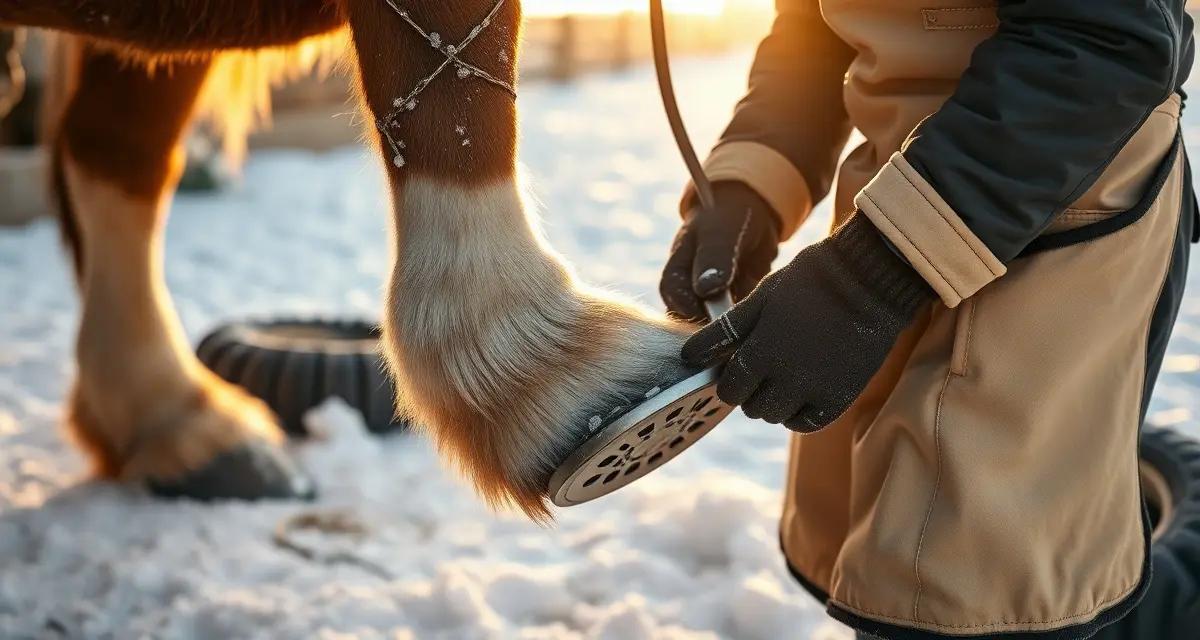
Snow pads (also called snow ball pads or rim pads) prevent snow from packing into the shoe and creating a dangerous "ball" of ice under the horse's hoof. A packed snow ball raises the horse's effective hoof height by 2-4 inches, creating instability and serious fall risk.
Types of Snow Pads
Full pads: Cover the entire sole. They eliminate snow packing entirely and provide additional sole protection. Best for horses living in snowy conditions or working on snow regularly.
Bubble pads: Have a raised center portion that pops the snow out each time the horse takes a step. More effective than relying on the shoe shape alone, and allows more sole contact with the ground than a full pad.
Rim pads (leather or plastic): Sit between the shoe and the hoof wall. Less effective at preventing packing than full or bubble pads, but add some protection and are simpler to apply.
Application Notes
Applying full pads adds time to any appointment. The hoof needs to be thoroughly clean and dry before pad application. Pads should be trimmed to fit flush with the shoe edge, no overhang that creates a collection point for debris.
Petroleum-based pine tar is the traditional material applied between the pad and sole to prevent moisture accumulation. Some farriers prefer modern pour-in materials, which create a more complete seal and can provide additional cushioning.
Document pad application in the horse's record, the pad type, any fill material used, and the reason. This matters if you or another farrier is working on the horse later in the season.
Step-by-Step: Applying Snow Pads
- Clean hoof thoroughly, no debris between pad and sole
- Apply pine tar or pour-in base material to the sole before pad placement
- Position pad over the prepared sole
- Shoe the horse with the pad in place, clinching nails through both pad and hoof wall
- Trim any pad overhang flush with the shoe
- Check fit and confirm the pad seats correctly against the hoof wall
The FarrierIQ notes section in a horse's hoof record is the right place to log these application details, what you used, why, and any observations about the horse's comfort level.
Ice Studs: Screw-In and Permanent Options
Horses ridden on icy ground or frozen packed snow need traction. Shoes alone, even with some surface texture, become dangerously slippery on ice. Studs add grip that can prevent falls, both for horses at work and horses simply moving around a frozen paddock.
Screw-In Studs
Screw-in studs require threaded holes tapped into the shoe at the time of shoeing. The holes are plugged with cotton or rubber between uses. When traction is needed, the owner removes the plugs and screws in the appropriate stud type.
Benefits: owners can customize traction based on current conditions (different studs for ice vs. soft snow vs. packed snow). Cons: requires maintenance of the holes, correct plug use, and owners who are reliable about changing studs appropriately.
Stud types for winter:
- Bullet studs: general purpose winter traction
- Ice studs: sharper, for hard ice conditions
- Road studs: tungsten carbide tips for longevity on hard surfaces
Permanent Borium or Carbide Applications
Borium welded onto the shoe at wear points provides permanent traction enhancement without the maintenance of screw-in systems. It's less adjustable but more foolproof, particularly for horses whose owners won't reliably manage screw-in studs.
Applied to the toe and heel areas, borium gives the horse reliable ground purchase without the dramatic grip of competition studs. For most winter pleasure horses, this is the more practical option.
Stud Placement Considerations
Symmetric placement matters. Studs on only one side of a shoe create uneven loading and can contribute to joint soreness over time. Place studs symmetrically, typically at both heels and sometimes at the toe for maximum traction.
On front feet, exercise caution with toe studs on horses in heavy work, the toe stud can prevent normal breakover and put additional stress on the deep digital flexor tendon. Discuss this with your client for their specific horse and use pattern. Keeping detailed farrier invoicing records that note stud type and placement also helps when clients ask about changes in their horse's movement later in the season.
Proactive Winter Scheduling: Protecting Your Revenue
The 19% revenue dip that northern farriers experience in January is largely preventable. It happens when farriers allow clients to "wait until spring" without maintaining the interval conversation through the cold months.
Why Horses Still Need Winter Farrier Visits
Horse hooves don't stop growing in winter. The growth rate slows somewhat in cold conditions, but it doesn't stop, and a horse that goes from October to March without a farrier visit is not going to be in good shape when spring arrives.
Winter barefoot horses still need trims. Shod horses need their shoes maintained. Therapeutic horses need their programs continued regardless of season.
The Pre-Winter Client Conversation
Have this conversation in October with every client in a winter-weather region:
> "[Horse] will still need visits through winter, hoof growth doesn't stop, it just slows down a bit. I'm thinking we'll extend your interval slightly from [X] to [Y] weeks through December-February, but I want to keep us on schedule so we're not starting from scratch in spring. I'll reach out when it's time for each appointment."
This sets the expectation clearly that winter appointments are part of the plan, not optional. Most clients agree readily, they just hadn't thought about it.
Managing Winter Weather Disruptions
Weather cancellations happen. Have a clear protocol:
- If conditions are dangerous, either party can request rescheduling without penalty
- Reschedule within 7-10 days rather than letting the slot sit
- Keep a short waitlist of clients who want their next appointment sooner, fill cancellations immediately
Use FarrierIQ's farrier scheduling software to track which appointments have been rescheduled due to weather and which are still open, so nothing falls through the cracks during the disruptions of a snowy week.
Pair winter scheduling with the hoof health records system to document any condition changes that the cold months bring, particularly for horses with sole sensitivity or conditions aggravated by frozen ground.
FAQ
What shoes do horses need in winter?
Most horses in light to moderate winter use do fine with their standard shoes. Horses that work or live on snow need snow pads (full, bubble, or rim style) to prevent snow packing under the shoe. Horses on icy or frozen hard ground benefit from screw-in studs or permanent borium applications for traction. Horses with solar sensitivity may need pads and protective materials to buffer concussion from frozen ground. The specific need depends on the horse's use, the local conditions, and any existing soundness considerations.
How does cold weather affect farrier work?
Cold slows every part of the process. Metal cools faster, so you're reheating shoes more frequently when hot shoeing. Horses are often less patient in cold conditions, creating more movement during the appointment. Working with cold hands affects grip and sensitivity. Build additional time into winter appointments, bring a heat source to the work area, and dress appropriately, comfort and safety both matter when you're working with large animals in cold conditions.
How do I schedule farrier appointments in winter weather?
Proactive scheduling before winter arrives is the most effective approach. Have the conversation with each client in October about maintaining their interval through the cold months. When weather forces a reschedule, move the appointment within 7-10 days rather than letting it drift. Keep a short waitlist of clients who want to come in sooner, so weather cancellations can be filled quickly. Don't let "it's winter" become an excuse for clients to skip 3-4 months of regular care.
Should barefoot horses still see a farrier in winter?
Yes. Barefoot horses still need regular trims through winter, even if the interval is extended slightly. Without trimming, hooves can flare, chip unevenly on frozen ground, or develop imbalances that become harder to correct in spring. The growth rate slows in cold weather but does not stop, and a horse that goes several months without attention will take longer to bring back into balance when the season changes.
How do I explain winter shoeing costs to clients who want to skip visits?
Frame it around the cost of correction versus the cost of maintenance. A horse that skips three months of farrier visits often needs additional work in spring to address flaring, imbalance, or shoe-related issues that developed over the winter. That correction appointment typically costs more in time and materials than two or three standard maintenance visits would have. Most clients respond well to this framing when it's explained clearly in October before the skipping pattern starts.
Can a horse wear the same shoes all winter without a reset?
In most cases, no. Even if the shoe itself is in acceptable condition, the hoof grows and the shoe's position relative to the hoof wall shifts over time. A shoe left on too long creates uneven loading, can cause the hoof to grow over the shoe edge, and increases the risk of the shoe being pulled in deep footing or snow. Standard reset intervals still apply in winter, though some farriers extend by one to two weeks for horses in very light use.
Sources
- American Farriers Journal, Lessiter Media
- American Association of Equine Practitioners (AAEP), Equine Health and Lameness Resources
- University of Minnesota Extension, Horse Care and Management Program
- Cornell University College of Veterinary Medicine, Equine and Farm Animal Hospital
- Farrier Registration Council (FRC), United Kingdom
Get Started with FarrierIQ
Winter is the season that separates farriers who protect their revenue from those who lose it to drift and cancellations. FarrierIQ gives you the scheduling tools to stay ahead of weather disruptions, the hoof record system to document seasonal modifications like snow pads and stud placement, and the client communication features to have the October conversation at scale. Try FarrierIQ free and head into winter with a full calendar instead of an empty one.