Summer Horse Hoof Care: Dry Ground, Brittle Hooves
Summer creates a different set of hoof challenges than spring or winter, and it's a season that catches some horse owners off guard. While spring gets attention for mud and moisture, summer's problem is the opposite: too little moisture. Hoof cracks increase by 40% during the driest summer months in arid climates -- not because of anything the horse is doing wrong, but because the hoof dries out and becomes brittle in ways that crack under normal use.
Understanding what summer does to hooves and how to respond is one of the core elements of year-round horse management.
TL;DR
- Hoof cracks increase by 40% during the driest summer months in arid climates, driven by moisture loss rather than anything the horse is doing wrong.
- Brittle hooves hold nails less securely, meaning clinches can loosen faster and shoes may pull off more easily in summer than in other seasons.
- Apply hoof conditioner (lanolin-based or commercial) to the outer wall and coronary band only -- never to the sole or frog, and never over petroleum jelly.
- Horses in arid climates (Southwest, high desert) should be seen every 5 weeks during peak summer dryness rather than the standard 6-to-8-week interval.
- Early morning ground watering is more effective than midday watering because heat-driven evaporation reduces moisture absorption later in the day.
- Tracking hoof condition notes across multiple summers lets farriers and owners get ahead of dryness patterns in June rather than reacting to cracking in August.
What Heat and Dryness Do to Hooves
The hoof wall is composed primarily of a protein called keratin, organized in a structure that depends on a certain level of internal moisture to stay flexible and resilient. When that moisture drops -- through prolonged exposure to dry, hot ground and low-humidity air -- the hoof wall becomes more rigid and brittle.
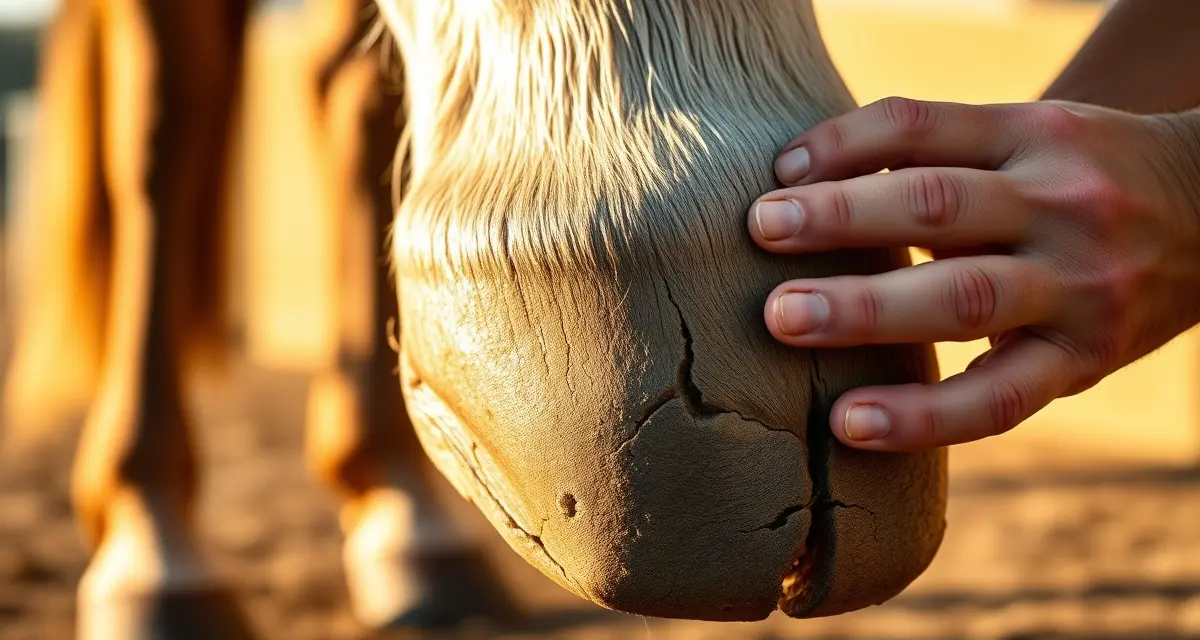
Brittle hooves crack more easily, hold nails less securely, and may flake or chip at the sole surface. The white line can become desiccated and more susceptible to separation. In horses doing significant work on hard, dry ground, the mechanical stress on a dried-out hoof is noticeably higher than on a properly hydrated one.
This problem is most pronounced in hot, arid climates -- Texas, Arizona, Nevada, New Mexico, southern California -- but summer dryness affects horses everywhere to varying degrees. Even horses in more humid climates can experience hoof drying if they're spending time on dry, baked clay paddocks or gravel lots.
How to Recognize Dry, Brittle Hooves
Visible signs from the outside:
- Chipping or flaking at the toe and sole margin
- Small horizontal cracks developing at the coronary band
- Sand cracks (vertical cracks from the ground surface upward)
- A dull, chalky appearance to the outer hoof wall rather than a naturally waxy look
- The hoof sounds hollow or rings differently when tapped compared to a well-hydrated foot
Behavioral signs:
- Reluctance to move forward on hard, dry ground
- Unusual sensitivity when the farrier handles the sole
- Shortened stride on firm footing that doesn't appear when the horse is on soft ground
If you're seeing any of these signs, the horse needs more attention to hoof moisture management and probably a sooner farrier visit.
Moisture Management in Summer
The goal isn't to make hooves wet -- it's to keep them in a balanced moisture state. Hooves that are too wet lose structural integrity just as hooves that are too dry become brittle. Summer management is generally about preventing excessive drying rather than adding moisture.
Consistent water access: Horses that stand near or frequently wade through water troughs keep their hooves in better moisture balance. Some barns use a wet sand pit or mud patch in the paddock specifically to keep hooves from drying out completely.
Early morning watering: Wetting the ground in the horse's pen or paddock in the early morning -- before the sun bakes the surface -- gives hooves some moisture exposure without the heat-driven rapid evaporation that makes midday watering less effective.
Hoof conditioners: Applied to clean, dry hooves, a quality hoof conditioner (lanolin-based, or commercial products like Farrier's Fix or Hooflex) can moderate moisture loss by slowing evaporation from the outer wall. Apply to the outer wall and coronary band -- not to the sole, which should be allowed to remain naturally firm.
What doesn't work: applying petroleum jelly or thick grease to the hoof wall. These products seal the surface but don't add moisture and can actually trap dirt and bacteria.
Summer Shoeing Considerations
Nail retention: Dry, brittle hooves don't hold nails as well as hydrated hooves. Clinches may loosen faster in summer conditions, and shoes may shift or pull off more easily. Checking clinches between regular appointments and calling the farrier earlier if a shoe seems loose is better than waiting for a full loss.
Summer shoe wear: Hard, dry ground is abrasive. Horses on rocky or hard-baked terrain may wear through shoes faster in summer than in spring on softer ground. If your horse is doing significant work on hard footing, the interval may need to tighten to account for wear.
Pads: Some horses benefit from pads during the driest summer months, particularly if they're working on extremely hard ground. Leather pads can hold moisture-retaining pack material that helps prevent sole bruising from hard, unforgiving footing.
Aluminum shoes: For performance horses in summer heat, aluminum shoes are cooler and lighter than steel. Some farriers and trainers prefer aluminum shoes for horses competing in summer shows for this reason.
The Summer Farrier Schedule
Summer typically doesn't require the same tightening of intervals that spring does, but horses doing heavy work on dry, hard ground should be evaluated on their individual situation. A horse trail riding five days a week on rocky terrain in July is wearing its feet differently than a horse in light work on arena sand.
Track hoof condition notes through summer visits using FarrierIQ so you can see whether a particular horse consistently develops dryness issues in July and August. That pattern, noted year after year, allows you and your farrier to get ahead of it -- using conditioning products proactively in June rather than reacting to cracking in August.
If you notice a shoe getting loose between appointments during a particularly dry stretch, don't wait for the scheduled visit. A lost shoe on hard ground in summer can cause rapid hoof damage -- the exposed foot is already fragile from dryness, and walking without the shoe accelerates cracking and chipping. Farriers who manage client appointment reminders and scheduling can flag high-risk horses for check-in calls during peak summer months.
Special Considerations for Horses in Arid Climates
If you're in a region where dry conditions are the norm rather than the exception -- the Southwest, high desert regions, or anywhere with prolonged summer drought -- hoof management needs to be more consistent and proactive throughout the warmer months.
Consider:
- Twice-daily hoof picking to remove hard debris that can pressure the sole
- Weekly application of a quality hoof conditioner during the driest months
- More frequent farrier visits (every 5 weeks instead of 6 to 8) during peak summer dryness
- Discussing with your farrier whether full pads or pour-in pad material makes sense during particularly dry stretches
The goal is always to manage the environment as much as possible, adjust the farrier schedule to match conditions, and use your records to anticipate summer problems rather than discover them when a horse goes lame. Farriers who maintain detailed per-horse hoof condition histories across multiple seasons are better positioned to make these calls early.
Frequently Asked Questions
How do I keep my horse's hooves healthy in summer?
Focus on moisture balance. Provide consistent water access that allows hooves to absorb some moisture naturally, apply a quality hoof conditioner (lanolin-based or commercial) to dry outer walls to moderate moisture loss, and maintain regular farrier appointments. Avoid products that seal the hoof surface without adding moisture, like petroleum jelly. If your horse is working on hard, dry ground, consider discussing pads with your farrier to reduce sole concussion. Track hoof condition across summer appointments so you can identify any patterns developing before they become lameness issues.
Should I use hoof conditioner in summer?
Yes, on dry hooves. Apply a conditioner to the outer hoof wall and coronary band when hooves are clean and dry -- this helps moderate moisture loss during the driest periods. Don't apply conditioners to hooves that are already wet from mud or water; you're trying to prevent over-drying, not trap moisture against an already saturated hoof. Also avoid applying anything to the sole or frog, which should remain firm. The coronary band is especially worth attention in summer because healthy coronary band tissue produces better-quality new hoof growth.
How does summer heat affect how often horses need a farrier?
For most horses, summer doesn't require dramatically different scheduling than the rest of the year. However, horses doing heavy work on hard, dry ground may need slightly tighter intervals because summer conditions accelerate wear and can cause shoe loosening. If your horse is in a high-use situation during summer (trail riding, competitions, daily arena work), a 5 to 6-week interval makes more sense than stretching to 8 weeks. Tracking these patterns over multiple summers in FarrierIQ lets you make these scheduling decisions based on your horse's specific history rather than general guidelines.
Can a horse go barefoot in summer, or does the dry ground make shoes more important?
Some horses do well barefoot in summer, particularly those in light work on varied terrain that naturally conditions the hoof wall. However, dry, hard ground increases concussion on the sole and can accelerate chipping in horses with naturally thin walls or flat soles. Whether to shoe or go barefoot in summer depends on the individual horse's hoof quality, workload, and footing -- a conversation best had with your farrier after evaluating the horse's specific foot structure and summer schedule.
What is white line disease, and does summer dryness make it more likely?
White line disease is a bacterial and fungal infection that invades the inner hoof wall through the white line, the junction between the hoof wall and sole. Summer dryness can make the white line more susceptible to separation, which creates an entry point for the organisms that cause white line disease. Horses in arid climates or those transitioning between very dry and wet conditions (such as irrigation paddocks) are at higher risk. Regular hoof picking, prompt farrier attention to any separation, and avoiding prolonged standing in contaminated footing are the primary preventive measures.
How do I know if a hoof crack is serious enough to call the farrier before the next scheduled visit?
Surface cracks that are shallow, dry, and not extending toward the coronary band are generally cosmetic and can wait for the next scheduled appointment. A crack that is deep, widening, moist, or bleeding -- or one that reaches the coronary band -- warrants a call to your farrier sooner. Any crack accompanied by lameness, heat in the hoof, or a foul smell should be evaluated promptly. When in doubt, a quick photo sent to your farrier can help them assess whether the crack needs immediate attention or can be addressed at the next visit.
Sources
- American Farriers Journal, Lessiter Media
- American Association of Equine Practitioners (AAEP), Equine Hoof Care Guidelines
- University of Minnesota Extension, Horse Hoof Care and Management
- Texas A&M AgriLife Extension, Equine Management in Hot and Arid Climates
- The Horse: Your Guide to Equine Health Care, Equine Network
Get Started with FarrierIQ
If summer hoof challenges -- dry walls, loose clinches, and horses that need tighter intervals during peak heat -- are part of your regular client conversations, FarrierIQ gives you a place to track all of it. Record hoof condition notes at every visit, flag horses that historically struggle in July and August, and build a scheduling history that lets you get ahead of problems rather than respond to them. Try FarrierIQ free and see how much easier it is to manage your summer workload when the records are already there.