What Do Farriers Do? A Day in the Life of a Professional Farrier
The average full-time farrier drives 62 miles and completes 8-12 appointments per working day. Behind those numbers is a profession that combines skilled trade work, animal handling, physical endurance, and the kind of practical knowledge that takes years to develop fully.
TL;DR
- Full-time farriers average 62 miles driven and 8-12 appointments per working day, making route planning a core part of the job.
- Hoof trimming and balancing is the foundation of every appointment - a poorly balanced trim under a well-fitted shoe is still a poor outcome.
- Farriers often see a horse's hooves more frequently than the veterinarian does, making them the first line of detection for conditions like white line disease, thrush, and contracted heels.
- Therapeutic shoeing for conditions like navicular syndrome and laminitis requires close collaboration with vets and a solid understanding of anatomy and biomechanics.
- Most successful farriers spend 1-2 hours per day on administrative tasks including scheduling, billing, and client communication.
- Professional farriers in established markets typically earn $50,000-$90,000 annually, with experienced farriers in high-demand markets exceeding $100,000.
- Entry into the trade typically requires farrier school plus apprenticeship, with the AFA's certification pathway providing a structured credential from Certified Farrier through Certified Journeyman Farrier.
If you're considering becoming a farrier, or just curious about what the job actually involves, here's an honest look at what professional farriers do.
The Core Work: Trimming and Shoeing
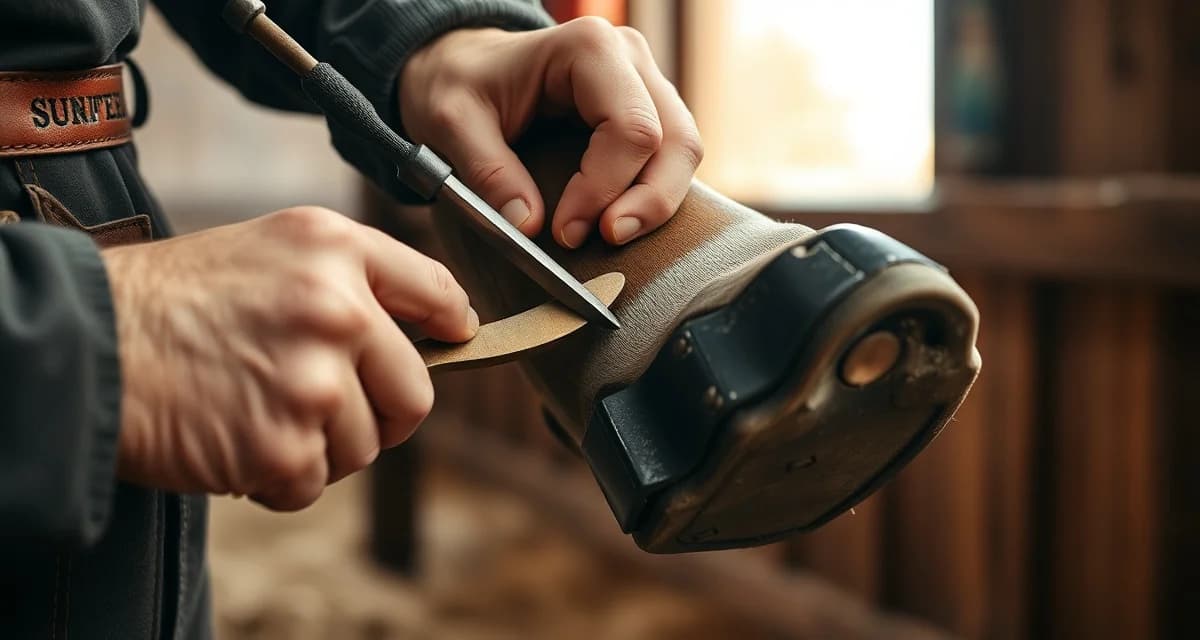
The most visible part of a farrier's job is the hands-on work with horses' feet. A typical appointment involves:
Hoof assessment. Before picking up a tool, a skilled farrier observes the horse's stance and movement. Unevenness in how the horse stands, asymmetry in hoof size or shape, or any sign that the previous shoeing needs adjustment all inform the work before it begins.
Removing old shoes. Using a clinch cutter and pull-offs, the farrier removes the existing shoes without damaging the hoof wall. A pulled shoe that takes wall with it is a mistake that creates problems for the next set.
Trimming and balancing. The hoof is trimmed to remove excess wall, address any flares, clean the sole and frog, and establish the angle and balance appropriate for that horse's conformation and use. This trim work is the foundation of everything that follows. A poorly balanced trim under a well-fitted shoe is still a poor outcome.
Shoe selection and fitting. The right shoe for the horse's size, use, and hoof condition is selected from stock. Cold-shoeing bends pre-made shoes to fit. Hot-shoeing involves heating the steel in a forge and shaping it precisely to the hoof's profile, allowing custom modifications that cold work can't achieve.
Nailing and finishing. Nails are driven through the hoof wall at the correct angle, the protruding nail ends are clinched, and the finished shoe is checked for proper seating and fit.
Hoof Health Diagnosis and Monitoring
Good farriers aren't just mechanics. They're the professional who sees a horse's hooves most frequently, sometimes more often than the veterinarian, and they're often the first to notice developing problems.
White line disease, thrush, hoof wall cracks, contracted heels, thin soles, changes in hoof quality. These are the conditions a farrier observes and notes at every visit. Catching a white line infection early means a few minutes of treatment and some management advice. Missing it for three visits means a notable remediation project.
FarrierIQ's farrier business software supports the documentation side of this monitoring role. Condition notes at each visit, tracked across multiple appointments, build the longitudinal record that makes this observation useful.
Therapeutic and Remedial Shoeing
The most technically demanding farrier work involves therapeutic cases, horses with navicular syndrome, laminitis, coffin bone fractures, white line disease, hoof wall injuries, or other conditions requiring specialized shoeing.
Therapeutic farriery is practiced in close collaboration with veterinarians. The vet diagnoses the condition and prescribes the approach. The farrier implements it. This requires not just shoeing skill but knowledge of anatomy, biomechanics, and the evidence base for different therapeutic shoeing approaches.
Route Planning and Business Management
The logistics of a farrier's working day are as much a part of the job as the technical work. Driving 60 miles efficiently requires planning. Managing a client book of 80-150 horses on individual intervals requires a system. Billing and invoicing, client communication, tax records. These administrative demands don't go away just because the work itself is physical.
Most successful farriers spend 1-2 hours per day on administrative tasks. Tools like FarrierIQ reduce that through automation, but it never drops to zero.
How to Become a Farrier
Most professional farriers enter the trade through one of two paths: formal school and apprenticeship, or extended apprenticeship alone.
Farrier schools range from intensive short programs of 6-12 weeks to longer professional programs of 3-6 months. These programs cover trimming and shoeing fundamentals, hoof anatomy, forge work, and business basics.
Most farriers then apprentice under an established professional to develop real-world competence before starting their own book. The American Farrier's Association's certification pathway provides a structured way to assess and demonstrate professional credentials, from the entry-level Certified Farrier through to the Certified Journeyman Farrier designation.
Frequently Asked Questions
How do I become a farrier?
Start with a professional farrier school program or arrange an apprenticeship with an established farrier in your area. After school, plan to spend time apprenticing before building your own book. The AFA's certification pathway provides a way to formalize your credentials. Expect a 2-3 year minimum before you're working fully independently with a professionally managed client book.
How much do farriers earn?
Full-time professional farriers in established markets typically earn $50,000-90,000 annually, with experienced farriers in high-demand markets exceeding $100,000. Earnings depend on market rates, geographic location, specialization, and business efficiency. Route optimization and professional tools like FarrierIQ help farriers maximize earnings by reducing non-productive time.
What tools does a farrier need?
The basic farrier tool kit includes pull-offs, clinch cutters, nippers, hoof picks, rasps, clinch blocks, hammers, and nail sets for the basic mechanical work. Hot-shoeing farriers also need a portable forge, anvil, and associated forge work tools. A professional business tool kit now includes a mobile app for scheduling, records, and invoicing. The physical tools and the business tools are both part of running a professional operation.
How often does a horse need to see a farrier?
Most horses on a regular maintenance schedule are seen every 6-8 weeks, though this varies by individual hoof growth rate, the horse's workload, and the time of year. Horses in heavy work or those with therapeutic shoeing needs may require more frequent visits. A farrier will typically recommend an interval based on how the horse's hooves grew and wore between the previous two appointments.
What's the difference between a farrier and a blacksmith?
A blacksmith works with metal in a general sense, shaping iron and steel for a wide range of applications. A farrier specializes specifically in equine hoof care, which includes both the metalwork of shaping and fitting shoes and the veterinary-adjacent work of assessing hoof health and balance. Some farriers are also trained blacksmiths, particularly those who do extensive hot-shoeing and custom metalwork, but the two trades are distinct.
Do all horses need shoes, or can they go barefoot?
Not all horses require shoes. Many horses in light to moderate work on softer terrain do well barefoot, provided their hooves are trimmed and balanced on a regular schedule. Shoes are typically recommended when a horse's work demands more traction or protection than the natural hoof provides, when the horse has thin soles or other hoof quality issues, or when therapeutic correction is needed. The decision is made case by case based on the individual horse's conformation, hoof quality, and use.
How do farriers handle difficult or unruly horses?
Managing a horse that doesn't stand well for shoeing is a routine part of the job. Experienced farriers develop handling techniques that keep both the horse and themselves safe, including working with the horse's natural movement rather than against it. In cases where a horse is genuinely dangerous to work on, farriers often coordinate with the horse's owner and veterinarian to address the underlying cause, whether that's pain, training gaps, or anxiety. Sedation administered by a vet is occasionally used for horses that cannot safely be shod otherwise.
Sources
- American Farrier's Association (AFA) - professional certification standards, farrier education resources, and industry statistics
- University of Minnesota Extension - equine hoof care and horse management publications
- American Association of Equine Practitioners (AAEP) - guidelines on farrier-veterinarian collaboration and therapeutic shoeing
- American Farriers Journal - trade publication covering farrier techniques, business practices, and industry trends
- Oklahoma State University Department of Animal and Food Sciences - equine science and hoof health research
Get Started with FarrierIQ
FarrierIQ is built around the realities covered in this article: the hoof condition records that make monitoring meaningful, the scheduling system that keeps a book of 80-150 horses organized, and the invoicing tools that cut down on the 1-2 hours of daily admin that comes with running a professional farrier operation. Try FarrierIQ free and see how much time you get back on the business side of the job.