What Is White Line Disease in Horses? Farrier's Guide
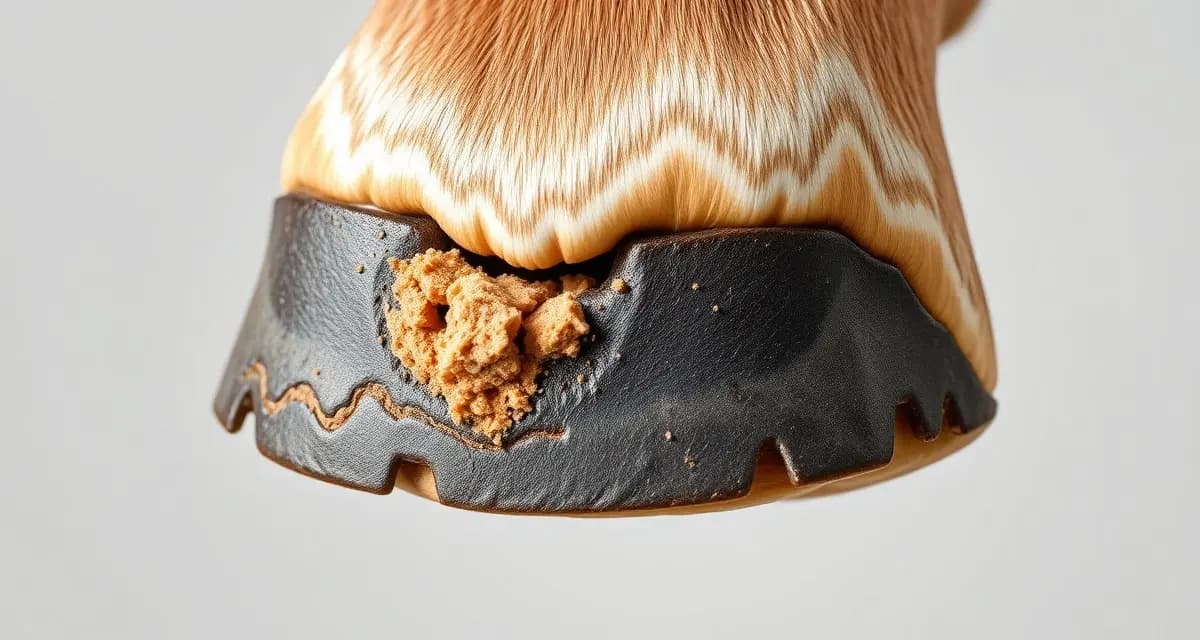
White line disease is a bacterial and fungal infection that invades the inner hoof wall -- specifically the area called the "white line," which is the junction between the outer hoof wall and the sole. Despite the name, this condition doesn't always show obvious white discoloration. What you're more likely to see is a crumbly, powdery, or hollow area in the hoof wall that sounds different when tapped with a hoof pick.
TL;DR
- White line disease affects an estimated 5 to 8 percent of shod horses in the US per year and is more common in wet climates and during wet seasons.
- Farriers identify it by the hollow sound when tapping the hoof wall and the soft, crumbly, foul-smelling tissue in the affected area.
- Treatment requires full debridement of all infected tissue until solid, healthy hoof wall is reached -- leaving any diseased material behind allows the infection to keep spreading.
- After debridement, the area must be kept dry; common topical treatments include copper sulfate, diluted bleach, and commercial antifungal products.
- Shoeing decisions post-treatment depend on how much wall was removed -- options include modified shoes, bar shoes, or a barefoot period.
- White line disease can recur in the same horse, especially if wet or contaminated footing conditions haven't been addressed.
- Documenting location, extent, and treatment at each visit in farrier records helps track regrowth and supports clear communication with horse owners.
White line disease affects an estimated 5 to 8 percent of shod horses in the US per year. It's more common in wet climates and during wet seasons, though it can occur anywhere. It's not a death sentence for a horse, but untreated cases can progress to serious structural damage and lameness.
How White Line Disease Develops
The outer hoof wall is designed to be an impenetrable barrier. When that barrier gets compromised -- through cracks, nail holes that are improperly placed, or prolonged contact with wet, contaminated footing -- bacteria and fungi can enter the inner hoof wall structure.
Once inside, the organisms digest the keratinized (dead) material in the white line zone, creating a hollow pocket. That pocket can spread upward toward the coronary band or horizontally across the sole junction if left untreated. The horse typically isn't lame until the undermining becomes extensive enough to affect the sensitive inner structures.
Common contributing factors include:
- Horses kept in wet, muddy, or manure-contaminated environments
- Improperly fitting shoes that create gaps or pressure points
- Previous hoof wall damage from injury or severe cracks
- Prolonged time between farrier visits, allowing hoof distortion
- Previous white line disease (it can recur in the same area)
How Farriers Diagnose It
Farriers identify white line disease primarily through hoof testers and manual examination. When you tap or probe the affected area with a hoof pick, you'll hear a hollow sound rather than the solid thud of healthy hoof wall. The material in the affected area is soft, crumbly, and often has a distinct smell -- somewhat like decay.
On the solar surface, you may see a widened or discolored white line, though in early stages the visible changes can be subtle. The real extent of the undermining often isn't apparent until you start removing the diseased tissue.
In shod horses, white line disease can develop under the shoe and only become apparent when the shoe is pulled. This is one reason regular farrier visit intervals matter -- a farrier pulling shoes and examining the sole surface will catch early WLD before it progresses.
Treatment: What Farriers Do
Treatment involves removing all the diseased material. This means the farrier uses a hoof knife to debride (cut away) the crumbly, infected tissue until they reach solid, healthy hoof wall. This can be alarming if you've never seen it -- the farrier may remove what looks like a large portion of hoof wall. But leaving infected material in place just lets the disease continue to spread.
After debridement, the exposed area needs to dry out. The organisms that cause white line disease thrive in moist, airless environments. Opening up the affected area and keeping it dry removes the conditions they need to survive.
Common topical treatments include copper sulfate solution, diluted bleach, commercial antifungal treatments, and products specifically formulated for white line disease. The specific treatment protocol varies by farrier preference and the severity of the case.
In severe cases where the undermining has reached the sensitive laminae, a vet should be involved to assess the structural integrity of the hoof and rule out involvement of deeper structures. Clear farrier-to-vet communication notes at this stage help ensure both professionals are working from the same information.
Shoeing After Treatment
Whether to shoe a horse while it's recovering from white line disease depends on the extent of the damage and where the affected area is. In mild cases where a small section of wall was removed, the farrier may be able to shoe normally while allowing the remaining healthy hoof wall to handle the load. In cases where significant wall was removed, the horse may need a modified shoe, a bar shoe, or a period barefoot to avoid putting a nail through a compromised section.
Tracking white line disease treatment progress in your farrier records is important for monitoring recurrence, documenting the treatment approach, and communicating with the horse owner about timeline and expectations.
Can It Come Back?
Yes. White line disease can recur, particularly if the underlying conditions that allowed it to develop haven't changed. A horse kept in a consistently wet, dirty environment is at ongoing risk. Management changes -- improving footing, cleaning more frequently, reducing mud exposure -- are as important as the veterinary treatment.
Farriers who note white line disease in their horse records can monitor recurrence over time. If you see it coming back in the same horse, that's a conversation to have with the owner about environmental management. Keeping a written record of those owner conversations and recommendations also protects you professionally if the situation escalates.
Frequently Asked Questions
How do farriers treat white line disease?
Treatment starts with debridement -- removing all the infected, crumbly tissue until the farrier reaches solid, healthy hoof wall. After debridement, the exposed area is treated with a topical antifungal or antibacterial solution (copper sulfate, diluted bleach, or a commercial white line treatment product) and kept dry. The farrier then decides whether to shoe the horse with modification, leave it barefoot, or apply a protective boot while the hoof regrows. Severe cases involving the sensitive laminae need veterinary involvement alongside the farrier's work.
Can white line disease come back after treatment?
Yes. White line disease can recur in the same horse, especially if environmental conditions haven't changed. Horses kept in wet, contaminated footing are at ongoing risk even after a successful treatment. Proper treatment removes the infection, but preventing recurrence requires improved footing management, regular farrier visits to catch any early signs, and keeping hoof walls clean and dry. Some horses seem more susceptible than others, possibly due to hoof wall quality or conformation issues that create stress points at the white line junction.
How do I track white line disease treatment progress?
FarrierIQ's hoof health records let you note the location and extent of white line disease at each visit, document the treatment applied, and track how the hoof wall is regrowing over successive shoeing cycles. This is useful both for monitoring the horse's recovery and for communicating with the horse owner, who may not understand why the hoof looks unusual or why the shoeing approach changed. A treatment record also protects the farrier if there's any question about how the case was managed.
How long does it take for the hoof wall to regrow after white line disease debridement?
Hoof wall grows at roughly 3/8 inch per month on average, though this varies by horse, season, and nutrition. A small debridement site may fill in within a few shoeing cycles, while a large area of removed wall can take six months to a year to fully regrow. Farriers should set realistic expectations with owners upfront so they understand why the hoof may look unusual for an extended period.
Should I charge differently for a white line disease appointment?
Many farriers charge an additional fee for white line disease work because debridement adds significant time and skill to a standard trim or reset appointment. It's reasonable to discuss this with the owner before the appointment, especially if the extent of the undermining is unknown until the shoe is pulled. Documenting the time spent and the treatment applied in your records supports that billing if the owner has questions later.
Is white line disease contagious between horses?
White line disease is not considered directly contagious from horse to horse in the way a respiratory illness would be. However, the bacteria and fungi that cause it are environmental organisms present in soil, manure, and wet footing. If one horse in a herd develops it, other horses sharing the same environment are exposed to the same conditions and may be at similar risk, particularly if they have any existing hoof wall damage or cracks.
When does white line disease require a veterinarian rather than just a farrier?
A veterinarian should be involved when the undermining has progressed far enough to reach the sensitive laminae, when the horse is showing significant lameness, or when there is any concern about involvement of the coffin bone. In advanced cases, radiographs may be needed to assess whether the coffin bone has rotated or been affected by the infection. The farrier and vet should work together on a treatment plan in those situations rather than the farrier managing the case alone.
Sources
- American Farriers Journal, Lessiter Media
- American Association of Equine Practitioners (AAEP), Hoof Care Resources
- University of Minnesota Extension, Horse Health and Hoof Care Program
- The Horse: Your Guide to Equine Health Care, Equine Network
- Oklahoma State University Cooperative Extension, Equine Hoof Health Publications
Get Started with FarrierIQ
FarrierIQ gives you a straightforward way to document white line disease cases from first diagnosis through full hoof wall regrowth -- recording debridement details, topical treatments, shoeing modifications, and owner communications all in one place. If you're managing cases across multiple horses and clients, having that history organized protects you professionally and helps you catch recurrence early. Try FarrierIQ free and see how it fits into your existing workflow.