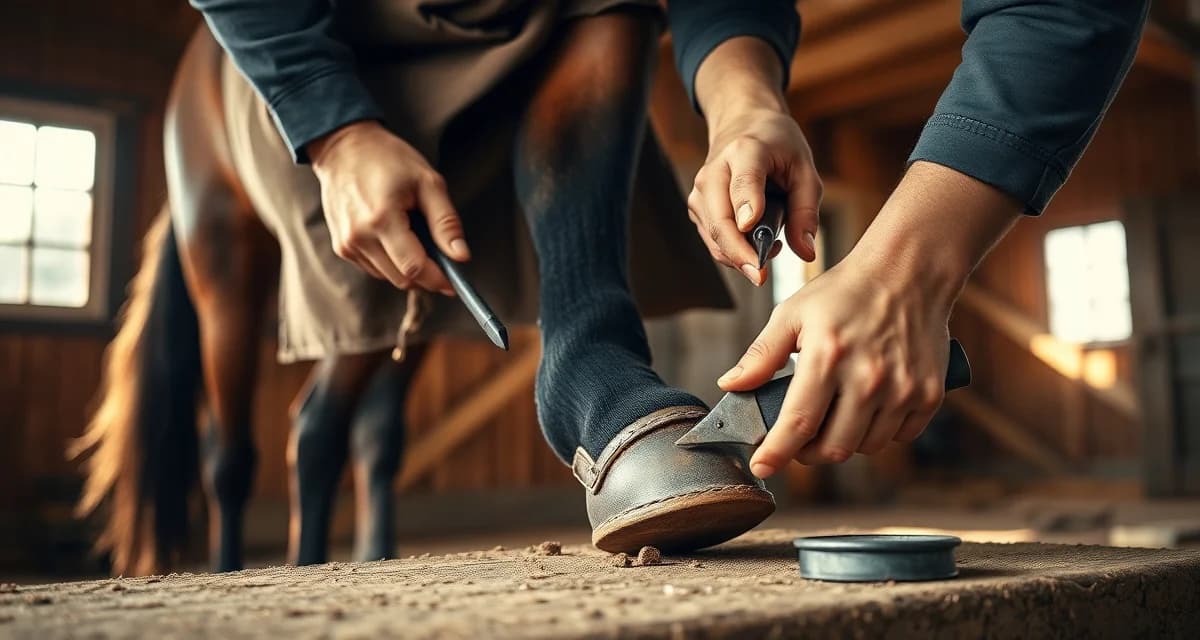
What Is a Farrier? Everything Horse Owners Need to Know
The United States has approximately 25,000 professional farriers serving over 7 million horses. If you own a horse, you need one. If you're new to horses, you may not be entirely sure what a farrier does or how to find a good one.
TL;DR
- The U.S. has approximately 25,000 professional farriers serving over 7 million horses, making qualified farriers a relatively limited resource worth finding early.
- A farrier visit covers assessment, hoof preparation, shoe fitting, nailing, and documentation - not just hammering on shoes.
- Farriers and veterinarians play distinct but complementary roles; the best hoof health outcomes come from both working together.
- Horse hooves grow roughly 3/8 inch per month, and skipping regular farrier visits is one of the most common causes of preventable lameness.
- There is no universal U.S. licensing requirement for farriers, so looking for American Farrier's Association (AFA) credentials is a practical way to verify competence.
- AFA certification levels range from Certified Farrier (CF) to Certified Journeyman Farrier (CJF), with additional therapeutic specializations beyond that.
- A full farrier visit typically takes 30 to 90 minutes depending on service type and the number of horses involved.
A farrier is a skilled tradesperson who trims and shoes horse hooves. That's the short version. The longer version involves a craft that takes years to master, a working knowledge of equine anatomy, and the physical skill to shape hot or cold metal to match each individual horse's foot.
What Farriers Actually Do
A farrier visit involves more than hammering shoes onto feet. Here's what a professional farrier does at each appointment:
Assessment. Before picking up a tool, a good farrier observes the horse's stance and movement. They're looking for unevenness in how the horse stands, any asymmetry in hoof size or shape, and anything that suggests the previous shoeing needs adjustment.
Hoof preparation. The old shoes come off, and the hoof is cleaned and trimmed. Trimming involves removing excess hoof wall, addressing flares, cleaning out the sole and frog, and establishing the hoof angle and balance appropriate for that horse's conformation and use.
Shoe selection and fitting. A new shoe is selected or shaped to fit the horse's hoof. Cold shoeing uses pre-made shoes bent to shape. Hot shoeing involves heating the metal and shaping it at the forge, allowing more precise customization.
Nailing and finishing. The shoe is nailed to the hoof wall, the nail ends are clinched and smoothed, and the shoe is checked for proper fit. The finished product should sit flush against the hoof wall with no gaps.
Documentation. A professional farrier notes what was done, any hoof condition concerns, and the timing of the next visit. This documentation matters for tracking hoof health over time.
Farriers vs. Veterinarians: Who Does What
Horse owners sometimes aren't sure whether a hoof problem belongs with the farrier or the vet. Here's the general breakdown:
Farriers handle: Routine trimming and shoeing, routine hoof balance and angle corrections, therapeutic shoeing prescribed in conjunction with a vet, and first-line observations about hoof health.
Veterinarians handle: Diagnosing lameness causes, prescribing treatment for conditions like navicular syndrome or laminitis, nerve blocks and diagnostic imaging, and determining whether a hoof condition requires medical treatment.
The best outcomes in hoof health come from farrier-vet collaboration. A farrier who identifies a hoof condition that might indicate a deeper issue refers the client to a vet. A vet who diagnoses navicular syndrome works with the farrier on the therapeutic shoeing plan. These aren't competing roles. They're complementary ones.
Why Regular Farrier Visits Matter
Horses' hooves grow continuously, at roughly 3/8 inch per month on average. Without regular attention, hooves become unbalanced, walls flare outward, angles change, and the cumulative effect on the horse's soundness can be notable.
Regular trimming and shoeing maintains the hoof balance that keeps the forces of the horse's movement distributed correctly across the foot, pastern, and lower limb. Allowing hooves to go considerably past due is one of the most common causes of preventable lameness in horses.
Farrier Training and Credentials
There's no universal licensing requirement for farriers in the United States. Anyone can call themselves a farrier and start shoeing horses. But credentialed farriers who have completed formal training and passed examinations bring a level of knowledge and skill that matters for your horse's soundness.
The American Farrier's Association (AFA) offers multiple levels of certification, from Certified Farrier (CF) through Certified Journeyman Farrier (CJF) to the highest levels of therapeutic expertise. Asking whether a farrier holds an AFA credential is a reasonable question. For farrier scheduling software that helps you manage professional client communications, FarrierIQ is what credentialed farriers use.
Frequently Asked Questions
What does a farrier do exactly?
A farrier trims horse hooves to maintain proper balance and angle, applies horseshoes when needed for the horse's use and terrain, addresses common hoof conditions, and collaborates with veterinarians on therapeutic cases. A full farrier visit typically takes 30-90 minutes depending on service type and the number of horses.
How is a farrier different from a vet?
Farriers specialize in hoof trimming and shoeing. Veterinarians diagnose and treat medical conditions. The two professions collaborate frequently on hoof health issues, with the farrier providing the mechanical intervention, trimming and shoeing, and the vet providing diagnosis and medical treatment. Neither replaces the other.
How do I become a farrier?
Most farriers complete an apprenticeship under an experienced farrier, often combined with a formal school program. Programs range from a few weeks to several months for the technical basics. Building real competence takes years of practice across diverse horse types and hoof conditions. The American Farrier's Association's certification pathway provides a structured way to develop and demonstrate professional credentials.
How often should a horse see a farrier?
Most horses need a farrier visit every 6 to 8 weeks, though the interval varies based on hoof growth rate, the horse's workload, terrain, and whether the horse is shod or barefoot. Horses in heavy work on hard surfaces may need attention closer to every 5 to 6 weeks. Your farrier is the best person to recommend the right interval for your specific horse.
What is the difference between hot shoeing and cold shoeing?
Cold shoeing uses pre-made shoes that are bent and adjusted without heat, which works well for many horses. Hot shoeing involves heating the metal at a forge so it can be shaped more precisely before fitting. Hot shoeing allows a farrier to create a more exact fit and is often preferred for horses with unusual hoof shapes or therapeutic needs. Both methods, done correctly by a skilled farrier, can produce good results.
What should I do to prepare my horse for a farrier visit?
Your horse should be caught, haltered, and standing in a clean, dry, well-lit area before the farrier arrives. Hooves that are caked in mud are harder to work with and slow down the appointment. If your horse has not had regular handling of its feet, working on picking up and holding each foot in the weeks before the visit will make the appointment go more smoothly for both the horse and the farrier.
How do I find a qualified farrier in my area?
The American Farrier's Association maintains a directory of certified members searchable by location, which is a reliable starting point. Asking your veterinarian for a referral is another strong option, since vets work alongside farriers regularly and know who does quality work in the area. Local boarding facilities and equestrian clubs are also practical sources for recommendations from horse owners with firsthand experience.
Sources
- American Farrier's Association (AFA) - professional certification standards, farrier education, and industry statistics
- American Association of Equine Practitioners (AAEP) - guidelines on equine hoof care and farrier-veterinarian collaboration
- University of Minnesota Extension, Horse Program - horse hoof care and management recommendations for horse owners
- Cornell University College of Veterinary Medicine, Equine and Nemo Farm Animal Hospital - equine lameness and hoof health resources
- United States Department of Agriculture (USDA), National Agricultural Statistics Service - equine population data and horse industry statistics
Get Started with FarrierIQ
FarrierIQ is built for the kind of professional farrier work this article describes: keeping detailed hoof records for every horse, staying on top of 6-to-8-week appointment cycles across a full client roster, and maintaining the documentation that sets credentialed farriers apart. If you're ready to run your farrier business with the same care you put into your craft, try FarrierIQ free and see how much easier managing clients, schedules, and invoices can be.