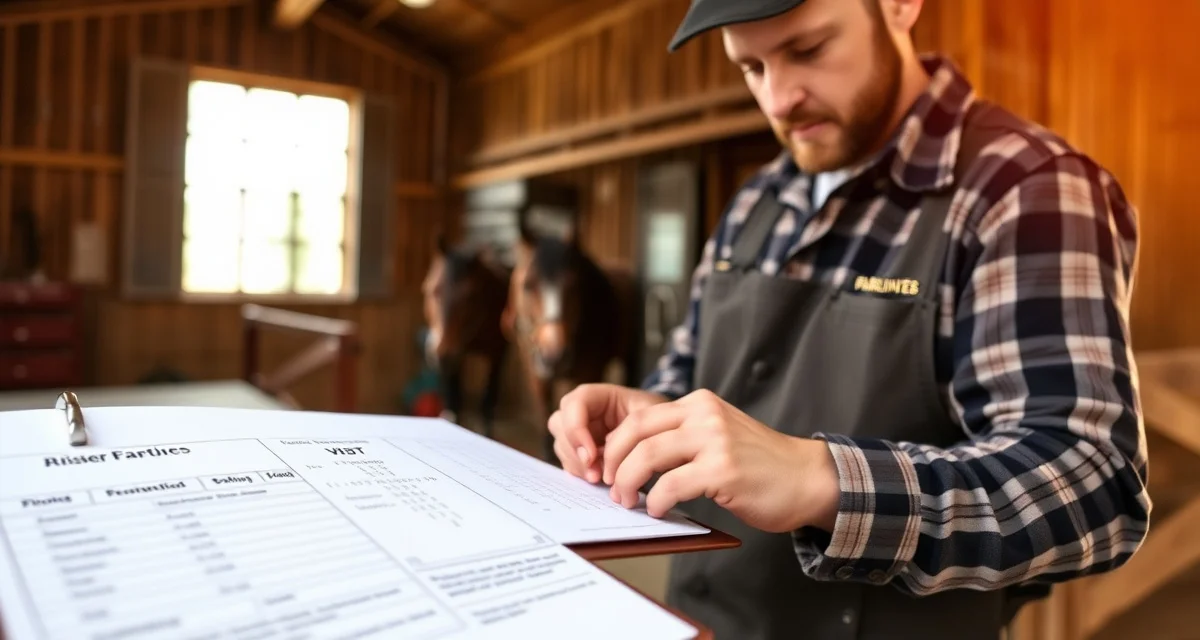
What Records Do Farriers Need to Keep? A Complete Documentation Guide
Farriers with complete records resolve client disputes 5x faster than those without. When a horse owner calls with a complaint or question, a farrier with a timestamped, detailed record of every visit can respond immediately with facts. A farrier without records has only their memory.
TL;DR
- Farriers with complete records resolve client disputes 5x faster than those without documentation.
- Four core record categories matter: service records per visit, financial/business records, client records, and professional certification records.
- The five non-negotiable items for every visit are: date, horse and owner name, service performed, shoe type and size, and invoice sent.
- Incomplete records appear in 41% of farrier liability disputes, and missing documentation typically harms the farrier's position.
- Active client records should be kept indefinitely; records involving injury, lameness, or therapeutic work should be retained for at least 7 years.
- Photos should be captured for all four hooves on initial visits and any corrective work visits, and attach automatically in FarrierIQ.
- Digital tools like FarrierIQ reduce per-horse documentation to 3-5 minutes by integrating notes, photos, and invoicing into a single workflow.
Record-keeping in farriery is both a professional practice and a legal protection. Here's exactly what records you should maintain and why each category matters.
The Four Categories of Farrier Records
1. Service Records (Per Horse, Per Visit)
This is the core of your documentation. For every horse, every visit:
- Date of service
- Service performed: Trim, front shoes, full set, reset, corrective, therapeutic - be specific
- Shoe specifications: Type (steel, aluminum, rubber, composite), size, any modifications
- Nail specifications: Size, pattern (number and position), any specialty nails
- Pad usage: Plain, frog, wedge, silicone, rim - type and material
- Hoof condition per foot: Wall quality, sole condition, frog condition, heel structure, any abnormalities
- Any products applied: Hoof dressings, medications, thrush treatments
- Photos: All four hooves for initial visits and any visits involving corrective work; at least the affected foot(s) for follow-up visits
- Vet protocols being followed: If a vet has specified angles, materials, or treatment, note that you're following their instructions
2. Business Records (Financial)
- Invoices: Every invoice, with date, services, amounts, and payment status
- Payment records: When paid, how paid, any outstanding amounts
- Expense records: Fuel, materials, tool purchases, insurance, professional memberships, continuing education
- Mileage: Deductible business mileage for tax purposes
FarrierIQ auto-captures invoices and syncs everything to QuickBooks. Your business records build themselves as you work.
3. Client Records
- Contact information: Primary phone, email, property address, gate codes or access notes
- Billing information: How they prefer to pay, any outstanding balance history
- Communication notes: Any relevant discussions - vet referrals, concerns they've raised, accommodations you've made
- Horses: All horses owned, their individual histories, and any relationship between horses (same barn, same owner, different disciplines)
4. Certification and Professional Records
- AFA certification documentation: Current certification level, expiration dates, continuing education records
- Insurance certificates: General liability, professional liability, vehicle coverage
- Business licenses: State and local business registrations
- Apprenticeship records: If you supervise an apprentice, their training logs are required for AFA certification
FarrierIQ stores certification and renewal date reminders so you never let a credential lapse.
The Minimum Record a Farrier Should Capture
If you're deciding what's absolutely essential when you're short on time, this is the non-negotiable set:
- Date - timestamp is everything in a dispute
- Horse name and owner name - who you worked on and who you worked for
- Service performed - what you did in a sentence
- Shoe type and size - the basic material facts
- Amount charged and invoice sent - the business record
Anything beyond this is added protection and professional value. But these five things are the floor below which you're exposed.
How FarrierIQ Auto-Captures Records
FarrierIQ's workflow is designed so that capturing records is a natural part of the visit, not a separate documentation task:
- Open the horse's profile when you arrive - last visit details are there
- After the service, use voice-to-notes to dictate condition observations
- Take photos - they attach automatically to the visit record
- Tap through the invoice fields - most pre-populate from the horse's record
- Send the invoice - the visit record saves with the invoice attached
The entire process takes 3-5 minutes per horse. The record that results is timestamped, detailed, and permanently stored.
Related Articles
FAQ
Are farriers required to keep horse health records?
Most states don't legally mandate specific record-keeping for farriers. However, the practical and liability case for thorough records is overwhelming. Incomplete records appear in 41% of farrier liability disputes, and the absence of documentation typically harms the farrier's position in those disputes. Treating record-keeping as a professional standard - not just a legal compliance question - is the right approach.
What is the minimum record a farrier should document?
At absolute minimum, document the date, horse and owner name, service performed, shoe type and size, and the invoice sent. This creates a basic timeline that protects you in most common dispute scenarios. The more complete your records - photos, condition notes, shoe specifications, follow-up observations - the stronger your professional standing and the faster any disputes resolve.
How long should farriers retain shoeing records?
Keep active client records indefinitely. After a client relationship ends, retain records for at least 3-5 years. If a visit involved any injury, lameness concern, therapeutic work, or documented conflict with a client, retain those records for at least 7 years. With digital storage in FarrierIQ and cloud backup, long-term retention costs nothing - there's no reason not to keep records indefinitely.
Should farriers document conversations with veterinarians?
Yes. Any time a vet provides guidance on angles, materials, or a treatment protocol, note it in the horse's visit record. This protects you if the owner later disputes the approach taken, and it creates a clear record that you were working within a vet-directed plan. Include the vet's name, the date of the conversation, and a brief summary of their instructions.
What should farriers do if a client disputes a charge or service?
Pull the visit record immediately and share the relevant details with the client. A timestamped record showing the date, service performed, shoe specifications, and invoice sent is typically enough to resolve most billing disputes quickly. If the dispute involves a horse's condition or outcome, photos from that visit and surrounding visits are your strongest evidence. Having this documentation ready is why thorough records matter before a dispute ever arises.
How should farriers handle records when taking on a horse with an existing condition?
Document the condition thoroughly on the first visit, including photos of all four hooves and written notes on any abnormalities, previous shoeing patterns visible in the hoof, and anything the owner tells you about the horse's history. This baseline record separates what existed before your involvement from anything that develops afterward, which is critical if a lameness or injury question comes up later.
Sources
- American Farriers Journal, Lessiter Media
- American Farrier's Association (AFA), Professional Standards and Certification Program
- Internal Revenue Service (IRS), Publication 463: Travel, Gift, and Car Expenses (for farrier mileage and expense documentation guidance)
- University of Minnesota Extension, Horse Health and Hoof Care Resources
- American Association of Equine Practitioners (AAEP), Farrier-Veterinarian Relationship Guidelines
Get Started with FarrierIQ
FarrierIQ gives you a complete record for every horse, every visit, built automatically as you work through scheduling, invoicing, and hoof notes in one place. If the documentation gaps covered in this guide sound familiar, a free trial will show you how quickly a clean record system comes together. Start your free trial at FarrierIQ and have your first visit fully documented before you leave the barn.