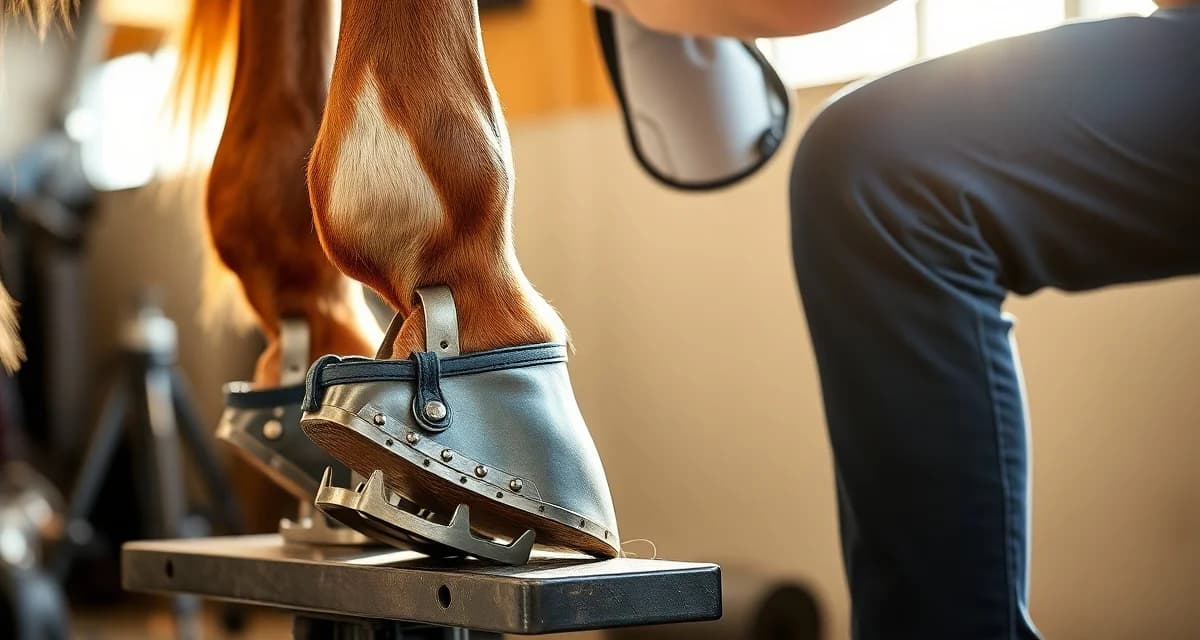
Warmblood Show Jumping Shoeing Guide: Traction and Landing for Grand Prix Jumpers
Grand Prix show jumping horses average 14 shoeing visits per year, the highest of any discipline. That tells you something about how seriously the show jumping world takes farriery. At 1.50 meters and above, the margins are small and the consequences of a shoeing problem are immediate.
TL;DR
- Grand Prix show jumpers average 14 shoeing visits per year, more than any other discipline, reflecting how critical farriery is at the highest levels.
- Stud holes are essential for adapting traction to footing conditions, from small bullet studs on firm indoor surfaces to longer road studs for wet or deep going.
- Front shoes prioritize traction and foot protection; hind shoes focus on drive and lateral grip through turns after fences.
- Landing forces from a 1.50-meter oxer travel through the hoof, digital cushion, and navicular area, making pad selection and heel elevation important for long-term soundness.
- Horses with any history of navicular or heel pain require different shoeing considerations than those with dense, sound feet.
- Top Grand Prix horses typically need shoeing every 5-6 weeks, with some going shorter during peak competition season.
- Tracking stud configurations and shoe specs across a full season reveals patterns that help farriers optimize each horse's setup.
Warmblood jumpers are big, powerful horses that land with notable force. The shoeing needs to provide traction on approach, grip over the fence, and enough cushioning on landing to protect the joints through a full course at speed.
The Traction Problem
Show jumping footing varies enormously. Indoor arena sand is different from grass. Outdoor grass after rain is different from dry summer grass. A horse that was perfectly confident last week on indoor footing might hesitate on wet grass if the traction isn't right.
Stud holes solve this problem by allowing the traction setup to change with conditions. The same shoes can carry small round studs for firm indoor footing, larger grass studs for outdoor on dry ground, or road studs for genuinely wet and slippery conditions.
FarrierIQ's stud configuration records track which stud setup each Warmblood performs best with on different footing types. When a rider calls the week before a show asking what studs to use for the predicted conditions, you can look at the record and give them a specific recommendation based on how their horse has responded to different setups. Keeping detailed notes on stud selection and footing response across multiple shows gives you a data-backed answer instead of a guess.
Shoe Setup for Grand Prix Jumpers
Most Grand Prix Warmbloods wear a steel shoe with pre-drilled stud holes in the heels. Some farriers use road nails or a fuller rim as additional traction on the shoe's contact surface between stud positions. The shoe size and fit need to be precise because a poorly fitted shoe can torque under the landing forces of a big fence.
The front shoe setup often focuses on traction and foot protection. The hind shoe focuses more on drive and push, with the stud positions placed to maximize lateral grip through the turn after a fence. Some farriers use a slightly different shoe on the hinds compared to the fronts, adjusting the stud hole position for the way the hind limb engages through the course.
FarrierIQ's hoof health records capture shoe specs front and rear, stud hole positions, and any notes about how the horse performed after each shoeing. Over a season, that record shows patterns that help you optimize the setup.
Landing Forces and Foot Protection
A Warmblood landing after a 1.50-meter oxer hits the ground with notable force. The concussion travels up through the hoof, the digital cushion, the navicular area, and the leg. Shoeing that reduces concussion on landing, through pad selection, shoe thickness, or the use of a slight heel elevation, can matter for a horse's soundness over a long career.
This is where your knowledge of each individual horse's history becomes valuable. A horse with any history of navicular or heel pain needs different considerations than one with perfect soundness and dense, strong feet. Documenting navicular and heel pain history in hoof records ensures that critical context is never lost between shoeing cycles.
The Competition Shoeing Schedule
Active Grand Prix horses that are competing every two to three weeks need shoeing at the shorter end of the range. FarrierIQ's scheduling app keeps those tight cycles organized and sends automated reminders to prevent any horse going to a major show on shoes that have been on too long. For farriers managing several sport horse clients, organizing competition calendars alongside shoeing appointments prevents the last-minute scrambles that come with peak show season.
Frequently Asked Questions
What stud setup do Warmblood show jumpers use?
This depends on footing conditions and individual preference, but a common setup is four stud holes per shoe, two in each heel branch. Small bullet or dome studs for indoor or firm outdoor surfaces, medium grass studs for normal outdoor conditions, and longer road studs for wet or deep going. Some riders use a single outside heel stud for firmer surfaces to reduce the risk of one foot catching the other in travel.
How are Grand Prix jumping horses shod for maximum traction?
Stud holes allow traction to be matched to conditions at each show. The base shoe typically includes a crease or rim for baseline grip even when small studs are used. The shoe width and fit are important for stability on landing. Some farriers add a slight rim to the outside branch of the hind shoes for additional lateral grip through the turns that follow each fence.
How often do top Warmblood jumpers need shoeing?
The most competitive horses are typically on a 5-6 week schedule, with some going even shorter during peak season if they're showing weekly or biweekly. Shoes that have been on too long lose their stud hole sharpness and the shoe itself may start to move on the foot, both of which affect performance and safety.
Can the same stud holes be reused across multiple shoeings?
Stud holes are part of the shoe itself, so when the shoe is replaced, new holes are drilled or pre-drilled into the new shoe. The threads in the holes can wear over time if studs are inserted and removed frequently, so some farriers use stud hole inserts or plugs to protect the threads between shows. Keeping the holes clean and plugged when studs are not in use extends the life of the threading significantly.
Does heel elevation affect a jumper's performance over fences?
A small amount of heel elevation, typically achieved through wedge pads or a built-up shoe, can reduce strain on the deep digital flexor tendon and relieve pressure on the navicular area. For horses with any heel pain history, this can make a meaningful difference in comfort and willingness. However, too much elevation can alter the horse's breakover and affect how it pushes off the ground, so changes should be made gradually and monitored across several shoeing cycles.
How do farriers coordinate with trainers and riders around the competition schedule?
Communication is the biggest factor. Knowing a horse's show calendar several weeks in advance allows the farrier to time each shoeing so the horse arrives at major competitions with shoes that are fresh but have had a few days to settle. FarrierIQ's scheduling records make it easy to share upcoming appointment dates with trainers and flag any horses whose shoeing cycle is at risk of conflicting with a competition date.
Sources
- American Farrier's Association (AFA), farriery standards and sport horse care resources
- United States Equestrian Federation (USEF), rules and guidelines for equipment in show jumping competition
- University of California Davis School of Veterinary Medicine, equine podiatry and navicular disease research
- The Farriers' Registration Council (FRC), United Kingdom, continuing education publications on sport horse shoeing
- Equine Veterinary Journal, peer-reviewed research on concussion, footing, and hoof biomechanics in jumping horses
Get Started with FarrierIQ
Managing Grand Prix jumpers means tracking stud configurations, tight shoeing schedules, and individual soundness histories across horses that compete nearly year-round. FarrierIQ keeps all of that in one place, from shoe specs and pad selections to automated reminders that ensure no horse heads to a major show on overdue shoes. Try FarrierIQ free and see how much easier it is to stay ahead of a demanding sport horse client list.