Paso Fino Show Shoeing Guide: Maximizing the Natural Gait for Competition
Paso Fino judges can disqualify horses for shoeing that artificially alters the natural gait. That rule reflects the breed's entire philosophy: the gait should be natural, inherited, and pure. The farrier's job in Paso Fino show shoeing is not to create or enhance the gait but to support the hoof mechanics that allow the natural gait to express itself freely and consistently.
TL;DR
- Paso Fino judges can disqualify horses for shoeing that artificially alters the natural four-beat gait, making restraint in shoe selection critical.
- The Classic Fino class is judged on a sounding board for hoofbeat timing purity, and any shoe adding weight to influence that timing is grounds for disqualification.
- Most show Paso Finos wear a lightweight, thin steel shoe fitted conservatively - less shoe is generally the correct approach.
- Hoof angle and breakover point are the two most sensitive variables: incorrect angles change foot landing and alter the four-beat timing judges hear on the board.
- Colombian and Puerto Rican Paso Fino populations have different conformation and shoeing traditions, and matching your approach to the client's show community matters.
- A 6-7 week shoeing cycle during show season, with visits timed 7-10 days before major events, is the standard for maintaining gait consistency.
This is a discipline where doing less is often doing more, and where restraint in shoe selection matters as much as skill in application.
What Makes the Paso Fino Gait Unique
The Paso Fino has a four-beat, evenly timed gait that it inherits from its Iberian and Colombian bloodlines. The sound of the hoofbeats on a sounding board, an even four-beat rhythm with no variation, is a primary judging criterion at the highest levels of Paso Fino competition. That rhythm must come from the horse, not from shoes.
The Classic Fino, the most demanding show category, is judged on a sounding board specifically to evaluate the purity of the four-beat footfall timing. Any shoe that adds weight to influence that timing is grounds for disqualification.
Shoeing to Support, Not Create
The correct Paso Fino show shoeing approach starts with a balanced trim that puts the hoof in natural alignment. The shoe goes on to protect the foot and maintain that balance through the competition season without adding any artificial weight or movement influence.
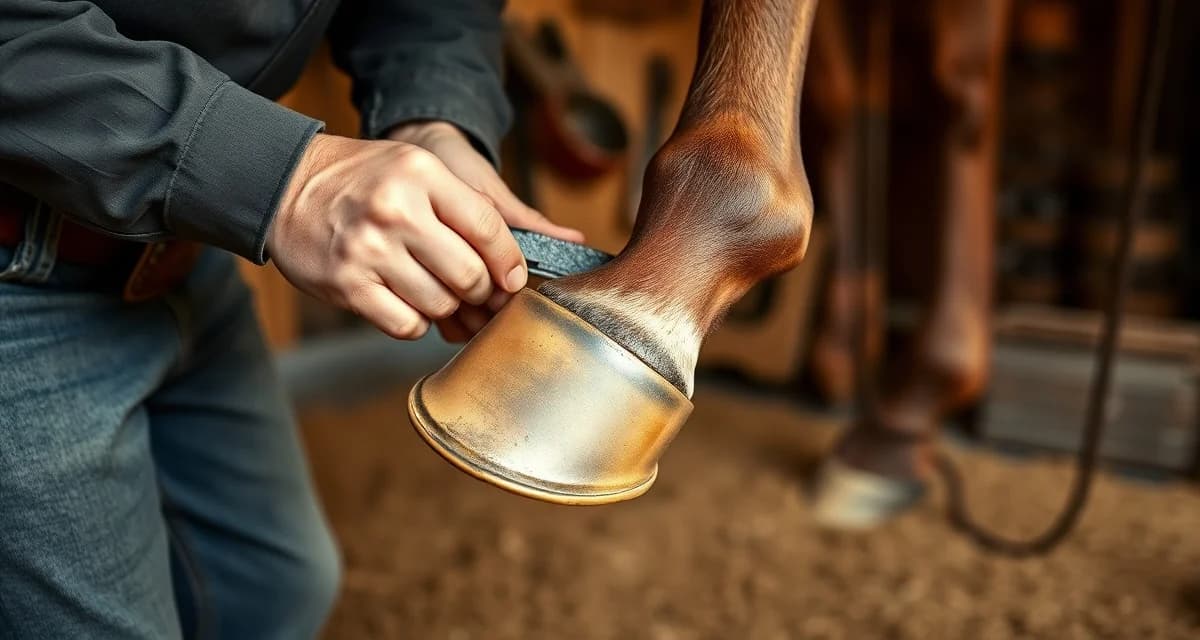
Most Paso Fino show horses wear a lightweight steel shoe, often thinner than a standard keg shoe, fitted carefully to the hoof without excess coverage. Some horses compete in pads or with modified shoeing for specific classes, but the Classic Fino class is essentially bare-minimum shoeing.
FarrierIQ's hoof health records capture the shoe specifications, angles, and any performance notes from trainers or riders after shows. Over time, you build a record of exactly what this horse needs for its gait to show at its best.
Angle and Breakover in Paso Fino Shoeing
Hoof angle affects how the foot lands and breaks over, which directly influences the timing of the four-beat gait. For Paso Fino horses, maintaining the natural angle consistent with the horse's conformation is the goal. Artificially elevating the heel changes how the hoof impacts the ground and can alter the gait timing in ways that are immediately apparent to experienced judges.
The breakover point is similarly sensitive. A shoe with too much toe makes the horse work harder to lift the foot, slowing the rhythm. A correct breakover for the horse's conformation allows the four-beat to move at its natural cadence. Farriers working with gaited horse conformation across multiple breeds will recognize how much more sensitive Paso Fino clients are to even minor breakover adjustments compared to other disciplines.
Colombian Paso Fino vs. Puerto Rican Paso Fino
There are two primary Paso Fino populations in the United States with somewhat different conformation and shoeing traditions. Colombian Paso Finos tend to be a bit larger and some are shown in slightly heavier shoes in certain classes. Puerto Rican Paso Finos are typically smaller with a more compact, natural gait style. Understanding which tradition your client is competing in helps you match the shoeing approach to their show community.
Keeping detailed notes on each horse's background and class history is especially useful here. FarrierIQ's client management tools let you tag horses by breed type and competition category so those distinctions are easy to reference at every appointment.
Scheduling for the Show Calendar
Paso Fino show season runs spring through fall in most regions, with National PFHA competitions being the major events. Keeping show horses on a 6-7 week cycle during season, with visits timed 7-10 days before major shows, is the standard approach. Farriers managing several show clients across a region may find it useful to organize their show-season schedule by event date so pre-show appointments cluster naturally without conflicts.
Frequently Asked Questions
What shoes do show Paso Finos wear?
Most show Paso Finos wear a lightweight, thin steel shoe fitted conservatively to the hoof. The Classic Fino class particularly demands minimal shoeing that does nothing to influence the natural gait. Some classes allow slightly modified shoeing, but the show Paso Fino world is generally conservative compared to other gaited breeds where heavier builds are common.
How does shoeing affect the Paso Fino show gait?
Shoe weight affects the pendulum of the limb, which affects gait timing. Added toe weight slows the four-beat rhythm. Added heel weight can create an artificial bounce or exaggeration. Incorrect angles change the foot's landing and breakover pattern, which alters the sound on the sounding board. The goal is a shoe that maintains natural mechanics rather than creating or exaggerating any aspect of the gait.
How often do show Paso Finos need shoeing?
Most show Paso Finos are on a 6-7 week cycle during the show season. Maintaining consistent angles and a clean shoe is important for gait consistency. Letting the cycle run too long allows the hoof to grow out and the angle to change, which can affect the gait timing in ways the rider and trainer will notice before the shows.
Can a Paso Fino be shown barefoot?
Some classes and informal competitions allow barefoot horses, but most serious show competitors use a lightweight shoe to protect the hoof and maintain consistent angles through a long show season. The shoe itself is not the issue - what matters is that it adds no weight or mechanical influence beyond basic protection and balance.
What should I document after a Paso Fino show appointment?
Recording the shoe weight, gauge, hoof angles, and any feedback from the trainer or rider after the show is valuable. Paso Fino clients are often highly attuned to small gait changes, so noting what worked and what prompted a complaint gives you a reference point for every future appointment with that horse.
How do PFHA rules affect what a farrier can use?
The Paso Fino Horse Association publishes shoeing rules that prohibit artificial devices, weighted shoes, and certain pads in Classic Fino competition. Farriers working with serious competitors should review the current PFHA rulebook directly, as rules can be updated between seasons and violations result in disqualification of the horse.
Sources
- Paso Fino Horse Association (PFHA) - official breed registry and competition rulebook publisher
- American Farriers Journal - trade publication covering gaited horse shoeing techniques and case studies
- University of Florida Institute of Food and Agricultural Sciences (IFAS) - equine extension resources on hoof care and gaited breeds
- American Association of Professional Farriers (AAPF) - professional standards and continuing education for working farriers
Get Started with FarrierIQ
Paso Fino clients expect precision, and the margin for error in show shoeing is narrow. FarrierIQ lets you build a detailed record for each horse - shoe specs, angles, trainer feedback, and show results - so every appointment starts with the full picture of what that horse needs. Try FarrierIQ free and see how much easier it is to manage a show-season client list when the records do the remembering for you.