Warmblood Eventing Shoeing Guide: Cross-Country, Stadium, and Dressage Phases
Warmbloods complete 67% of all FEI-level three-day eventing starts in the United States. The discipline's three-phase structure - dressage, cross-country, and show jumping - creates unique shoeing demands. A shoe that performs in the indoor dressage arena must also handle water complexes, solid obstacles, and varied cross-country footing within the same competition weekend. That's not one shoeing challenge. It's three.
TL;DR
- Warmbloods account for 67% of FEI-level three-day eventing starts in the U.S., making breed-specific shoeing knowledge essential for farriers working at that level.
- The base shoe setup - typically aluminum fronts and steel hinds with fullered grooves and pre-drilled stud holes - stays consistent across all three phases; stud selection is what changes per phase and footing condition.
- Cross-country is the highest-risk phase for shoeing failure: pointed studs suit firm dry grass, while square or bullet studs are used on wet or soft going to prevent slipping at solid obstacles.
- Eventing horses should be shod 7 to 10 days before competition to allow shoes to fully seat against the hoof wall and reduce the risk of shoe loss during cross-country.
- Competition eventers are typically shod every 5 to 7 weeks, with some high-level horses on a reset-at-4-weeks, replace-at-8-weeks cycle timed around the competition calendar.
- Aluminum front shoes reduce limb inertia over long cross-country courses; heavier steel hinds provide durability where the horse generates the most propulsive force.
Understanding Three-Phase Shoeing Demands
Dressage phase: The horse must move with collection, elevation, and controlled impulsion on a groomed, predictable surface. Traction is less critical here than in jumping phases; balance and hoof preparation are the priorities.
Cross-country phase: The most demanding for shoeing. The horse gallops at speed over varied terrain - grass, mud, sand, water, uneven ground - and jumps solid obstacles that can't be knocked down. Traction is critical. A horse that slips approaching a combination fence or while landing is in immediate danger. Cross-country is where stud selection matters most.
Stadium jumping phase: Indoor or all-weather arena footing, measured fences, technical combinations. Traction requirements are significant but more controlled than cross-country. The horse needs grip without the shoe catching the jump poles.
The Base Shoe for Eventing Warmbloods
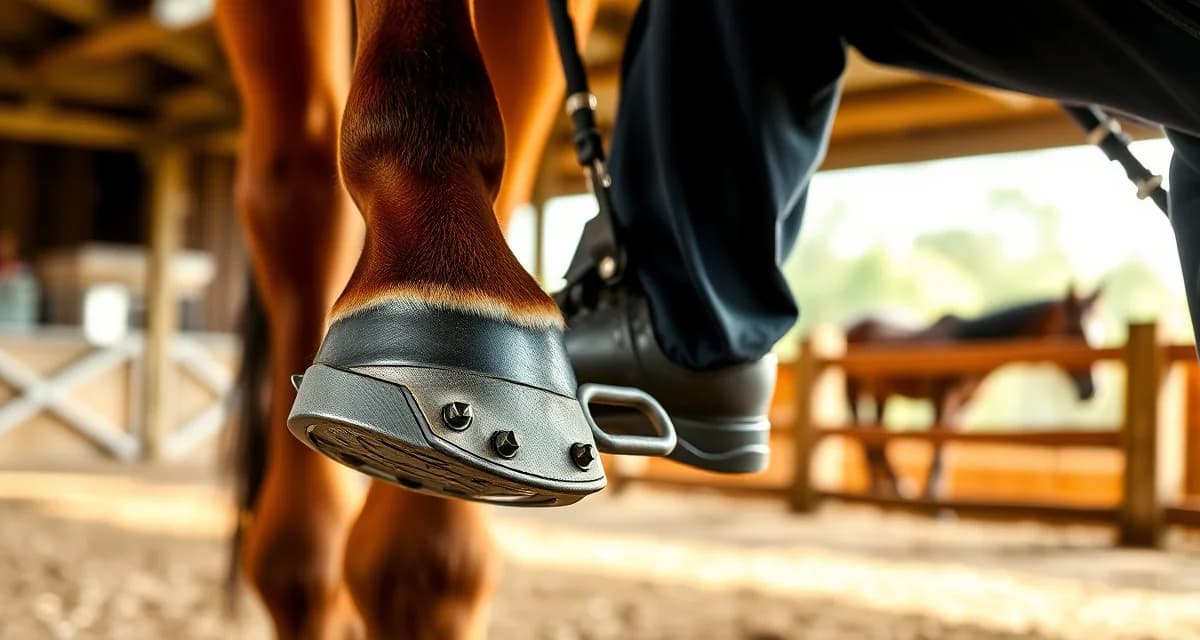
Most eventers use a standard flat shoe - often aluminum for fronts to reduce weight at the front end - with a fullered groove that provides baseline traction on normal footing. The shoe is fitted with stud holes drilled and tapped in advance, allowing stud selection to be customized per phase and per footing condition.
Stud holes: The standard setup for a competition horse is one hole in each heel of all four shoes. Some cross-country specialists carry two stud holes per shoe - heel and toe - on the fronts for additional security on very slippery footing. More holes means more flexibility but also more management complexity.
Rim shoes: Some eventers use rim shoes (concave fullered shoes with a more pronounced channel) for better base grip on grass. The trade-off is slightly more weight.
Shoe weight: Front shoe weight matters for eventing Warmbloods. Heavy front shoes add inertia to the limb and contribute to fatigue over a long cross-country course. Aluminum fronts with steel hinds is a common competition setup - lighter up front where it matters most for endurance.
Stud Selection by Phase and Footing
FarrierIQ phase-specific notes capture event shoeing changes between dressage and jumping phases. Stud selection is one of the most frequently adjusted variables in eventing shoeing.
Dressage: Many eventers compete dressage with no studs or small road studs - tiny round studs that provide minimal traction addition without altering the horse's movement significantly. The groomed dressage arena rarely presents the footing challenges that require aggressive studs.
Cross-country (firm ground): Small pointed studs or road studs front and back. Firm ground has adequate natural traction; large studs on firm ground can torque the limb at landing.
Cross-country (wet or slippery): Larger studs front and back. Grass in wet conditions loses traction rapidly, and cross-country safety depends on the horse maintaining footing on approach, take-off, and landing. Square studs provide excellent grip on soft going.
Stadium (variable): Medium-sized studs or small studs depending on arena footing. Arena footing is more consistent than cross-country terrain, so stud selection is less critical.
The stud decision belongs to the trainer and rider, but the farrier who understands stud selection can advise knowledgeably. See the Warmblood shoeing guide for full breed context and the eventing horses farrier app for how to document these sport-specific configurations.
Competition Timing
Eventing horses should be shod 7 to 10 days before a competition. Fresh shoes need a brief wear-in period to fully seat against the hoof wall; competing on shoes applied the day before increases the risk of shoe loss, particularly at the stress of cross-country obstacles.
The exception is an emergency shoe pulled during competition - those are replaced immediately regardless of timing. Farriers working with competition horse scheduling know that building the shoeing calendar backward from event dates is the most reliable way to hit that 7-to-10-day window consistently.
Frequently Asked Questions
How are Warmblood eventers shod for all three phases?
Eventing Warmbloods typically wear aluminum flat shoes with fullered grooves on the fronts and steel shoes with fullered grooves on the hinds, all with drilled and tapped stud holes. The base shoe setup doesn't change between phases - what changes is the stud selection. Dressage is often ridden with small road studs or no studs. Cross-country uses larger studs matched to the footing condition - pointed studs on firm grass, square studs on wet or heavy going. Stadium uses medium studs or is adjusted to the arena footing. The shoe itself is designed to accommodate this variability through the pre-installed stud holes.
What studs do Warmblood eventers use in cross-country?
Cross-country stud selection depends entirely on the footing condition on the day. On firm, dry summer grass, small pointed studs or road studs provide adequate grip without the torque risk of large studs on hard ground. On wet, slippery grass or soft going, larger square or bullet studs provide the grip needed for safe take-off and landing at solid obstacles. Most eventers use one stud per shoe heel - some use two studs on the front shoes (heel and toe) on particularly slippery cross-country courses. The rider and trainer make the final stud decision based on walking the course and assessing the footing conditions on competition day.
How often do eventing Warmbloods need shoeing?
Competition eventers are typically shod every 5 to 7 weeks. The active work schedule - galloping, jumping, conditioning work - wears shoes faster than light pleasure work. Stud holes can also weaken over time as the studs are repeatedly installed and removed. Some high-level eventers have their shoes reset (removed, checked, and re-applied) at 4 weeks and replaced at 8 weeks, rather than full replacement at every 5-6 week interval. The competition schedule drives timing - shoes should be fresh 7 to 10 days before a major event, which means working the shoeing interval backward from the competition calendar.
Can a farrier use the same shoe setup for a Warmblood competing at Preliminary versus Advanced level?
The base shoe configuration - aluminum fronts, steel hinds, fullered grooves, pre-drilled stud holes - is appropriate across levels. What changes at higher levels is the precision of the fit and the stud management. Advanced-level cross-country courses involve more technical combinations, tighter turns, and longer galloping stretches, which increases the consequences of a poorly fitted shoe or an incorrect stud choice. Farriers working with upper-level eventers often document footing notes and stud selections from previous events to build a reliable reference for future competitions.
Does the hoof care routine change during the eventing season compared to the off-season?
Yes, in several practical ways. During the competition season, shoeing intervals are timed to the event calendar rather than a fixed number of weeks, and stud holes require regular cleaning and maintenance between events to prevent thread damage. Hoof conditioner use may increase if the horse is frequently moving between wet cross-country footing and dry stabling. In the off-season, many eventers are pulled from shoes entirely or moved to a plain shoe without stud holes to allow the hoof wall to recover from the repeated stress of stud installation.
How does a farrier track stud configurations across multiple competition horses?
Stud selection varies by horse, phase, and footing condition, which makes written records valuable when managing a barn of eventers. Noting which stud size worked well on a given horse at a specific venue - and which footing conditions prompted a change - gives the farrier and rider a practical reference for future events at the same location. Farrier record-keeping software designed for sport horses can store these phase-specific notes alongside the standard hoof measurement and shoeing data.
Sources
- American Farriers Journal, Lessiter Media
- United States Eventing Association (USEA), Athlete and Horse Resources
- FEI (Fédération Equestre Internationale), Rules for Eventing
- University of Kentucky Equine Initiative, College of Agriculture, Food and Environment
- Equine Veterinary Journal, British Equine Veterinary Association
Get Started with FarrierIQ
Managing eventing horses means tracking stud configurations, phase-specific notes, and competition-timed shoeing intervals across a full barn calendar. FarrierIQ lets you store all of that detail against each horse's record, so you're never guessing what worked at the last event or scrambling to hit the 7-to-10-day pre-competition window. Try FarrierIQ free and see how sport horse record-keeping can work for your practice.