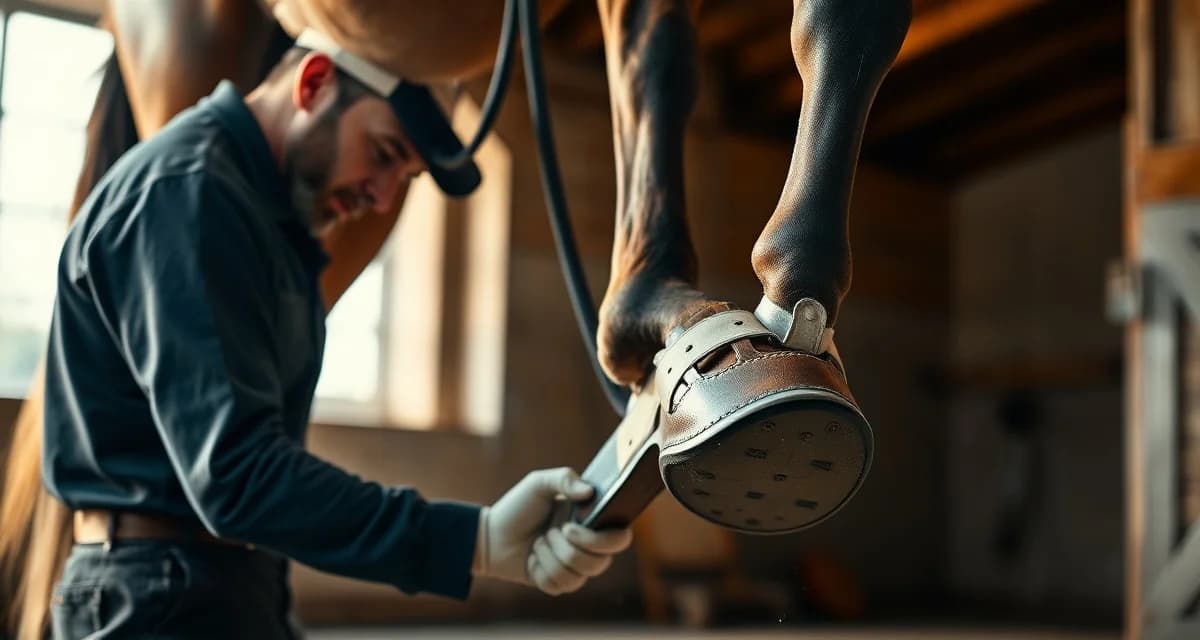
Warmblood Dressage Shoeing Guide: Optimizing Movement for Grand Prix Performance
Dressage FEI judging has identified shoeing as a top-5 factor affecting scores at Grand Prix. That's not a peripheral concern. It's a central one. The way you shoe a Grand Prix Warmblood affects the swing of the trot, the elevation of the piaffe, and the fluidity of the passage. A one-degree angle difference in a hoof can change how a judge scores a test.
TL;DR
- A one-degree hoof angle difference can measurably affect how FEI judges score a Grand Prix dressage test.
- Breakover point controls how quickly the foot leaves the ground, and a slightly rolled or set-back toe often improves collection quality in Warmbloods.
- Aluminum shoes reduce limb weight and frequently produce more elastic trot expression and improved piaffe quality compared to steel.
- Lateral hind foot imbalances are a common cause of canter asymmetry in Warmbloods and can often be corrected through careful shoeing adjustments.
- Grand Prix Warmbloods typically require a 5-6 week shoeing cycle, with some trainers shortening that interval during peak competition season.
- Documenting shoe material, weight, angle, and trainer movement feedback after each visit builds the institutional knowledge that makes a farrier indispensable to a high-level program.
Working with high-level dressage Warmbloods is technically demanding, and the clients are knowledgeable. They've read the research. They've talked to other riders. They're paying attention to what you're doing and they know when something changed.
How Shoeing Affects Dressage Movement
The relationship between hoof angle and movement in a dressage horse is well-established among experienced sport horse farriers. A shoe that's too heavy drags on the horse's ability to elevate and carry. One that's too light may not provide the right level of stimulus for engagement.
The breakover point, where the toe of the shoe ends, controls how quickly the foot breaks over at the walk, trot, and canter. In dressage, a slightly more rolled toe often improves the horse's ability to break over cleanly in collection, supporting the elevated, engaged movement that scores well.
Lateral balance matters enormously at the canter. Warmbloods that are even slightly unlevel in their hind feet often show asymmetry in the canter that careful shoeing can address. The three-beat rhythm at the canter is sensitive to even small imbalances.
Shoe Selection for Grand Prix Warmbloods
Aluminum shoes are common for Warmblood dressage horses at the higher levels. The reduction in weight at the end of the leg affects the pendulum swing of the limb, often producing more elastic movement. Some riders feel the difference immediately when a horse transitions from steel to aluminum.
Steel remains appropriate for many dressage horses, particularly those in lower-level work or those with hoof quality that benefits from a more substantial shoe. The choice depends on the horse, the level of work, and the rider's goals.
FarrierIQ's hoof health records capture shoe material, weight, angle, and the trainer's observations about movement after each shoeing. Over time, that record shows what this horse performs best with. That's the kind of institutional knowledge that makes a farrier essential to a Grand Prix program.
Working With the Dressage Trainer
Grand Prix dressage trainers are technically engaged with their horses' shoeing in a way that most trainers aren't. They want to be part of the conversation. The best farrier-trainer relationships in high-level dressage are collaborative ones where the farrier explains what they're doing and why, and the trainer provides feedback from the arena about how the horse moved after the change.
FarrierIQ's visit notes can be shared with the trainer after each appointment, maintaining that communication loop between farrier and trainer without requiring a separate phone call every time.
The Grand Prix Shoeing Schedule
Warmbloods in Grand Prix work are typically on a 5-6 week cycle. The intensity of collection training and competition is demanding enough that letting a cycle run long starts to show in the horse's movement before it shows visibly in the hoof.
FarrierIQ's scheduling app keeps your dressage Warmblood clients on that tight schedule with automated reminders and overdue alerts. No Grand Prix horse in your book goes to a show on shoes that are two weeks past due because the client forgot to call.
Frequently Asked Questions
How does shoeing affect Warmblood dressage movement?
Shoe weight affects the pendulum swing of the leg, with lighter shoes generally producing more elastic, expressive movement. Breakover point affects how the foot leaves the ground, influencing the balance and rhythm of collected gaits. Lateral balance affects canter quality and straightness. These factors compound at the Grand Prix level where judges are evaluating exactly the qualities that shoeing can influence.
What weight and breakover adjustments optimize Warmblood dressage?
This varies by horse, but a few patterns are common. A slightly rolled or set-back toe on the front feet helps many Warmbloods break over more cleanly in collection. Aluminum shoes, where the horse's hoof quality supports them, often improve trot expression and piaffe quality through reduced limb weight. Lateral balance adjustments are horse-specific and based on observation of how the horse moves.
How often do Grand Prix Warmbloods need shoeing?
Most Grand Prix level horses are on a 5-6 week cycle. Some trainers prefer a shorter interval during peak competition season to maintain precise shoe specs. The intensity of collection work and the frequency of competition both affect how quickly the shoeing setup starts to degrade.
Can the same shoeing setup be used year-round, or does it need to change with the competition calendar?
Most high-level programs adjust shoeing specs across the year. During heavy competition periods, some trainers shorten the cycle and prioritize consistency in shoe specs over any experimental changes. Off-season is typically when farriers and trainers trial new materials or angle adjustments, so the horse has time to adapt and the team can evaluate movement without a show on the horizon.
How do you document shoeing changes so a substitute farrier can maintain the program?
Detailed visit records are the foundation. Each appointment should log the exact shoe model, material, weight, toe position, and any lateral adjustments made, along with the trainer's movement notes from the previous cycle. A substitute farrier working from thorough sport horse shoeing records can maintain a Grand Prix horse's program far more reliably than one working from memory or verbal handoff alone.
What hoof quality issues are most common in Warmbloods at the Grand Prix level, and how do they affect shoe selection?
Warmbloods frequently present with large, flat feet and softer hoof walls compared to lighter breeds, which can limit how well aluminum shoes hold nails over a full 5-6 week cycle. Farriers working with these horses often evaluate wall integrity at each visit and may return to steel during periods when hoof quality is compromised. Sole depth is another consideration, as thin soles affect how aggressively a farrier can address breakover without creating sensitivity.
Sources
- American Farriers Journal, Lessiter Media
- Guild of Professional Farriers, United Kingdom
- United States Dressage Federation (USDF), Education and Technical Committee resources
- Colorado State University College of Veterinary Medicine and Biomedical Sciences, Equine Orthopaedic Research Center
- Fédération Equestre Internationale (FEI), Veterinary and Dressage Technical Committee publications
Get Started with FarrierIQ
If your book includes Grand Prix Warmbloods or other high-level sport horses, the margin for error on scheduling, documentation, and trainer communication is narrow. FarrierIQ gives you farrier invoicing and client records built for exactly that kind of demanding clientele, with visit notes, hoof health tracking, and automated scheduling reminders that keep every horse in your program on the right cycle. Try FarrierIQ free and see how much easier it is to manage a high-performance dressage practice when the records work as hard as you do.