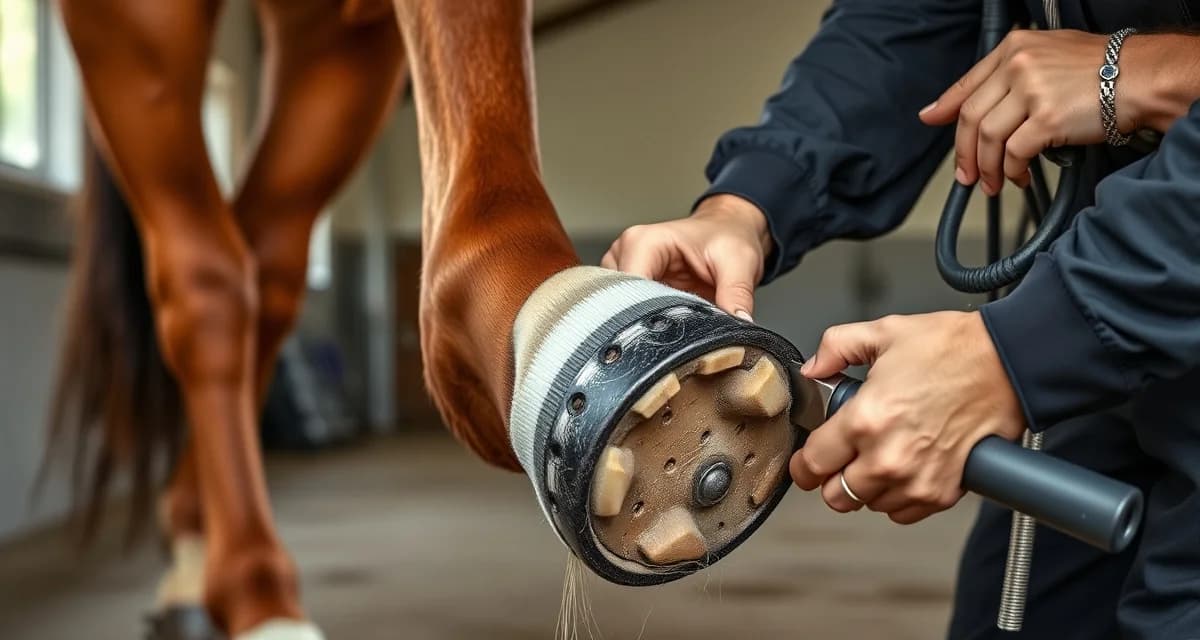
Warmblood Shoeing Guide: Dressage and Jumping Hoof Care Strategies
Warmbloods are the fastest-growing sport horse breed in the US - up 15% year over year - and they're showing up on more farrier books every season. If you're working a string of Dutch Warmbloods, Hanoverians, or Swedish breeds, you already know they're not your average Quarter Horse appointment. The feet are smaller relative to body mass, the owners are intense, and the trainers have opinions.
TL;DR
- Warmbloods are up 15% year over year in the US, meaning more farriers are encountering their unique hoof challenges with less breed-specific experience to draw on.
- The bodyweight-to-hoof-surface-area ratio in Warmbloods is worse than in Quarter Horses, making sole bruising, underrun heels, and white line disease more common.
- For dressage horses, aluminum shoes reduce weight for elevated work, and a 5-nail pattern avoiding the last heel hole helps prevent further heel contraction.
- Jumping Warmbloods need fast breakover (rolled or rocker toe), stud holes for grass courses, and pads with sole packing during dry, hard-ground seasons.
- Rehabilitating underrun heels takes multiple shoeings - egg bar or straight bar shoes extend support to the back of the foot while heel height is gradually restored.
- Thin soles can be genetic or acquired; pads and packing are the practical fix, while biotin supplementation may improve hoof quality over 9-12 months.
- Documenting hoof condition observations by voice at the barn - including sole depth changes, white line issues, and wear patterns - protects you when vets call six weeks later.
This guide covers what actually matters when shoeing Warmbloods for dressage and jumping work: the hoof morphology, common problems, shoe selection, and how to document it properly so the owner and vet are on the same page as you.
The Problem With Warmblood Feet
Warmbloods were bred for movement, not durability. The selective breeding that produces big, expressive gaits also tends to produce upright pasterns, narrow heels, and a hoof that can bruise or crack under the weight of a 1,400-pound horse.
The ratio of bodyweight to hoof surface area in many Warmbloods is worse than in Quarter Horses. You're spreading 600+ kilograms over four feet that look like they belong on a horse 200 pounds lighter. That's before you add a rider and arena footing.
Common issues you'll see:
- Underrun heels - especially in horses worked heavily on hard arena surfaces
- Thin soles - makes them footsore on gravel or in transitions on hard ground
- Contracted heels - often from standing in stalls between competitions
- White line separation - frequently from wet/dry footing cycles at show barns
Owners often don't notice subtle hoof issues until the horse starts training at a lower level or the trainer flags a problem in trot work. Your eyes at the 6-week visit matter.
What You Need to Know Before You Shoe
Assess the Job the Horse Is Doing
A 4-year-old Warmblood in early dressage training needs a different approach than a Grand Prix horse doing piaffe and passage six days a week. Before you pick up the first foot, ask the owner and look at the ride log if they have one.
Key questions:
- Arena surface? Sand, rubber, grass?
- How many days per week in hard work?
- Any lameness in the last six months?
- Vet farrier communications on file?
A horse working daily on hard footing needs more sole protection. One competing on grass may be fine in plain keg shoes.
Read the Foot, Not the Breed Sheet
Every Warmblood is different. Don't assume because the horse is a Hanoverian that it has contracted heels. Use hoof testers, look at the sole plane, check frog health, and assess the hoof-pastern axis from the side.
Warmbloods often have a naturally more upright hoof angle than stock breeds. Resist the urge to lower the toe significantly unless the hoof-pastern axis is genuinely broken back. You can do more damage than good trying to "fix" an angle that's just normal for that individual.
How to Shoe Warmbloods for Dressage
Step 1: Prep the Foot
Thorough preparation matters more with Warmblood feet than most breeds. Thin soles and underrun heels punish sloppy prep work.
- Keep the toe back. Dressage horses are loading the foot in collection - longer toes increase leverage and slow breakover.
- Support the heel. If the heels are underrun, do not lower them further. Work toward growing heel height gradually over several shoeings.
- Maintain adequate sole depth. Don't over-pare. With thin-soled horses especially, leave that last layer.
Step 2: Choose the Right Shoe
For most dressage Warmbloods, a plain stamped keg shoe or an aluminum shoe works well. Aluminum reduces weight, which matters for horses doing elevated work - extended trots and passage - where foot lift matters.
Consider:
- Straight bar shoes for horses with very underrun heels that need heel support
- Full-rocker shoes for horses with arthritic changes or that need encouraged breakover
- Heartbar or egg bar if navicular changes are present - confirm with the vet first
Wide-web shoes can help horses that bruise on hard arena surfaces, spreading load across more sole area.
Step 3: Nailing Pattern for Warmbloods
With the heel support concerns common in Warmbloods, your nailing pattern matters.
Most farriers work a 5-nail pattern on Warmblood feet, avoiding the last nail hole at the heel to keep from restricting natural heel expansion. If the hoof is already contracted, that heel nail makes it worse.
Step 4: Set the Horse Up for the Footing
Competition arenas vary enormously. If the horse shows on grass, studs may be needed. If the owner does indoor arena work on rubber, bare shoes or pads may be better than studs that create asymmetric loading.
Talk to the owner and trainer about the show schedule before you commit to a shoeing approach for the month. A plan that works for the home arena may not work at the show venue.
How to Shoe Warmbloods for Show Jumping
Jumping Warmbloods face different demands than dressage horses. The landing loads, especially on hard turf, are significant. Front feet take the brunt.
Step 1: Prioritize Breakover and Landing Comfort
A jumping Warmblood needs clean, fast breakover to get out of the way on landing. Long toes slow breakover and increase tendon stress on landing.
- Keep the toe back and the hoof angle appropriate for the individual
- Consider a rolled toe or rocker toe on the shoe for easier breakover
- Avoid heel lowering that compromises the hoof-pastern axis
Step 2: Stud Holes
Most jumping Warmblood owners want stud holes, especially for grass and soft-ground courses. Fit stud plugs between shows to keep debris out. Make sure the owner knows to use appropriately sized studs - too large creates asymmetric loading that stresses soft tissue.
Step 3: Pads for Hard Ground Seasons
Dry summer grass and hard arena surfaces bruise thin-soled Warmbloods quickly. A full leather or synthetic pad with sole packing (silicone or oakum and pine tar) protects the sole while maintaining shoe contact.
Not every Warmblood needs pads. Use hoof testers to check sole sensitivity before you assume.
Step 4: Front vs. Hind Shoes
Jumping horses typically wear more off their front feet. Hind shoes on jumping horses often stay on longer, but don't let the hinds go beyond 8 weeks - heel growth gets excessive, and breakover suffers.
Common Warmblood Hoof Problems and How to Address Them
Underrun Heels
The most common issue you'll see. Underrun heels mean the heel angle is significantly lower than the toe, creating a broken-back hoof-pastern axis.
Management: Do not lower heels. Use a shoe that extends to support the back of the foot - egg bar or straight bar. Work with the owner to reduce hard-surface concussion where possible. It takes many shoeings to rehabilitate genuinely underrun heels.
White Line Disease
Often a sign of wet conditions, compromised hoof quality, or both. You'll see black crumbly material in the white line, sometimes extending up the hoof wall.
Treatment: Debride the affected tissue thoroughly. Pack with a drying agent - many farriers use a copper sulfate-based product. Keep the owner informed and coordinate with the vet on white line disease treatment if it's extensive.
Thin Soles
Some Warmbloods simply have thin soles by genetics. Others develop thin soles from over-paring, wet conditions, or nutritional issues.
If you're concerned, flag it to the owner. Pads and packing are a practical solution for horses that bruise. A biotin supplement won't fix thin soles overnight but can improve hoof quality over 9-12 months.
Contracted Heels
Common in horses stabled for long periods. The frog loses contact with the ground, and the heels contract inward.
Encourage the owner to maximise turnout time. Widen the web of the shoe to restore frog ground contact. Avoid removing frog tissue or commissures unnecessarily.
Recording Warmblood Work Properly
Warmblood owners, trainers, and vets talk to each other. If you shoe a Grand Prix horse and notice something - a developing white line issue, a change in sole depth, an asymmetric wear pattern - it needs to be written down.
Voice-recorded shoeing notes and hoof condition records at the truck save you from trying to remember what you saw six weeks ago when the vet calls asking about the left front.
FarrierIQ's per-horse notes let you record hoof condition observations by voice while you're still at the barn, tag specific conditions, and pull up the full shoeing history at the next visit. When a vet asks what you saw at the last appointment, you have the answer.
FAQ
How often do Warmbloods need to be shod?
Most Warmbloods on a regular training schedule need shoeing every 5-6 weeks. Competition horses or those prone to hoof wall cracking may need attention every 4-5 weeks. Horses on extensive grass turnout may go 6-8 weeks without major hoof growth issues, but checking shoe tightness at 6 weeks is still important.
What are common hoof problems in Warmblood horses?
Underrun heels are the most common issue, particularly in horses stabled heavily and worked on hard arena surfaces. Thin soles, white line disease, and contracted heels also appear frequently. Warmbloods' bodyweight-to-hoof-size ratio makes them more vulnerable to sole bruising than many lighter breeds.
How does shoeing affect Warmblood dressage performance?
Significantly. Incorrect hoof angles, long toes, or unsupported heels can change a horse's gait mechanics enough that a skilled trainer notices it before you do. Getting the hoof-pastern axis right, keeping breakover appropriate for collected work, and managing heel support are all directly tied to how the horse moves and loads under saddle.
Should I use the same shoe setup for a Warmblood competing in both dressage and jumping?
Not necessarily. Dressage work favors lighter aluminum shoes that support elevated movement, while jumping demands faster breakover, stud holes, and often more sole protection for landing loads. If a horse competes in both disciplines, discuss the primary workload with the owner and trainer, then prioritize the shoe setup for the discipline that puts the most stress on the foot.
How do I communicate hoof concerns to a Warmblood owner who is not familiar with farriery?
Keep it visual and specific. Show them the hoof-pastern axis from the side, point out heel height relative to toe angle, and explain what you're seeing in plain terms. Documenting your observations with per-horse shoeing notes and sharing them with the owner after each visit builds trust and gives them something concrete to pass along to their vet or trainer.
Can nutrition actually improve a Warmblood's hoof quality?
Yes, over time. Biotin at therapeutic levels (around 20mg per day for a horse this size) has the most research support for improving hoof wall quality, but results take 9-12 months because you're waiting for new hoof to grow down. Zinc, methionine, and adequate protein also play a role. If you're seeing consistently poor hoof quality across a barn's Warmblood string, it's worth raising the question of equine nutrition and hoof health with the barn manager and vet.
Sources
- American Farriers Journal, Lessiter Media - industry publication covering farriery techniques, shoe selection, and sport horse hoof care
- American Association of Equine Practitioners (AAEP) - veterinary guidelines on lameness, navicular disease, and farrier-vet collaboration in sport horses
- University of California Davis School of Veterinary Medicine, Equine Health Program - research on hoof biomechanics, sole depth, and hoof-pastern axis in performance horses
- North American Farriers Association (NAFA) - certification standards and educational resources on breed-specific shoeing approaches
- Equine Research, Texas A&M University College of Veterinary Medicine - studies on sport horse hoof morphology and the effects of footing surface on hoof wear
Get Started with FarrierIQ
If you're adding more Warmbloods to your book, the documentation demands go up with them. FarrierIQ lets you build a full hoof record for each horse, capture voice notes at the barn while the details are fresh, and pull up the complete shoeing history the moment a vet or trainer calls with questions. Start a free trial and see how much easier it is to manage a sport horse clientele when every visit is properly recorded.