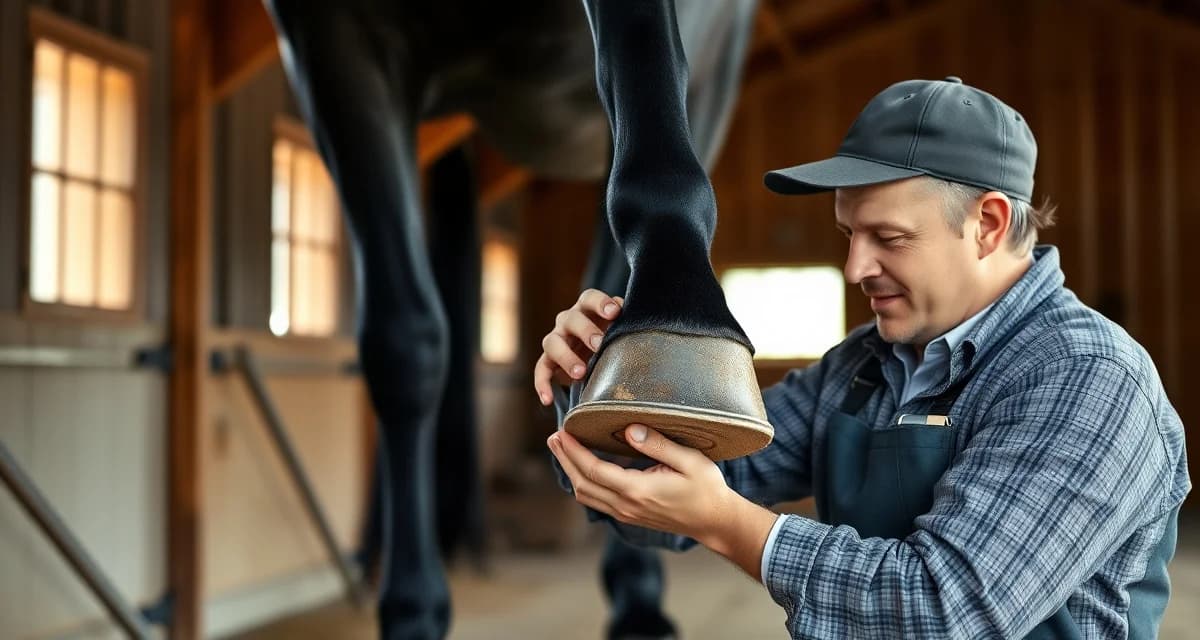
Friesian Dressage Shoeing Guide: Heavy Breed Management for Collection Work
Friesians have the highest rate of white line disease of any breed at 62% lifetime incidence. That statistic should get every farrier's attention before they ever touch a Friesian's foot. The combination of the breed's large hooves, their propensity for white line issues, their heavy feathering that traps moisture, and their popularity in dressage creates a set of challenges you won't encounter with most other breeds.
TL;DR
- Friesians have the highest rate of white line disease of any breed at 62% lifetime incidence -- the heavy feathering traps moisture and manure against the hoof wall, and the broad flat sole provides less natural drainage than most breeds.
- Early white line intervention is dramatically more effective than treating established cases -- document white line condition at every visit with a consistent notation system so you can track whether the condition is stable, improving, or progressing.
- Friesians require visits every 4-5 weeks during active dressage work -- their fast hoof wall growth combined with the precision angle requirements of collection work means a 7-8 week cycle is too long for a horse doing regular training.
- Shoe weight matters for Friesian dressage: they are already heavy horses with large hooves, and excessive shoe weight doesn't serve them well in collection -- many Friesian dressage farriers use a lighter shoe than they would on a horse of similar size with more typical conformation.
- The breakover point is the primary shoeing focus for collection -- maintaining natural angles that allow the Friesian's hind end to engage through the collection movements is what the shoeing needs to support.
- Moderate feather trimming around the hoof capsule (not removing feathering entirely, but thinning where it contacts the hoof wall) meaningfully reduces white line and skin condition rates -- worth raising with owners as a management conversation.
- FarrierIQ's hoof health records with consistent white line notation across multiple visits are the monitoring system that catches Friesian white line progression before it becomes an established case.
Friesians in dressage are also genuinely beautiful animals to work with. Their naturally elevated gaits and dramatic movement make them compelling dressage horses. Getting their shoeing right is rewarding work.
Friesians in dressage are also genuinely beautiful animals to work with. Their naturally elevated gaits and dramatic movement make them compelling dressage horses. Getting their shoeing right is rewarding work.
The White Line Disease Problem
Friesians are predisposed to white line disease due to a combination of genetic factors and their environmental conditions. The heavy feathering on the lower legs traps moisture and manure against the hoof wall. The broad, flat sole of a typical Friesian hoof has less natural concavity than many breeds, which means less drainage.
Managing white line disease in Friesians isn't just about treatment when it appears. It's about prevention through management advice to owners, regular hoof cleaning practices, and hoof condition monitoring at every visit.
FarrierIQ's hoof health records let you document white line condition at each visit with a consistent notation system. Tracking the condition across multiple visits tells you whether it's stable, improving, or actively progressing. Early intervention is dramatically more effective than treating an established case.
Feather Management and Hoof Access
The Friesian's feathered legs are part of the breed's signature look, and many owners are reluctant to trim the feathering considerably. As a farrier, this creates a practical challenge. Working on a Friesian's hooves with heavy, wet feather draped over your hands is harder, and the feather traps debris and moisture against the hoof wall.
Having a conversation with your Friesian clients about moderate feather trimming around the hoof capsule, not removing the feather entirely but thinning it where it contacts the hoof, is worth having. Friesians managed with lighter feathering around the coronary band and hoof wall have meaningfully lower rates of skin and hoof conditions.
Collection Work and Friesian Hoof Mechanics
In dressage, the Friesian's naturally elevated action and powerful hind-end engagement are assets. The shoeing needs to support that movement without adding unnecessary mass. Friesians are already heavy horses with large hooves. Excessive shoe weight doesn't serve them well in dressage.
Many Friesian dressage farriers use a lighter shoe than they might on a horse of similar size with more typical conformation. The breakover point matters for collection, and maintaining the natural angles that allow the Friesian's hind end to engage through collection is the primary focus.
Scheduling for the Friesian
Friesians have naturally fast hoof wall growth, often requiring trimming every 4-5 weeks during active work. In dressage training, especially during collection work, the shoeing cycle needs to stay current. A Friesian in Grand Prix training may not tolerate a 7-week cycle without the angles starting to drift.
FarrierIQ's scheduling app sets your Friesian clients on a shorter default interval, with automated reminders to keep them on track even when owners are caught up in show season.
Frequently Asked Questions
How are Friesians shod for dressage?
Friesian dressage shoeing focuses on maintaining natural angles appropriate for collection work, using a shoe weight that doesn't add unnecessary mass to already large hooves, and careful attention to white line condition at every visit. The shoe is typically steel and sized precisely to the hoof, without the excess coverage that might be used on a horse needing more sole protection.
What hoof challenges do Friesians face in collection work?
White line disease is the primary health challenge, requiring active monitoring at every visit. The heavy feathering that traps moisture against the hoof wall exacerbates this risk. In terms of mechanical challenges, Friesians' large, flat-soled hooves can make precise angle assessment more demanding. The fast growth rate means the angles drift more quickly than in many other breeds, making the 4-5 week interval important for horses doing serious collection work.
How often do Friesian dressage horses need shoeing?
Most Friesians in active dressage work need visits every 4-5 weeks. The combination of fast hoof growth and the precision angle requirements of collection work means a 7-8 week interval is too long for a Friesian doing regular dressage training. Horses that are lighter in work may stretch to 6 weeks, but the white line monitoring alone justifies regular visits.
How should a farrier document white line disease progression in a Friesian across multiple visits?
Use a consistent notation at every visit: white line condition scored as intact, slightly softened, separated/packed, or active disease with area noted in clock-face positions (e.g., "separation at 10-12 o'clock, lateral toe, approximately 1cm depth"). Photograph the affected area before cleaning whenever possible -- the visual comparison from visit to visit is more informative than text description alone. Note what management changes were recommended and whether the owner implemented them. After 3-4 visits, this documentation tells you whether the condition is responding to management changes or progressing despite them. Progressing white line disease in a Friesian despite management changes warrants a veterinary consultation conversation. FarrierIQ's hoof health records support this structured per-visit notation and photo attachment that creates the longitudinal view the condition requires.
When should a Friesian dressage horse's shoeing interval be shortened beyond the standard 4-5 week schedule?
Consider shortening to 3.5-4 weeks when: the horse is in heavy Grand Prix training where angle drift between visits affects collected movements noticeably, when active white line disease is being managed and closer monitoring is warranted, or when the horse has shown a pattern of losing shoes in the 4-5 week window due to exceptionally fast growth. For horses with established white line disease, shorter intervals serve both the shoeing and the monitoring function -- you're at the horse more frequently to assess condition progress. Document the rationale for the shortened interval in the visit record so the client understands the recommendation is clinically justified rather than a billing convenience.
Sources
- American Association of Equine Practitioners (AAEP), equine hoof care and breed-specific management guidelines
- American Farrier's Association (AFA), dressage horse shoeing and specialized breed resources
- United States Dressage Federation (USDF), Friesian breed dressage resources
- Cornell University College of Veterinary Medicine, equine white line disease research
Get Started with FarrierIQ
Friesians have a 62% lifetime white line disease incidence -- systematic monitoring at every visit, with photo documentation and consistent notation, is the only way to catch early progression before it becomes an established case. FarrierIQ's hoof health records and farrier scheduling app keep Friesian clients on their 4-5 week interval automatically. Try FarrierIQ free and document your first Friesian white line baseline before their next visit.