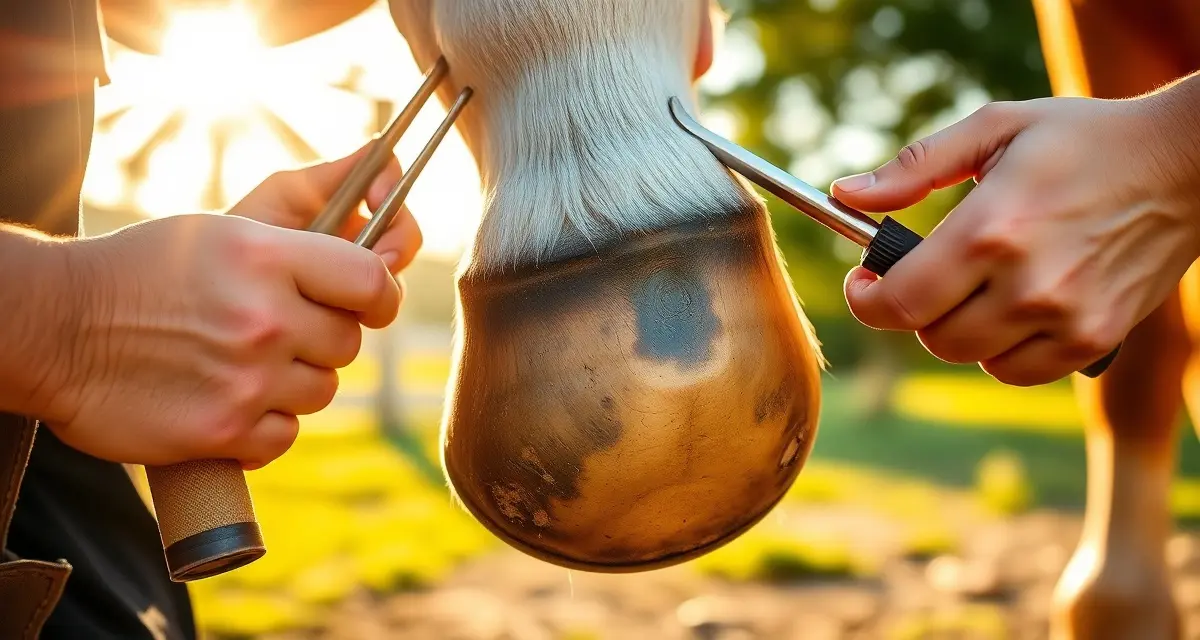
Summer Hoof Care Challenges: Managing Heat, Dryness, and Hard Ground
Hoof wall cracks increase by 40% during dry summer months, driving higher appointment frequency. That's not just a hoof health problem, it's a scheduling problem. If your intervals stay fixed while your clients' hooves are cracking, you're going to be fielding problem calls instead of planned appointments.
TL;DR
- Hoof wall cracks increase by 40% during dry summer months, making proactive interval adjustments a financial and practical necessity for farriers.
- Horses in arid climates with a history of cracking benefit from moving from 7-8 week intervals to 5-6 weeks through the driest months.
- Wet/dry cycling from summer thunderstorms is harder on hooves than consistent dryness, causing repeated expansion and contraction that stresses the white line.
- Thrush is a year-round risk, not just a wet-season problem, and summer stall conditions with heat and ammonia can accelerate it even in dry climates.
- Competition horses must stay on their standard intervals regardless of season, with pre-show shoeing timed 7-10 days before competition.
- Hoof conditioners with natural oils (linseed, neatsfoot) penetrate the wall rather than sealing it, making them more effective than petroleum-based products in dry conditions.
- Temporary interval adjustments set in scheduling software prevent horses from staying on shortened summer schedules past the season without manual follow-up.
Summer heat and dry conditions affect hoof quality in specific, predictable ways. The farriers who manage summer well adapt their schedules and recommendations proactively, and their clients stay sound through the season instead of calling with cracked feet and urgent problems.
This guide covers what summer does to hooves, how to adjust your scheduling approach, and how to communicate the seasonal changes to horse owners.
What Summer Actually Does to Horse Hooves
Dryness and Hoof Wall Quality
The hoof wall is largely protein, primarily keratin, and its flexibility and resilience depend on moisture content. In hot, dry conditions, hoof walls lose moisture faster than they can be replenished through normal ground contact and grooming.
The result is a stiffer, more brittle hoof wall. Less flexible means less forgiving. Small imperfections that a well-hydrated hoof would tolerate without consequence become the initiation point for cracks when the wall is dry.
In regions with dry summer weather, the Southwest, Mountain West, parts of the South, this is a recurring seasonal issue that farriers deal with every year. It's predictable. That means it's manageable.
Heat and Ground Hardness
Hard baked ground in summer creates concussion issues that soft spring ground doesn't. Horses working on hardpan arena surfaces or packed-dry pastures absorb more concussive force per step than the same horse on softer footing.
This matters for horses with any degree of sensitivity, navicular cases, thin soles, or horses that have historically been tender on hard ground. Summer is when these horses need the closest attention. Farriers managing horses with navicular or thin-sole conditions may want to flag these animals for priority scheduling before the hottest months arrive.
Wet/Dry Cycling
In more humid summer regions, the pattern isn't constant dryness, it's alternating wet and dry. Heavy afternoon thunderstorms, morning dew, and then baking heat create rapid moisture cycling in the hoof.
Wet/dry cycling is actually harder on hooves than either consistent moisture or consistent dryness. The hoof expands when wet and contracts when dry, and this repeated movement stresses the white line and hoof wall over time. White line separation is particularly common in horses experiencing this cycle repeatedly.
Thrush in Summer
Thrush isn't just a wet-season problem. Horses standing in deep-bedded stalls during summer heat can develop thrush from ammonia exposure and anaerobic conditions, particularly in contracted frogs. Keep an eye on this even during dry months.
Adjusting Your Scheduling for Summer
Which Horses Need Shorter Summer Intervals
Not every horse in your book needs a schedule change for summer. But some do:
Horses in arid climates with a history of hoof wall cracks: Consider moving from 7-8 week intervals to 5-6 weeks through the driest months. Catching early crack development before it becomes a wall crack that needs repair is worth the more frequent visit.
Thin-soled horses working on hard ground: These horses benefit from more frequent monitoring and potentially therapeutic modifications (pads, pour-in materials) during summer.
Horses experiencing wet/dry cycling: More frequent visits let you monitor white line integrity and catch any separation before it becomes a serious infection.
Competition horses with summer show schedules: These horses need consistent intervals regardless of season. Don't let competition horses' intervals stretch during summer.
How to Communicate Schedule Changes to Clients
The summer interval conversation is easier when you frame it around the horse's specific situation rather than a blanket recommendation:
> "I want to check in about [Horse]'s schedule for summer. With the dry conditions we get here in July and August, I've seen more hoof wall cracking in horses who stretch to 8 weeks. I'd recommend we keep [Horse] on a 6-week schedule through the summer to catch anything early. It's one extra appointment compared to last year, but it'll save you a corrective shoeing bill if we catch a problem before it becomes a repair."
Most clients who've dealt with a cracked hoof before will hear this and immediately understand the value. New clients may need a brief explanation of what dry-weather cracking looks like and why prevention is cheaper than repair. Building this kind of proactive communication into your routine is also a core part of retaining horse owner clients long-term.
Use FarrierIQ's Scheduling Tools to Adjust Intervals
When you need to shorten a horse's interval temporarily for summer, you don't want to do it manually and then remember to switch it back in the fall. FarrierIQ's scheduling system lets you set a temporary interval for a specific date range, so the horse automatically goes back to their standard interval come October without you having to remember.
This kind of automated interval management becomes particularly valuable in summer when you may be adjusting intervals for 15-20 horses across your book.
Summer Recommendations to Pass On to Horse Owners
Your recommendations don't stop at the appointment. What clients do between visits affects what you find when you come back. Give them actionable summer guidance:
Hoof moisturizing: In dry climates, a quality hoof conditioner applied 2-3 times per week can help maintain hoof wall moisture. Avoid petroleum-based products, they create a barrier that actually prevents moisture exchange rather than supporting it. Look for products with natural oils (linseed, neatsfoot) that penetrate rather than seal.
Water management: Standing in water doesn't help dry hooves, it creates the wet/dry cycling problem. Instead, horses benefit from consistent exposure to damp (not wet) ground, a slightly damp paddock corner or standing briefly in a stream. Soaking hooves for 15-20 minutes and then applying hoof conditioner once or twice weekly is a better approach for dry-climate horses.
Thrush prevention: Keep stalls clean and well-bedded. Treat early signs of thrush (black material in the sulci, soft frog tissue, foul odor) immediately. Summer heat makes stall conditions that contribute to thrush more intense.
Ground management: If possible, keep horses off hardpan surfaces during the hottest part of summer, particularly for thin-soled or sensitive horses. Sand or soft arena footing during heat is preferable to baked clay or rock-hard paddocks.
Hoof Records in Summer: What to Track
Summer is a season when hoof condition notes matter more than average. Document:
- Hoof wall quality at each visit, noting any increased brittleness, dryness, or micro-cracking
- Frog condition and any thrush development
- White line quality in wet/dry cycling environments
- Sole condition for thin-soled horses on hard ground
- Any sensitivity the horse shows during the appointment
FarrierIQ's hoof health records let you add these notes directly at the horse's profile during the appointment. Reviewing summer records from one year to the next helps you anticipate which horses need intervention before problems develop. Detailed seasonal hoof condition tracking across multiple years is one of the most reliable ways to identify patterns before they become emergencies.
Show Season Overlap
Summer coincides with many regional show seasons. Competition horses need to stay on tight intervals regardless of the season, and the heat means pre-show shoeing timing may need adjustment, horses shod in intense summer heat may benefit from a day or two before they're comfortable competing on new shoes.
For farriers managing show horses through summer, the farrier scheduling software helps track both seasonal interval adjustments and competition calendar timing in a single view.
FAQ
How does summer affect horse hooves?
Dry summer heat removes moisture from the hoof wall, making it more brittle and prone to cracking. Hard-baked ground increases concussion. In more humid climates, wet/dry cycling from afternoon thunderstorms and heat creates repeated expansion and contraction of the hoof wall, which stresses the white line and can lead to separation. Farriers in hot climates routinely see a 40% increase in hoof wall cracking during dry summer months compared to wetter seasons.
Do horses need more frequent farrier visits in summer?
It depends on the horse and the local climate. Horses in arid climates with a history of hoof wall cracking, thin-soled horses working on hard ground, and horses experiencing wet/dry cycling from summer storms often benefit from shorter intervals, moving from 7-8 weeks to 5-6 weeks through the driest months. Competition horses should maintain their usual intervals regardless of season. Most horses on standard pleasure schedules can continue their normal interval if their hooves are in good condition.
How do I schedule farrier visits around summer show season?
Keep competition horses on a strict interval regardless of the heat. Time pre-show shoeing so the horse has 7-10 days between the appointment and competition, new enough that the shoe fits well, long enough that any sensitivity from the appointment has resolved. Communicate with your show horse clients early in the summer about their schedule, since show calendars fill up the same way appointment books do. Use FarrierIQ's competition date tracking to flag pre-show windows automatically.
What's the best way to explain a schedule change to a horse owner who doesn't want to pay for an extra appointment?
Frame the conversation around cost comparison rather than hoof science. One additional appointment at your standard rate is almost always less expensive than a corrective shoeing visit to address a wall crack or white line infection that developed because the interval stretched too long. Most clients respond well when the math is laid out plainly, and clients who've already dealt with a crack repair tend to need no convincing at all.
Can I use the same hoof conditioner year-round, or should I switch products in summer?
The type of product matters more than the season. Petroleum-based sealants that block moisture exchange can be counterproductive in dry summer conditions, trapping what little moisture remains rather than replenishing it. Products with penetrating natural oils like linseed or neatsfoot oil are generally better suited to dry-climate summer use. If you're already using a penetrating conditioner year-round, increasing application frequency to 2-3 times per week during the driest months is usually more effective than switching products entirely.
How do I keep track of which horses I've temporarily moved to shorter summer intervals?
This is where scheduling software pays for itself in summer. Manually tracking 15-20 temporary interval changes across your client list, and then remembering to revert them in the fall, is a reliable source of errors. FarrierIQ lets you set a temporary interval with a defined end date, so the horse's schedule reverts automatically without any follow-up action on your part.
Sources
- American Farriers Journal, Lessiter Media - industry publication covering hoof care research, seasonal shoeing practices, and farrier business topics
- American Association of Equine Practitioners (AAEP) - veterinary guidelines on hoof health, lameness, and seasonal care recommendations
- University of Kentucky Equine Initiative, College of Agriculture, Food and Environment - research on hoof wall composition, moisture dynamics, and environmental effects on hoof quality
- Texas A&M AgriLife Extension, Equine Program - regional guidance on managing horses in hot, arid, and humid climates
- The Farriers' Association (UK) - professional standards and technical resources on hoof care across seasonal conditions
Get Started with FarrierIQ
Managing summer interval adjustments for 15-20 horses, tracking hoof condition notes across seasons, and timing pre-show appointments around a packed summer calendar is a lot to hold in your head. FarrierIQ gives you scheduling, hoof records, and client communication tools built specifically for farrier businesses, so you can focus on the work instead of the administration. Try FarrierIQ free and see how much easier summer scheduling gets when the system handles the follow-through for you.