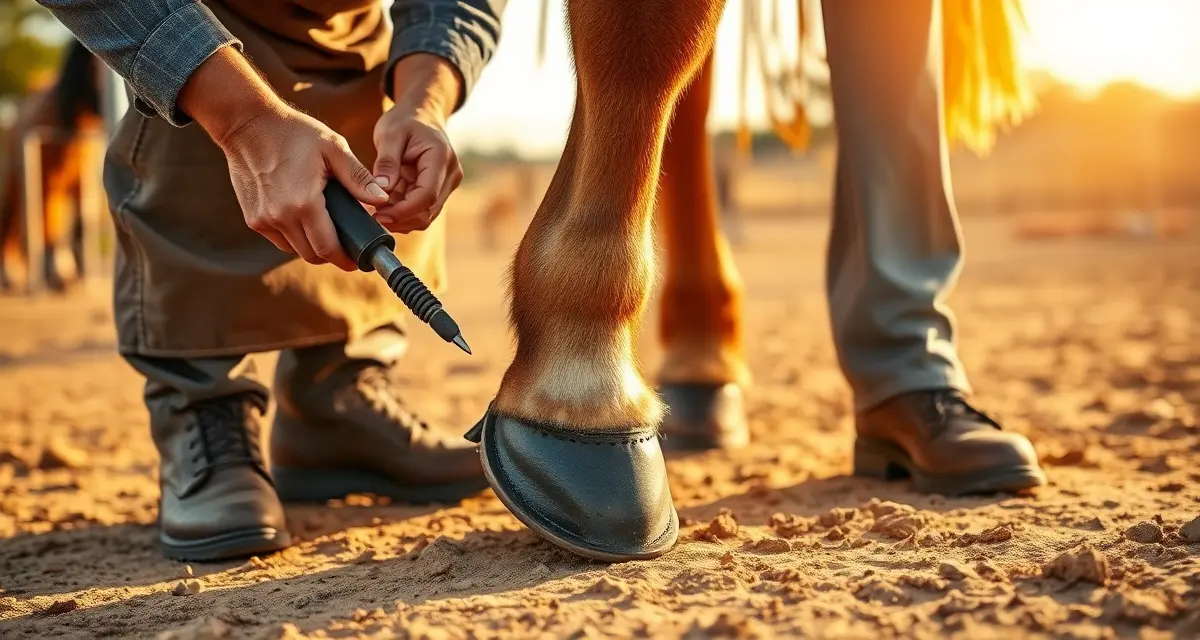
The Complete Farrier's Summer Guide: Managing Heat, Dry Ground, and Heavy Schedules
Hoof cracking incidents increase 55% during hot dry summer conditions. If you've worked a full summer in a dry climate, you've seen exactly what that looks like: feet that were in good shape in May developing checks, quarter cracks, and toe cracks by August. Horses that were easy to shoe in spring becoming trickier to work as their horn gets brittle and dry.
TL;DR
- Hoof cracking incidents increase 55% in hot dry summer conditions as moisture content drops, making horn brittle and reducing its ability to handle concussive force on hard ground.
- Watch for visible surface checking, brittle horn that chips instead of cutting cleanly, dry and chalky white line, and nail holes that look stressed or enlarged from last visit.
- Some horses in heavy work on rocky terrain need 5-week intervals in summer instead of 6, because hooves wear faster and cracks progress quickly under dry conditions.
- Summer show season demands that show barn appointments be built backward from competition dates, not forward from a standard interval.
- Early start times - finishing horses before 11 a.m. where possible - are a real quality-of-life strategy that also protects horse welfare during peak afternoon heat.
- Invoice at each barn immediately in summer: invoices sitting unsent for five days in peak season won't be paid for another week or two.
Summer also brings something farriers often don't talk about as a business challenge: a packed schedule combined with heat that makes the physical work considerably harder. Long days, hot ground, clients wanting horses ready for trail season and shows, summer rewards preparation and punishes improvisation.
This guide covers the full picture: hoof health through dry heat, summer shoeing adjustments, schedule management under pressure, and how to protect both the horses and yourself through the hardest working months.
What Summer Heat Does to Hooves
The chemistry of hoof horn changes with moisture content. In wet conditions, horn softens. In dry conditions, it becomes brittle. That brittleness is the source of most summer hoof problems.
When the moisture content of hoof horn drops considerably, the internal structure becomes less flexible. The constant concussive force of a working horse on hard summer ground creates micro-fractures that develop into visible cracks. Quarter cracks start from stress concentration points. Toe cracks develop from imbalance or from horn that simply can't handle the compression-extension cycle on hard dry ground.
The wall also contracts slightly as it dries. This changes the dynamics of how a shoe sits and how nails hold. Summer is when nail holes enlarge faster and shoes can start to shift before the next scheduled visit.
Summer Hoof Dehydration Signals
At each summer visit, you're assessing moisture content alongside everything else. Watch for:
- Visible surface cracking in the dorsal wall, especially horizontal checking
- Brittle feel when trimming, the horn chips and fractures instead of cutting cleanly
- White line appearing dry and chalky rather than slightly elastic
- Existing cracks propagating faster than during other seasons
- Nail holes that look stressed or enlarged from last visit
When you see these signs, document them in the horse's record. FarrierIQ's hoof health records let you flag these conditions with photos so you can compare progression across summer visits and have data if a client questions why you're recommending additional visits or conditioning treatment.
Adjusting Your Shoeing Approach for Summer
Summer hoof conditions call for deliberate adjustments. The approach that worked in May needs modification by July in a dry summer.
Conditioning and Moisture Management
This is primarily the horse owner's job between visits, but it starts with your recommendation. Horses in dry summer conditions benefit from regular hoof conditioning, not constant soaking, which can cause its own problems, but appropriate topical conditioning that supports wall flexibility.
Be specific with clients. "Use a hoof conditioner" is vague. Tell them what product, how often, and where to apply. Put it in the visit note in FarrierIQ so it's documented and the next visit you can ask whether they followed through.
Nail Selection in Hard Summer Ground
Hard baked-summer ground creates much higher concussive shock per step than spring ground. That changes the stress on nail holes and on the shoe itself. Some farriers move to slightly heavier nails in summer on horses doing consistent work on hard surfaces.
The choice depends on the horse's workload and hoof condition. A trail horse pounding 20 miles a week on rocky ground needs different consideration than a pleasure horse in sandy pasture.
Addressing Summer Cracks
Quarter cracks that develop or worsen in summer need to be managed, not just noted and revisited next time. Identify the cause, is it imbalance, a previous injury to the coronary band, or purely environmental brittleness? Your approach changes depending on the cause.
Document what you find and what you're doing about it. Clients need to know whether their horse's crack is being actively managed or just monitored. If the answer is the former, they need to know what that management looks like and what the expected timeline is. See the corrective shoeing hoof cracks guide for intervention options.
Shoeing Intervals in Summer
Some horses need shorter intervals in summer, particularly those doing hard work on dry rocky terrain where shoes wear faster and hooves grow quickly in warm weather. Others do well on standard intervals. The variable is the individual horse's workload and hoof health.
FarrierIQ lets you set custom intervals per horse. If a trail horse needs to come in at five weeks through summer instead of six, you set that in the record and the system flags it on the right schedule. You don't have to remember to check, it's tracked.
Managing the Summer Schedule
Summer schedule management is its own discipline. You've got maximum appointment volume while dealing with maximum physical demand from the heat. The organizational pressure is real.
Summer Route Optimization
FarrierIQ's scheduling app becomes even more important in summer because every extra hour of driving in a hot truck costs you energy you need at the next barn. Efficient routing isn't just about fuel in summer, it's about keeping yourself functional through a long day.
Clustering stops geographically and starting days earlier when possible are the structural choices that matter. FarrierIQ's route optimization sequences your stops automatically so you're not wasting time backtracking across your territory.
Early Start Strategy
In hot climates, experienced farriers learn to start early. Finishing horses before 11 a.m. when possible is a real advantage. The air temperature is lower, the ground is cooler underfoot, and the horses are generally less heat-stressed.
Building your schedule to front-load the hardest or most demanding horses in the first part of the day, when you're fresh and the temperature is most manageable, is a real quality-of-life decision.
Handling Summer Cancellations and Reschedules
Summer has its own cancellation pattern. Horse shows, trail rides, vacations, and heat events all create schedule disruptions. Unlike winter weather cancellations, summer cancellations often come with less notice.
Keep your waitlist populated in summer. When a cancellation opens a slot in a geographic area, check who's waiting or overdue in that area. A filled slot is a filled slot regardless of why the original appointment moved.
Managing Heat Events
Extreme heat events, the kind that trigger heat advisories, create a genuine decision point. Working under those conditions is hard on you and potentially on the horses. Know your limits and build some flexibility into your summer schedule to handle true heat emergencies.
If you have to reschedule a day due to extreme heat, document it clearly and reschedule promptly. Clients generally understand, especially if you communicate clearly. What they don't understand is vague delays without explanation.
Summer Hoof Record-Keeping
Summer hoof records serve a few specific purposes beyond routine documentation.
Tracking Crack Progression
If you're managing a cracking hoof through summer, you need sequential documentation to know whether your approach is working. A photo at each visit, with a quick note on measurements if you're tracking a crack, gives you a clinical timeline.
Without that documentation, you're relying on memory and subjective assessment at each visit. With it, you can tell a client "the quarter crack has held at 15mm for three visits and isn't propagating upward" or "we're seeing the crack grow despite the balance correction, which tells us the cause is more mechanical than environmental."
FarrierIQ's photo records attach to individual visits, making it easy to scroll back through the summer season and compare conditions.
Documenting Ground Conditions
Note the ground conditions at each summer visit. Not in exhaustive detail, but a quick note on whether the property is running dry, whether there's dust versus hard pan, whether the arena surface has changed. These details contextualize the hoof condition you're seeing.
When a client asks in September why their horse had three lost shoes in August, you have an answer grounded in documented conditions rather than guesswork.
Client Communication in Summer
Summer clients are often the most demanding of the year because their horses are in peak use. Shows are happening. Trail rides are scheduled. Competitions are on the calendar. And when something goes wrong with a hoof, a lost shoe, a developing crack, a thrush problem despite the dry weather, clients feel it more urgently than in the off-season.
Proactive Communication on Heat and Hoof Condition
If you're seeing dehydration-related hoof problems across your book, send a proactive client message. Something simple: "With the dry weather we've been having, several horses I'm seeing are showing signs of dehydration in the hoof wall. If you're not already using a hoof conditioner, now is a good time to start. Ask me for a specific recommendation at our next visit."
That kind of proactive message serves two purposes: it helps the horses and it demonstrates your expertise. Clients who get that kind of communication from their farrier don't shop around.
Managing Show Season Expectations
Show season puts scheduling pressure on you that comes from client competition calendars rather than your optimal routing plan. A client who needs a horse shod the week before a show doesn't care that it disrupts your geographic clustering.
The solution is information. Get show dates from your show barn clients in spring and build their appointments backward from those dates. FarrierIQ's scheduling let you place specific appointments at specific dates, you're not just managing a rolling interval, you're managing against a fixed calendar.
When show dates are in your system, you can see conflicts coming and address them before they become problems.
Personal Health Through Summer
You can't shoe horses if you're down with heat exhaustion. Summer heat is a genuine occupational hazard for farriers. Your personal health management is part of your business management.
Hydration needs to be deliberate. Working in a forge environment or in direct sun, you're losing water faster than you feel thirsty. By the time thirst is strong, you're already behind. Keep water in the truck, drink before and between stops, and monitor your urine color as a simple dehydration check.
Sun protection is real too. Forearms, neck, face, farriers spend a lot of time in direct sun. The accumulated UV exposure is notable over a career. Sunscreen isn't optional for long-term health.
Know the signs of heat exhaustion: heavy sweating, weakness, cold or pale skin, fast and weak pulse, nausea. If any of those hit, stop. Get in the shade. Drink. Don't try to push through it.
Physical Maintenance in Summer
Summer's physical demands are higher than other seasons. You're doing the same work, but in conditions that fatigue you faster. Regular stretching, particularly for the lower back and hamstrings, matters more in summer because tight muscles working in heat are injury muscles.
If you're running summer without any recovery protocol, stretching, adequate sleep, rest days, you're running on a body that's progressively less capable. That's how summer fatigue becomes fall injuries.
Protecting Income Through Summer
Summer should be your best income season alongside spring. Some farriers give income away inadvertently.
Invoice Immediately
Summer's busy days make it tempting to batch invoicing for the end of the week. That's a trap. Invoices sitting unsent for five days are invoices that won't be paid for another week or two. FarrierIQ lets you invoice from your phone the moment you finish a horse. The invoice goes out while you're still at the barn. Clients pay faster, and you're not doing invoice paperwork at 10 p.m.
Track Overdue Accounts
Summer volume means more invoices outstanding at any given time. FarrierIQ's payment tracking flags overdue accounts so you know who's behind before you show up at their barn for the next visit. Following up on a $180 overdue invoice before you do another visit on the same account is a lot more comfortable than doing it after.
Frequently Asked Questions
How does summer heat affect horse hooves?
High temperatures and dry conditions reduce the moisture content of hoof horn, making it brittle. This leads to increased cracking, quarter cracks, toe cracks, and horizontal checking in the wall. Hard dry ground also increases concussive stress per step, accelerating nail hole enlargement and shoe shifting.
Should farriers adjust shoeing frequency in summer?
It depends on the horse. Animals in heavy work on hard, rocky terrain may need shorter intervals, five weeks instead of six, because hooves wear faster and cracks can progress quickly in dry conditions. Horses in light work on sandy ground may do fine on standard intervals. Track individual horses rather than applying a blanket summer rule.
How do farriers handle packed summer schedules?
Route optimization to reduce drive time between hot stops, early start times to finish before peak afternoon heat, a populated waitlist for quick cancellation recovery, and automated appointment reminders to reduce no-shows are the core tools. Keeping administrative work simplified with software like FarrierIQ means evenings can be for recovery rather than paperwork.
How do you communicate hoof conditioning recommendations to summer clients effectively?
The most effective approach is specific and written. "Use a penetrating hoof conditioner on the coronet band and upper wall three times per week, particularly after feet get wet and dry" is actionable. "Put some conditioner on" is not. Entering the specific recommendation in FarrierIQ's visit notes creates a record you can reference at the next visit - you can ask directly whether they followed through and adjust the conversation based on what you're seeing in the hoof condition.
What's the best way to handle a show horse that loses a shoe the week before a major competition?
Get there. Emergency summer shoe calls for competition horses are one of the highest-value services you can offer, and handling them promptly builds the kind of client loyalty that generates referrals for years. Have a clear emergency rate policy communicated in advance so there's no awkward conversation about money. Document the emergency visit thoroughly in FarrierIQ - the date, the shoe, the condition of the hoof, and what you did. That documentation protects you if the horse has any issues at the show.
Related Articles
Sources
- American Farrier's Association (AFA), summer hoof care and seasonal shoeing resources
- American Association of Equine Practitioners (AAEP), equine hoof health and seasonal care guidelines
- Kentucky Equine Research, hoof wall moisture content and seasonal variation studies
- The Horse: Your Guide to Equine Health Care, summer hoof management and crack prevention coverage
- National Institute for Occupational Safety and Health (NIOSH), heat stress guidelines for outdoor workers
Get Started with FarrierIQ
Summer's packed schedule, crack documentation needs, and show calendar management all benefit from organized tools. FarrierIQ's route optimization sequences your summer stops efficiently, the per-horse hoof photo records give you a visual timeline of crack progression, and the scheduling tools let you manage show dates alongside standard intervals. Try FarrierIQ free and approach summer's demands with a system instead of improvisation.