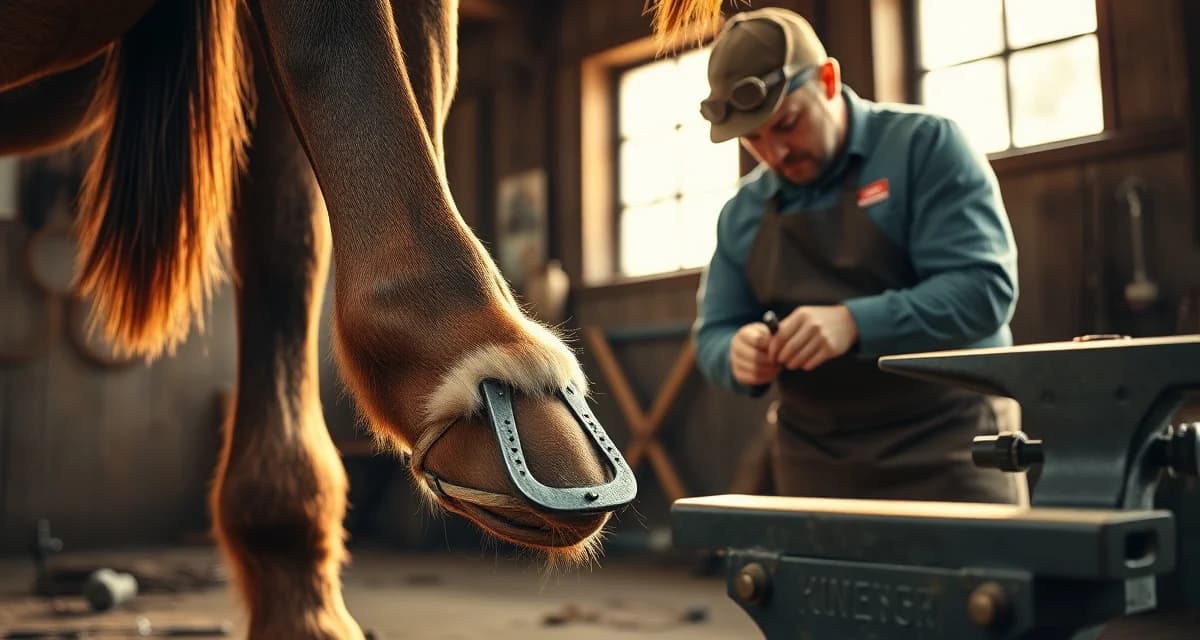
Morgan Horse Shoeing Guide: Versatile Breed With Tough, Durable Hooves
Morgans were built to be useful. The founding Justin Morgan bloodline was a work horse - pulling, hauling, pacing, and trotting under saddle. That utilitarian heritage gave the breed something valuable: durable, sound feet that hold up well under work.
TL;DR
- Morgans consistently rank among the soundest breeds for hoof quality, with good wall thickness, appropriate concavity, and well-developed frogs as breed norms.
- Shoeing requirements vary significantly by discipline: park show horses need increased toe length and pads, while trail and pleasure Morgans typically need standard keg shoes or can go barefoot.
- Most Morgans doing regular work run on 5-7 week cycles; show horses in active competition are often on 5-week cycles to maintain appearance.
- Foundation-bred Morgans tend toward wider, sturdier feet while refined park horse show types may have a narrower, higher-angled foot - assess each horse individually.
- Many endurance Morgans compete barefoot or with hoof boots, and those who are shod may benefit from lighter materials and careful nail placement to support natural hoof expansion over long rides.
If you're adding Morgan clients to your book, you're generally in good shape. These are horses that don't give farriers a lot of trouble. That said, knowing the breed's specific characteristics and the disciplines they work in helps you do the job well.
Morgan Hoof Characteristics
Generally Excellent Feet
Morgans consistently rank among the soundest breeds for hoof quality. Breeders have historically selected for serviceability alongside other traits, and the result is a breed with typically:
- Good hoof wall thickness and density
- Appropriate concavity
- Well-developed frogs
- Compact, well-balanced feet that suit the horse's size and work
You'll rarely see the thin soles and compromised walls that are common concerns in Warmbloods and some Thoroughbred-influenced breeds.
Range in Hoof Type
Modern Morgans span a spectrum from the classical compact type (foundation-bred, heavier bone, more workmanlike) to the more refined show-type Morgan with finer bone and more elevated movement. Hoof type varies accordingly. The heavier-type Morgans tend toward wider, sturdier feet. The refined park horse show types may have a narrower, higher-angled foot.
Morgan Disciplines and Their Shoeing Requirements
Morgans are used in an impressive range of disciplines: western pleasure, hunter pleasure, trail, driving, dressage, pleasure driving, park horse, and endurance. Each has different shoeing requirements.
Trail and Pleasure Riding Morgans
The most common Morgan use case. Standard keg shoes in steel appropriate to the foot size. These horses are usually on 6-8 week cycles depending on work intensity. Many trail Morgans do well barefoot given the breed's naturally hard feet - evaluate individually based on terrain and use.
Show Morgan Divisions
The Morgan show world has distinct divisions with specific shoeing requirements:
Park and Classic Pleasure: High-action, elevated movement is the show ring goal. Shoeing for park horses involves increased toe length and sometimes pads to elevate action. This is similar in principle to Tennessee Walking Horse show shoeing at a less extreme level. Know what the show division requires before making assumptions.
English Pleasure / Hunter Pleasure: More natural, flowing movement is desired. Shoeing is closer to hunter/jumper approaches - natural balance, moderate toe, clean breakover.
Western Pleasure: Similar to AQHA western pleasure shoeing. Breakover and toe length adjusted to the specific stride desired.
Pleasure Driving: Driving Morgans in light harness need durable, well-fitted steel shoes. The Morgan's naturally animated trot makes it a natural harness horse for pleasure driving.
Endurance Morgans
Morgans compete well in endurance given their natural toughness and their ability to maintain condition over long distances. Many endurance Morgans compete barefoot or with hoof boots for rocky sections. Those who are shod for endurance work may use lighter materials and careful nail placement to minimize interference with natural hoof expansion over long rides.
Step-by-Step: Shoeing a Pleasure Morgan
Step 1: Assess
Good hoof quality is the norm, but assess each horse individually. Check wall integrity, sole depth, white line, frog health. Standard trim and balance work for pleasure Morgans doesn't require the specialized considerations of a Warmblood or draft.
Step 2: Trim
Conservative trim for most pleasure Morgans. These horses don't typically need major correction work. Balance for their conformation, remove excess growth, keep toes from getting long.
Step 3: Shoe Selection
Standard keg shoe appropriate to foot size for most applications. For show Morgans, know the division requirements:
- Park horses: longer toe with appropriate pad configuration per trainer/division requirements
- Pleasure divisions: moderate, natural balance
- Trail and western: standard stock horse shoeing
Step 4: Nail
Morgan walls nail well. Standard 4-5 nail pattern. Clean clinches. These are typically easy horses to work on.
Common Issues in Morgans
Morgans don't have many breed-specific hoof issues - their generally good hoof quality and sound constitution means they're one of the lower-maintenance breeds for farrier work.
Thrush occurs in Morgan horses kept in wet conditions just as in any breed. Management is standard.
Hoof rings can appear after nutritional changes or stress events - they're informational but not always concerning. Note them and mention them to the owner if they're prominent.
Show Morgan toe length management requires specific knowledge of what different show divisions require and careful transition management when a horse changes divisions or comes out of retirement back to showing.
Related Articles
FAQ
How often do Morgan horses need to be shod?
Most Morgans doing regular work are on 5-7 week cycles. Light-use pleasure horses can go 7-8 weeks. Show horses in active competition are often on 5-week cycles to maintain appearance. Morgans in endurance work may be on varied schedules depending on competition calendar.
Do Morgans need shoes, or can they go barefoot?
Many Morgans do well barefoot given their naturally good hoof quality, particularly those in light to moderate work on appropriate footing. Trail Morgans on soft or mixed footing are often excellent barefoot candidates. Shoeing becomes appropriate for consistent hard-surface work, show requirements, or specific performance demands.
What shoes are appropriate for Morgan show horses?
It depends entirely on the division. Park horses require specific toe length and pad configurations that vary by association. Pleasure divisions are closer to natural balance. If you're working on show Morgans, know the Morgan breed show rules (American Morgan Horse Association) for the specific classes the horse competes in.
Are there any conformation traits in Morgans that create recurring hoof challenges?
The refined show-type Morgan can present with a narrower, higher-angled foot that requires attention to breakover and heel support, particularly if the horse is being pushed for elevated movement. Foundation-bred Morgans are generally straightforward, but any horse with upright pasterns warrants monitoring for long-term soundness under hard-surface work.
How do I handle a Morgan transitioning from a show career to trail or pleasure work?
The main adjustment is gradually reducing toe length if the horse was shod for park or classic pleasure divisions. Rushing that transition can create soreness and balance issues. Work with the owner and trainer on a realistic timeline, and reassess the horse's natural hoof angle once the show shoeing has grown out over several cycles.
What should I know about the American Morgan Horse Association's shoeing rules before working on a show horse?
The AMHA has specific rules on toe length, pad height, and weighted shoe use that vary by division and age class. Rules are updated periodically, so it's worth reviewing the current rulebook or asking the trainer before the show season starts. Working outside those rules can result in disqualification, which reflects poorly on both the trainer and the farrier.
Sources
- American Morgan Horse Association (AMHA) - Breed standards, show rules, and division guidelines
- American Farrier's Journal - Industry publication covering breed-specific shoeing techniques and hoof care research
- University of Minnesota Extension, Horse Program - Hoof care and horse management resources for working horses
- United States Equestrian Federation (USEF) - Rules and specifications for Morgan show divisions including equipment and shoeing requirements
- The Horse: Your Guide to Equine Health Care - Practical hoof health and farriery reference published by the American Association of Equine Practitioners
Get Started with FarrierIQ
Managing a diverse client book that includes show Morgans, trail horses, and endurance competitors means tracking different shoeing schedules, division-specific notes, and hoof records across a wide range of horses. FarrierIQ keeps all of that organized in one place - from scheduling your 5-week show horse cycles to logging toe length changes across a park horse's show season. Try FarrierIQ free and see how much easier it is to stay on top of every horse in your book.